


Every few weeks, someone on a planning call asks me the same question in a slightly sideways way. "So... are we camping?" Not nervous, exactly. More like they've seen a photo of a white canvas tent with an actual bed inside it and their brain can't decide which category to file it under. Hotel. Tent. Something else entirely.
It's the something else. And the easiest way I've found to explain it isn't with a definition, it's by walking through one real camp, tent by tent, so you can actually picture where you'd sleep. I'm going to use Ang'ata Camps, because Follow Alice uses them often on our Tanzania safaris and because they sit at a level that answers the question well: not a rough mobile setup, not an ultra-luxury lodge with a helipad, just a properly comfortable canvas camp built for people who want to be looked after in the middle of nowhere.
Ang'ata started in 2011, run out of Arusha, and the name comes from Maa, the Maasai language - it means "wilderness." That's a better name than most operators bother to earn.
The tent, not the room
Start with the fabric, because that's the part people worry about most. It's not the tent from your camping trips. The canvas is heavy-duty ripstop with a UV sun-sheet layer over the top, built to keep the tent cool through a hot Serengeti afternoon and to actually keep rain out, which matters more than it sounds like it should when you're an hour from the nearest solid roof.
Inside, each guest tent has a private balcony with a couple of safari chairs, which is where I'd tell you to have your morning coffee if you get the chance - you're usually looking straight out at the bush, not a car park. The bed is a proper king, or twin/triple depending on who's travelling, with mosquito netting draped over it. There's a lockable wooden box for your passport and cash, a solar lamp for when the sun goes down, and a safety whistle, which sounds dramatic until you remember camps aren't fenced and you might actually want one at 2am.
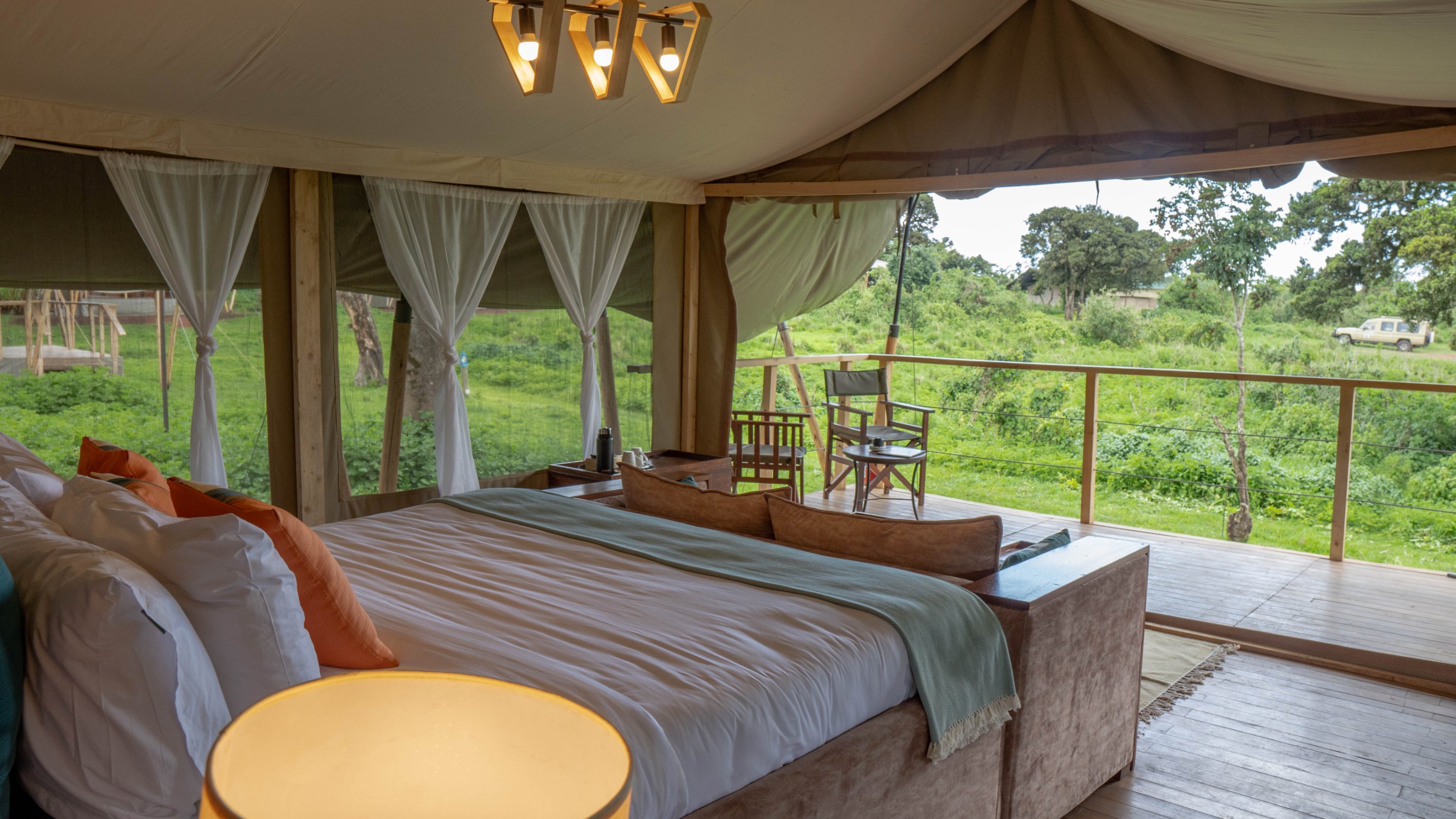
The bathroom is en suite: a vanity and sink, a flush toilet, and a shower with 25 litres of hot water and 25 litres of cold, heated by a solar system rigged to that specific tent. You get bottled water at the sink too, because the tap water isn't for drinking or brushing your teeth - camp staff will point this out, but it's worth knowing before you arrive so it doesn't feel like an odd surprise. Bathrobes and towels are provided. Power throughout is solar, and each tent runs its own system rather than sharing off one central generator, which is part of why the lights don't flicker out camp-wide when a cloud rolls over.
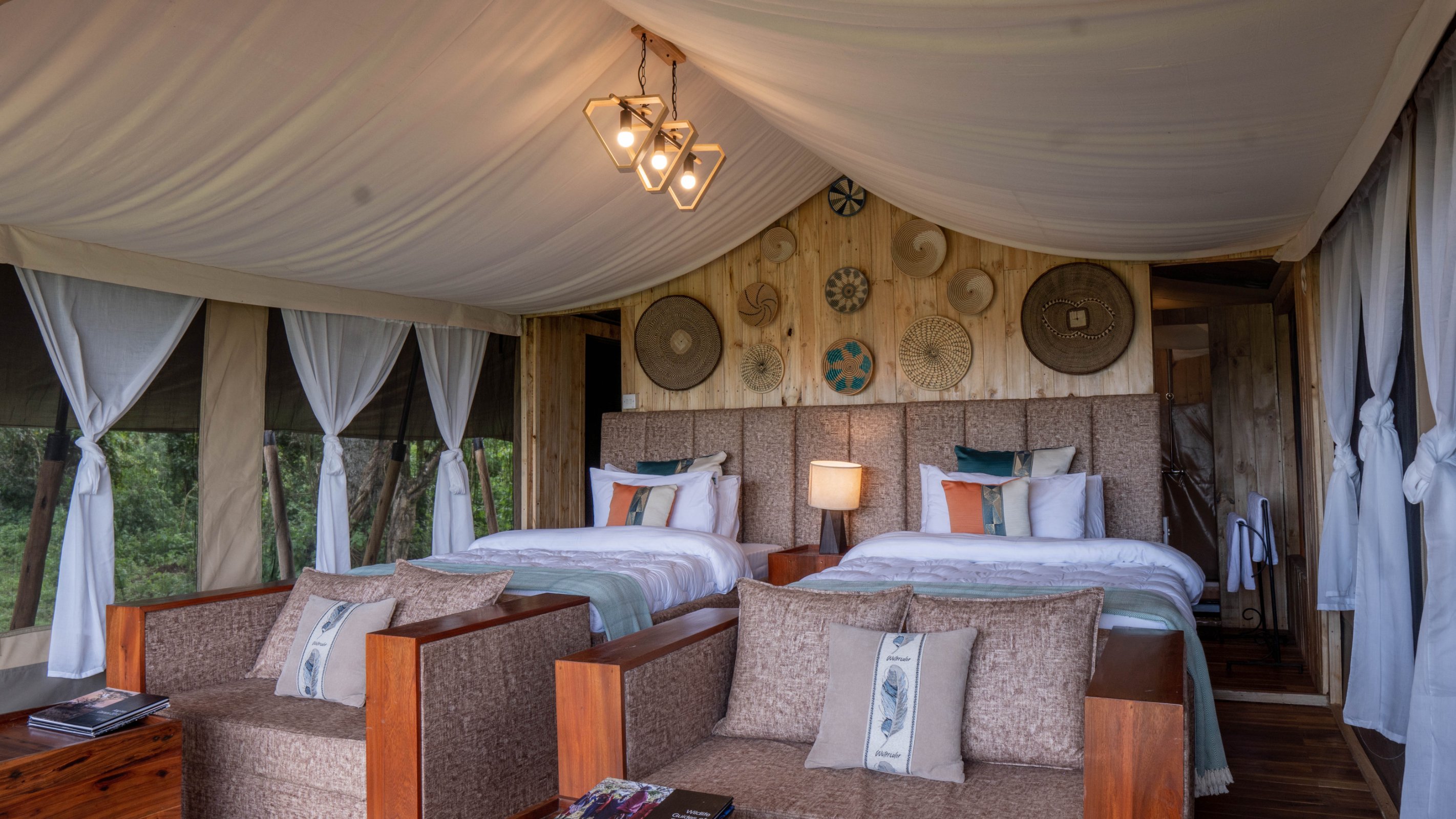
So: not a hotel room, because there's no door that locks with a keycard and no room service button. Not camping, because you're not pitching anything or filtering your own water. It's its own category, and once you've stayed in one, "tented camp" stops being a vague marketing phrase and starts meaning something specific.
WATCH OUR 4K TANZANIA SAFARI VIDEO HERE: https://www.youtube.com/watch?v=2mHpM6nzdY0&t=6s
Water and power, explained properly
I get more questions about hot water than almost anything else, so let me be precise about it rather than reassuring. The 25-litre hot water allowance per shower is generous enough for a normal wash, not for a long soak, and it's solar-heated, so it's actually warmest in the late afternoon after a full day of sun rather than first thing in the morning. If you're someone who showers at dawn before a game drive, it'll still be warm, just not blazing.
Solar power per tent means your lamp and any charging point will work, but it's not the same as mains electricity at home - camps ask you to be sensible about what you're charging and when. None of this is a hardship. I'm flagging it because "solar-heated" and "off-grid" sound like compromises until you're actually there, and then they just feel like part of being somewhere without a power line for fifty kilometres in any direction.
Meals in the bush, not from a packet
Meals happen in a dining tent, which can open right up to the bush on a clear evening or close in against wind and rain when the weather turns, so dinner doesn't depend on the forecast being kind to you. Food is prepped centrally and then finished fresh in camp, and there's a real wine list - South African, Italian, French, Spanish - which is not something I expected the first time I sat down to dinner an hour after watching a lion pride cross the track in front of our vehicle. Vegetarian, vegan, gluten-free, and halal requests are handled without a fuss if you flag them ahead of time, which I'd strongly recommend doing when you book rather than mentioning it on arrival.
What you actually do all day
The default rhythm is two game drives a day, one early and one in the late afternoon when the light and the animal activity are both better, with the middle of the day free for lunch, a nap, or just sitting on your tent's balcony with a book. Beyond that, most camps offer optional extras: walking safaris with an armed ranger for a different pace and perspective, night game drives for the nocturnal side of the park that you'd otherwise miss entirely, balloon safaris at sunrise, and private bush lunches or dinners set up away from the main dining tent if you want one properly memorable meal to yourself.
None of these extras are included by default, so it's worth deciding before you travel whether a hot air balloon at dawn over the Serengeti is a splurge you want built into the itinerary or something you'd rather skip.
Six camps, and why the differences actually matter
This is the part that trips people up, because "camp" gets used for two quite different things, and Ang'ata's own six properties are a good way to see the difference clearly.
Four of the six are fixed-site tented camps - permanent locations, built once and staffed year-round, just constructed from canvas rather than brick:
- Ang'ata Serengeti Camp, in Seronera in central Serengeti, with 12 tents including a family unit.
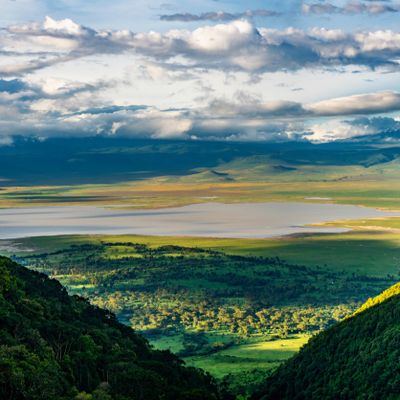
- Ang'ata Ngorongoro Camp, on the eastern rim of the Ngorongoro Crater at 2,310 metres, the smallest of the six at just 8 tents including a family unit. Pack a warm layer for this one specifically - crater rim nights get properly cold, more than people expect from an African safari.
- Ang'ata Tarangire Camp, inside Tarangire National Park, which opened in July 2016 and is the newer of the two Ngorongoro-region camps we use on our Tarangire and Ngorongoro Crater itineraries.
- Ang'ata Kimarishe Camp, also in central Serengeti, the newest addition to the group, with 12 rooms including two family rooms.
The other two are the ones that actually earn the word "migration" in their name, because they move with the wildebeest rather than staying put:
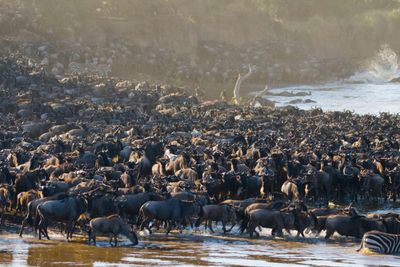
- Ang'ata Migration Ndutu Camp, south of Lake Ndutu, is the original Ang'ata property, opened in December 2011 specifically to sit where the Great Migration gathers to calve.
- Ang'ata Migration Bologonja Camp, in the northern Serengeti, is timed to the migration's river-crossing season instead.
That distinction matters more than it might seem. If someone tells you a safari camp "follows the migration," ask which camp they mean - it's true of Ndutu and Bologonja specifically, not a blanket description of every canvas camp in Tanzania. Most tented camps, including the other four Ang'ata properties, simply stay where they are because their location is good year-round, not because moving would defeat the purpose.
Which combination of camps you'd actually stay in depends on the route - our Great Northern Parks trip and our guide on what a Tanzania safari actually costs both go into how the parks and the timing fit together, if you want the fuller picture before you land on dates.
That's the honest picture: canvas, not concrete; a proper bed and a hot shower, not a sleeping bag on the ground; solar power and 50 litres of water per shower rather than a hookup to anything. It's a specific, deliberate kind of comfortable, built for a place that doesn't have mains electricity or running water, and once you've sat on that balcony at first light, "glamping" starts to feel like the wrong word for it too.
Want to talk through which camps fit your route and dates? Book a call and we'll walk through it together.