


You’re browsing adventure trips online, some labelled as hikes and others as treks. A few mention ‘walking safaris’ or ‘gorilla trekking’, and suddenly you’re not sure whether these terms actually mean different things or if it’s all just distinct wording for the same kind of adventure.
The terms do point to different types of experiences. Not necessarily in a strict textbook sense, but in terms of the pace, preparation and expectations involved. That difference becomes important when you’re choosing between a casual day on the trails and a multi-day journey through the Himalayas.
At Follow Alice, we run both. Day hikes in the Maasai Mara, gorilla treks in Uganda and Rwanda, volcano walks in the Virungas, and multi-week expeditions to Everest Base Camp, the Inca Trail, Kilimanjaro, and the Manaslu Circuit. So we can tell you, plainly, what separates one from the other and help you work out which kind of adventure suits you. If you have any questions, please feel free to contact our team.
{{leadmagnet-one}}
The difference between trekking and hiking
Here is the simplest way to explain it: hiking is a day activity; trekking is a multi-day journey.
A hike takes you out and brings you home the same day. You carry a day pack. You do not need to think about where you'll sleep or what you'll eat for dinner on the mountain. It might be a two-hour loop through the forest or a demanding twelve-hour slog up a volcano, but it begins and ends at the same point, within the same day.
A trek is a journey measured in days, not hours. You leave camp or a guesthouse each morning and arrive somewhere new each night. Your body accumulates fatigue, your pack carries essentials for the duration, and the landscape changes around you in ways a single day cannot offer. The trail becomes your world for the length of the experience.
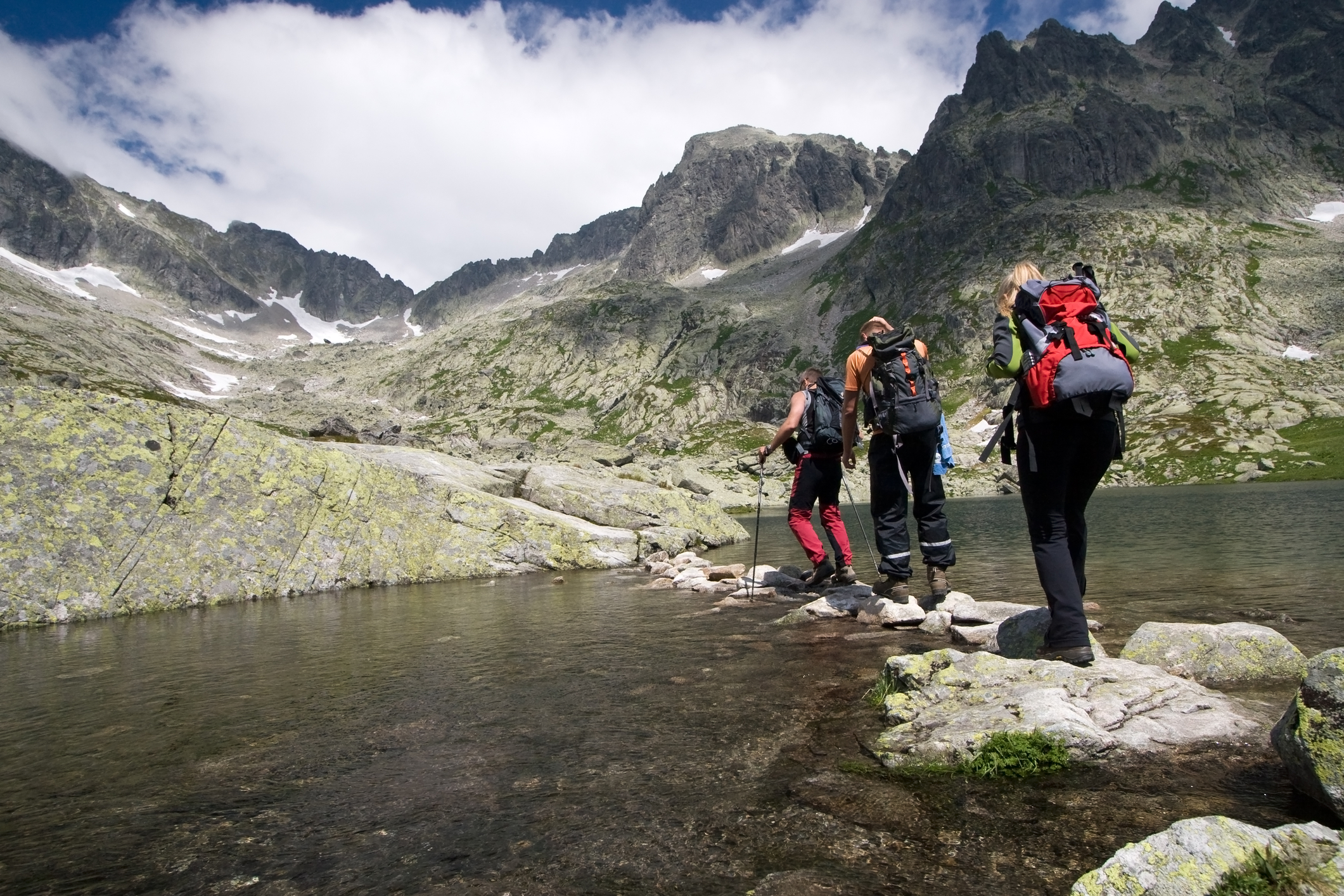
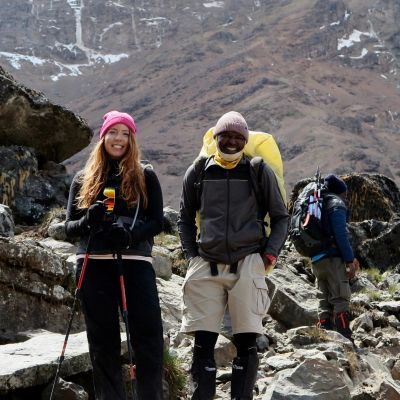
Hiking in the mountains.
{{leadmagnet-two}}
What makes trekking different?
Duration is the obvious factor, but terrain and altitude are what make trekking genuinely demanding. Most of the world's great treks gain serious elevation. Everest Base Camp sits at 5,364 metres, and even reaching it requires acclimatising gradually over two weeks of walking. Kilimanjaro's summit is 5,895 metres. The Inca Trail threads through high Andean passes where altitude affects breathing and pace.
On a trek, you are not just walking. You are managing your body over days of sustained effort. Fatigue builds gradually, your feet need care, and sleep at altitude is often lighter than expected. Nutrition and hydration become essential routines rather than background habits. Pacing also changes. It is no longer about getting through the day, but about sustaining yourself for the week ahead.
None of this is said to discourage you. Thousands of people with no prior mountaineering experience complete EBC or Kilimanjaro each year with proper preparation. But trekking requires that preparation in a way that a day hike generally does not.
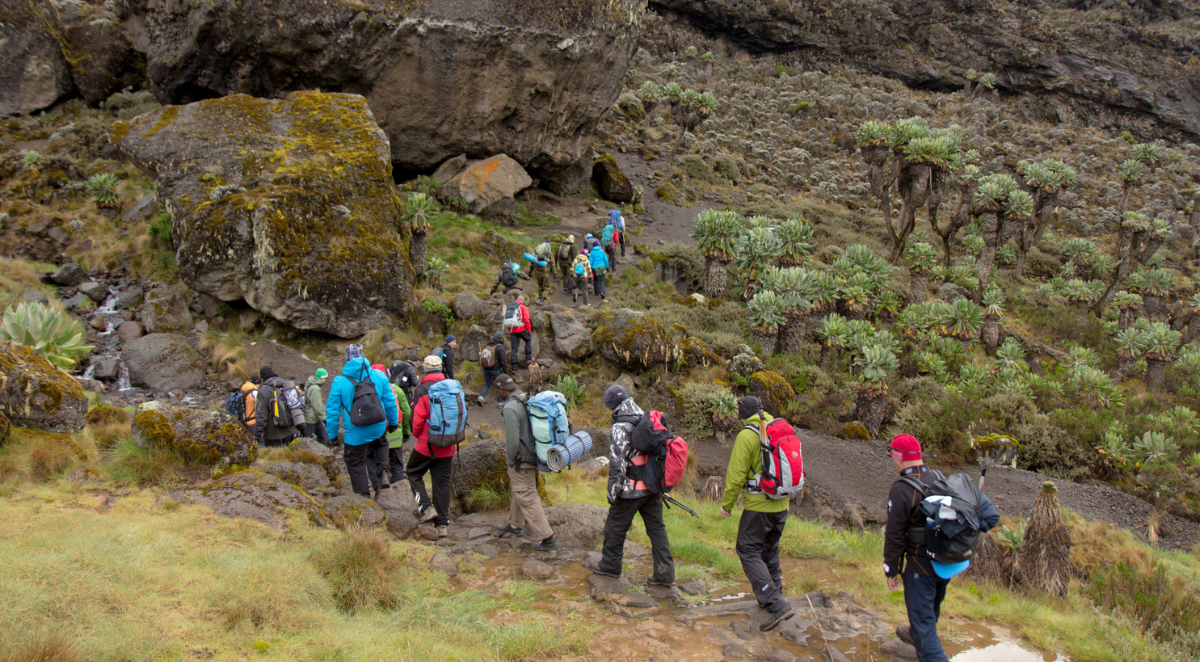
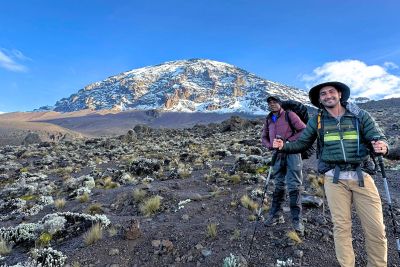
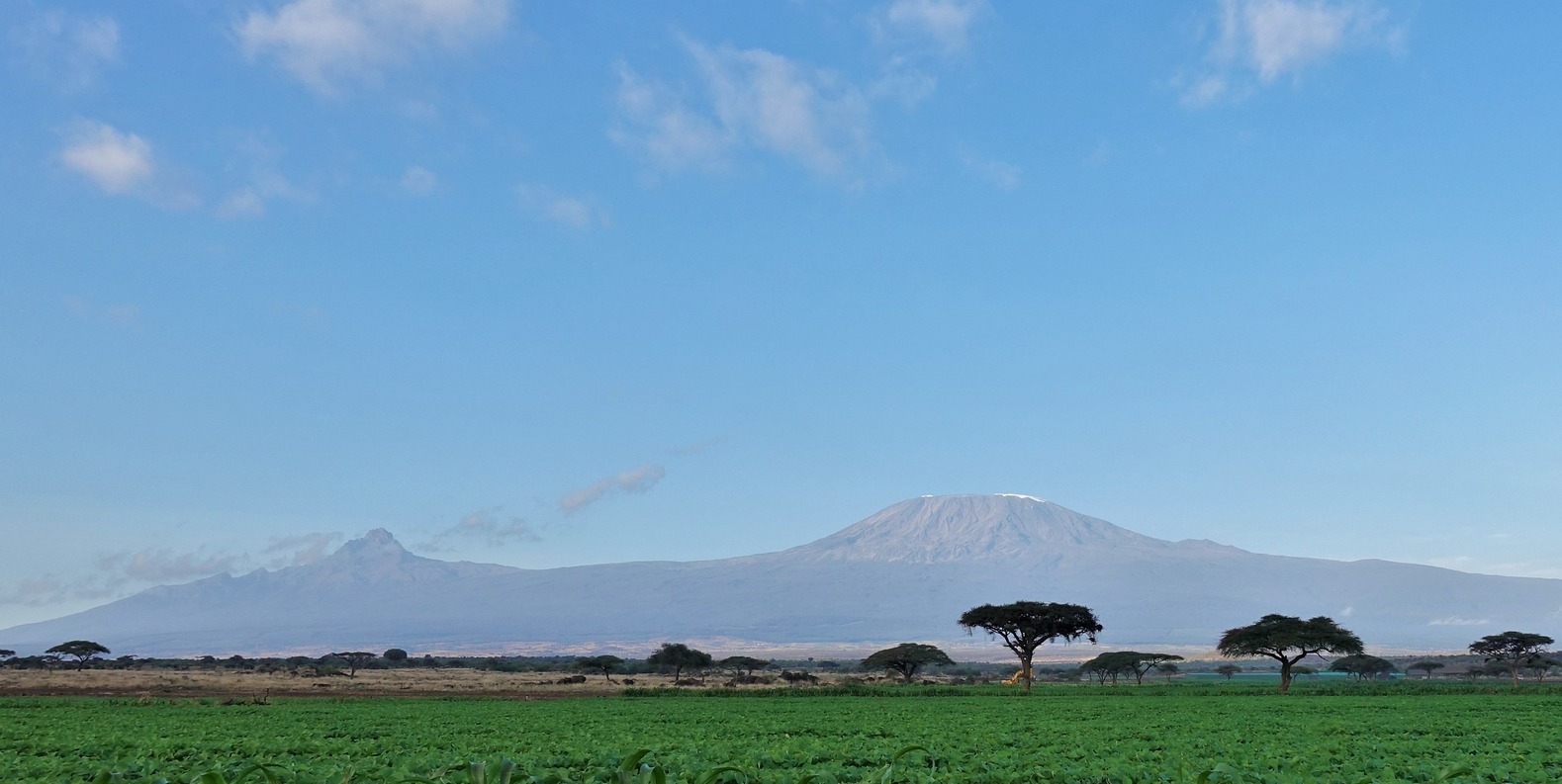
Tourists walking towards Mount Kilimanjaro.
{{leadmagnet-three}}
What hiking offers that trekking cannot
Hiking has a freedom that multi-day trekking cannot match. You show up, you walk, you go home. There is no permit system to navigate for most day hikes, no careful consideration of sleeping bag temperature ratings, and no itinerary fixed weeks in advance.
Day hikes are also excellent entry points for people new to walking in wild places. A guided morning hike in the Maasai Mara offers a genuine wilderness experience, open savannah, wildlife, dramatic East African landscape without requiring fitness levels beyond those of a reasonably active person.
Hiking can be demanding in its own right. A day route up Mount Longonot in Kenya involves a steep crater climb at altitude. The Rwenzori day walks are rugged and wet. Choosing a hike does not mean choosing something easy; it just means choosing something that fits within a single day.

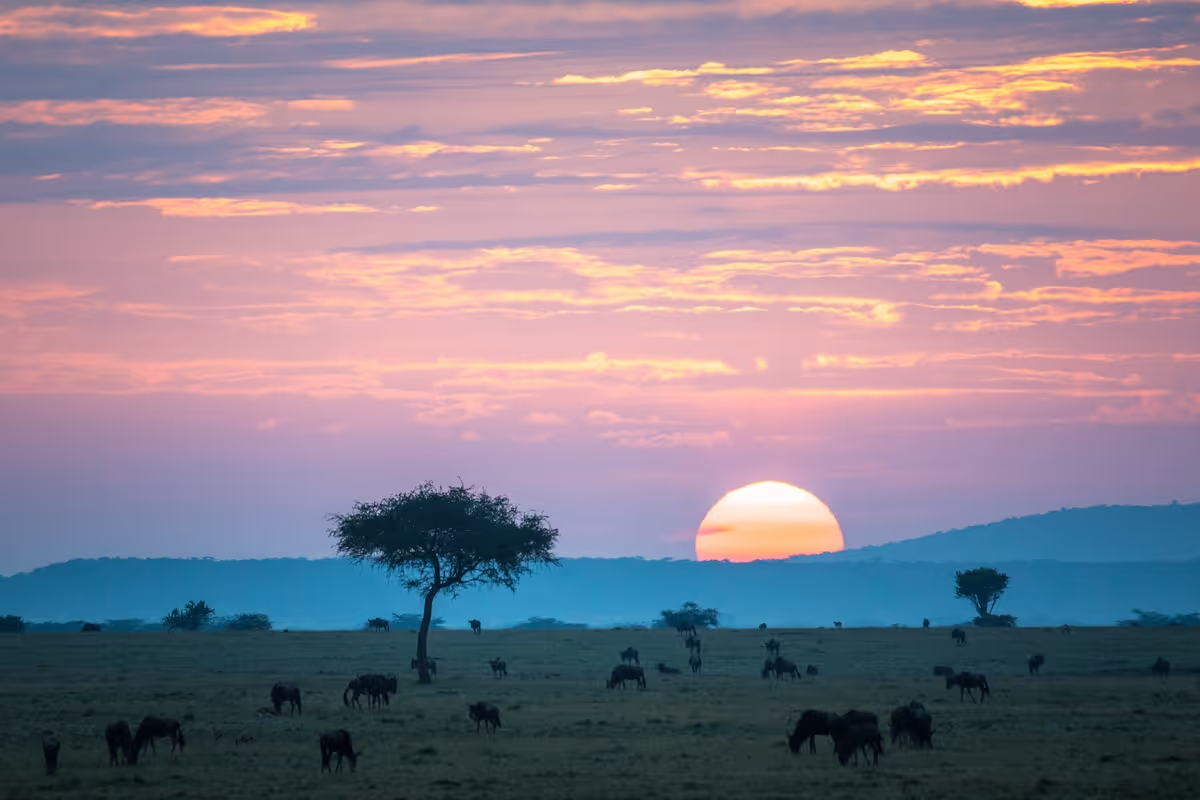
Tourists in safari vehicles watch as wildebeest gather along the banks of the Mara River in Kenya’s Maasai Mara Game Reserve.
Why the trekking vs hiking difference gets confusing in East Africa
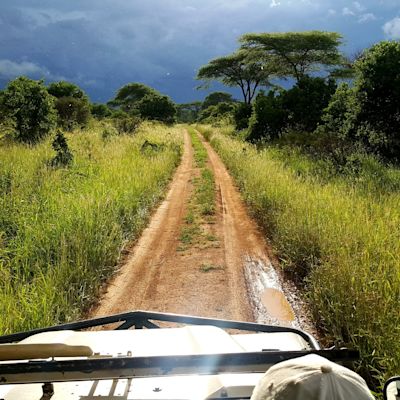
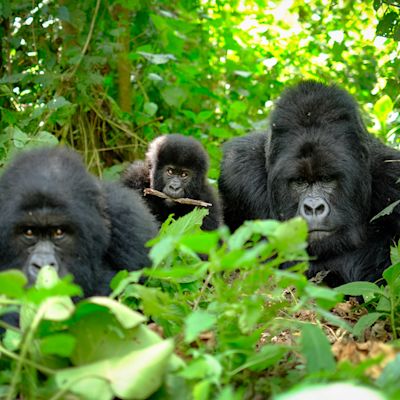
This is where the terminology starts to get a little messy, and it is surprisingly rarely explained clearly in most guides in this space. In East Africa, the word 'trekking' is used for activities that last only a few hours. Gorilla trekking in Uganda and Rwanda typically takes between two and eight hours. It is a guided walk through dense forest until you find a habituated gorilla family, after which you spend one hour with them before returning to the trailhead. By the dictionary definition of trekking, this is not a trek at all. But in the region, and across the safari industry broadly, it is universally called trekking.
Similarly, 'trekking' in East Africa frequently refers to walking safaris and excursions that would, elsewhere, simply be called hikes. The term carries a sense of wildness and effort rather than a precise measurement of days.
If you are booking through Follow Alice and you see the word 'trekking', always read the itinerary rather than relying on the label. The main questions are: how many days does the walking component last? Does it require overnight stays on the trail? What is the elevation gain? Those answers will tell you more than the name ever will.
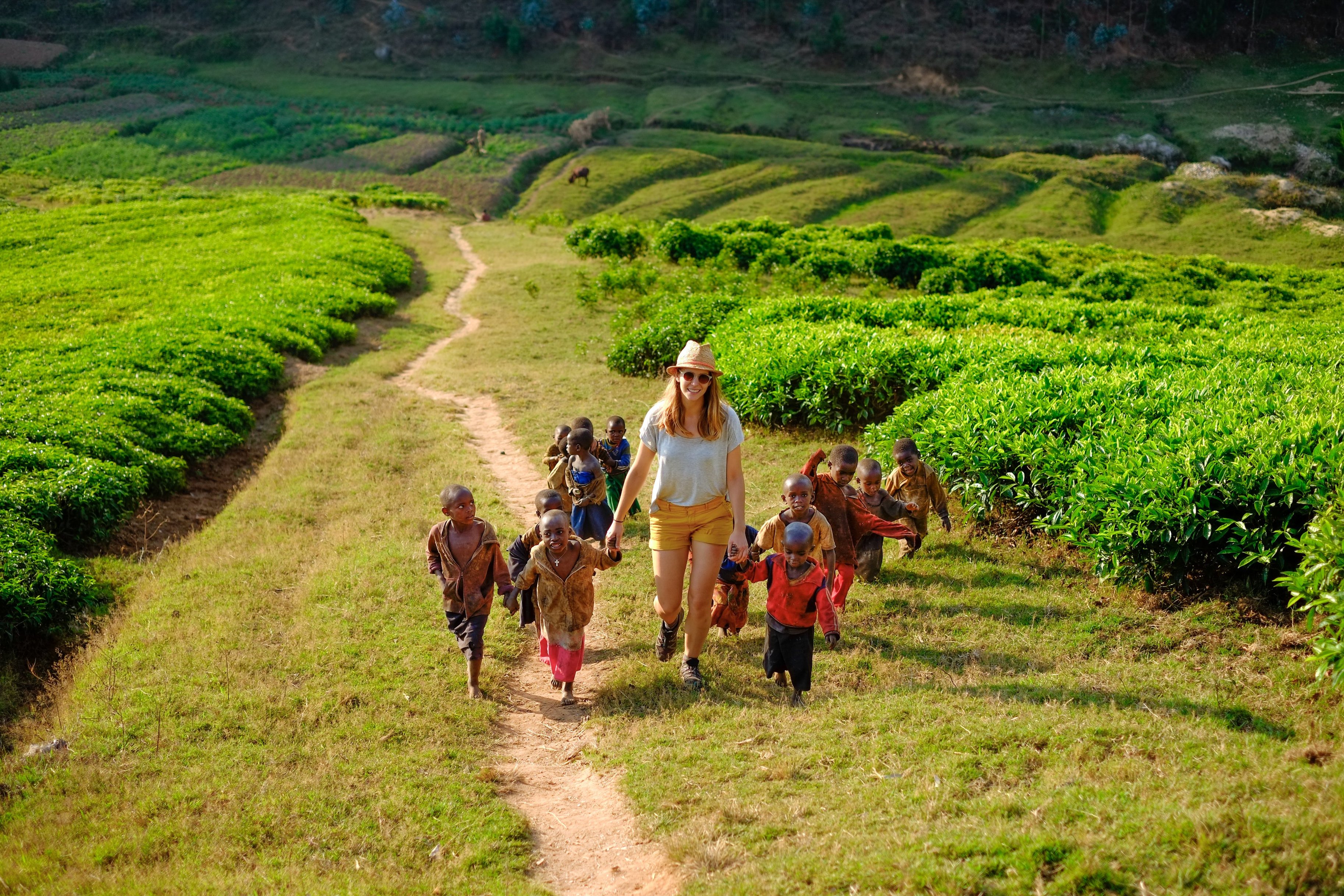
A tourist holding hands with children walking up a hill in a tea plantation on a dusty path in Rwanda.
Why multi-day treks offer more
One thing that often gets overlooked in these comparisons is just how different the experience becomes when you are walking for several days through remote terrain. It is not simply a longer version of a hike; it is something else entirely.
On the Everest Base Camp trek, you pass through Sherpa villages that exist entirely within the context of the mountains. Namche Bazaar, Tengboche, and Dingboche each has its own monastery, rhythm, and relationship to altitude and season. You eat in teahouses run by families who have guided and hosted walkers for generations. These are not just places to stop for food. They are lived-in communities that you pass through at walking pace, slowly enough to notice the details.
On the Inca Trail, the ruins are not detours from the walk; they are part of it. You arrive at Machu Picchu through the Sun Gate, having earned the view across four days of climbing and descent. The approach transforms the destination.
A day hike, by contrast, is usually centred on the landscape itself rather than the human environment. That is not a limitation, just a difference. If cultural immersion is part of what you are looking for, multi-day trekking naturally brings you closer to it in a way a single day on the trail rarely can.
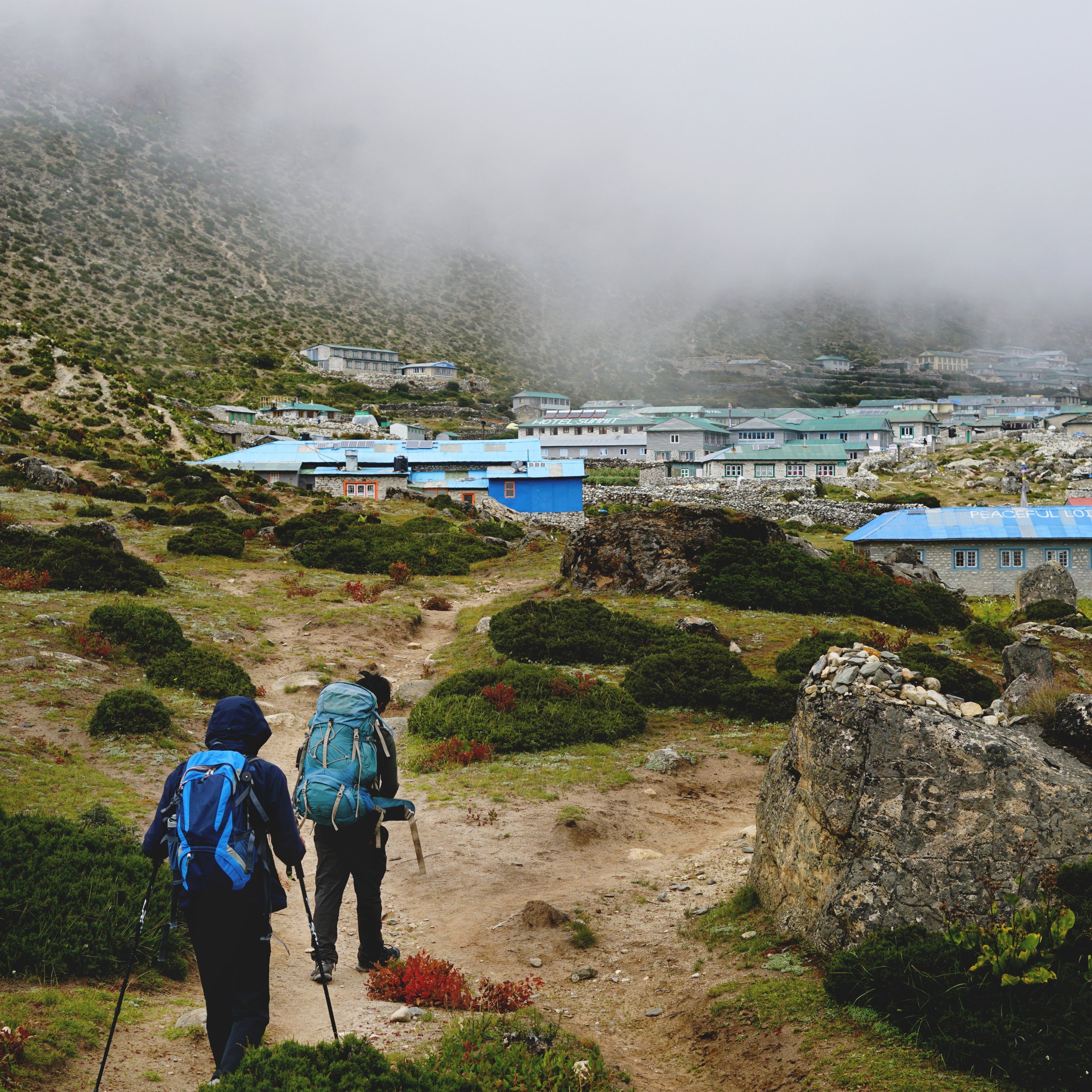
Two trekkers walking to Dingboche Village, Everest Base Camp trek.
Hiking vs walking
A quick note on this, because it comes up. Walking is what you do on flat, predictable surfaces like pavements, parks, and canal paths. It requires no particular preparation, no specific footwear, and no real thought about terrain. Hiking is walking, but in a wilder, more varied, and more demanding context. Uneven ground, elevation change, proper trail footwear, and some degree of navigation or route awareness start to matter. The line between them is blurry, but a useful way to think about it is this: if you would wear trainers and not think twice, it is a walk. If you would consider whether your boots are broken in, it is a hike.
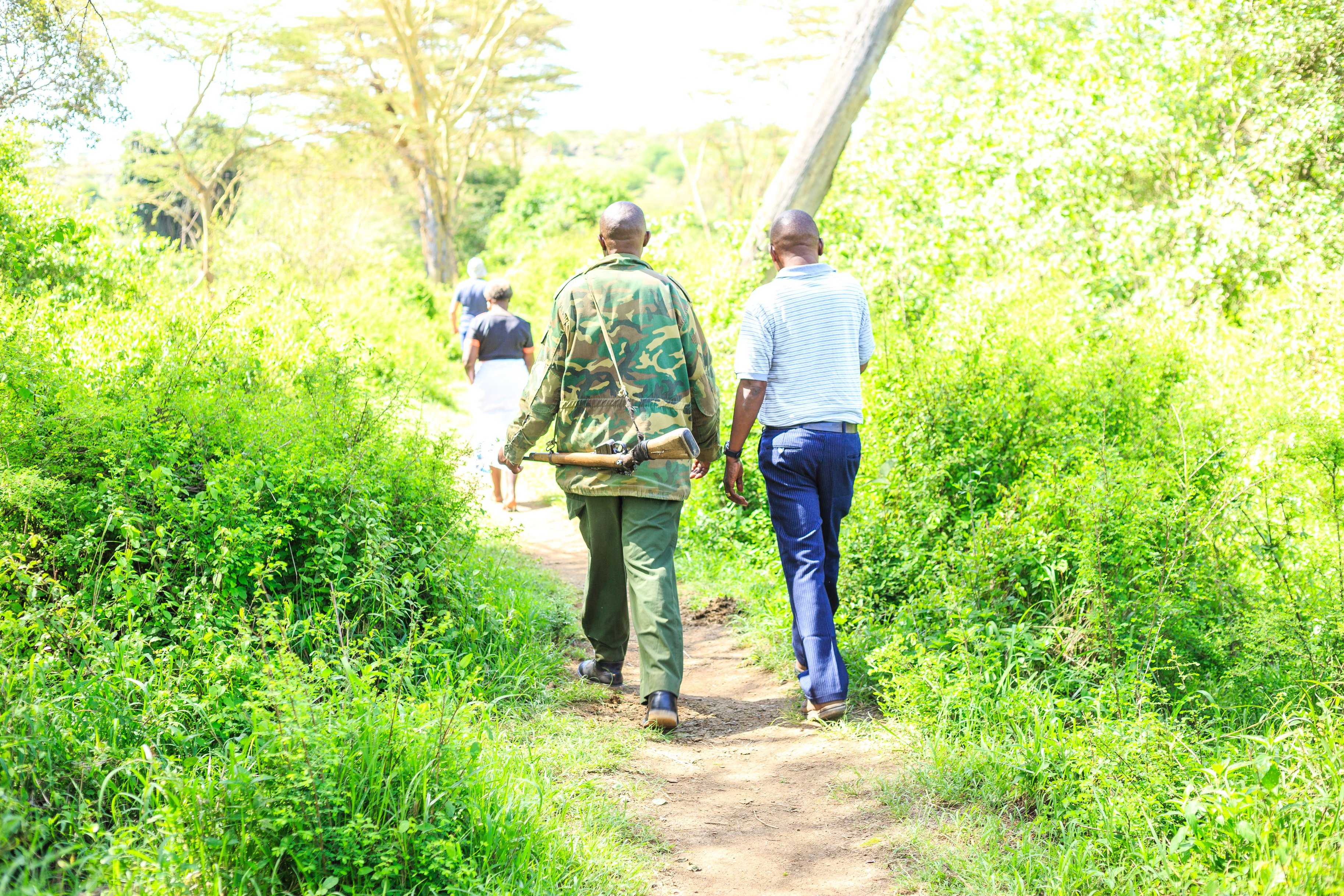
A ranger walking with tourists in Nairobi National Park, Kenya.
Trekking vs backpacking
Backpacking, in the context of trail travel, means carrying everything you need with you like your tent, sleeping system, food, cooking equipment, on your back for the duration of the trip. You are entirely self-sufficient.
Trekking does not require this. On Kilimanjaro, your gear travels with a porter team. On EBC, you stay in teahouses with beds and hot food. On the Inca Trail with Follow Alice, logistics are handled by your guide team. You carry a day pack, and all the heavy lifting is managed for you. This makes trekking accessible to people who would find fully self-supported backpacking beyond their capacity, which is most of us.
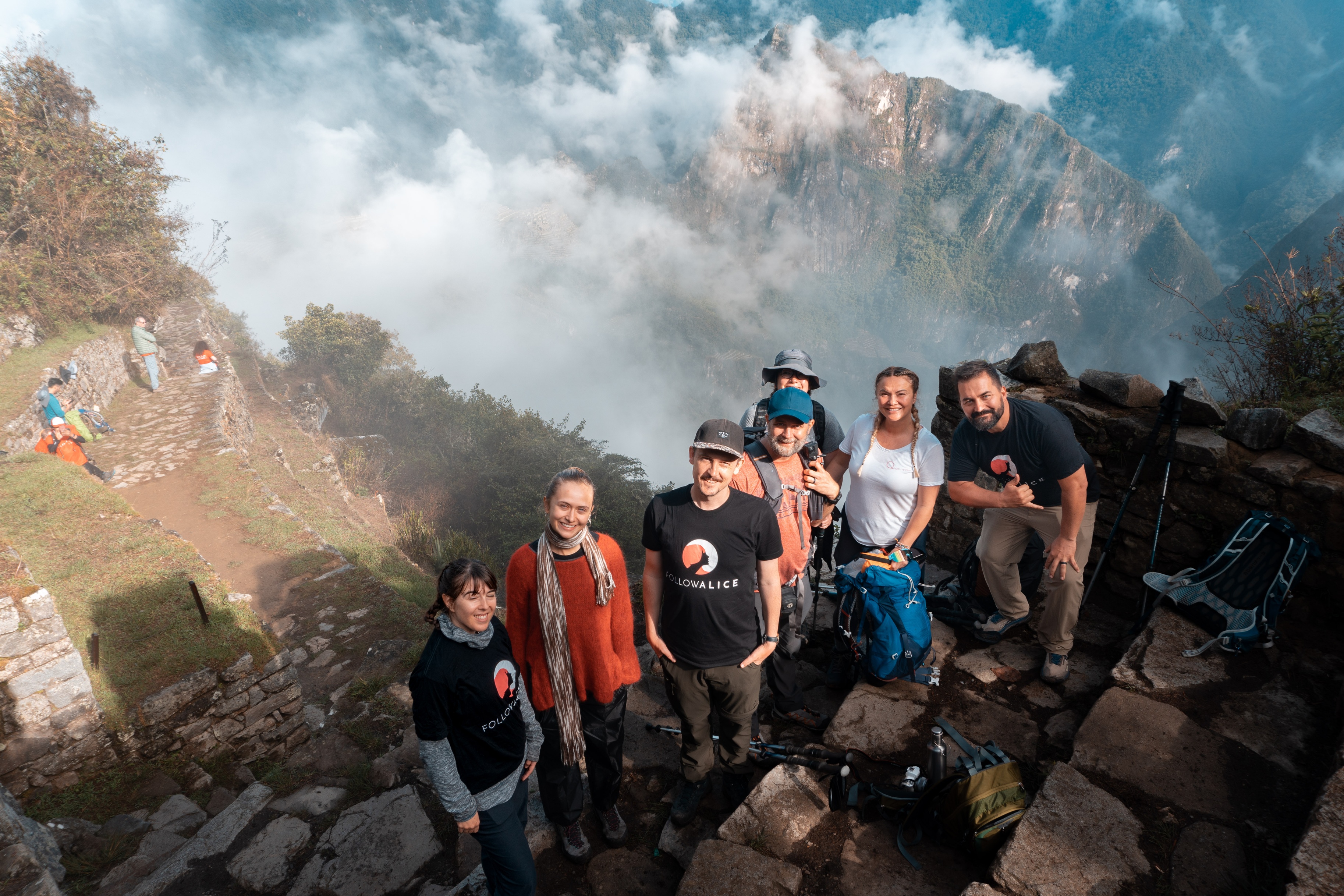
Inca Trail trek group at Machu Picchu in Peru.
Which is right for you: hiking or trekking?
Choosing between hiking and trekking comes down to the kind of experience you are looking for, and how much time, effort and immersion you want from the journey. Let's break it down:
You are probably looking for a trek if:
- You have a bucket-list destination in mind like EBC, Kilimanjaro, the Inca Trail, Manaslu and reaching it requires multiple days of walking.
- You want more than a view at the top and want the journey to be the experience.
- You are willing to train for several months and arrive in solid aerobic condition.
- You have ten days to three weeks available, not just a long weekend.
- Cultural immersion by seeing villages, teahouses, local guides, and high-altitude communities is part of the appeal.
You are probably looking for a hike if:
- You want a memorable day out in a remarkable landscape without committing to a week on the trail.
- You are travelling with mixed fitness levels or ages and need flexibility in how far you go.
- You are new to walking in wild or elevated terrain and want to build confidence before taking on something longer.
- Your trip has limited time, and a full multi-day trek does not fit around other plans.
- You are in East Africa and keen to combine wildlife viewing with some time on foot — a morning hike, afternoon safari.
There is no wrong answer here, as both activities can be extraordinary. The question is which one fits your life, time, and current fitness level.
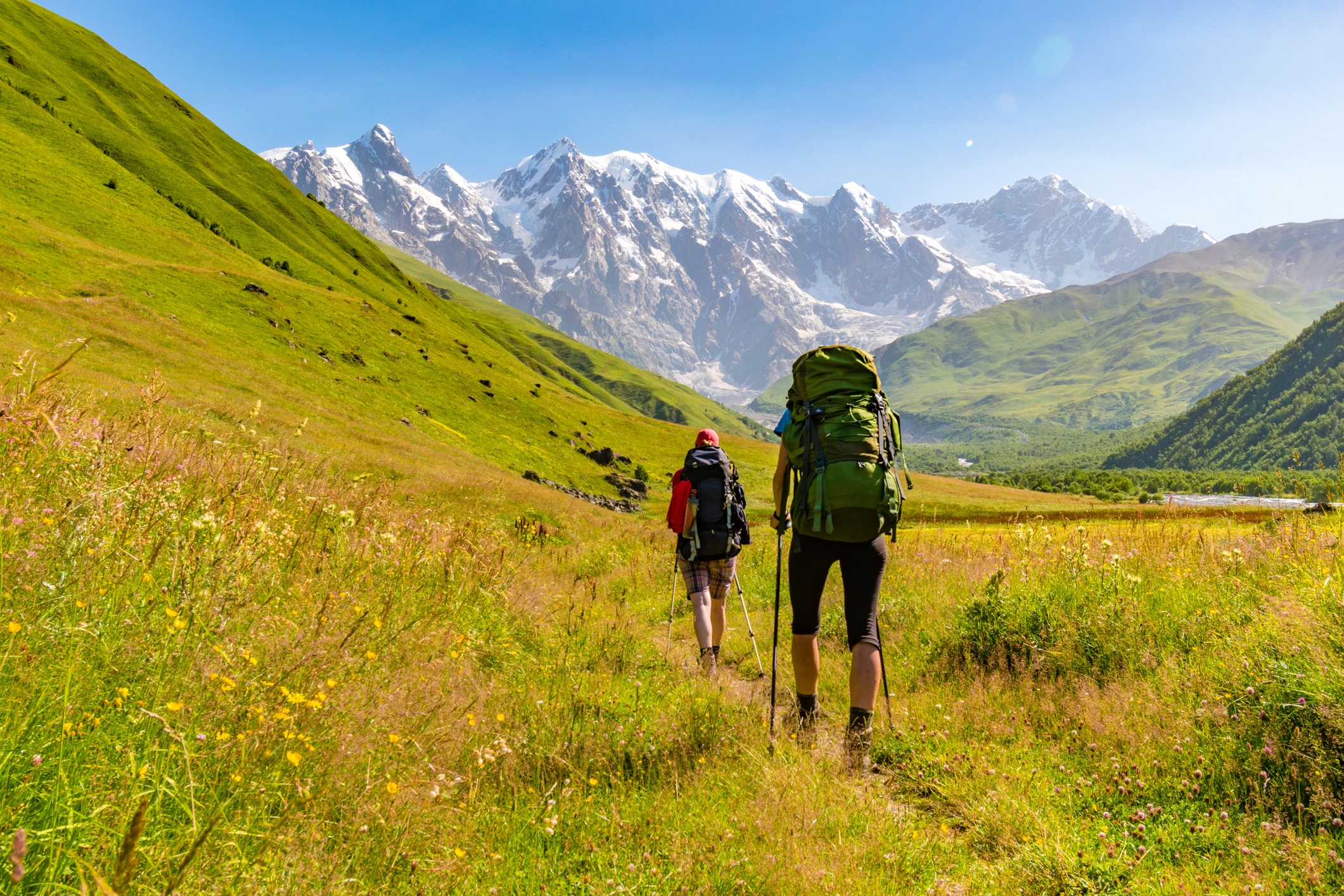
Hikers are making their way along the trail, taking on the walk step by step.
Ready to start planning? Follow Alice runs both
If you are after a guided day hike in the African bush or a three-week trek to Everest Base Camp, Follow Alice has been doing this for years. Our team has walked these routes, slept in the teahouses, tracked the gorillas, and guided people of all fitness levels through some of the world's most extraordinary landscapes.
If you know what you are after, browse our full trip portfolio. If you are still working it out, our team is happy to talk through what suits your fitness, your timeframe, and your idea of a proper adventure. Browse all Follow Alice treks and hikes and find the one that best suits you.