



With the situation in the Middle East so uncertain, like a storm throwing every flight schedule off course, there’s no question that thousands of travellers are feeling nervous about flying. Stories on social media and in the news of passengers stranded at airports, unable to catch their flights, paint a daunting picture for anyone planning a trip.
Right now, many travellers aren’t just worried about the destination; they’re worried about the journey itself. The war involving the United States, Israel, and Iran has disrupted some of the world’s most important flight routes. Most travellers find themselves stopping in major regional hubs such as Dubai, Doha, or Abu Dhabi, which serve as crucial connecting points between Europe, Asia, Africa, the Americas, and beyond.
As a result of the war, countries across the region have imposed airspace restrictions or closures at different times. Airlines have had to reroute or suspend services, and the knock-on effects are being felt far beyond the Middle East. Flights have become more unpredictable, more expensive, and, for many travellers, more stressful.
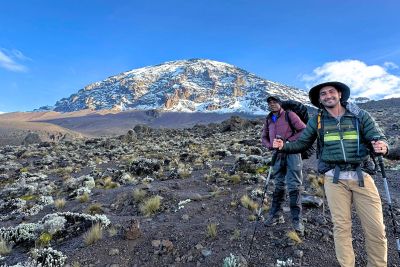
That uncertainty hits adventure travellers particularly hard. These aren’t short city breaks with dozens of easy substitutes. A Kilimanjaro climb, an Everest Base Camp trek, or a gorilla safari in East Africa is often a once-in-a-lifetime trip, planned around annual leave, months of training, permits, guides, domestic transfers, mountain logistics, and carefully timed itineraries.
If you’re researching a trek in Nepal, a climb on Mount Kilimanjaro, a safari in Kenya or Tanzania, a journey to Peru, or gorilla trekking in East Africa, the current conflict likely makes you pause and ask a very reasonable question: Is this still safe, and is it sensible to book?
The right question isn’t just, “Should I still travel?” It’s: “What’s really happening, what are the actual risks, and what’s the smartest way to plan and book an adventure trip right now?”
At Follow Alice, we’re here to tell you that many adventure trips are still absolutely viable, but how you route, book, and protect them matters more than ever. Our team is ready to take that stress off your shoulders so that you can focus on the adventure ahead. Your safety will always be our top priority.
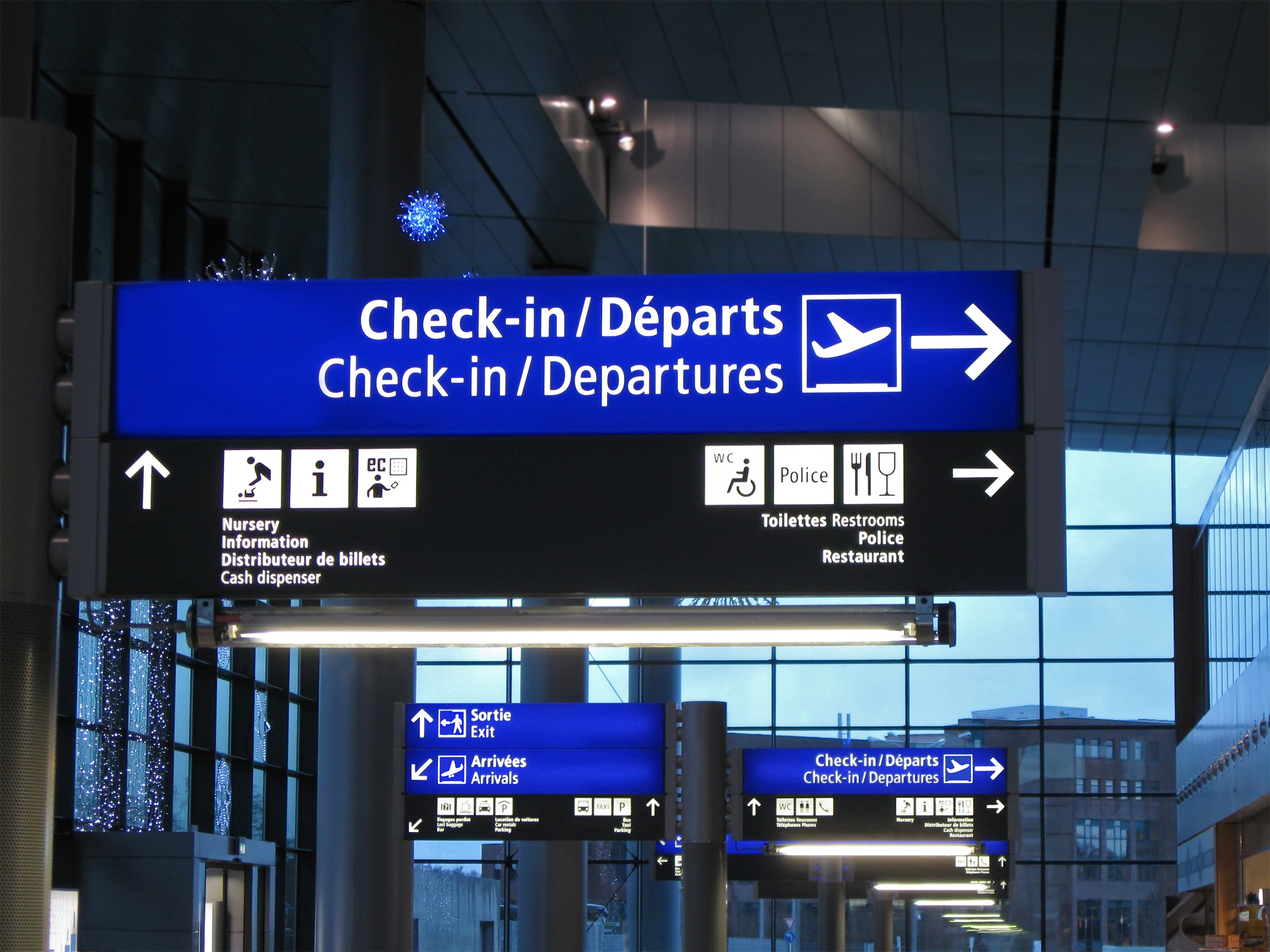
Inside an airport.

How the Middle East war is affecting your flights
The biggest issue is not that the whole world has become unsafe to visit. The issue is that global flight networks are under strain.
The Middle East sits at the centre of many long-haul routes linking Europe, Africa, Asia, North America and beyond. Gulf carriers and regional hubs have long been popular because they make it easy to reach places that are otherwise awkward to access. It also gives travellers a break from their final destination. When those routes are disrupted, the effects ripple across the entire system.
At the moment, airlines are dealing with three overlapping problems:
1. Airspace restrictions and rerouting
Airlines are avoiding or suspending routes that would normally pass through parts of the Gulf and wider Middle East. That means longer flight times, more operational complexity and fewer available routings.
2. Higher fuel costs
Jet fuel prices have risen sharply amid disruption to energy flows through the region. The International Air Transport Association has warned that the conflict has exposed major vulnerabilities in jet fuel supply, particularly for markets that depend heavily on the Persian Gulf.
3. Higher fares and lower flexibility
As seats disappear from some schedules and airlines absorb higher costs, many long-haul fares have increased. Several carriers have already added fuel surcharges or adjusted fares on international routes.
With that said, it doesn’t mean planes have stopped flying. It means the margin for error is smaller. One cancelled flight can now trigger a much larger chain reaction than it would in a more stable market.
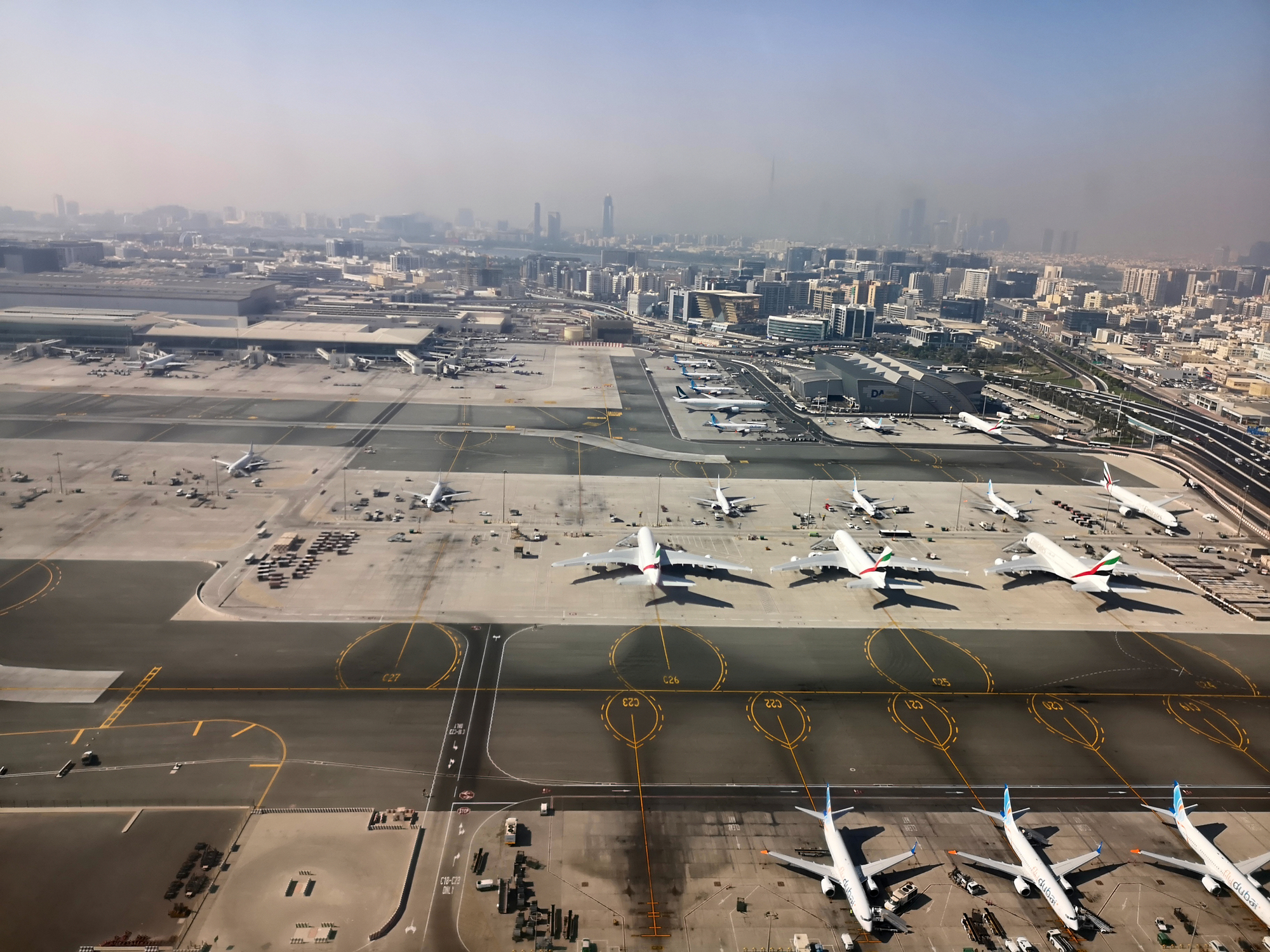
Dubai Airport is the home port for Emirates Airlines and one of the biggest hubs in the world.
Learn more: A step-by-step guide for planning adventure travel
Planning an adventure trip amid the Middle East war
Adventure travel works differently from mainstream package travel. If your beach holiday gets delayed by a day, it’s annoying. If your trekking flight gets delayed by a day, you may miss your guide briefing, your internal connection, your permit window, your porter team or your carefully built acclimatisation schedule. That’s why this moment calls for a slightly different mindset. You don’t need to panic. But you do need to plan with more intention.
The main concerns we’re hearing from travellers right now are these:
- Is it safe to fly long-haul?
- Will my route transit through the Middle East?
- Could cancellations derail the trip?
- Should I postpone and go somewhere else?
- What happens if something changes while I’m already en route?
These questions can only be answered based on whether you have booked your flight or not. Not all flight routes are operating reliably at the moment. Some connections are limited, others have been temporarily suspended, and airspace restrictions can change with little notice. This is why choosing the right route, timing your flights carefully, and having the support of a knowledgeable operator like Follow Alice is more important than ever. With the right planning, you can avoid unnecessary delays, minimise risk, and make sure you get to your destination as smoothly as possible.
And if you’ve already booked your trip, you’re not on your own. Follow Alice is actively monitoring flight schedules, airspace restrictions, and destination-specific updates so we can advise you in real time. If your flights are affected, we’ll help:
- Re-routing flights through alternative hubs or safer airspace.
- Adjusting itineraries to account for delays or cancellations.
- Coordinating with local operators to ensure guides, transfers, and accommodations are ready when you arrive.
- Providing expert advice on risk, safety, and timing so you can travel with confidence.
For us, it's to make sure that even in an unpredictable travel environment, your adventure remains feasible, safe, and as smooth as possible.

A group of trekkers enjoying a trek.
Learn more: How to stay healthy when you travel – 13 solid strategies
So how do you get there without relying on Gulf hubs?
This is where many articles have been surprisingly unhelpful. A lot of reporting says “travel may be disrupted” or “Middle East transit hubs are affected”, but doesn’t answer the question travellers actually care about: How do I get to my holiday destination? There are still very workable alternatives. The better route strategy is to think Africa and Europe-first, not Gulf-first.
If you’re flying from the UK, Europe or North America, the most resilient booking strategy at the moment is often to route via major European and African hubs such as:
- Amsterdam
- Paris
- Brussels
- Istanbul
- Addis Ababa
- Nairobi
These routings are not immune to delays, but they are generally less exposed than itineraries that depend entirely on Gulf transits. You will also not be flying over the Middle East and will be safer in the air.
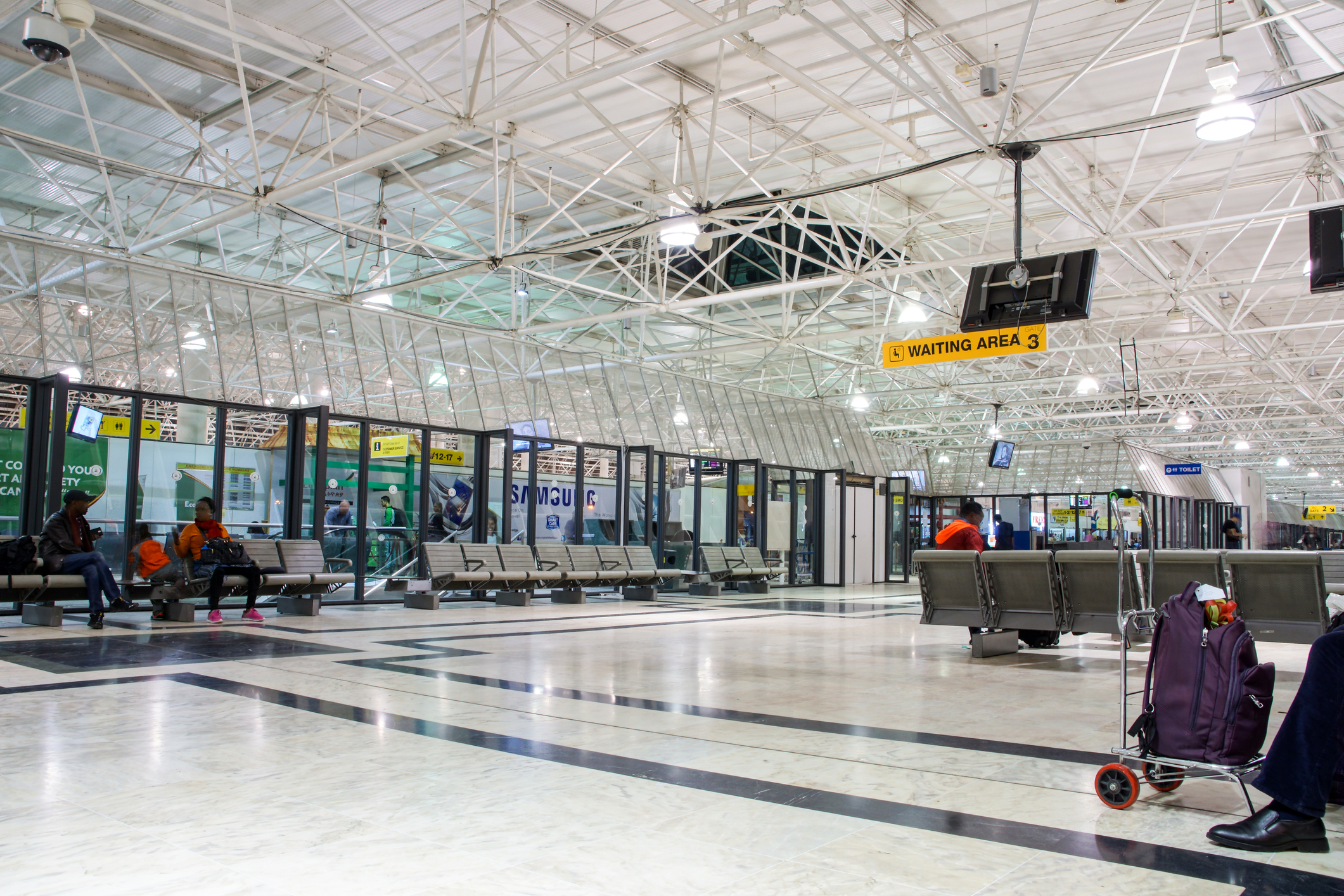
A waiting area inside Addis Ababa International Airport in Ethiopia.
Examples of more reassuring routings for adventure travellers
For Kilimanjaro, Tanzania:
- British Airways to Nairobi, then onward to Kilimanjaro.
- KLM via Amsterdam to Kilimanjaro or via East African gateways.
- Ethiopian Airlines via Addis Ababa.
- In some cases, Brussels Airlines via Entebbe or Kigali connections, depending on the schedule.
For East Africa safaris:
- London or Europe to Nairobi on non-Gulf carriers.
- Europe to Kilimanjaro, Arusha, Kigali or Entebbe via European or African hubs.
- Kenya Airways and Ethiopian Airlines remain especially useful for regional onward links.
For Nepal:
- Turkish Airlines via Istanbul.
- Air India or other South Asia routings via Delhi.
- Europe-to-India-then-Kathmandu is often a more comfortable fallback than relying on Gulf connections.
For Peru:
- Direct from North America: Miami, New York, Houston.
- Europe direct: Madrid, Amsterdam, Paris.
- Latin America connections: Panama City (Copa Airlines), Bogotá (Avianca), São Paulo (LATAM).
It's important to remember that you often do not need to transit through the Gulf to reach your adventure destination. It just might mean a longer flight, and if you’re nervous about it, you shouldn’t feel locked into those routings.
Is it safe to travel during the US–Israel war with Iran?
This is where nuance matters. Yes, flying is still highly regulated, and airlines are actively avoiding risk. Commercial aviation does not simply “hope for the best” in conflict situations. Airlines constantly assess route safety using government notices, airspace restrictions, NOTAMs and their own operational risk teams. When a corridor is deemed unsafe, it is rerouted or suspended. IATA has explicitly stressed that conflict-zone risk management and airspace closures are central to airline safety decision-making right now. With this information, that should reassure travellers who are worried that planes are being sent through danger casually. They are not. It’s important, though, to remember that “safe” and “smooth” are not the same thing. A route may still be safe to operate while also being more likely to be:
- Delayed
- Rerouted
- Rescheduled
- Cancelled at short notice.
- More expensive to replace if disrupted.
This matters. For most travellers, the problem right now isn’t danger at the destination, it’s getting there. So if you’re asking if it’s unsafe to book a trek in Nepal or a safari in Tanzania, the answer is no. These trips can still go ahead safely. The risk comes from booking carelessly by choosing the cheapest flights, relying on uncertain connections, or travelling without support. This is when delays and problems happen. With the right planning and help, your adventure can go smoothly.
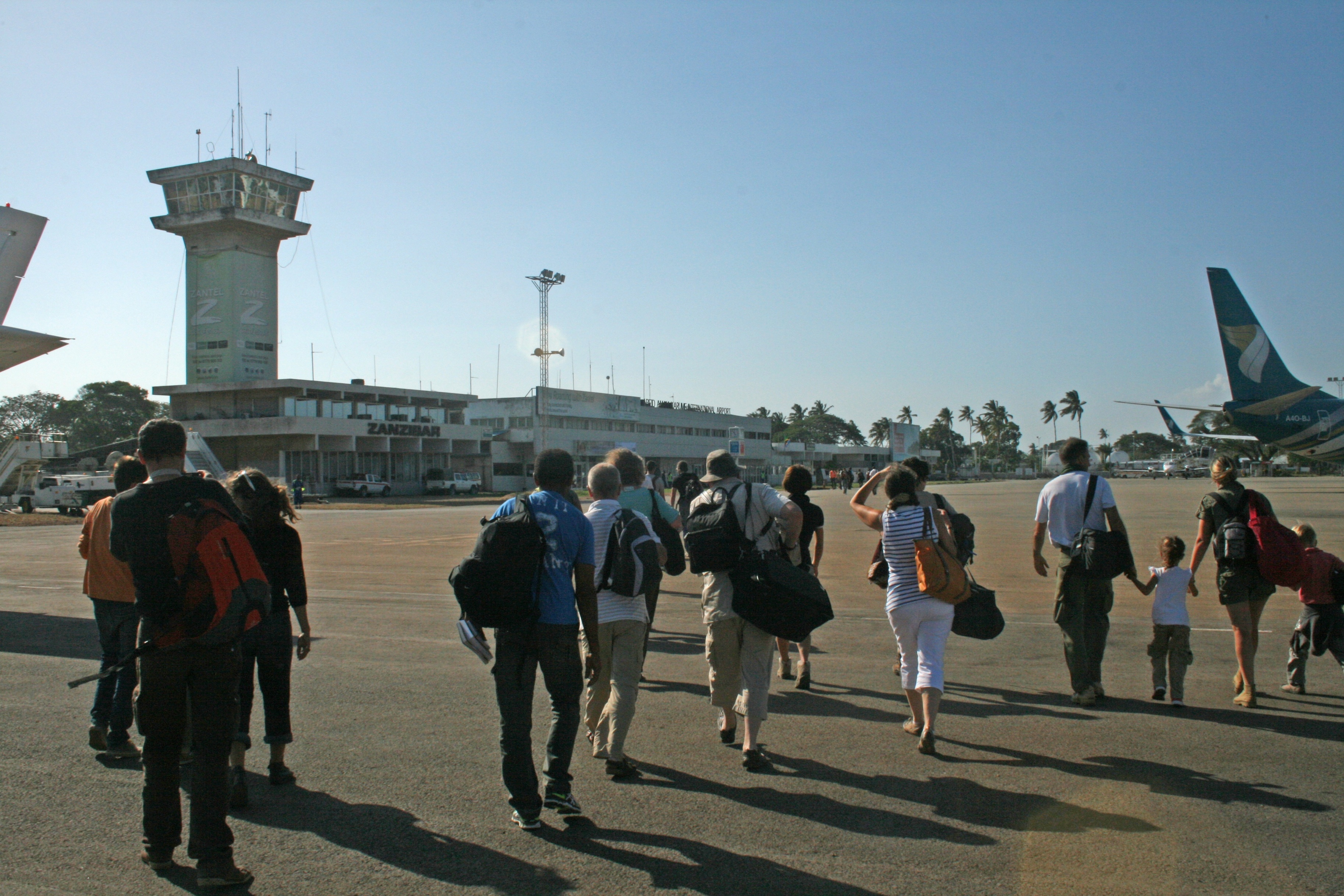
Tourists arrived at the international airport of Zanzibar in Tanzania.
Learn more: 10 science-supported reasons for adventure travel
If you’re already booked and feeling anxious, don’t rush to cancel
This is one of the most important practical points. A lot of travellers panic-cancel when headlines worsen. In many cases, that is the wrong move. If your airline is still operating your itinerary and your dates are not yet covered by a disruption waiver, cancelling voluntarily can leave you with less protection, not more.
Airlines often introduce:
- Fee waivers
- Free date changes
- Penalty-free rebooking
- Cancellation options
- Disrupted travel policies within specific travel windows.
But those protections usually apply only once the airline formally changes or cancels the booking. So if you’re nervous but your trip is still weeks away, the smarter move is often to:
- Monitor, don’t panic.
- Wait for the airline to move first if a disruption seems likely.
- Keep all booking records and fare rules.
- Talk to your operator before making unilateral changes.
The last point is especially important for adventure travel. Your flight decision should not be made in isolation from the rest of your itinerary.

A group of travellers setting out on a gorilla trek.
{{leadmagnet-one}}
How Follow Alice handles flight disruptions
This is exactly where a good operator matters. When flights unravel, what travellers need most is not generic sympathy. They need real coordination.
This means:
- Moving airport transfers.
- Adjusting hotel nights.
- Shifting trek start logistics.
- Reworking internal flights or road transfers.
- Communicating with guides and local teams.
- Helping the traveller salvage the trip, not simply “stick to policy”
This is not theoretical for us. One recent traveller, Daniil Yazovsky, had his flight to Nepal reverted and then cancelled because of the Iran-related disruption. Instead of the trip falling apart, our team reorganised the logistics, adjusted the plan and helped keep the trek on track. He still made it to Nepal and still completed the adventure.
His words say it best:
We did an Everest Base Camp track in March. They organised the trip end-to-end: airport pick-up, accommodation throughout the trek, guide and porter, and an introduction session. Everything was top-notch. Special thanks to our guide Aakash and porter Nara, who made our trek very interesting and so much easier! And additional thanks to the Follow Alice team, who were very flexible when our trip got delayed because of the unexpected situation where our flight was cancelled, and we had to rebook it. Despite all the turbulence, the trek happened, and we reached the EBC.
This is what true flexibility looks like. Right now, the real question isn’t just, “Can I travel?” It’s: “If something goes wrong on the way, who will be there to help me?”
How to book smartly right now if you’re planning a big trip
With all the stress, this is not the moment to book on autopilot. Airline schedules are shifting, airspace restrictions are changing, and some connections are suddenly unreliable. Despite the uncertainty, you can still travel if you do the following:
1) Prioritise routing over bargain-hunting
The cheapest ticket is not always the best ticket. A £200 saving disappears very quickly if your itinerary includes:
- A short self-transfer
- A vulnerable Gulf hub connection
- Separate tickets with no through protection
- A long-haul arrival the same day your trek begins
Pay attention to:
- Airline alliance protection
- Connection times
- Whether your bags are checked through
- Whether your itinerary is on one ticket
- How easy it is to rebook if something shifts
2) Build a buffer day
This is one of the best pieces of advice for any adventure trip right now. If you’re heading to Nepal, Kilimanjaro or East Africa, arrive at least one full day early, and in some cases two.
This buffer can protect:
- Your trek briefing
- Your safari departure
- Your domestic flight
- Your acclimatisation plan
- Your sanity
A buffer day costs far less than a derailed itinerary.
3) Buy travel insurance that actually covers disruption
A lot of travellers buy insurance and assume they are protected. Then they discover too late that “disruption” is narrowly defined.
Read the wording for:
- Trip interruption
- Missed departure
- Delay cover
- Rerouting
- Airline insolvency
- Conflict-related exclusions
- Emergency accommodation
This is not exciting, admin, but it matters.
4) Use airline apps and official alerts
Not Reddit. Not TikTok. Not a friend’s cousin who saw something on X.
Use:
- Your airline’s app
- Airline email/SMS alerts
- Official government travel advisories
- Your tour operator’s communications
The U.S. State Department and the UK government have both warned that current Middle East disruption can affect journeys even when your destination is elsewhere. Monitor all the websites carefully to get the latest and most factual information.
5) Choose an operator that can adapt
This is the big one. When you book a complex adventure, you are not only buying the destination. You are buying the operator’s ability to handle uncertainty.
That includes:
- Flexible pre-departure support
- Route guidance
- Local teams on standby
- Practical reorganisation if flights shift
- Calm communication when things get messy
This support is worth far more in a disrupted environment than a tiny saving on paper.

Follow Alice summit team photo in Kilimanjaro.
Learn more: 7 excellent reasons to travel with Follow Alice
Should you postpone and choose a different destination?
Sometimes, yes. But not automatically. If you are uncomfortable flying long-haul right now, or if your ideal routing depends heavily on Gulf hubs, it may be worth considering alternatives that are easier to reach with fewer moving parts.
For example:
- Tanzania may feel more straightforward than some Gulf-bound trips.
- East Africa may still be very viable via European or African hubs.
- Nepal remains highly worthwhile if routed carefully.
- Some travellers may prefer to travel later in the year if they want more schedule stability.
Postponing a trip is never an easy decision, and it’s completely natural to feel anxious when headlines are full of uncertainty. Ideally, it should be a thoughtful logistical choice, not a reaction driven by fear. Adventure travellers are often more resilient than they realise; they’re used to unpredictable weather, sudden plan changes, and challenges on the trail. The key is to bring that same patience and adaptability to the journey itself, from flights to transfers, and approach it with the same calm, steady mindset you’d rely on during any adventure.

A group of travellers pose for a photo in Uganda.
Learn more: 12 reasons why good tour guides are so important
Travel disruptions in the Middle East don’t have to stop your adventure
Yes, the world is more disrupted than it was a month ago. Yes, long-haul travel is more expensive and less predictable. Yes, the war in the Middle East has made flight planning more complicated, especially for travellers who normally transit through Gulf hubs.
But that doesn’t mean your dream trip to Nepal, Kilimanjaro, East Africa, or Peru is off the table. The difference lies in how you book: with clearer eyes, smarter routing, built-in flexibility, and strong support. That’s what separates a stressful trip from one that’s still exciting and unforgettable.
At Follow Alice, we don’t ignore the challenges; they’re real. But our experience shows that with the right planning and a team that knows the routes, transfers, and contingencies, far more is still possible than headlines suggest. When something goes sideways, you don’t need spin; you need people who can make a plan work.
If you’re planning an adventure and unsure about flights, be it for Nepal, Kilimanjaro, East Africa, Peru, or another long-haul journey, we can help you choose resilient routes, avoid fragile transit hubs, and build flexibility into every stage of your trip. Talk to Follow Alice before you book your flights, and we’ll help you get there the smart way that is safe, smooth, and stress-free.