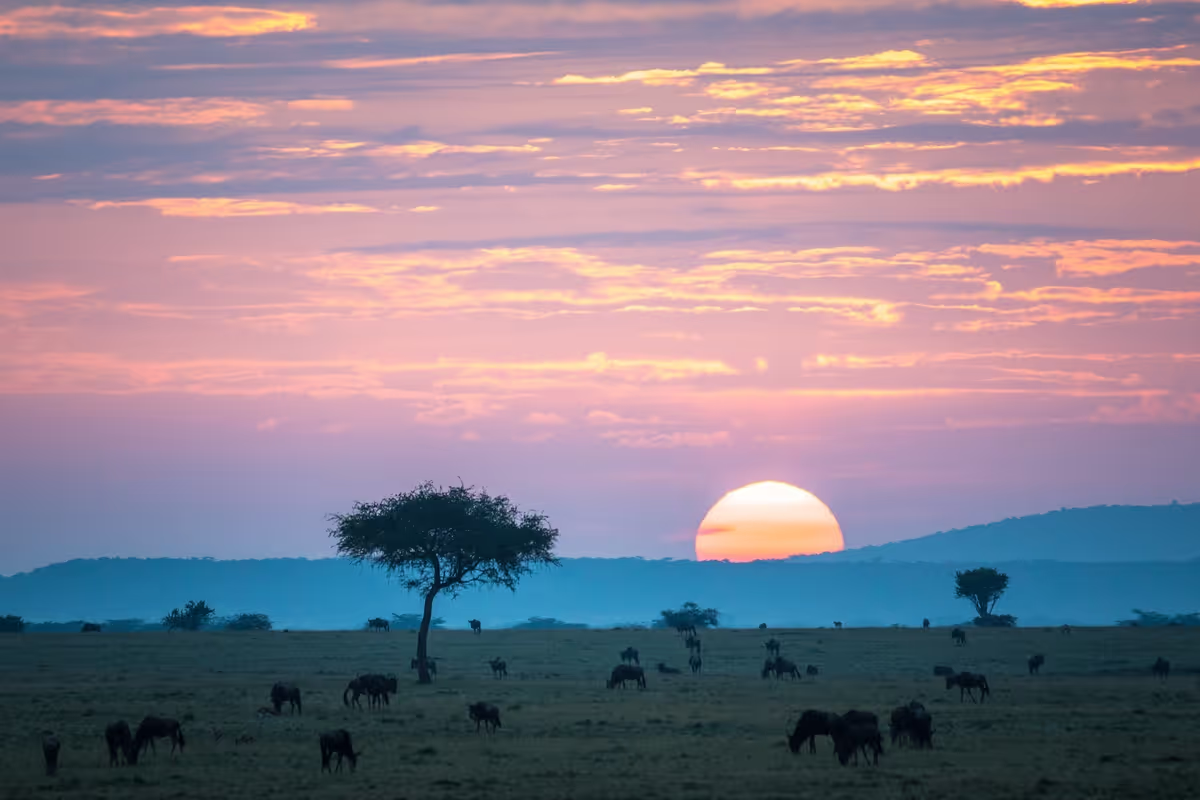




Standing over a metre tall, with a massive, shoe-shaped bill and an unblinking stare, the shoebill is one of Africa’s most enigmatic creatures. For wildlife lovers and birders, seeing one in the wild is a true bucket-list moment, and East Africa offers the best chance to make it happen. These birds haunt freshwater marshes and swamps, earning them the nickname the “king of the marshes.”
Although often called a stork, the shoebill is more closely related to pelicans. It can be found across freshwater wetlands in southern Sudan, eastern Congo, Rwanda, Uganda, western Tanzania, and northern Zambia. It's important to note that these birds are occasionally seen around Akagera National Park in Rwanda, but they move between wetlands along the Rwanda and the Tanzanian border, making sightings rare. Shoebills rarely migrate, moving only when their habitat changes, food becomes scarce, or human activity disturbs them.
The species is classified as Vulnerable, meaning it faces a high risk of extinction. Current estimates suggest only 3,300 to 5,300 mature individuals remain in the wild, with numbers declining. Threats include hunting, disturbance of nesting sites, habitat loss, and drought driven by climate change. Shoebills are also targeted by the illegal live bird trade, which carries a high mortality rate during capture, transport, and captivity.
For those keen on seeing a shoebill, Uganda remains the more reliable option. This article will cover how to plan a trip and which locations offer the best chances."
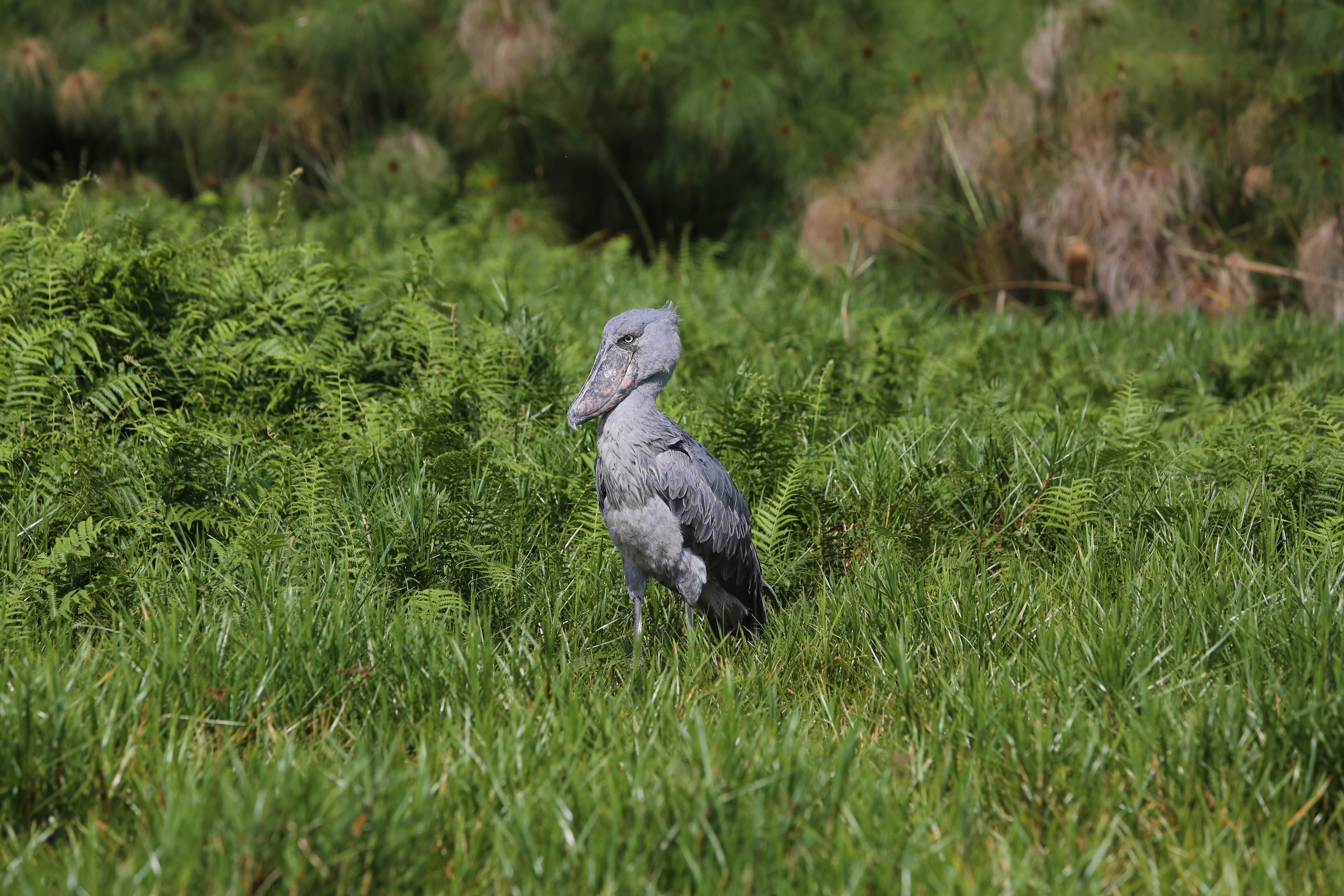
Rare shoebill stork (Balaeniceps rex) photographed in the wetlands of Lake Victoria, Uganda.
Learn more: Are you a birder? Then these 9 East African destinations are a must-visit!
Where can I see a shoebill stork?
This rare, prehistoric-looking bird inhabits freshwater swamps and wetlands across parts of East and Central Africa, favouring quiet, shallow waters with dense reeds where it can patiently hunt fish and amphibians. Its specialised habitat and solitary nature make it notoriously elusive, so spotting one in the wild is a truly unforgettable experience for any bird watcher. Sightings are rare, which only adds to the sense of wonder when you finally come face to face with this extraordinary bird. Let's have a look at where you can find them:
Uganda
If seeing a shoebill is at the top of your wildlife wishlist, Uganda should be your first stop. The country’s sweeping wetlands, strong conservation initiatives, and local community engagement support one of the largest remaining populations of these elusive birds. You can find shoebills at:
1. Mabamba Swamp
Known as Uganda’s shoebill capital, Mabamba Swamp, located on the shores of Lake Victoria near Entebbe, is widely regarded as the world’s premier destination for spotting Shoebill Storks. This large marsh, full of winding channels and floating plants, is the perfect place for these rare birds to hunt. The calm, misty mornings and abundant wildlife visit the wetlands, and it will be an experience you’ll never forget.
How to spot them:
Local guides navigate traditional canoes through the narrow waterways, quietly scanning the reeds for the telltale silhouette of a shoebill. Early mornings, from around 6 to 10 AM, are the best times when you will be able to spot them.
Why Mabamba?
The swamp is part of a community-based tourism initiative, ensuring that sightings are both ethical and sustainable while supporting local livelihoods. Success rates here are exceptionally high, often exceeding 80 per cent. Beyond shoebills, Mabamba hosts hundreds of bird species, making it a dream destination for birdwatchers.
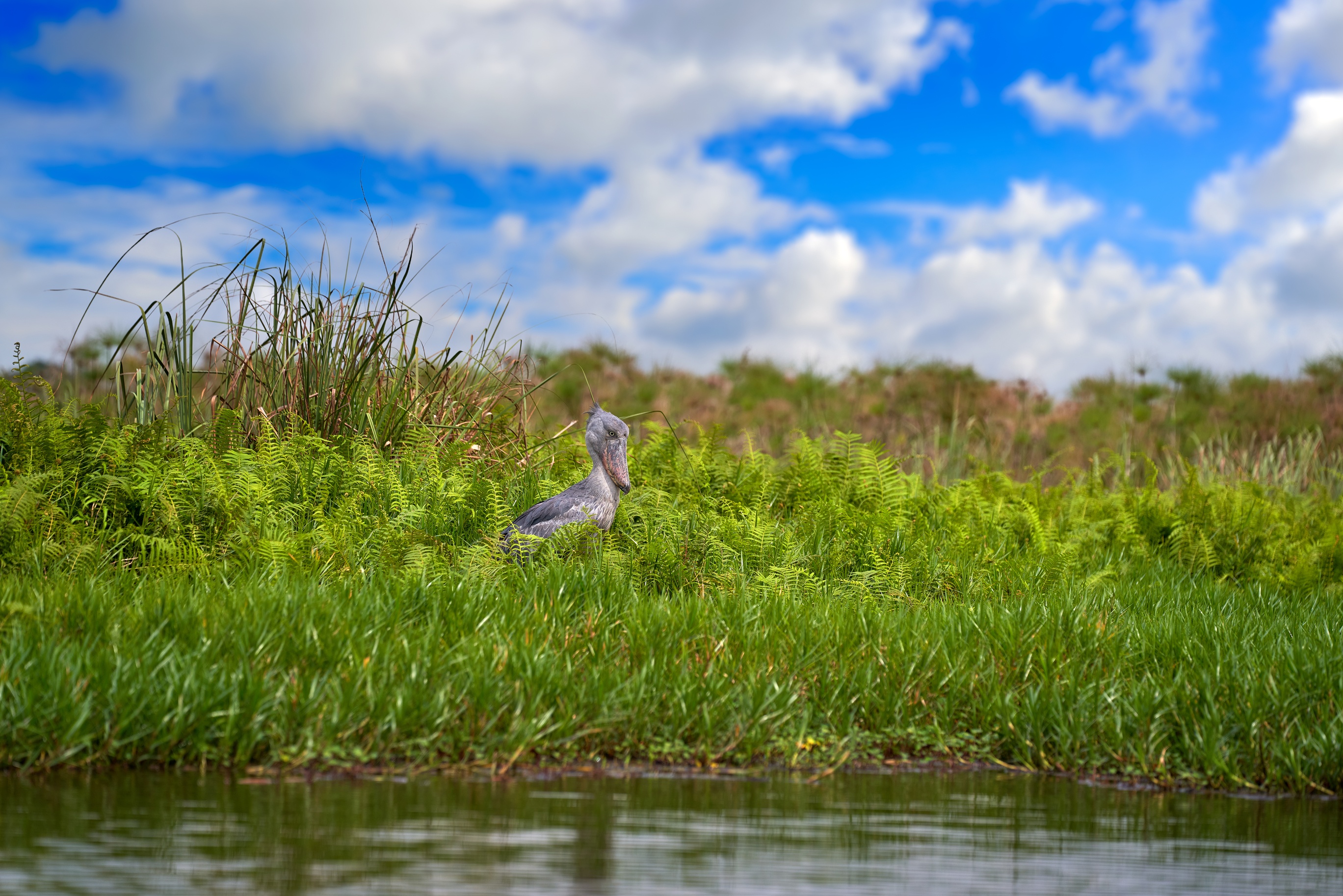
A close-up portrait of a shoe bill in its natural habitat.
2. Murchison Falls National Park
Uganda’s largest national park offers another excellent shoebill opportunity. Boat safaris along the Nile Delta take you through prime wetland habitat where shoebills hunt patiently. Murchison allows you to combine classic African wildlife with elite birding. You might track lions or elephants in the morning, then scan the delta for a shoebill in the afternoon, which will be a rare chance to experience big-game safari and birdwatching in one trip.
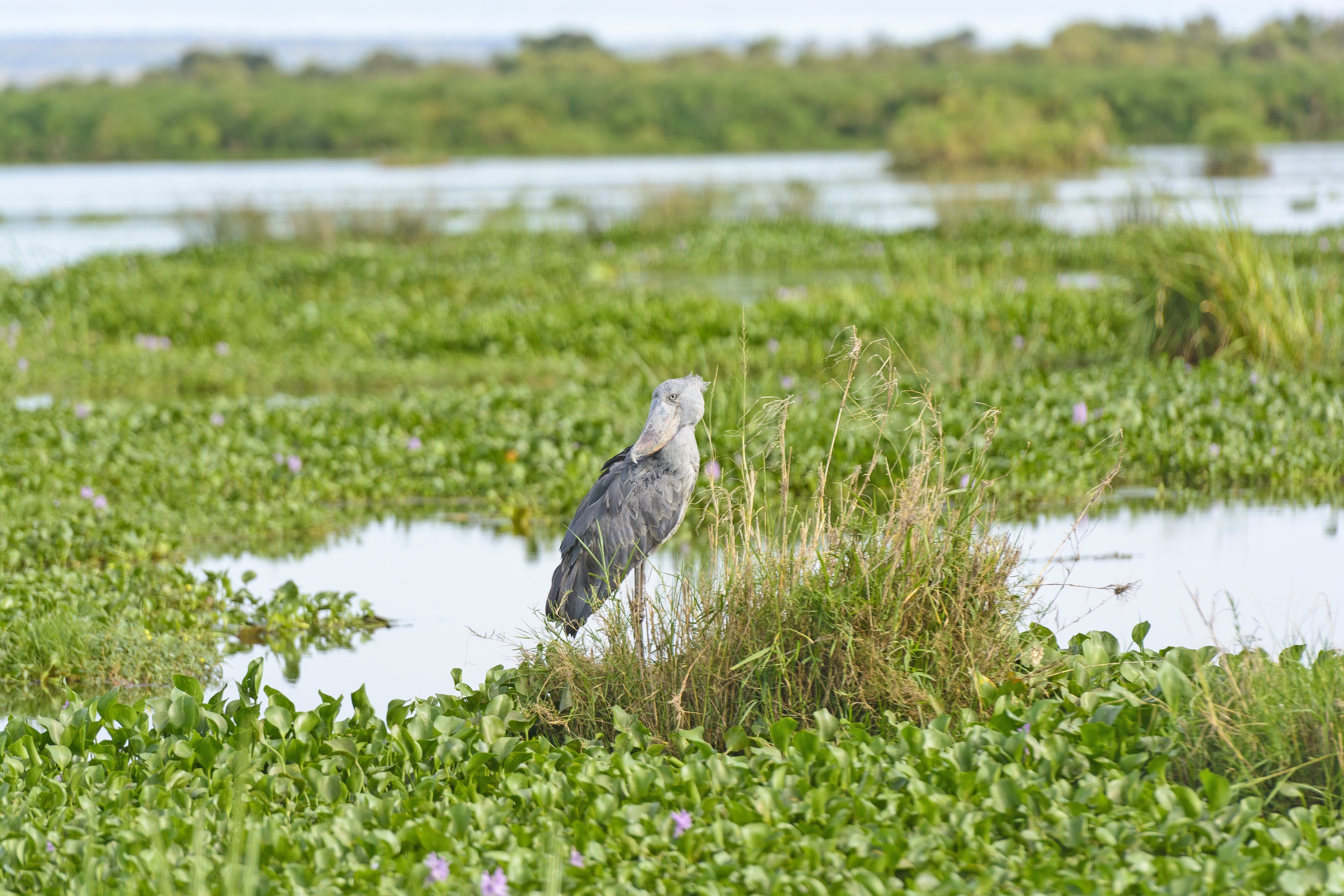
Shoebill seen at the Murchusion Falls National Park.
3. Other Ugandan locations
While Mabamba and Murchison are the headline sites, shoebills can also appear in:
- Ziwa Rhino Sanctuary wetlands
- Queen Elizabeth National Park (Ishasha sector wetlands)
- Semuliki and other remote swamp systems
These sightings are less predictable but contribute to Uganda’s reputation as a global birding hotspot.

Shoebill sighting in Uganda.
{{leadmagnet-one}}
Shoebill stork across East and Central Africa
For those looking to expand their search beyond Uganda, shoebills inhabit wetlands across the region:
1. Bangweulu Wetlands, Zambia
Accessible from East Africa, the Bangweulu Wetlands are another stronghold for shoebills. The floodplains are vast and surreal, with open spaces where the birds can be seen wading in shallow waters. These wetlands are also home to rare black lechwes and thousands of waterbirds. The best time to visit is May–August, when receding water levels make shoebills easier to spot.
2. The Sudd Swamps, South Sudan
One of the world’s largest wetlands, the Sudd is remote and largely unexplored. Shoebills thrive here, but access is limited due to political instability and the need for permits and expert guides. For the dedicated birdwatcher, the Sudd offers pristine wetlands and unmatched sightings.
3. Lake Victoria Marshes (Tanzania and Kenya)
The marshy edges of Lake Victoria occasionally host shoebills. The main areas include Rubondo Island in Tanzania and Ruma National Park in Kenya. Sightings are less predictable, but the experience of gliding through these quiet wetlands is unforgettable.
4. Akagera Wetlands, Rwanda
Though sightings are rare, Akagera National Park in Rwanda has recently become a growing destination for birders. Its lakes and papyrus swamps near the Tanzanian border provide suitable shoebill habitat. Fewer visitors mean a serene, intimate experience, which will be just you, the wetlands, and the hope of a shoebill emerging from the reeds. Rwanda birding tours are growing in popularity, and while it isn’t a shoebill stronghold like Uganda, it offers a quieter, boutique-style experience.


Uganda vs Rwanda: Which is better for shoebill storks?
If spotting a shoebill stork is your top priority, Uganda is the place to go. With the highest success rates and multiple locations to see these rare birds, Uganda is perfect for travellers planning a dedicated birding safari. From the famous wetlands of Mabamba to Murchison Falls and beyond, birdwatchers have plenty of opportunities to encounter the elusive shoebill. For those wondering where to see shoebill storks, Uganda consistently delivers the most reliable experiences.
On the other hand, Rwanda is better suited for travellers whose main goal is gorilla trekking. While shoebill stork sightings in Rwanda are possible, they are less predictable. The country offers a quieter, more intimate wildlife experience, with luxury lodges and compact travel logistics, making it ideal for those willing to trade certainty for comfort and convenience. Many travellers combine the two countries for the ultimate East African adventure, starting with Uganda’s wetlands for birding safaris and ending in Rwanda for gorillas and serene wildlife encounters. This way, you can experience the best of both worlds.
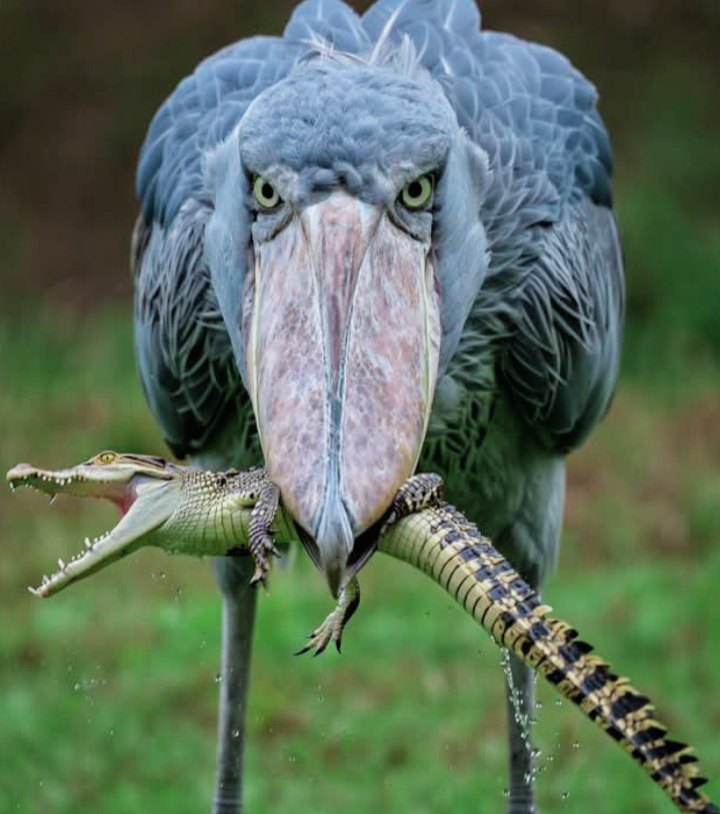
Shoebill seen hunting and catching a baby crocodile.
Learn more: Sipi Falls Trail: From Coffee Farms to the Clouds of Mount Elgon
What is Uganda famous for in birding?
Uganda is home to over 1,000 bird species, which is one of the highest totals in the world, and this is why experienced birdwatchers consider it prime territory. Here, you can expect to see colourful bee-eaters, striking turacos and kingfishers, rare forest endemics, wetland specialists, and unique species from the Albertine Rift. For many travellers, a trip to see the shoebill stork becomes the start of a lifelong love of African birdwatching.
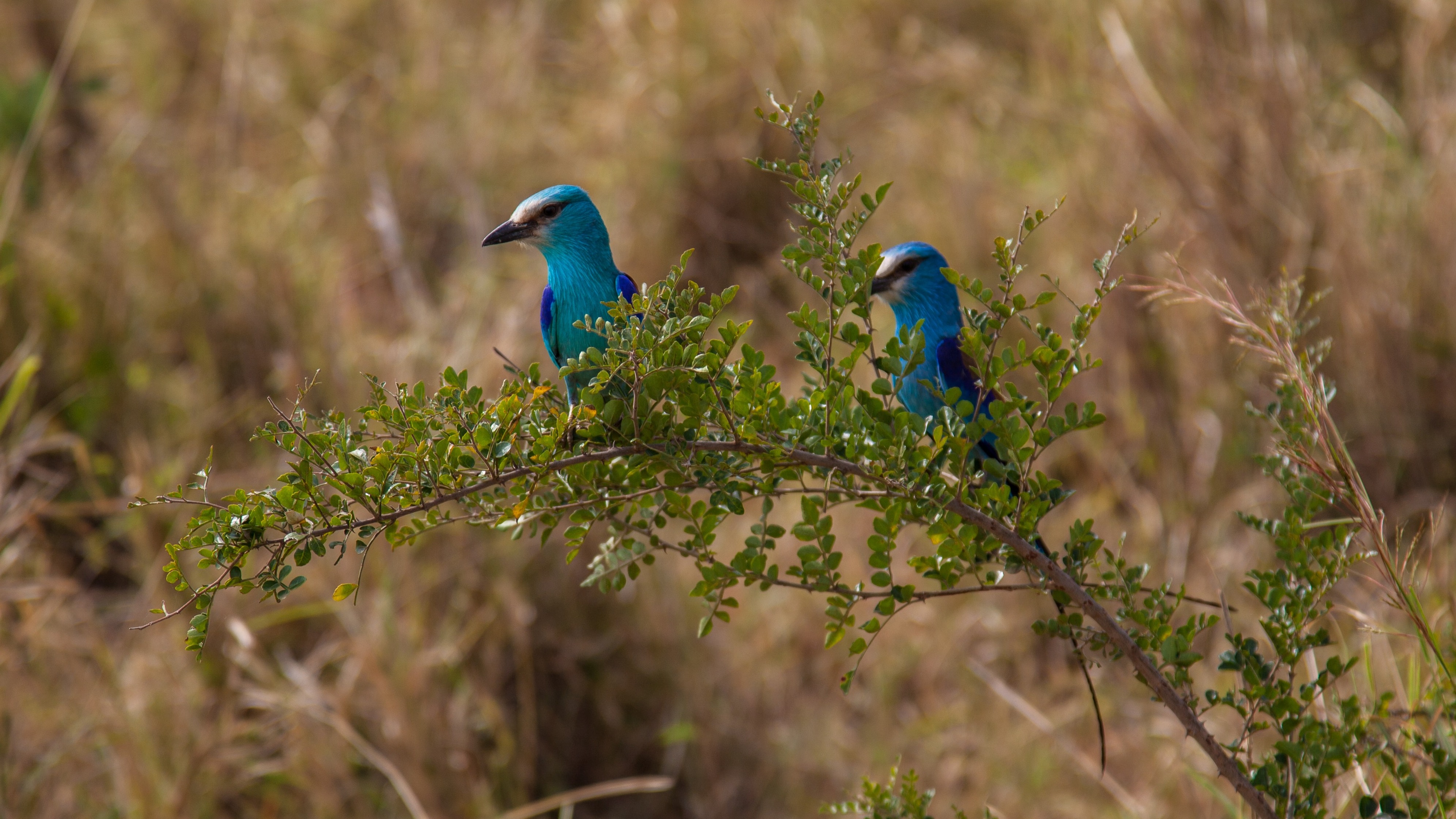
Spotting Blue Birds on safari in Kidepo Valley National Park, Uganda.
Best times for shoebill tracking
Shoebills can be spotted throughout the year, and Uganda can be visited at any time with few restrictions. Roads can flood occasionally, but experienced guides always find a way and know how to navigate the wetlands safely. Shoebills are most active in the early morning, so visits at sunrise give the best chance to see them hunting and moving through the water. Observing their behaviour in the calm light of dawn also makes for the best photography opportunities.
Even though the birds are often solitary and can move between wetlands, guides use local knowledge to locate areas where shoebills are most likely to appear. Patience and quiet observation are important as the birds may remain still for long periods. Trips can be tailored to include multiple wetland areas, increasing the chances of sightings and giving a broader view of the shoebill’s habitat.
What a shoebill safari feels like
A shoebill safari is quiet and slow, full of suspense. Your boat moves gently through tall papyrus, the guide speaking in whispers. Every shadow looks like it might hide something — and then suddenly, you see it: a huge bird standing perfectly still, watching you. It doesn’t fly away, and you have time to take in the moment. Photographers love the calm, birdwatchers love the rarity, and everyone feels the wonder of seeing this amazing bird up close. If you would like more information, feel free to contact our team.
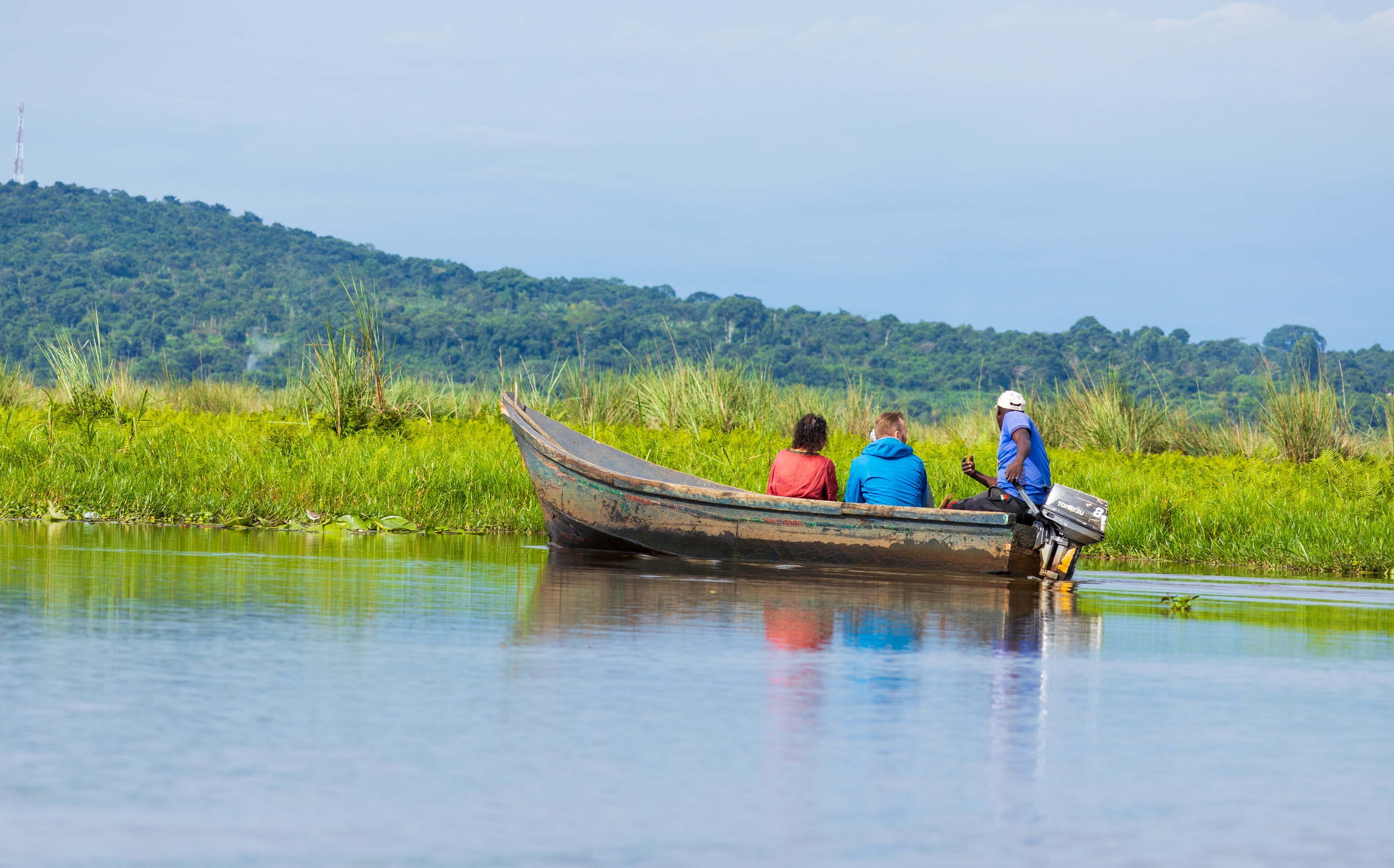
Tourists on a safari by boat, in search of the Shoebill stork on Lake Victoria, Entebbe in Uganda.
{{leadmagnet-two}}
6 things you didn’t know about shoebills
The shoebill stork is one of Africa’s strangest and most fascinating birds. At first glance, it almost looks unreal — part dinosaur, part sculpture, standing perfectly still in the wetlands. But beyond its famous bill and intense stare, there’s a lot more travellers don’t know about this rare species. Here are a few facts that make seeing one in the wild even more special:
1. Shoebills hunt completely alone Shoebills aren’t social hunters. They prefer to work solo, standing motionless for long stretches as if frozen in time. This stillness isn’t laziness; it’s their strategy. When prey comes close, they explode into action with shocking speed.
2. They eat more than just fish Fish are their favourite meal, especially lungfish and catfish, but shoebills aren’t picky. They’ll also eat frogs, snakes, baby crocodiles, and even small mammals. Their wetland diet makes them one of the top predators in their habitat.
3. Their bill is a built-in weapon That giant shoe-shaped bill isn’t just for show. Its sharp edges and hooked tip help grip slippery prey, while its size allows the bird to scoop up water and food in one powerful strike. It’s one of the most specialised hunting tools in the bird world.
4. They look prehistoric for a reason Shoebills are often called “dinosaur birds,” and it’s easy to see why. Their lineage goes back millions of years, and their slow, deliberate movements give them an ancient, almost mythical presence in the wetlands.
5. They communicate by clattering their bills Most of the time, shoebills are quiet, but when greeting mates or defending territory, they make a loud machine-gun-like clattering sound with their bills. Hearing it echo across a misty swamp is unforgettable.
6. The breeding life of shoebills
Shoebills are devoted parents, but their approach to raising chicks is both fascinating and harsh. During breeding, the male and female share duties, taking turns to incubate the eggs. Once the chicks hatch, the female stays close, keeping the young safe, while the male brings food to her, ensuring the chick is nourished until it can follow its mother in the wetlands. Shoebills usually lay two eggs, but survival is rarely equal. More often than not, only one chick survives. Parents focus their care on the stronger chick, leaving the weaker sibling to fend for itself, so it will either starve or be killed by its sibling. They also breed very slowly, which contributes to the species being vulnerable.

Shoebills rarely fly, but when they do, it’s impressive for a bird up to 1.5 m tall and 7 kg.
{{leadmagnet-three}}
A moment with the Shoebill
With all this information, seeing a shoebill stork in the wild is truly something you need to experience for yourself. When you are there, you will see that there’s something almost timeless about watching a shoebill in its wetland home. Standing still among the papyrus reeds, it feels like a creature from another era, moving with patience and precision that demands your full attention. In Uganda or Rwanda, or anywhere in East and Central Africa, seeing one is more than a wildlife sighting; it’s a quiet, unforgettable moment that reminds you of the hidden wonders of the continent's wetlands.
For those willing to rise early, glide through the mist, and embrace the calm of the swamp, the experience is rare, humbling, and very magical. If you’ve ever dreamed of seeing one in the wild, now is the time to start planning your journey and step into a world where the extraordinary still exists. Curious to see one of Africa’s rarest birds? Contact our team to learn more about shoebill storks and the best places to find them in Uganda and Rwanda — a world where time slows, and the extraordinary comes to life.