



Sipi Falls doesn’t announce itself. You don’t always encounter crowds, fences, or a single viewpoint designed to impress upon your arrival. Instead, you walk into it slowly, following village paths that climb away from the plains and onto the lower slopes of Mount Elgon.
The Sipi Falls trail feels lived in because it is. Coffee grows beside the path. Water runs through channels still used today. People move past you on foot because this is how they get around. The waterfalls come later, one by one, shaping the walk rather than defining it.
The result is one of the most quietly rewarding walks in eastern Uganda. Not because it tries to be dramatic, but because it never stops feeling real.
Where are the Sipi Falls in Uganda?
Sipi Falls is located in eastern Uganda, close to the Kenyan border, on the foothills of Mount Elgon. The waterfalls sit just outside Mount Elgon National Park, above the small rural settlement of Sipi.
This region feels very different from Uganda’s more famous safari landscapes. Elevation plays a bigger role here. The air is cooler, the soil is volcanic, and the land is heavily cultivated rather than wild. Farming isn’t something you pass on the way to the trail. It’s part of the trail itself.
Mount Elgon dominates the area without feeling imposing. It’s an ancient volcano with a broad, gentle profile, and its slopes support both agriculture and forest. The mountain shapes rainfall patterns, water flow, and the conditions that allow Sipi Falls, Uganda, to exist in the first place.
Walking the Sipi Falls trail from village paths to mountain air
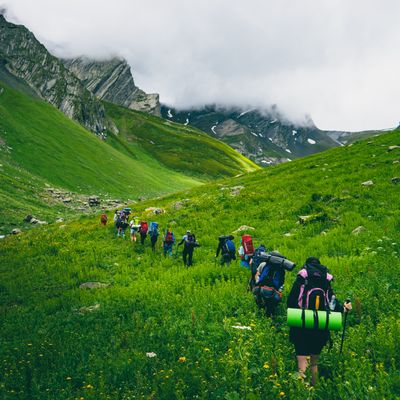
The Sipi Falls trail isn’t a single defined route. It’s a loose network of footpaths that connect farms, homes, viewpoints, and the three waterfalls. These paths weren’t created for hikers. They evolved through daily use, which is why the walk feels natural rather than curated.
The terrain changes constantly. One moment you’re walking between coffee plants and banana trees. A little higher up, the land opens and the air cools. The climb is steady but never aggressive, and you’re rarely aware of how much elevation you’ve gained until you look back.
What defines the Sipi Falls trail is how closely it follows ordinary movement through the landscape.
- Footpaths run through farmland and between homes, reflecting how people move around this part of Uganda.
- The climb happens gradually, with the trail rising toward Mount Elgon without sharp or technical sections.
- Water stays close throughout the walk, with streams and channels feeding the rivers that form Sipi Falls.
- The route builds in stages, revealing the landscape piece by piece rather than pushing you toward a single endpoint.
The pace of the walk makes it easy to include on a longer Uganda itinerary, especially if you’re already spending time on foot elsewhere.
Coffee culture along the Sipi Falls trail
Coffee isn’t an attraction here. It’s a livelihood. Arabica coffee grows exceptionally well on the fertile slopes of Mount Elgon, and most of the coffee along the Sipi Falls trail is produced by smallholder farmers working family plots.
As you walk, you’ll pass coffee plants growing alongside food crops. Beans dry in open yards. Processing happens close to home. Nothing is hidden or staged, which is why it feels so integrated into the walk.
Coffee has shaped daily life in this region for generations, and it continues to do so today. Uganda is one of Africa’s top coffee producers overall. While Robusta dominates nationally, high-quality Arabica coffee thrives around Sipi Falls on the slopes of Mount Elgon.
Some Sipi Falls tours include guided coffee walks where farmers explain how coffee is grown and processed locally. These moments add depth to the walk because they explain why the land looks the way it does.
The three waterfalls of Sipi Falls
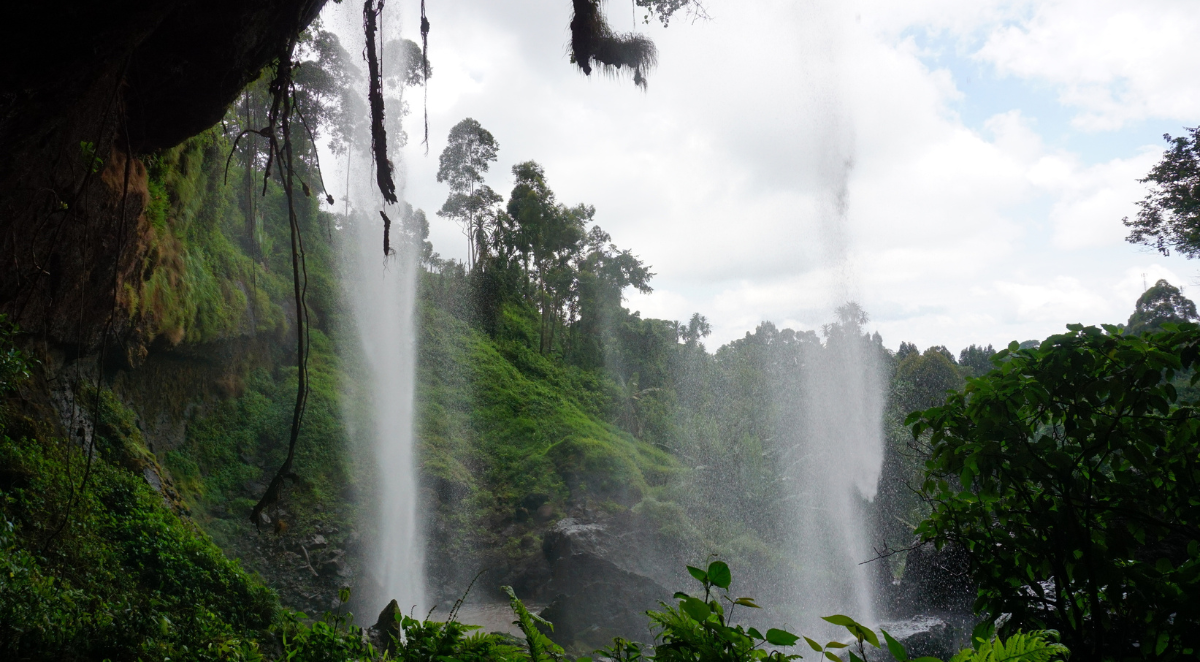
Sipi Falls consists of three separate waterfalls fed by rivers flowing off Mount Elgon. They’re often grouped together under one name, but each fall has its own character and setting.
The lowest waterfall is often the most powerful, especially after rain. It’s wide, loud, and throws mist into the air. The middle waterfall feels more enclosed, with the path narrowing and vegetation closing in around you. The highest waterfall sits closer to the mountain and offers wider views across the plains below, often with cloud drifting through.
Visiting all three creates a natural sense of progression. You don’t arrive at Sipi Falls all at once. You move through it.
Landscape, views, and wildlife around Sipi Falls
The landscape around Sipi Falls is shaped by elevation, water, and long-established farming practices. It’s productive land, and it shows.
Volcanic soils support dense vegetation. Terraced fields follow the contours of the hills. Streams cut through the land on their way down from Mount Elgon, feeding both farms and waterfalls.
Birdlife is the most noticeable wildlife presence along the trail. Especially in quieter sections away from villages, one may spot sunbirds, hornbills, and birds of prey. Larger wildlife isn't the focus here, and that absence allows the landscape itself to take centre stage.
Guided Sipi Falls tours
While it’s possible to walk parts of the trail independently, guided Sipi Falls tours add context that’s easy to miss on your own. Local guides understand how the land works and how the trail changes with weather and seasons.
Guided walks usually happen on coffee farms, quieter side paths, and viewpoints you’d miss without local knowledge. You spend more time talking to people who live here and less time guessing where the trail goes next.
Sipi Falls is often included as a walking highlight within broader Uganda journeys that balance wildlife, culture, and time on foot. It’s frequently mentioned alongside other active experiences in articles such as Uganda is calling all adventure lovers.
Cultural encounters along the Sipi Falls trail
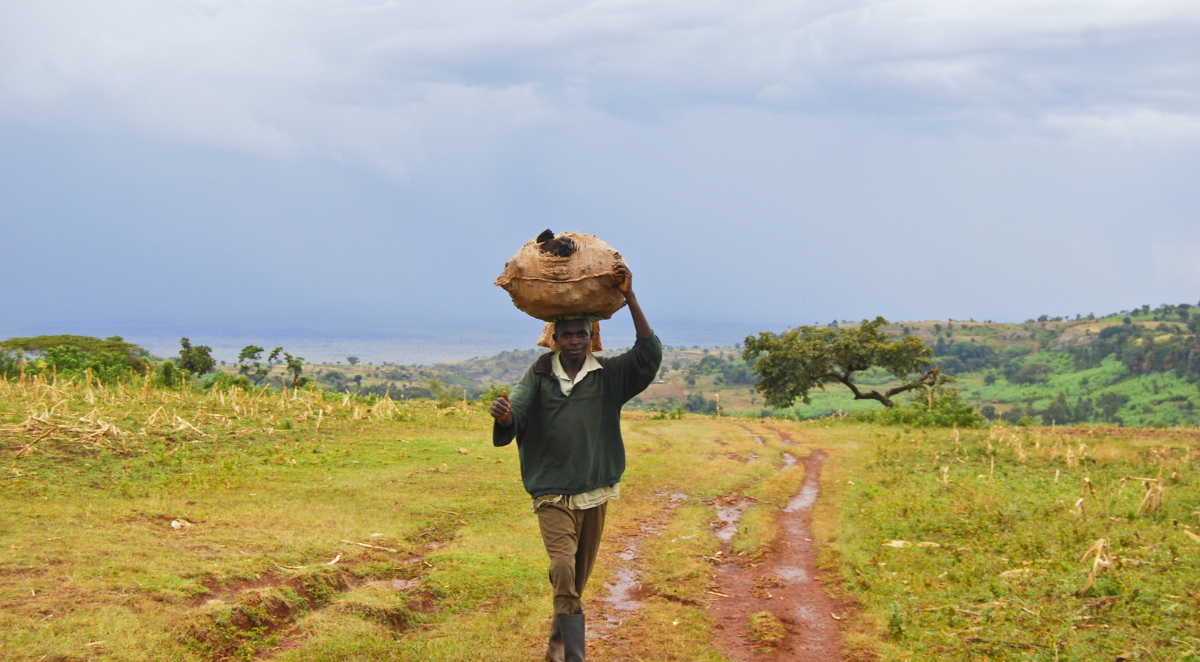
Life continues as normal along the Sipi Falls trail. Villages aren’t organised around visitors, which is why interactions feel unforced.
You pass people heading to fields or carrying water. Children walk home from school. Greetings are exchanged because that’s customary, not because anyone expects something in return.
This everyday presence is part of what makes Sipi Falls memorable. It doesn’t separate you from local life. It moves you briefly through it. That’s one reason the area appears consistently in broader explorations of Uganda, including Top 20 Things to Do in Uganda and reflections on why the country is often called the Pearl of Africa.
Practical hiking tips for the Sipi Falls trail
The Sipi Falls trail is accessible for most travellers, but it's still worth preparing properly. Conditions change quickly on the lower slopes of Mount Elgon, and small choices make a big difference to how the walk feels.
- Wear shoes with decent grip: Sections of the trail can be slick after rain, especially on clay soil near the waterfalls.
- Bring light layers: The walk often starts warm and cools as you gain elevation, with mist rolling in without much warning.
- Carry water, even on shorter walks: you’ll be moving steadily, and shade isn’t constant along the trail.
- Allow extra time for the walk. Distances are short, but progress is slow.
- Expect changing trail conditions: Rainfall affects both footing and the volume of the waterfalls, which can shift the pace of the walk.
Seasonal weather plays a real role in how the Sipi Falls trail looks and feels. Planning around rainfall patterns can make the experience far more comfortable, which is why guidance on the best time to visit Uganda is useful when shaping an itinerary.
Why Sipi Falls belongs in an Uganda trek
Sipi Falls is a notable active and cultural component of many eastern Uganda travel routes. It complements them. It adds movement, context, and a quieter understanding of the country’s eastern landscapes.
That’s why it fits naturally into longer routes and walking-focused journeys, including curated Uganda tours and immersive itineraries like the Definitive Uganda.
If you want help shaping a Uganda trek that includes Sipi Falls as a meaningful highlight rather than a box to tick, you can book a call here to talk through routes, pacing, and seasonal timing.