


Let's start with the truth: there is no single answer to what a Tanzania safari costs. A budget overlander paying $250 per person per day and a honeymooner in a private tented camp paying $1,500 per person per day are both on a Tanzania safari. They are simply having very different experiences.
What Follow Alice aims to do is cut through the confusion, and there is a great deal of information online. Competing articles quote prices per day, per night, per trip, before tax, after tax, including park fees, excluding park fees, and sometimes without specifying which circuit they mean. By the time you have read three of them, you are more confused than when you started.
This article uses a single, consistent pricing methodology (stated above). It covers not just the safari itself but every cost you will realistically encounter from flights, visas, vaccinations, tips, the Zanzibar extension most travellers add on, and the hidden fees that nobody puts in their headline price. It covers all three safari circuits, including the rarely discussed Western circuit. It speaks directly to solo travellers, families, and honeymooners. This is also an honest review about how prices have changed and where they are headed. If you still have questions, feel free to contact our team.

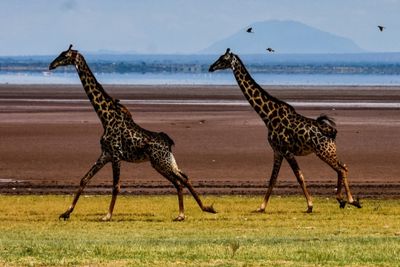
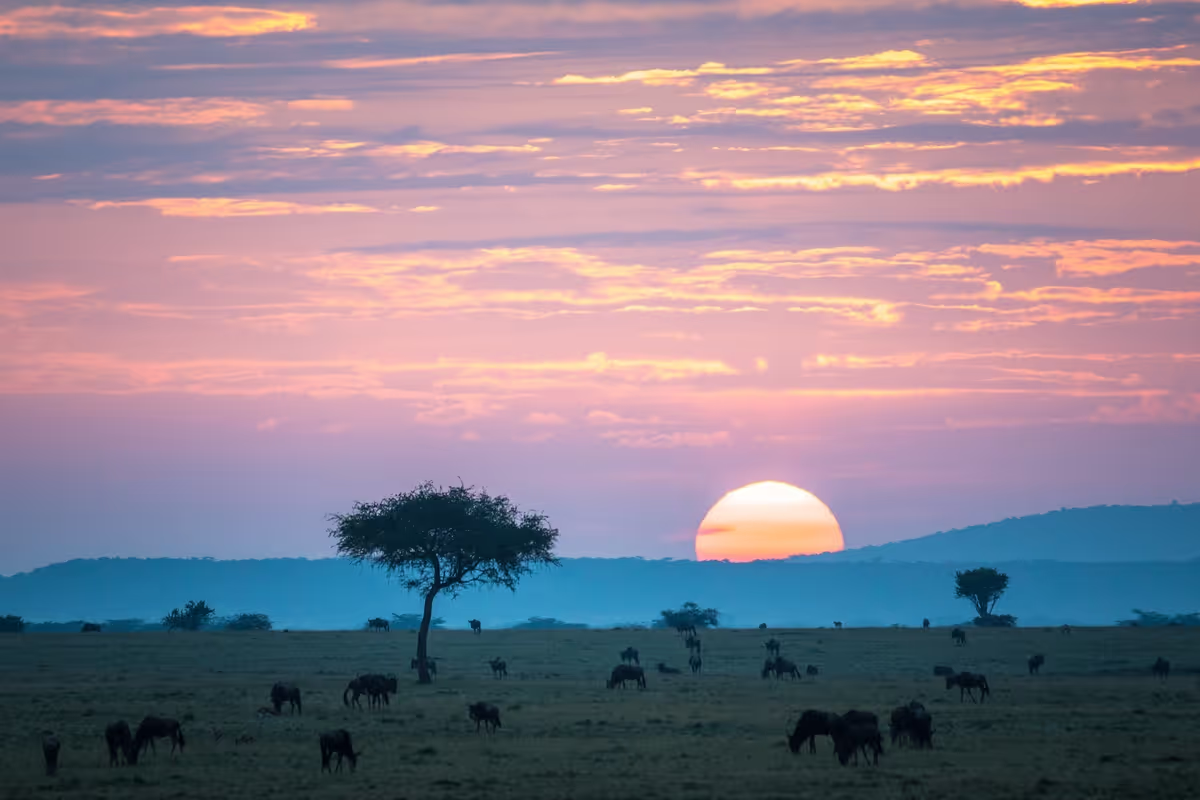
Zebras and giraffes by the Tarangire River in the dry season during a Tanzanian safari.
Learn more: 7 truly stupendous facts about the Great Migration
Understanding Tanzania's three safari circuits
Most guides compare the Northern Circuit with the Southern Circuit and leave it at that. This misses an entire category of safari experience and some major pricing differences.
The Northern Circuit
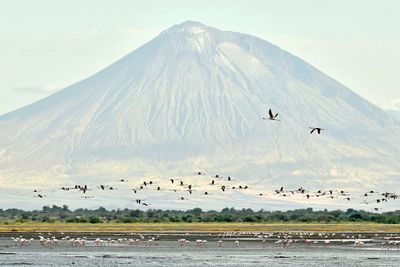
This is where most first-time safari travellers go, and for good reason. The Northern Circuit encompasses the Serengeti National Park, the Ngorongoro Crater, Tarangire, Lake Manyara, and Arusha National Park. It is home to the Great Migration, which is the annual movement of approximately 1.5 million wildebeest across the Serengeti and into Kenya's Masai Mara, which is one of the natural world's most extraordinary spectacles.
Precisely because the Northern Circuit is Tanzania's most popular safari region, it is also the most competitive in pricing terms. Budget safari options genuinely exist here, especially for overlanding travellers who are comfortable in basic campsites. The flip side is that the most famous camps in the Serengeti can be really expensive, particularly during the river crossing season, which is between July and October when demand spikes.
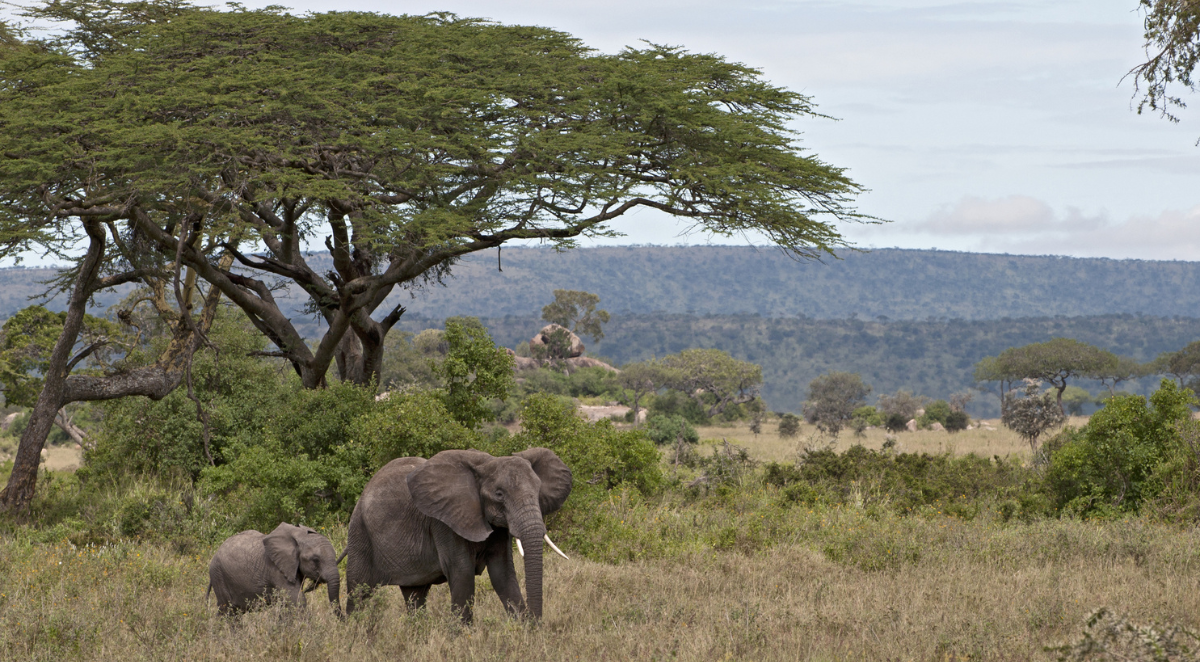
Elephants in the Serengeti.
The Southern Circuit
The Southern Circuit is centred on Ruaha National Park and the Selous Game Reserve (now Nyerere National Park), and it attracts a different kind of traveller. Roads are harder, distances are greater, and budget camping safaris are far less common. It's safe to say, though, the rewards are significant, with vast wilderness areas with a fraction of the vehicle density you encounter in the northern Serengeti, exceptional walking safaris, and amazing boat safaris on the Rufiji River in Nyerere.
Getting to the Southern Circuit typically requires a charter flight from Dar es Salaam, which adds cost but also adds drama. Pricing in the south starts higher than the north's budget options and rises to comparable luxury levels. Expect mid-range options to begin around $500 per person per day, fully inclusive. You can also drive if flights are expensive. With a 4x4 and a bit of patience, the 100 km (62 miles) trip takes around two hours.

Lions feeding on an African bush elephant that they hunted in the Ruaha National Park in Tanzania.
The Western Circuit
Very few safari guides cover the Western Circuit in any detail, which is a genuine disservice to travellers. Katavi National Park and Mahale Mountains National Park, situated on the remote eastern shore of Lake Tanganyika, offer some of the most extraordinary wildlife experiences anywhere in Africa. Katavi is famous for its enormous hippo pods and remote, uncrowded bush. Mahale is home to the largest known population of wild chimpanzees, and trekking with them through the forest above Africa's deepest lake is an experience that those who have done it describe as life-changing.
You have to keep in mind that the Western Circuit is not cheap and is not easy to reach. Getting there typically requires flying from Dar es Salaam to Kigoma or Mahale airstrip via light aircraft. Infrastructure is minimal by design; there are very few lodges, and the ones that exist are largely in the mid-range to high-end category. Budget travellers should be aware that the Western Circuit is not practically accessible at lower price points. For those seeking absolute remoteness and an entirely different safari experience, the cost is justified.

A male chimpanzee pauses to wait for the rest of the family to catch up in the Mahale Mountains.
Here is a detailed breakdown of each circuit in the table below. Please note that costs may vary since the time of writing this article.
All prices per person per day, two sharing, fully inclusive of park fees, meals, and standard activities. VAT additional where applicable.
Complete Tanzania trip budget
This is the section that most safari guides do not write. They tell you what the safari costs and leave the rest as an exercise for the reader. The table below reflects realistic total trip costs for a two-week Tanzania safari (seven safari nights plus seven nights including flights and a Zanzibar extension), two people sharing, departing from Europe or North America.
All figures in USD per person, based on two people sharing. Safari package costs are based on 7 nights. Flight estimates from the UK/Europe. Zanzibar extension based on 5 nights.
International flights to Tanzania
Flight costs are the single biggest variable in your overall Tanzania trip cost and the one most often overlooked in safari pricing guides. Return flights from London or Western Europe to Kilimanjaro (JRO) or Dar es Salaam (DAR) typically range from $900 to $1,800 in economy, depending on airline, routing, and how far in advance you book. From North America, add $300–$600 to those figures. Business class doubles to triple the cost and is worth considering for overnight legs on a 12+ hour journey to an active, physical trip.
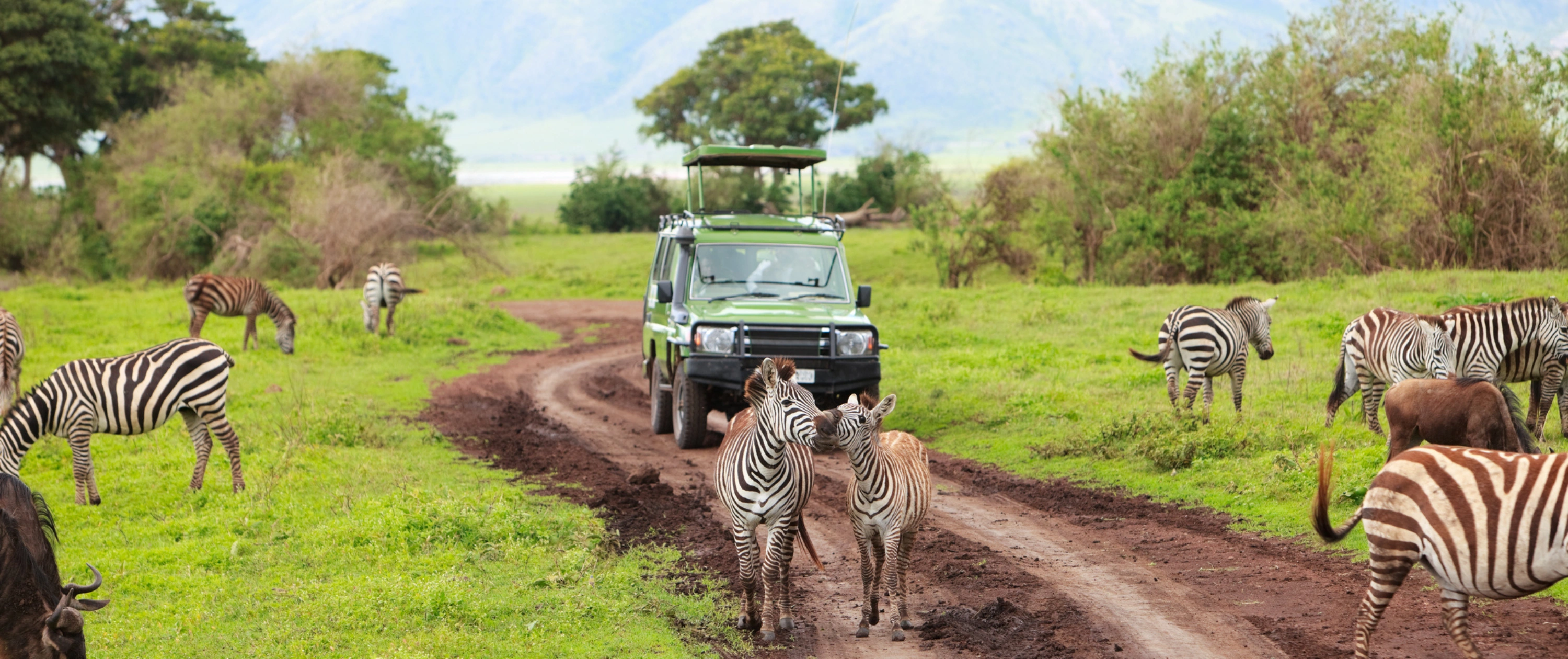
A safari vehicle exploring Tanzania.
Learn more: How to book the cheapest international flights
Vaccinations and preventive medicine
Tanzania requires proof of yellow fever vaccination if you are arriving from a country where yellow fever is endemic. Beyond that, you will want to budget for typhoid, hepatitis A and B, meningitis, and potentially rabies, depending on your itinerary. Malaria prophylactics are essential for virtually all Tanzania safari regions. Budget approximately $150–$350 per person, depending on your existing vaccination history and which antimalarials your doctor prescribes.

An elephant herd and baobab trees are seen during a safari in Tanzania.
Learn more: Best time for safari in Tanzania
Travel insurance
This is non-negotiable, and the key detail that many travellers miss is that standard travel insurance is insufficient for a safari. You need a policy that includes medical evacuation coverage, which in remote wilderness areas can mean a chartered flight to Nairobi or even repatriation. Confirm your policy explicitly covers safari activities and, ideally, covers disruption due to natural events or operator failure.

Tourists sightseeing in Tanzania.
Learn more: 12 great facts about Tanzania's Ngorongoro Crater
Tipping
Tipping is a meaningful part of safari economics, and the livelihoods of guides, trackers, and camp staff depend on it. The widely accepted benchmark is $10–$20 per person per day for your main guide, $5–$10 per day for a tracker, and $5 per day for general camp staff, split at the end of your stay. On a seven-night safari with a guide and a couple of camp tips, budget $200–$350 per person. It’s best to see this as part of the full safari cost, rather than an extra.
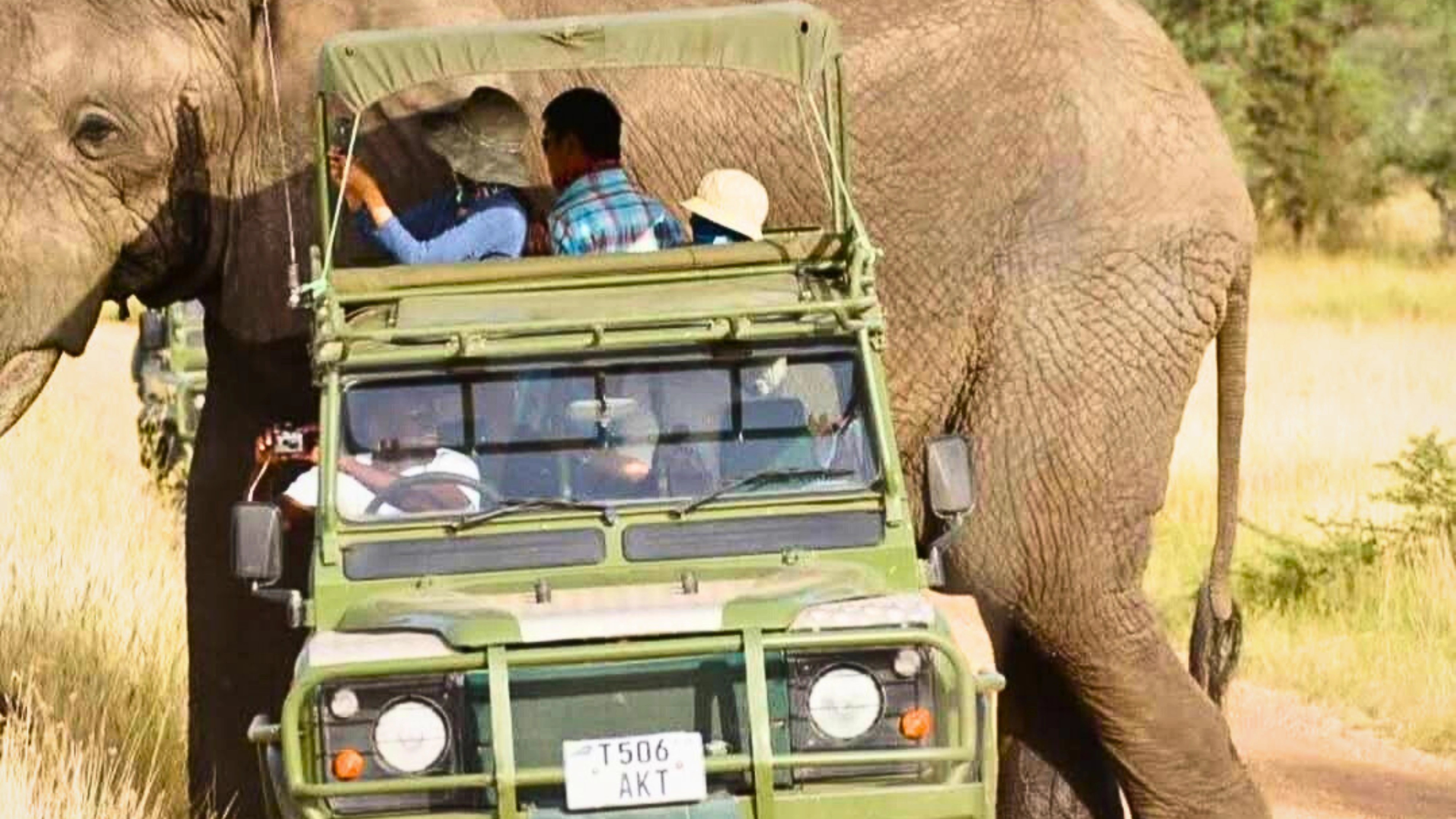
A safari guide from Follow Alice getting up close and personal with a elephant.
Learn more: What is a Kilimanjaro tipping ceremony?
Hidden Costs: The Fees Nobody Puts in the Headline Price
The safari industry has a quiet tradition of quoting an attractively headline price and revealing the extras later. These are the fees most likely to ambush you.
Always ask your operator to confirm in writing if the quoted prices include all park fees, VAT, and the Ngorongoro Crater descent fee. A reputable operator will confirm this without hesitation. One that hedges deserves scrutiny.
{{leadmagnet-one}}
Solo traveller costs
If you are travelling solo, you need to understand the single supplement, which is the additional charge applied when you occupy accommodation or a vehicle space designed for two. In the safari industry, this penalty is more significant than almost anywhere else in travel, and most guides mention it in a single sentence and move on. It deserves more than that.
Safari pricing is fundamentally built on a two-sharing model. Vehicles, tents, and lodge rooms are priced on the assumption of two occupants. When you travel alone, an operator still incurs the full cost of the vehicle, fuel, guide, and accommodation but splits it across one passenger instead of two. The result is a single supplement that typically ranges from 25 per cent to 100 per cent of the per-person double rate, depending on the operator, camp, and season.
In practical terms, a mid-range safari that costs $500 per person per day for two sharing might cost $700–$1,000 per day for a solo traveller. On a seven-night safari, that is an additional $1,400–$3,500 on top of an already significant trip cost.
How to reduce the single supplement:
• Join a group departure safari. Many reputable operators run fixed-departure small-group safaris with vehicles shared across four to eight strangers. The per-person cost is lower, the single supplement often disappears or is significantly reduced, and solo travellers frequently find the group dynamic adds rather than detracts from the experience.
• Ask operators about solo pairing. Some operators will match two solo travellers to share a vehicle and accommodation, splitting the double rate. This requires flexibility on dates and willingness to share with a stranger, but can halve your cost.
• Choose camps with standard single rooms. Some properties, particularly in the mid-range category, have rooms genuinely designed and priced for solo occupancy rather than simply charging half a double room.
• Travel in shoulder season. The single supplement is harder to negotiate in peak season when demand is high. Operators are more flexible in the green season (March–June) when occupancy is lower, and they would rather fill a bed at a reduced supplement than leave it empty.
• Consider self-driving in the Northern Circuit. It is the one circuit where this is genuinely practical for confident, experienced drivers. Self-driving eliminates the guide cost and the vehicle sharing problem, though it requires thorough preparation.
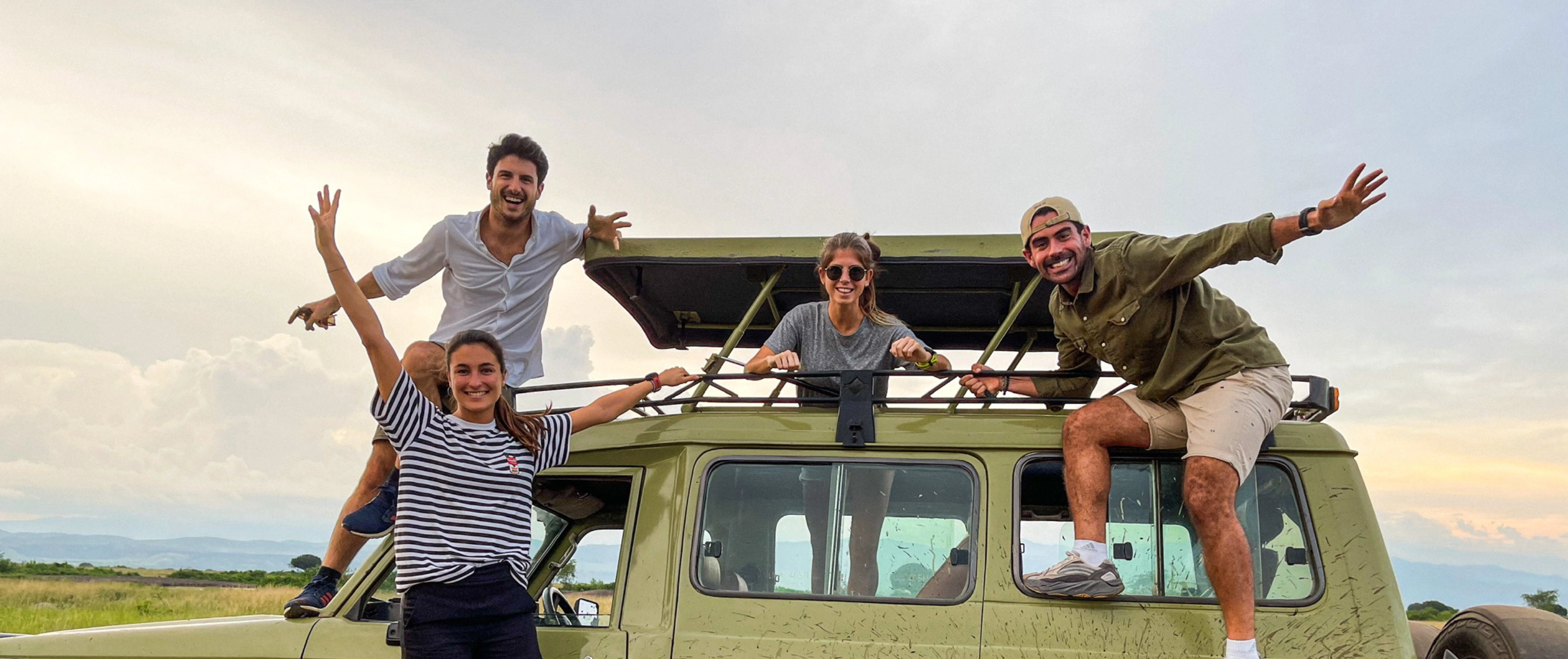
A group of tourists pose for a photo during their safari.
Learn more: Visa requirements for Tanzania: What you need to know
Family safari costs
Tanzania is a superb family safari destination, but understanding the pricing structure for children is important before you budget. Child policies vary significantly by operator and property.
• Children aged 0–2 are almost universally free on safari (though you need a seat for safety, so clarify this).
• Children aged 3–11 typically pay 50–75 per cent of the adult rate at most lodges and camps. Some budget and mid-range operators charge the full adult price regardless of age, so check carefully.
• Children aged 12 and over are usually charged the full adult rate at most luxury properties.
• National park entry fees in Tanzania are charged at the full adult rate for children 16 and over. Under 16 typically pays a reduced fee.
Family-specific practical costs to consider include malaria prophylactics for children (which can be expensive depending on body weight dosage), travel cots if you have a very young child, and the general advice that the vast majority of game drives run from approximately 6 am to 10 am and 4 pm to 7 pm which means very early mornings and a willingness to sit quietly in a vehicle for three to four hours at a time.

A family during a safari, taking in their surroundings.
Learn more: Adventure trips for solo travellers
Honeymooner costs: mid-range versus luxury
Tanzania is one of Africa's premier honeymoon destinations, and the industry caters accordingly. The honest question for honeymooners is not if you should go, but how to adjust expectations against budget.
Mid-range honeymoon safaris have comfortable tented camps, private bathroom facilities, attentive service, good guiding, and the Serengeti sunrise you imagined, and it is entirely achievable in the $500–$700 per person per day bracket. Add the Zanzibar extension at a mid-range beach resort, and two of you are looking at a total trip cost of approximately $10,000–$14,000 all-in, including flights.
Luxury and ultra-luxury honeymoon experiences include private fly-camps, butler service, bespoke itineraries, camps with private plunge pools, and an exclusive section of the Serengeti virtually to yourselves, can usually start at around $1,000 per person per day and can reach $2,500 or more at the most sought-after properties. For the right couple, this is money well spent. For others, the mid-range Serengeti experience at dawn, when the light is gold, and the wildebeest are moving, is just as profound.
Many luxury lodges in Tanzania offer complimentary honeymoon upgrades, champagne on arrival, or private bush dinners at no extra cost. Always mention you are honeymooning when booking; the industry responds generously to this at virtually every price point.
{{leadmagnet-two}}
Tanzania safari price trends
Tanzania safari prices have risen meaningfully over the past several years, and the trend is not expected to reverse. Understanding why helps you make a more informed booking decision.
National park fees have increased multiple times since 2017, with substantial hikes applied to the most popular parks, including the Serengeti and Ngorongoro. These increases are not arbitrary as they reflect a genuine strategy of funding conservation through higher visitor charges while simultaneously managing visitor volumes in ecologically sensitive areas. The Ngorongoro Conservation Area has been particularly active in revising its fee structure, and the $295 crater descent charge introduced in recent years is a direct mechanism to control vehicle numbers in the crater.
The COVID-19 pandemic accelerated price increases across the board as operators, lodges, and camps sought to recover revenues lost during two years of drastically reduced visitor numbers. Properties that had previously offered competitive pricing repositioned themselves in the mid-to-luxury segment. Budget options that had relied on high occupancy at low margins either closed or contracted significantly.
The post-pandemic period also coincided with a sharp increase in the cost of charter aviation across East Africa, which has had a direct knock-on effect on Southern and Western circuit pricing where fly-in access is standard. Fuel price volatility and the rising cost of maintaining ageing light aircraft fleets have made some previously affordable routes meaningfully more expensive.
The practical implication for 2026 travellers is that prices are unlikely to decline. The best value is found by booking early, travelling in the shoulder or green season, and being honest with your operator about your budget from the outset so they can build an itinerary that maximises the experience within your means.
Learn more: Romanian traveller keeps his promise to Maasai community
How to save money without sacrificing the experience
Generic money-saving advice on safari guides is frustratingly vague. Here are specific, actionable strategies that genuinely work.
Travel in the green season (March–June)
The green season is Tanzania's wet season, and it is genuinely underrated. Rain typically comes in sharp afternoon showers rather than all-day downpours. The bush is lush and photogenic. Newborn animals are abundant, which brings predators into concentrated activity. Most significantly, prices at many lodges drop by 20–40 per cent compared to peak season, and visitor numbers are a fraction of July–October levels. The one caveat is that some camps close in April and May for maintenance. Confirm this with your operator.
Choose lodges over luxury tented camps
Permanent lodge accommodation is typically 15–30 per cent cheaper than comparable luxury tented camps at the same property standard. The experience of sleeping in a tented camp in the bush is undeniably special, but if budget is a primary consideration, a well-positioned permanent lodge often offers equivalent guiding quality and game access at lower nightly rates.
Fly into Kilimanjaro rather than Arusha
For most Northern Circuit itineraries, Kilimanjaro International Airport (JRO) is the most practical entry point. It’s the main airport serving northern Tanzania and usually makes the journey to Arusha and the safari circuit simpler. Flying via Dar es Salaam can still work, but it often means adding a domestic connection or extra travel time.
Bundle your itinerary
Operators who handle your entire trip from safari and Zanzibar extension frequently offer package pricing that is more competitive than booking components separately. The savings on charter flights between parks, in particular, can be significant when bundled through a single operator like Follow Alice, which maintains volume agreements with aviation partners.
Be transparent about your budget from the start
The single most effective piece of advice for getting genuine value from a Tanzania safari is to tell your operator your actual budget at the beginning of the conversation. Experienced operators know exactly which combination of camps, parks, and seasons will maximise your experience at your price point. They can do this far more effectively if they know the real number, rather than spending the first three emails pitching you camps you cannot afford.
Consider the Zanzibar extension strategically
Zanzibar accommodation prices vary depending on the part of the island. The north coast (Nungwi, Kendwa) and northeast (Matemwe, Pongwe) are the premium beach areas. The East Coast (Jambiani, Paje) offers comparable beach quality at 20–40 per cent lower accommodation rates. For a post-safari recovery week, the East Coast is genuinely excellent value, and the kite-surfing conditions are world-class if that appeals.

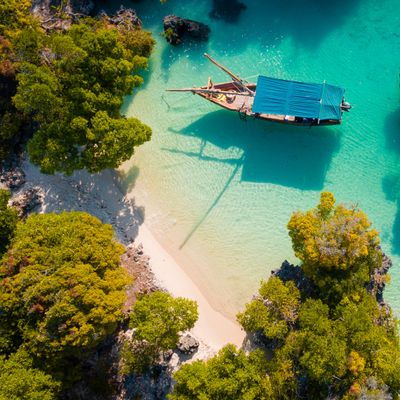
A tourist looking at the beautiful beach in Zanzibar.
Learn more: Planning Your Zanzibar and Safari Adventure: Everything You Need to Know
What will your Tanzania safari actually cost?
The most honest answer, given all the variables is that a well-planned Tanzania safari for two people sharing covering seven safari nights on the Northern Circuit, international flights from Europe or America, all the costs outlined in this article, and a five-night Zanzibar extension realistically costs between $9,000 and $16,000 per couple at mid-range, and between $20,000 and $40,000 at luxury.
For solo travellers, add the single supplement. For families, factor in child rates and the additional complexity. For honeymooners targeting the ultra-luxury end, the ceiling is as high as you choose to set it.
What we cannot tell you and what no pricing article honestly can is exactly what your Tanzania safari will cost without knowing your specific circuit preferences, travel dates, accommodation standards, group size, departure city, and appetite for the add-ons. What we can tell you is that a Tanzanian safari, at any of the price points described above, tends to be regarded by those who take it as one of the best investments they have ever made in a travel experience.
Get the budget right upfront. Book with a reputable, transparent operator like Follow Alice and go. If you would like to find out more, contact our team today.