


Climbing Mount Kilimanjaro is something very few people actually do. How many people do you know who have actually summited the "Roof of Africa"? Not many, right? I would probably be in that group if I weren't working for Follow Alice. That’s why it’s so exciting when one of our own team members decides to take on the majestic African giant.
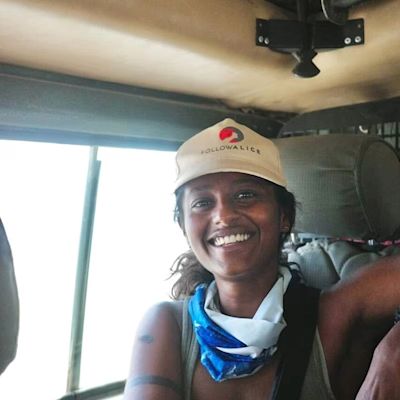
Recently, our very own Bejul Badiani stood on Uhuru Peak, the highest point in Africa. Bejul is part of our operations team and is based in Tanzania. She works behind the scenes, making sure every Follow Alice trip runs smoothly. This time, though, she wasn’t planning anyone else’s adventure; she was mapping out her own journey.
Bejul first climbed Kilimanjaro when she was just 14 years old. This early experience gave her a taste of the mountain, but returning as an adult was completely different. For her, it was not about ticking a box or racing to the summit. It was about understanding the mountain, testing herself with awareness and experience, and discovering how much she had grown since that first climb.
I had the chance to chat with Bejul about her journey up Mount Kilimanjaro. From the start of the climb to standing on Uhuru Peak, Bejul went through ups and downs and learned a lot about herself. Here’s my Q&A with her, and I promise you’ll get lots of useful tips if you're thinking of climbing Africa’s highest peak.
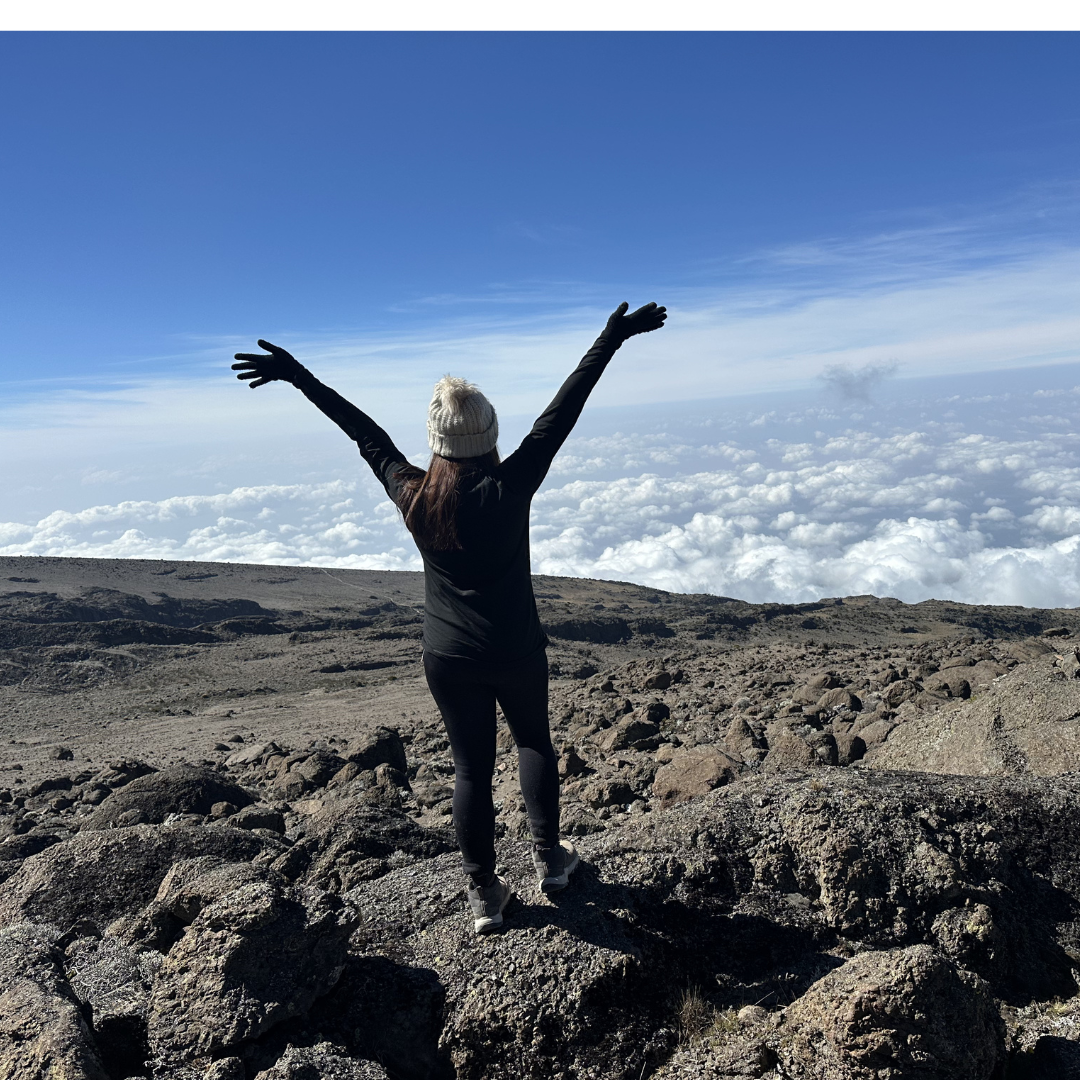
Bejul is embracing the view from the top of Mount Kilimanjaro.
1. Why did you personally decide to climb Mount Kilimanjaro?
I decided to climb Mount Kilimanjaro because it was a dream I’d carried for a long time, not just a random bucket-list idea. I’ve always loved mountains. There’s something about being surrounded by them that makes me feel grounded and powerful at the same time. Growing up in Tanzania, Kilimanjaro was never just a mountain to me. It’s part of our identity. It’s something you grow up seeing, hearing about, and feeling proud of. I wanted to experience something that forces you to earn it. In normal life, it’s easy to quit, procrastinate, or talk yourself out of hard things. Kilimanjaro doesn’t let you hide. You either keep moving or you don’t. For me, it was about proving to myself that I can commit to discomfort and still finish. It wasn’t just about standing on top. It was about becoming stronger on the way up.
2. What were you most nervous about before the climb?
Altitude, 100%. You can be fit and still get altitude sickness. That uncertainty was what scared me the most. I kept thinking: what if my body just refuses, and I can’t control it? I was also nervous about summit night because everyone describes it as a battlefield. The cold, the lack of sleep, the steepness, and the mental fight. I wasn’t scared of pain; I was scared of not being able to push through when my body says no.
3. What did you think Kilimanjaro would be like, and what surprised you?
I had actually climbed Mount Kilimanjaro before when I was 14, so I already had a memory of what it felt like. But climbing it as a teenager and climbing it as an adult are two completely different experiences. At 14, I didn’t fully understand what my body was going through. I just followed the instructions and kept moving. This time, I was much more aware. I understood altitude, pacing, recovery, and the mental battle.
What surprised me was how layered it is:
- The mountain changes constantly. Forest, moorland, alpine desert, arctic. It’s like walking through different worlds.
- The fatigue is not normal fatigue. It’s like a slow heaviness that builds each day.
- The mental aspect shocked me. You’re not battling a technical climb. You’re battling discomfort, sleep deprivation, cold, doubt, and your own thoughts. That’s the real mountain.
- I also didn’t expect how emotional it would be. I thought I’d be tough the whole time, but there were moments that hit me deeply, especially seeing how hard the porters and guides work for you.
4. Which route did you take and why?
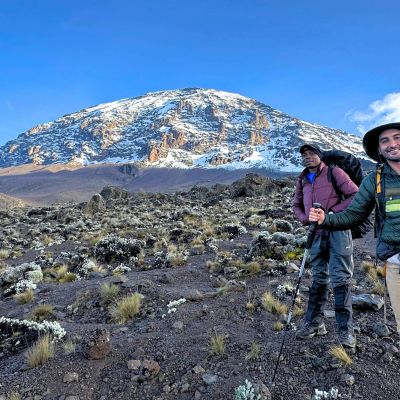
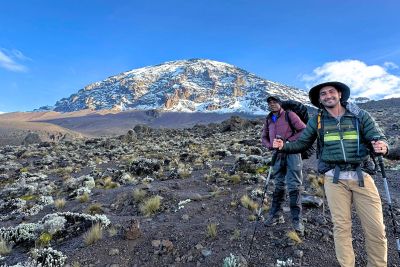
I took the 8-day Lemosho route because I wanted the best chance of acclimatising properly. I didn’t want to rush it. Lemosho is longer, which gives your body more time to adapt, and it’s known for being scenic and less crowded at the start. For me, it was about success and experience, not speed. The extra days weren’t a “luxury”; they were a strategy.
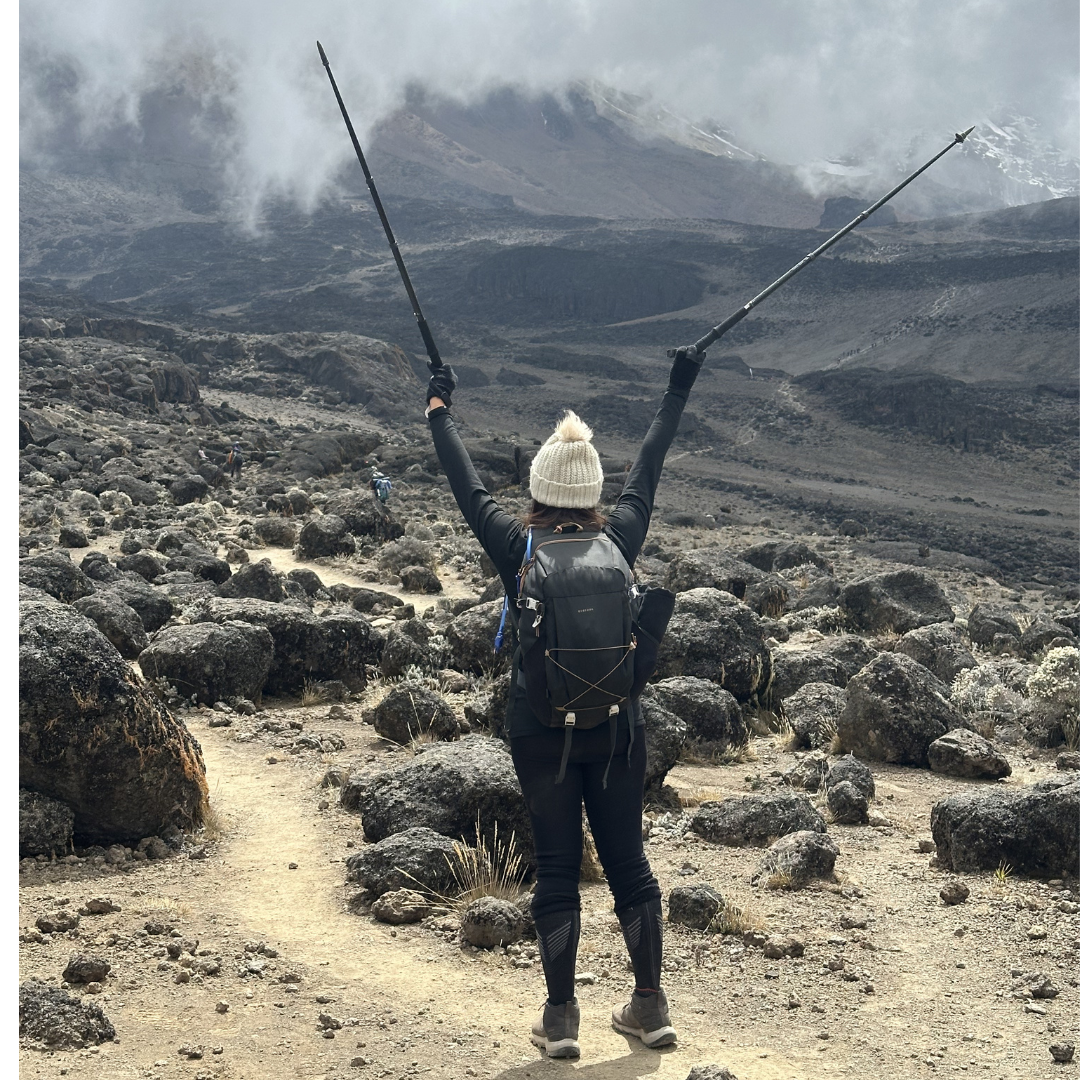
Bejul posing while trekking through the Lemosho route.
5. How did your body react to the altitude?
My body reacted in a realistic but controlled way. I did not experience altitude sickness, which I’m very grateful for. I took Diamox as a preventative measure, and I believe that helped significantly with acclimatisation. In terms of side effects, I experienced tingling in my fingers, which is a common reaction to Diamox. It wasn’t painful, just slightly noticeable. Other than that, I didn’t have any major issues. Overall, I believe it supported my body in adjusting to the altitude.
That said, I definitely felt the altitude. I experienced:
- mild headaches at certain points
- noticeable fatigue, especially as we gained elevation
- heavier breathing, even at a slow pace
- lighter, more broken sleep at higher camps
I never felt severely unwell, dizzy, or nauseous. It was more of a steady reminder that I was at high altitude rather than my body rejecting it.
6. What was the hardest day on Kilimanjaro, and why do you say that?
Summit day, and specifically summit night, was the hardest part of the entire climb.
- You start around midnight after already hiking for days.
- You are running on very little sleep.
- It was freezing, around -15°C when we were climbing.
- You feel the altitude much more intensely at that stage.
- Your breathing becomes heavier.
- Every step feels slower and more deliberate.
- You have to keep moving even when your body wants to stop and rest.
The hardest mental battle is resisting the urge to sit down “just for a minute.” At that altitude and temperature, stopping too long is not an option. Most people think the summit is the finish line. It isn’t. After celebrating for a few minutes at the top, you still have to descend for hours. By that point, you’re completely exhausted, your legs feel unstable, and your body is drained. It genuinely feels like your legs don’t belong to you anymore.
7. Can you describe the summit night in detail?
Summit night felt unreal. We woke up at 9:30 pm, had something to eat, and then stepped out into the pitch-black cold. Headlamps everywhere. A quiet line of people moving slowly up the mountain.
The air was thin. You could feel it immediately. My breathing was louder than normal, and every step required focus. Mentally, it became a war with my own mind. I wasn’t thinking,
“I have seven hours left.” I was thinking, “Just get through the next ten steps.” I kept repeating pole pole to myself and focused on staying calm. There were moments when I was in tears, asking myself and the guide, “Why am I doing this?” I was freezing, exhausted, and emotionally drained. At that point, your body just wants warmth, rest, and comfort.
The hardest part is that you can’t stop for longer than a minute, even when you desperately want to. If you stop too long, it gets risky; your body cools down quickly in that temperature, your muscles stiffen, and starting again feels even harder. So you keep moving, even if it’s painfully slow.
That’s when the real negotiation begins. Your mind starts offering excuses. That’s where mindset matters. But the guides were incredible. They don’t just walk beside you, they push you through. Even in the freezing cold, they were encouraging us, checking on us, and at certain points singing songs to keep the energy alive. Hearing them sing while we were climbing in complete darkness was powerful. It reminded me I wasn’t alone in it.
Before summit night even started, I had already decided I would reach the top unless something physically stopped me. So instead of thinking about the summit sign, I narrowed my focus to the next few steps. Just don’t stop. When I reached Stella Point, I could finally see Uhuru Peak ahead. That moment made everything real. After coming that far, there was no way I was giving up. Seeing the final stretch in front of me gave me a second boost. I told myself, I did not come all this way to stop now. And from there, it was just about finishing what I had started.
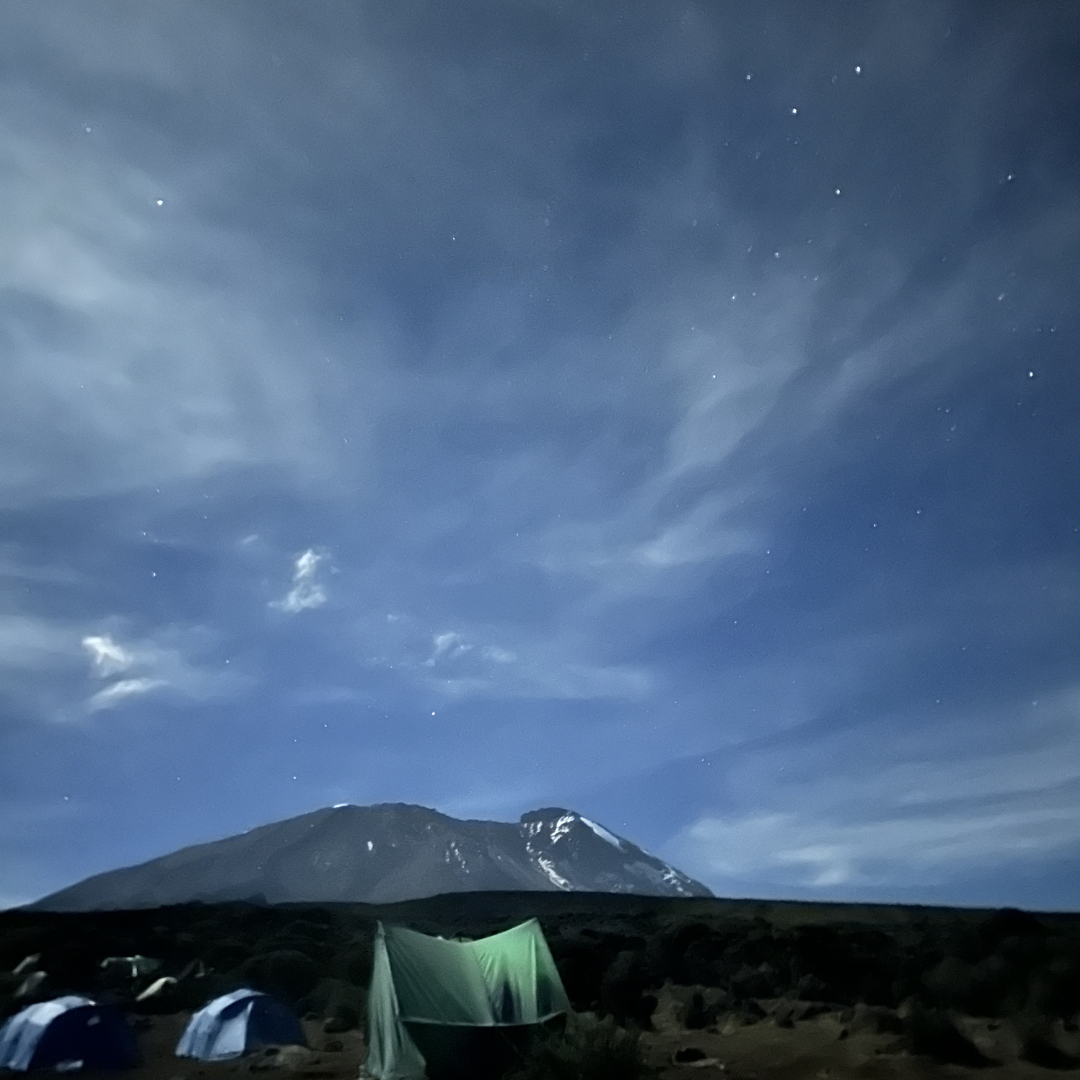
The beauty of Kilimanjaro at night was captured beautifully by Bejul.
8. What was going through your mind as you approached Uhuru Peak?
When I finally reached Uhuru Peak, I honestly cried. I couldn’t believe I had made it after such a tough night. Just a few hours earlier, I was freezing, exhausted, and questioning myself, and now I was standing at the top of Africa.
It felt so worth it. The moment I got there, it was like my body forgot everything I had gone through during the night. The cold, the tears, the heavy breathing, it all faded into the background. I suddenly felt energised.
All I could think was, “I actually did this.” I was so glad I didn’t give up when it got hard. I knew that if I had turned back, I would have regretted it deeply. Pushing through those dark hours made that moment even more powerful.
Standing there wasn’t just about reaching the summit. It was about keeping a promise to myself and knowing I didn’t quit when it mattered most. And it wasn’t just happiness. It was relief, pride, and gratitude all at once.
9. What stood out to you most about the Kilimanjaro guides? Was there a moment you were especially grateful for the crew?
What stood out to me most was how strong and steady the entire crew was, especially the guides and porters.
The guides weren’t just leading the way; they were reading us constantly. From day one, they were always present. They were checking on us, adjusting the pace, making sure we were hydrated, and paying attention to how we were feeling physically and mentally. It wasn’t just about getting us to the top. They genuinely cared about our safety and experience.
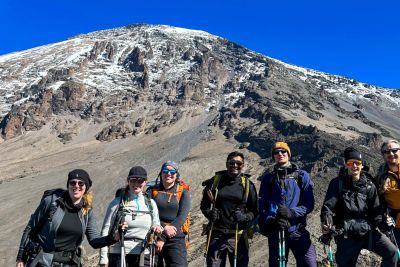
Over the days, you build a bond. You’re walking together for hours, eating together, and spending a lot of time. By the end of the climb, they didn’t feel like “guides” anymore. We’ve actually become really good friends. Even after the climb, they check up on us and stay in touch, which says a lot about the kind of people they are.
But what also really stayed with me was the porters. Every single day, they carried heavy loads up the mountain, often moving faster than us, setting up camp before we even arrived. By the time we reached camp, tired, our tents were up, warm food was ready, and everything was organised.
Some of the quotes our guides kept repeating were:
- “Non-stop to the top. To the top, non-stop.”
- “It’s not about competing with the mountain, it’s about completing it.”
- “Tiredness is not an illness.”
They would say these over and over, especially when we felt drained. And by summit night, those words were stuck in my head. Simple, but powerful. Seeing them work that hard at altitude, with strength and humility, gave me a deeper respect for the mountain and the people who make these climbs possible. It makes you realise you’re not doing this alone. There’s a whole team behind you, working just as hard, if not harder.
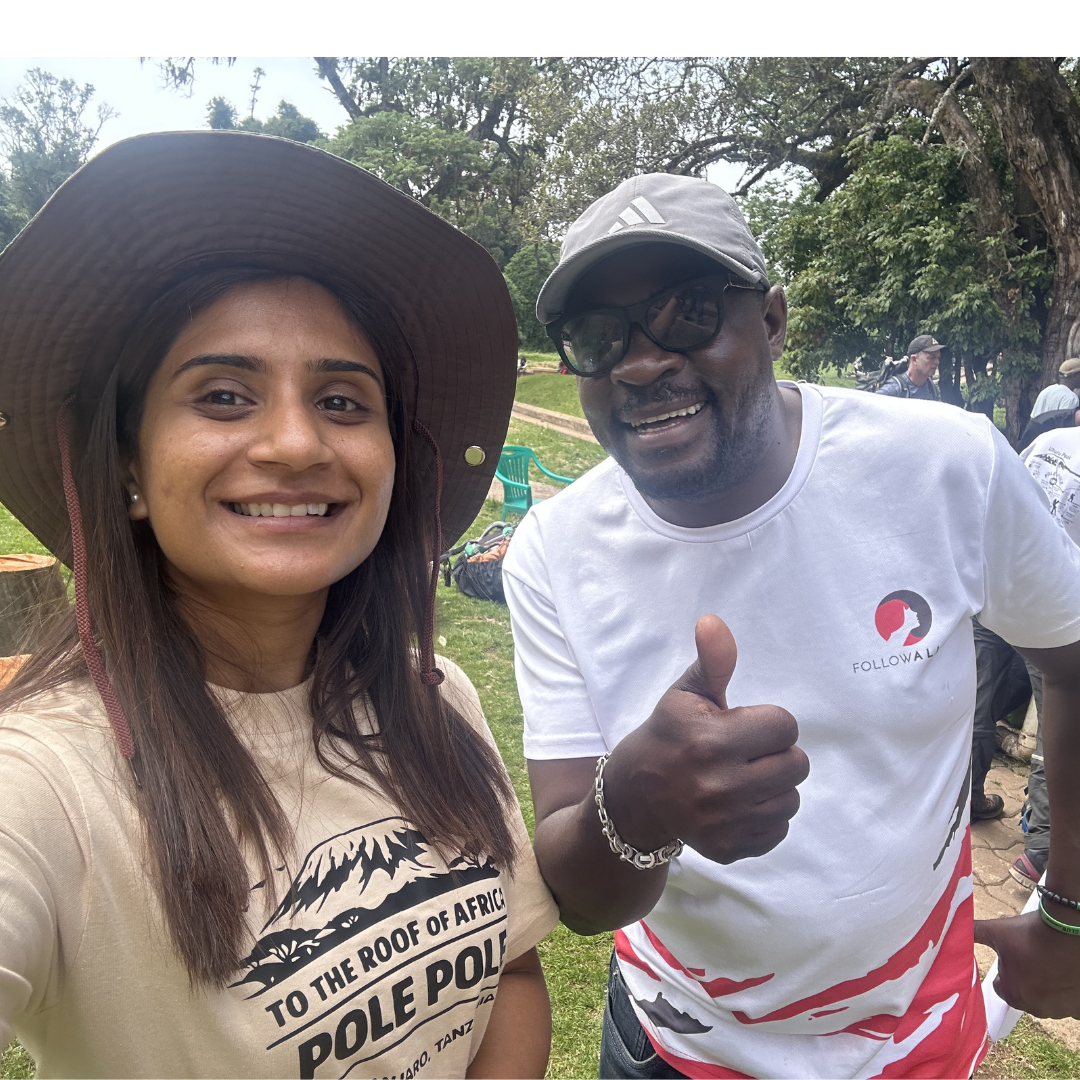
Bejul is pictured with Robert Sichalwe, part of the Follow Alice Mount Kilimanjaro crew.
10. How did the team handle climbers who were struggling?
Whenever someone felt tired or slowed down, the guides adjusted the pace straight away. There was no rushing and no pressure, just steady, controlled movement. At high altitude, that makes a huge difference.
What I appreciated most was how they kept the experience light and enjoyable. We weren’t just silently pushing through. We were laughing during the climbs. The guides made it genuinely fun. They cracked jokes, sang songs, told stories, and even danced at camp after long days.
Everyone became so comfortable with each other. It felt like a team. That comfort and connection made the hard moments easier to handle.
That balance of discipline and good energy is what stood out to me. It wasn’t just about reaching the summit. It was about how we got there together.
11. What did you learn about pacing (“pole pole”) that you didn’t expect?
Before the climb, I knew that “pole pole” meant going slowly. But on the mountain, I realised it’s not just advice, it’s the entire strategy. At altitude, rushing doesn’t make you stronger. It makes you weaker. The mountain doesn’t reward speed. It rewards consistency. I learned that slow and steady isn’t about being cautious; it’s about being smart. Even on days when I felt strong, sticking to a slow, controlled pace protected my energy for later, especially for summit night.
“Pole pole” also became mental. It wasn’t just about walking slowly. It was about breaking everything down into small steps. Not thinking about the summit, not thinking about the hours ahead, just focusing on the next few steps. Its with this mindset that carries you through the hardest parts.
12. What do most people misunderstand about climbing Kilimanjaro?
I think people misunderstand it in two opposite ways. Some people think it’s a technical climb that requires ropes and extreme mountaineering skills. It’s not. You don’t need technical climbing experience for the standard routes. On the other hand, some people think it’s “just a hike,” so it must be easy. That’s also not true. Kilimanjaro is a high-altitude endurance challenge. The real difficulty comes from the altitude, the long days of hiking, the cold temperatures, and especially summit night. It’s not technically complicated, but it demands mental resilience and physical consistency. Another thing people underestimate is how much mindset plays a role. Fitness helps, but your ability to stay calm, patient, and steady is what really determines how you handle the climb.
13. How fit do you really need to be? Did you train before the hike?
You don’t need to be an extreme athlete to climb Kilimanjaro, but you do need a solid level of fitness and stamina. It’s not about speed or short bursts of strength. It’s about endurance. You need to be comfortable walking for several hours a day, on inclines, for multiple days in a row. Personally, I’m quite active and play a lot of sports, which definitely helped. I didn’t follow a strict training program. I went on a few long walks to build endurance, and I did stair training by going up and down 23 floors several times, around three to four rounds. That helped prepare my legs and lungs for the incline. But honestly, mindset is just as important as fitness. If your head is strong and you stay consistent, your body will follow.
14. What do people overpack?
One of the biggest mistakes I feel people make is overpacking. Many people bring too many clothes, thinking they’ll need multiple outfit options for different temperatures. In reality, layering properly is more important than quantity. A few good quality base layers, a solid insulated jacket, and waterproof outerwear are far more useful than extra items you won’t wear. People also tend to overpack toiletries, extra shoes, and “just in case” items that never get used. The more you bring, the more you have to organise and repack every single day, which becomes tiring. Keeping your gear simple and practical makes the entire experience smoother.
{{leadmagnet-one}}
15. How was the food, and did you pack any snacks?
The food was honestly better than I expected. We had three proper meals a day. Breakfast was usually eggs, toast, cereal, fruit, and tea or coffee, which gave us a solid start before hiking. Soups were served at both lunch and dinner, and both meals were very filling, usually including rice, vegetables, and protein.
I also tried so many different varieties of soup, like banana soup, cucumber soup, and carrot and ginger soup, which I probably would have never tried otherwise. Surprisingly, they were all really good.
Personally, I didn’t lose my appetite at altitude, which I’m grateful for. I made sure to eat properly because I knew my body needed the fuel. On the longer hiking days, you definitely feel hungry since you’re constantly burning energy. We took regular snack breaks during the climbs, which helped keep our energy levels steady.
I also carried plenty of snacks with me, including energy bars, chocolate bars like Snickers and KitKat, and electrolyte tablets to add to my water. The electrolytes helped a lot with hydration, especially higher up, and the chocolate was perfect for quick energy boosts during tougher sections.
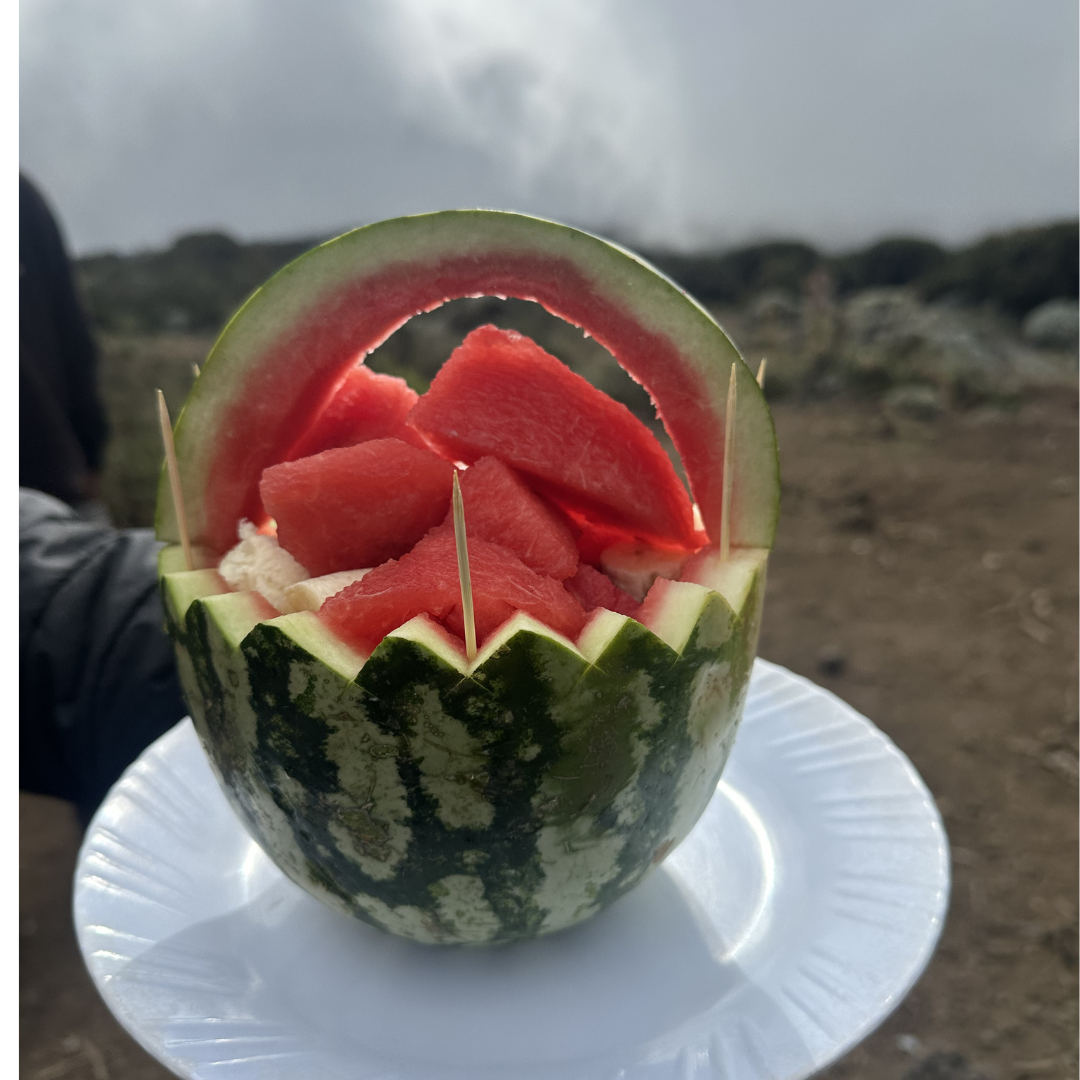
Watermelon presented beautifully on the Mount Kilimanjaro climb.
16. Also, how was the toilet situation, and how did you keep yourself clean?
The toilet situation is definitely something people are curious about. It’s not glamorous, but it’s manageable. We had access to a portable toilet tent, which made a big difference. It gave more privacy and was much more comfortable than using the basic public mountain toilets.
In terms of staying clean, I relied heavily on wet wipes and hand sanitiser throughout the day. We were also given water daily for washing, so we were able to wash our faces and hands, which helped a lot. Changing into clean, dry clothes at the end of each day made a big difference and helped me feel refreshed.
17. As a lady who climbed Kili, what tips can you give to help other ladies?
Preparation and comfort make a big difference. Focus on practical layering, good-quality base layers, and clothing that keeps you warm but breathable. Skincare is very important at altitude. SPF 50 sunscreen is a must, even when it feels cold, as the sun is much stronger at higher elevations. Lip balm and moisturiser are also essential because the wind and dryness can be harsh on your skin. Keep it simple, though; you don’t need to bring your entire skincare routine. You won’t use it all. Stick to the basics that protect and hydrate.
After several days without a proper shower, your hair can start to feel greasy and flat. A small bottle of dry shampoo makes a big difference.
It’s also worth planning around your cycle if possible. If the timing might fall during the climb, prepare in advance so you feel comfortable and stress-free. Being organised removes unnecessary worry while you’re already managing physical challenges.
Most importantly, trust your strength. The climb is mental as much as physical. Stay steady, listen to your body, and remember that you are more capable than you think.
18. What’s one mistake first-time climbers make? Share your experience.
One of the biggest mistakes first-time climbers make is starting too fast.
In the first couple of days, you usually feel strong. The altitude hasn’t fully hit yet, and the excitement is high. It’s easy to think you can push the pace. But Kilimanjaro is not a race.
If you burn too much energy early on, it catches up with you later, especially on summit night. The mountain rewards consistency, not speed.
Another mistake is underestimating how mentally demanding the climb is. Physical fitness helps, but there are moments when your body feels tired, and it’s your mindset that decides whether you continue or not.
From my experience, respecting “pole pole” from day one makes all the difference. Going slow might feel unnecessary at first, but it protects you from the hardest parts ahead.
19. What advice would you give someone considering climbing Kilimanjaro?
- Choose the right route. Don’t rush the mountain. Pick a route that allows proper acclimatisation. The extra days make a real difference.
- Respect “pole pole” from day one. Even if you feel strong, go slow. The mountain rewards consistency, not speed.
- Hydrate properly. Drink more water than you think you need and consider adding electrolytes, especially at higher altitudes.
- Eat even if you don’t feel like it. Your body needs fuel every day. Energy management is key.
- Prepare mentally, not just physically. There will be uncomfortable moments. Accept that in advance. If your mindset is strong, you’ll handle the hard parts better.
- Pack smart, not heavy. Focus on quality layers and essentials. You don’t need excess.
- Trust your guides. They know the mountain better than anyone. Listen to them.
20. If someone is on the fence about climbing Mount Kilimanjaro, what would you say to them?
I would say this: if there’s even a small part of you that wants to do it, listen to that. Kilimanjaro is hard, yes. But it’s not impossible. It doesn’t require you to be superhuman. It requires commitment, patience, and the willingness to be uncomfortable for a few days.
The growth you experience is worth it. You learn how you respond when things get tough. You learn how strong your mindset really is. And the feeling of standing at the top, knowing you didn’t give up, is something you can’t buy. You might regret not trying. You won’t regret doing it. If you prepare properly, trust the process, and respect the mountain, it is one of the most rewarding experiences you can have.
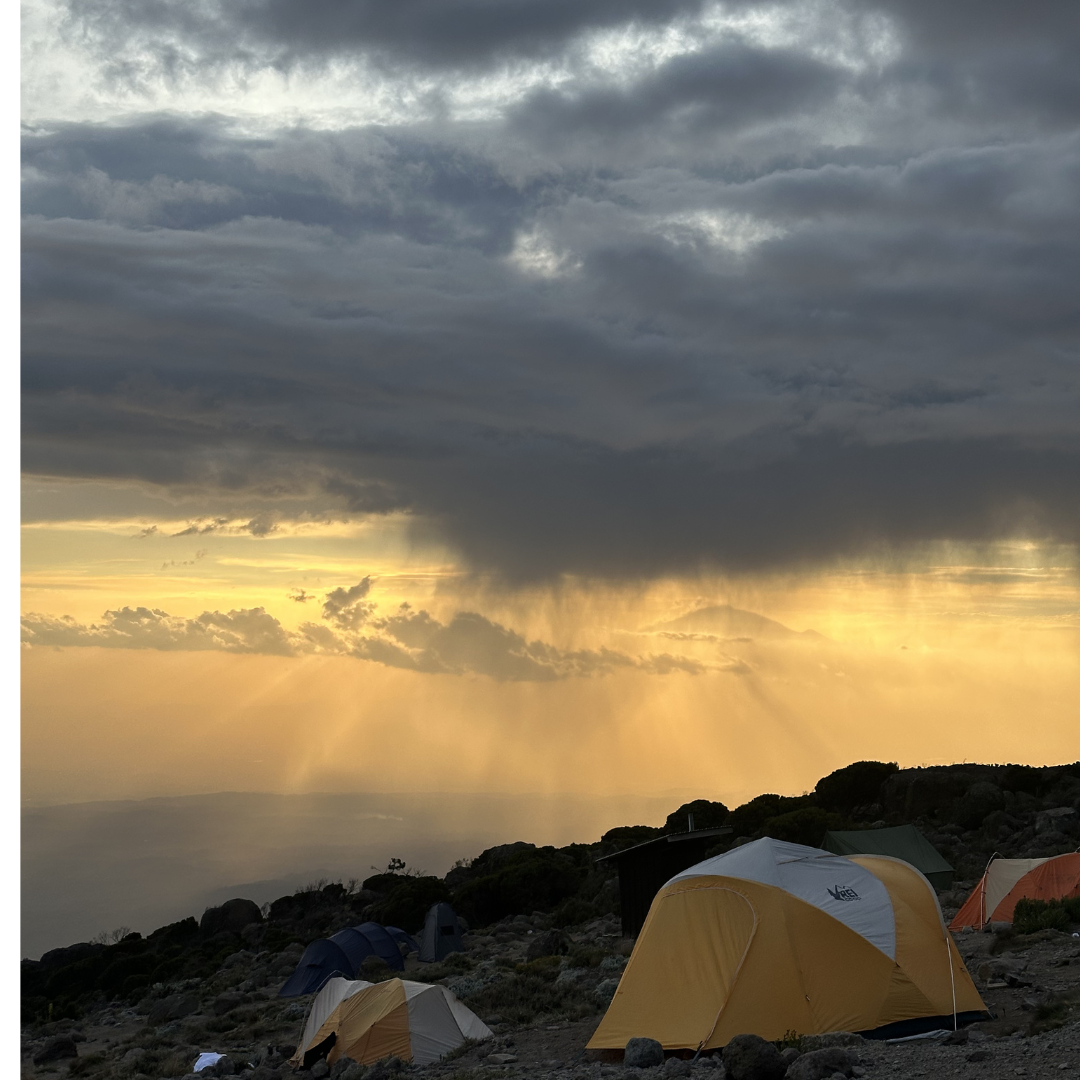
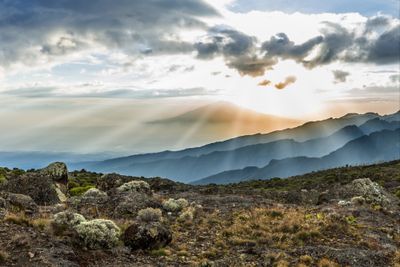
The view from the camping site on Mount Kilimanjaro. Photo credit: Bejul Badiani.
21. What would you do differently regarding your Mount Kilimanjaro climb?
Looking back, there isn’t much I would change because the experience shaped me exactly the way it was meant to. If I had to adjust anything, I might pack slightly lighter, and I would also maybe do a bit more incline or stair training beforehand to prepare my legs even further for summit night. But overall, I’m proud of how I approached the climb. I respected the pace, stayed mentally strong, and trusted the process. The challenges were part of what made the summit meaningful.
22. Can you also share with me how the tipping ceremony went and how much cash you carried?
At the end of the climb, the whole crew gathered together. There were speeches, thank-yous, and traditional songs. It felt powerful because you could finally see everyone together, the guides, assistant guides, cooks, and porters who had worked behind the scenes every single day.
It really hits you in that moment that the summit wasn’t just your achievement. It was a team effort. We organised the tips in advance and carried cash to make the process smooth.

What a typical tipping ceremony looks like.
23. In one word, if you could describe your Kili climb, what would you say?
Transformational. It pushed me physically, tested me mentally, and strengthened me emotionally. I didn’t just reach the summit, I grew through the process. The version of me that walked back down the mountain felt stronger, more disciplined, and more grateful than the one who started.
24. What did you do after the Kili climb?
After the climb, the first thing I wanted was a proper shower. Then I just wanted to rest. My body was completely exhausted, especially after summit night and the long descent. Sleeping in a real bed felt like pure luxury. But beyond the physical recovery, I needed time to process everything. The climb wasn’t just physical; it was emotional. I kept replaying summit night in my head, thinking about the moments I doubted myself and how I pushed through anyway. It took a while for it to fully sink in that I had actually done it. Physically tired, but mentally proud. That’s exactly how those first few days felt.
25. Anything else you would like to say to our readers?
Climbing Mount Kilimanjaro is not just about standing at the summit. It’s about who you become on the way up.It strips you down. No distractions. No shortcuts. Just you, your thoughts, and the decision to keep going. The hardest part wasn’t the cold or the altitude. It was the moment when my mind asked me to stop. And choosing not to stop changed something in me. The summit felt incredible. But what mattered more was knowing I didn’t quit in the dark. I walked down stronger. More disciplined. More grateful. And the truth is, I miss it so much. The simplicity. The focus. The team spirit. Even the challenge itself. I would go back any day. Once you’ve stood at the top after earning every single step, a part of you always wants to climb again.
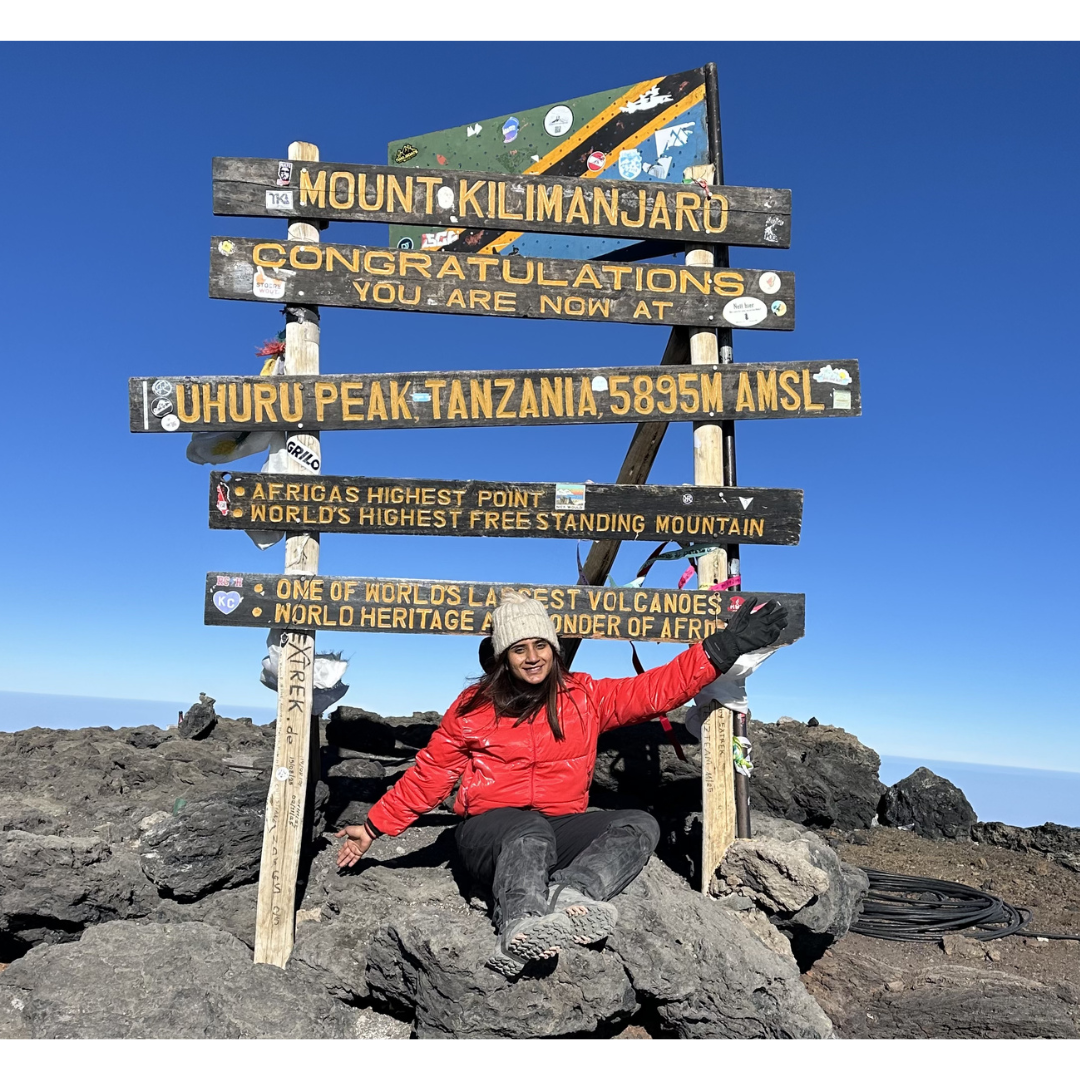
Bejul striking a pose at the Uhuru Peak sign.
Thinking of climbing Mount Kilimanjaro?
Bejul’s climb up Kilimanjaro shows that the mountain tests your patience and mindset, and along the way, you learn a lot about yourself. From the first morning on the trail to standing on Uhuru Peak, the journey teaches lessons in endurance, focus, and the importance of trusting your guides. If Bejul’s story inspires you, it might be time for your own adventure. Climb Kilimanjaro, go on a safari in Tanzania, or explore Zanzibar, and you’ll take home memories that last a lifetime. To plan your journey or ask any questions, contact Follow Alice. We are happy to help.