



Climbing Kilimanjaro is iconic on its own. Do it for charity, and suddenly every step matters more, each donation helps, and every update from the trek makes an impact far beyond Tanzania. More travellers than ever are choosing a Kilimanjaro trek for charity, to honour a loved one, support a cause close to home, or rally their community behind something important.
Follow Alice has put together the top reasons to climb Kilimanjaro for charity, along with tips on making your trek meaningful, inspiring, and uniquely your own. Climbing the world’s tallest free-standing mountain is no small feat, and adding a charitable cause makes it an achievement that resonates far beyond the summit.
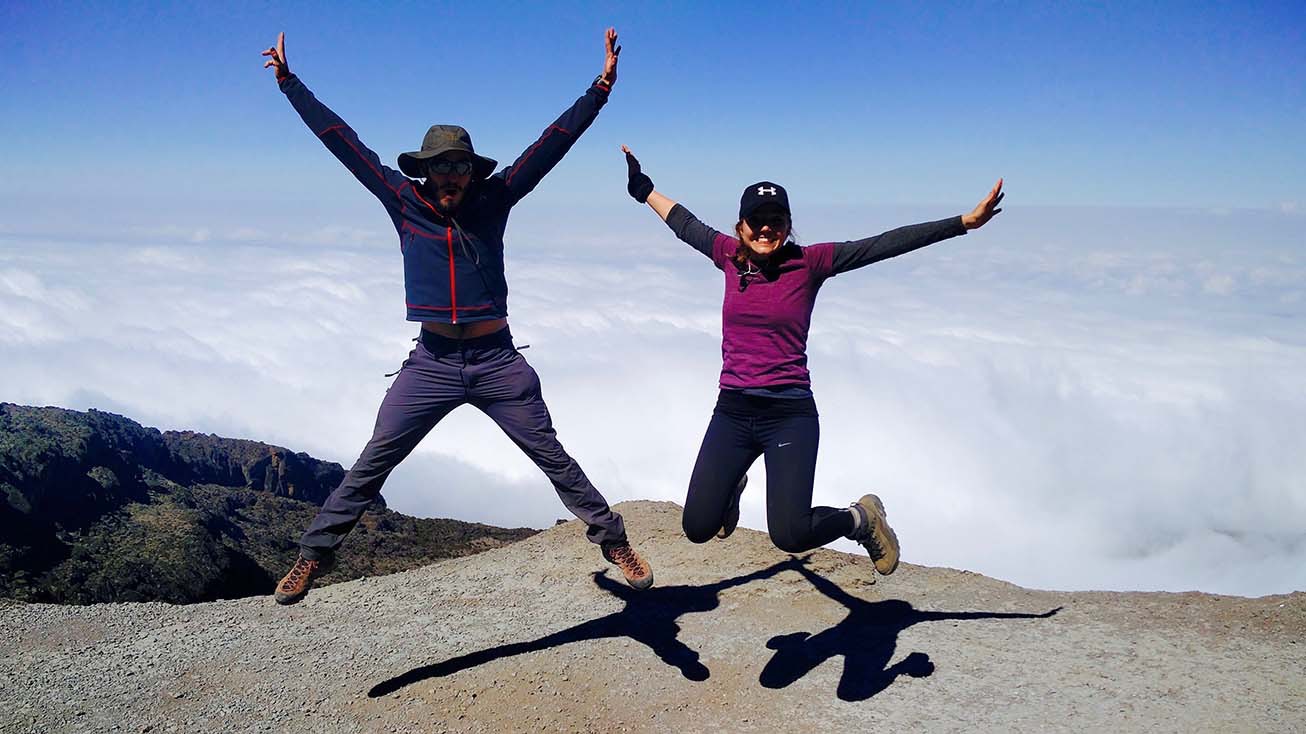
A couple jumping for joy on Mount Kilimanjaro.
{{leadmagnet-one}}
Top reasons to climb Kilimanjaro for charity
Charity climbs on Mount Kilimanjaro are about more than the trek; they’re about the people and causes you support along the way. Here, we explore the top reasons travellers are using their Kilimanjaro adventure to make a real difference. No matter the cause, if it’s raising funds, inspiring others, or leaving a lasting impact, every climb tells a story worth sharing. Let's take a look:
1. Your climb becomes a force for good
Standing on Uhuru Peak at 5,895 m is extraordinary. Knowing you used that climb to help fund a classroom, support conservation, or raise awareness for an illness adds layers of depth that stay with you for decades.
We’ve seen this firsthand at Follow Alice. One climber summited with us to raise R200,000 ($14,455) for Down Syndrome SA. Another combined his Tanzania and Uganda trip with a visit to a rural water-filtration NGO — he funded and installed a filtration system for a local community, and we arranged for him to meet the team and be part of the impact. Through these stories, you will see that your achievement becomes part of someone else’s story of progress. That’s the power of Kilimanjaro for charity.
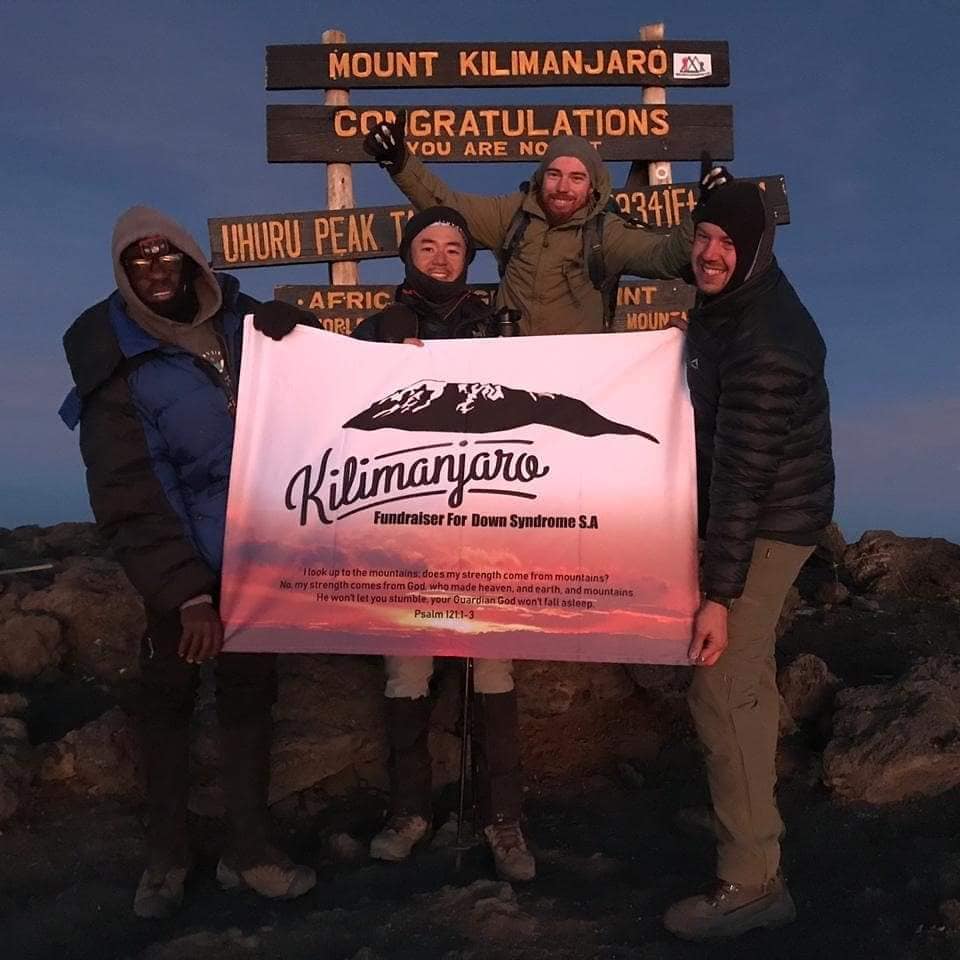
Follow Alice, climbers Dewald and Francois with Down Syndrome SA at Uhuru Peak with their guides.
2. Big challenges attract big support
A bold challenge inspires generosity. When you tell people you’re doing a Kilimanjaro trek for charity, something clicks they want to be part of it. Your supporters see the training, the altitude challenges, the early mornings, and the commitment. They witness your effort, and it inspires theirs. Fundraising doesn’t have to feel like you're just asking for money. It will make you feel like wanting to invite people into a powerful journey. Some climbers raise far more than expected simply because their supporters feel emotionally invested in the challenge.

Our co-founder, Daniel, met the team at Rau Eco and Cultural Tourism Enterprise.
3. You build a community around your climb
When you commit to climbing Kilimanjaro for charity, you’re rarely doing it alone. Your community steps forward like your colleagues, friends, family, people who care about the same cause, even strangers who stumble across your story online. Your circle will follow your training updates, share your fundraising page and cheer you on as you head up the mountain. Many climbers say it’s the most supported they’ve ever felt in their lives. Those bonds don’t disappear after the summit. They often spark long-term involvement in the cause.
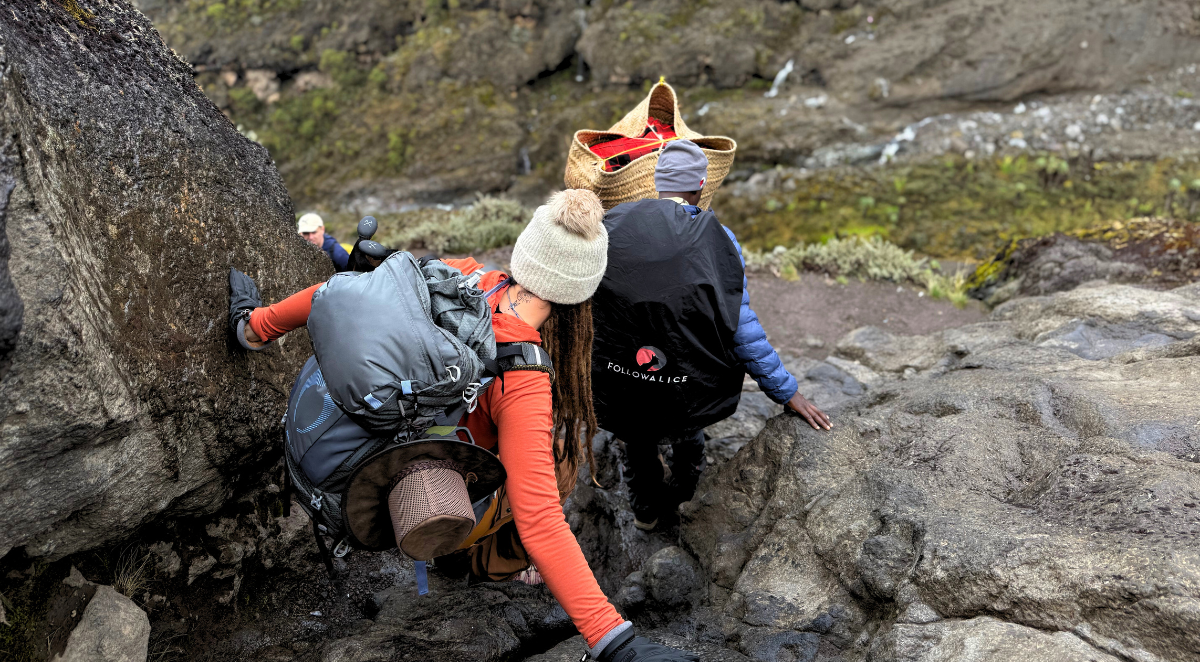
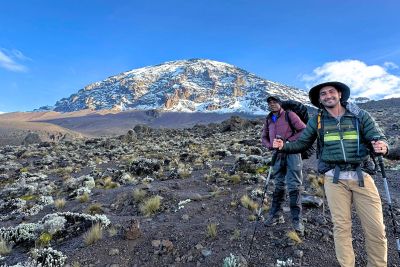
Two trekkers are embracing the rocky terrain.
4. Purpose carries you through the hard moments
Kilimanjaro has its fair share of tough hours, especially on summit night between midnight and sunrise. The cold bites, the altitude tests you, and the trail can feel endless. Having a cause gives you mental fuel.
When you’re climbing Kilimanjaro for charity, your “why” becomes a powerful anchor. It keeps you focused. It keeps you grounded. It keeps you moving. Many climbers tell us that remembering the people they’re climbing for made all the difference in the final push to Uhuru Peak.

Dewald climbed Mount Kilimanjaro in honour of his daughter, who has Down syndrome.
5. Kilimanjaro is accessible to first-time trekkers
One reason so many people choose a Kilimanjaro trek for charity is that the challenge is huge, but still achievable. You don’t need technical climbing skills, ropes, or mountaineering experience.
Kilimanjaro is a trek. A tough one, yes, but a trek. That’s what makes it such a compelling charity challenge; it feels monumental without being exclusive. You train, you prepare, and with the right support, you have an excellent chance of reaching the summit.
6. Your story raises awareness as much as funds
Sharing your journey from training walks to packing lists to summit updates does more than raise money. It raises awareness. People learn about your cause because they’re following your climb. A single Instagram post from Stella Point, snow catching the sunrise behind you, can start conversations that last long after your boots are off. Supporters often say these shared stories helped them understand the issue more deeply. For charities, this visibility is often just as valuable as the donations.
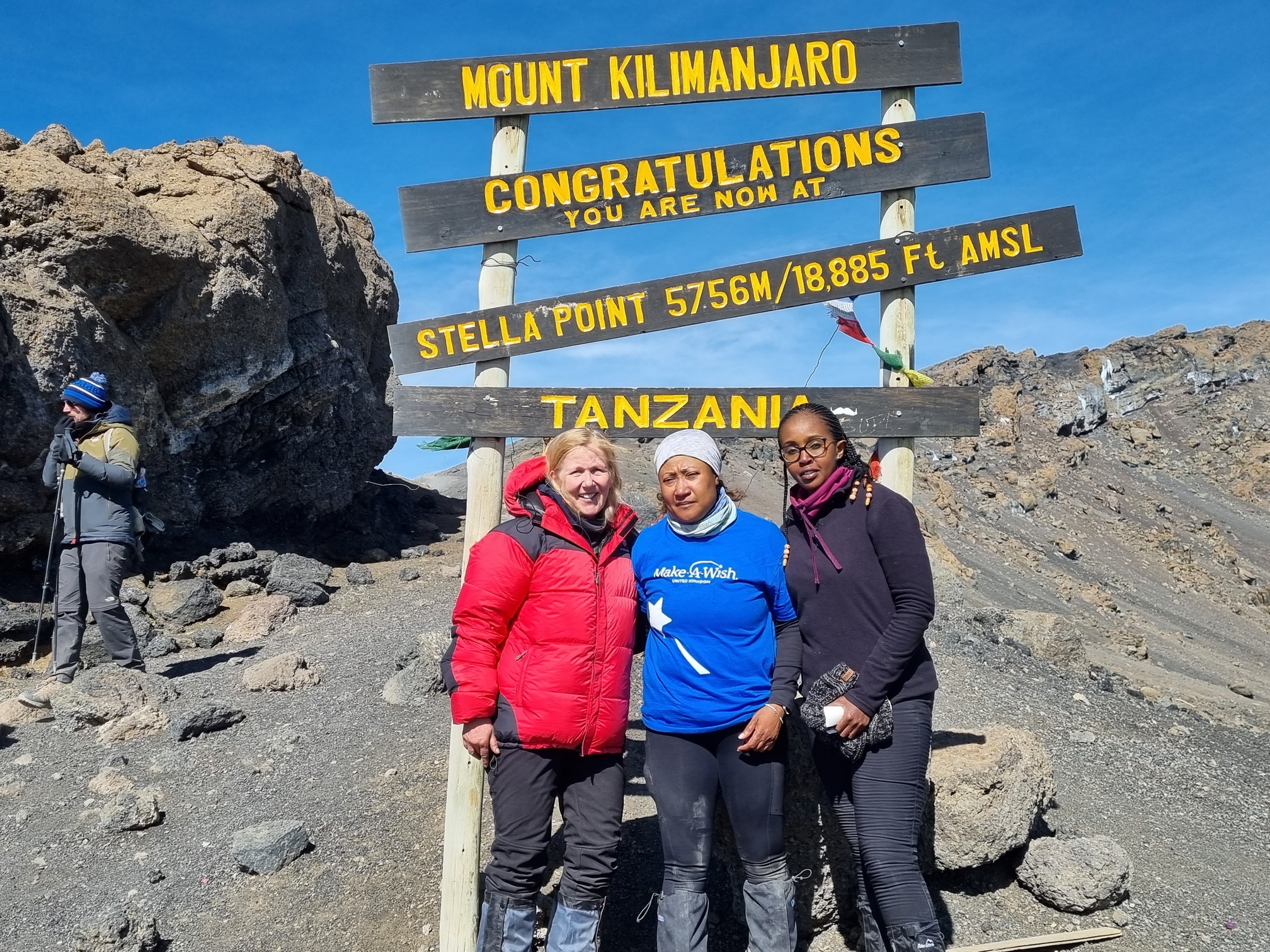
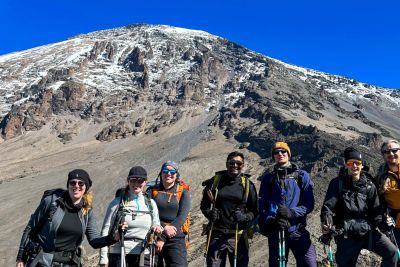
Trekkers pose at Stella Point.
7. You inspire others to take action
One of the most beautiful side effects of a climb of Kilimanjaro for a charity campaign is how contagious it is. Someone reads your story and signs up to volunteer. Another donates for the first time in years. A friend sees your effort and decides to take on their own challenge. Each action creates a ripple effect, inspiring others, raising awareness, and driving real change. You’re not just fundraising; you’re sparking a movement, one story, one step, and one act of generosity at a time.
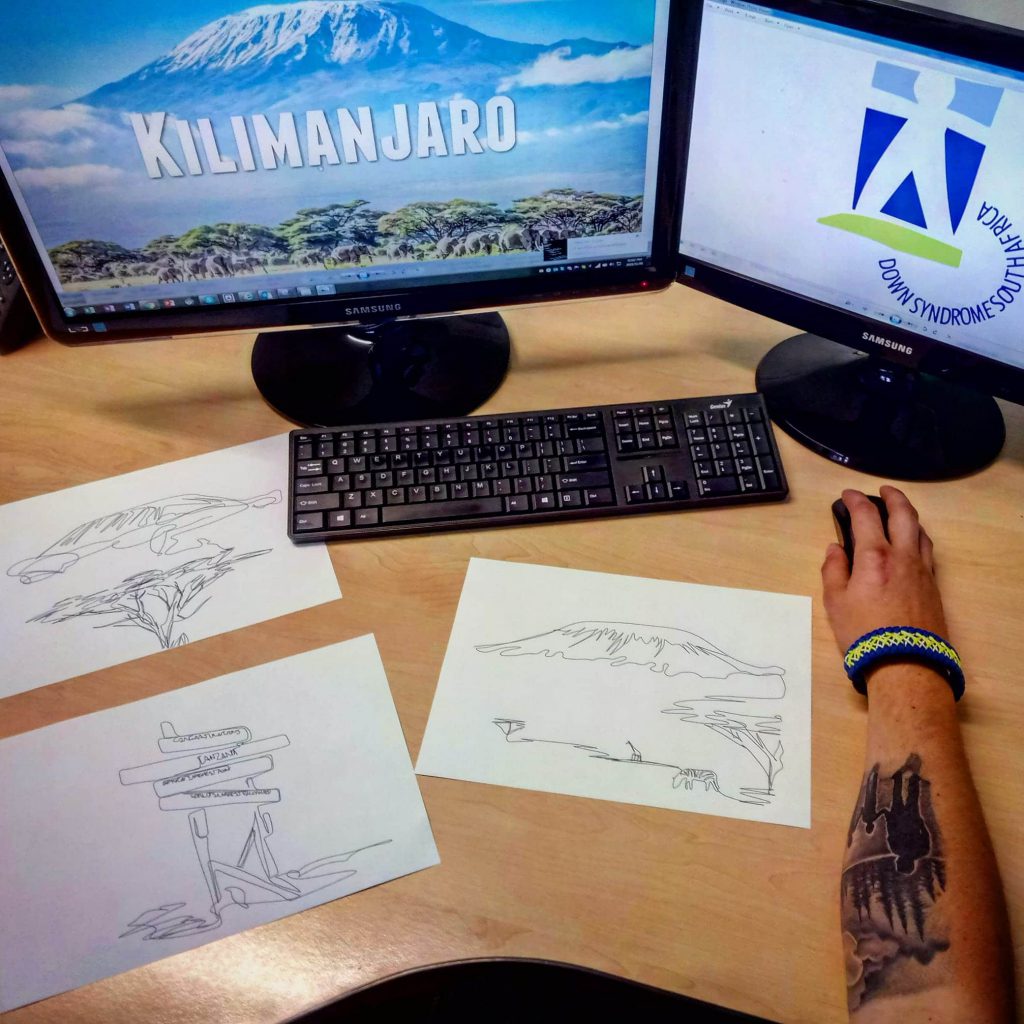
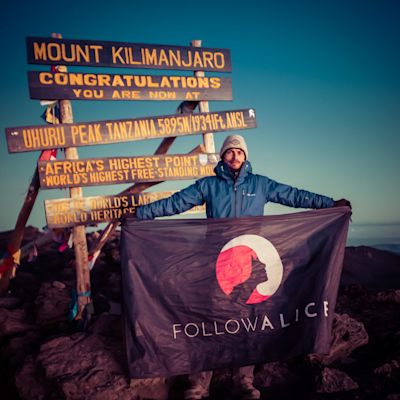
Trekker preparing for his charity climb.
8. You travel with intention and connection
A charity-focused climb naturally changes how you travel. It gives you a stronger connection with the destination and the people who call it home. At Follow Alice, we take this seriously. If you want your adventure to include impact beyond fundraising, we can help you:
- Visit the NGO you’re supporting.
- Meet local leaders driving grassroots change.
- Take part in community projects.
- Enjoy homestays and cultural experiences in Peru.
- Plant a tree or support reforestation efforts.
- Visit animal rescue and rehabilitation centres.
We also offer a vetted list of NGOs in Tanzania, Uganda, Nepal, and other destinations for travellers who want to support organisations doing credible, meaningful work. Your Follow Alice trip manager can walk you through options and build them into your itinerary.
9. It strengthens your connection to local communities
When you climb Kilimanjaro for charity, you naturally become more aware of the people who make the mountain experience possible — the guides, porters, cooks, and local partners. Many charity climbers say this is one of the most unexpected and rewarding parts of the journey. You learn about their families, their culture, their ambitions, and the challenges local communities face. You see where tourism genuinely helps and where thoughtful support can make a real difference.
10. It’s a once-in-a-lifetime adventure
Kilimanjaro is one of the world’s most iconic treks, featuring five distinct ecosystems, towering lava formations, alpine deserts, and an unforgettable sunrise at the summit. A glacier-capped peak and the thrill of stepping onto the Roof of Africa make it an adventure of a lifetime on their own. Add a cause, and the journey takes on a whole new depth. Your story shifts from “I climbed Kilimanjaro” to “I climbed Kilimanjaro and helped change something that matters.”
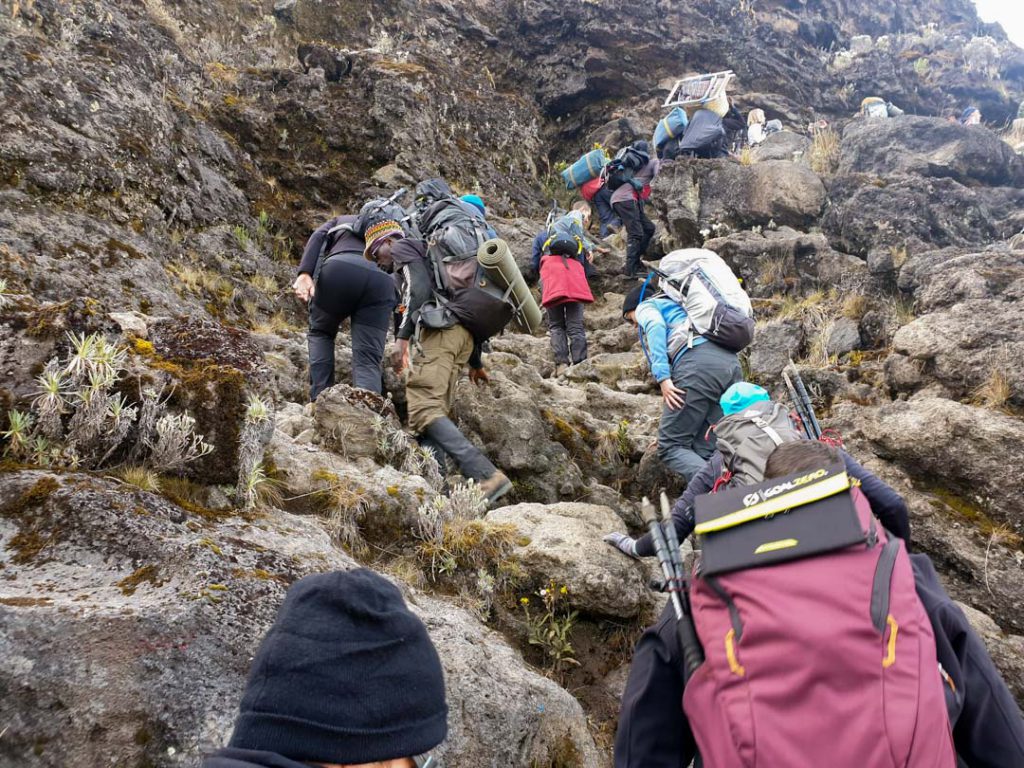
Trekkers taking on Mount Kilimanjaro.
How to Climb Kilimanjaro for charity
If you’re wondering how to climb Kilimanjaro for charity, here’s the simplest roadmap:
1. Choose a cause that genuinely matters to you
Your passion and authenticity drive your entire campaign.
2. Pick your route and date
Certain routes (like Lemosho and Northern Circuit) are great for charity groups because they offer excellent acclimatisation.
3. Set your fundraising goal
Make it achievable but inspiring. People love rallying behind a clear target.
4. Create your fundraising page
Use JustGiving, BackaBuddy, GoFundMe, or a similar platform. Include your story, your “why”, and what the funds will support.
5. Share your journey regularly
People connect with the process. Share your training walks, gear prep, altitude fears, hopes, everything.
6. Work with an operator who supports charity travel
This is where we come in. Follow Alice can help by planning your Kilimanjaro climb and facilitating on-ground visits. You focus on the fundraising and the journey, and we will handle the logistics and support.
Ready to climb Kilimanjaro for charity?
If you’re dreaming of a Kilimanjaro trek for charity, we’d love to help make it happen. If you already have a cause or need help choosing one, we can build a climb that’s safe, meaningful, inspiring, and beautifully aligned with your values.