


You haven’t left it too late to trek in Nepal. That’s the short answer. The longer one comes down to what your body needs, how you prepare, and how you pace yourself in the Himalayas. Maybe you’ve been thinking about this for years. Plans got pushed back because of work, kids, injuries, and life. Maybe you were meant to do this with someone who’s no longer here. Maybe you’ve just reached 65 and thought, if not now, when? Whatever brought you to this page, let's be honest with each other.
This article is not for people in their fifties who are getting on a bit. It's for people who are 65, 70, 75 and seriously asking if tackling the Himalayas is still for them. The answer is yes, but the conditions matter. If you still have questions, feel free to schedule a call with our team. But for now, here's everything you actually need to know.
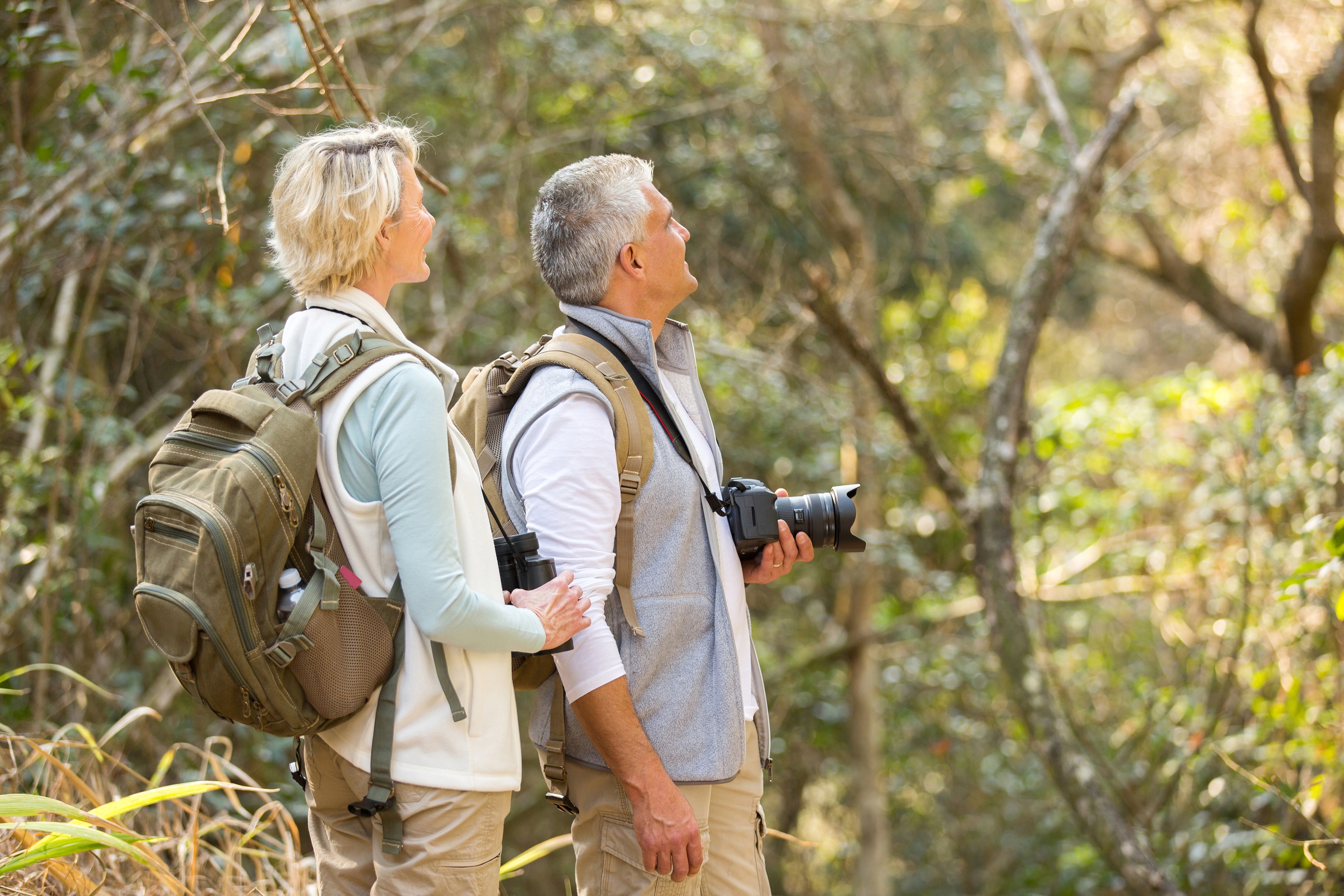
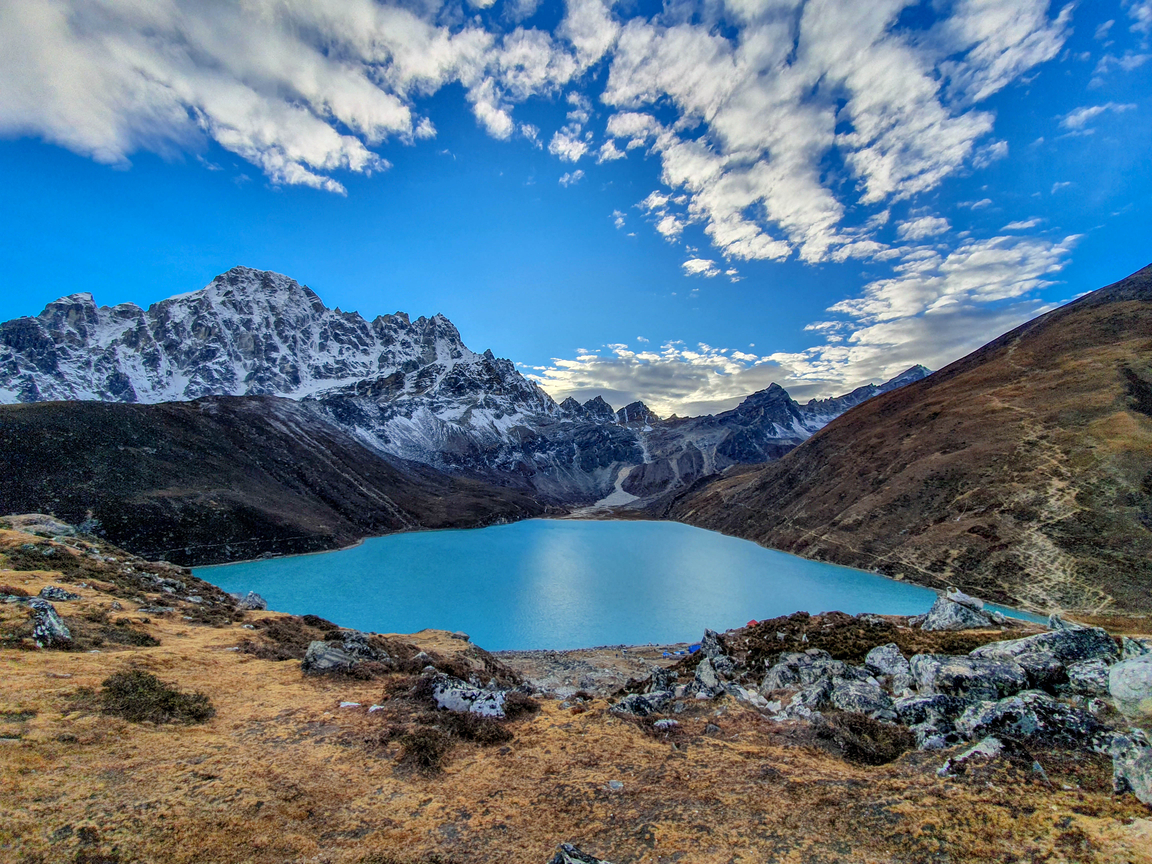
Older citizens are taking in the scenery on their hike.
{{leadmagnet-one}}
The age question for the Nepal trek
There is no upper age limit on trekking in Nepal. So, if you want proof that age is nothing but a number when your health is in good shape, consider this: the oldest person to climb Mount Everest was Japanese adventurer Yuichiro Miura, who reached the 8,848-metre summit on 23 May 2013 at the age of 80. He had undergone multiple heart surgeries before the climb. He went anyway, and he made it. This story shows it is possible when you prepare properly, get medical clearance, and stay aware of your physical well-being throughout.
Closer to the trails most trekkers walk, Follow Alice has guided clients well into their mid-seventies on the Everest Base Camp trek. Not as exceptions or extraordinary cases, but as people who prepared properly, listened to their bodies, and arrived ready. What mattered wasn’t their age, but how they had spent the previous six months preparing. What the numbers don’t show is how your body actually responds under sustained effort. Your cardiovascular fitness matters more than your age. So does how your joints behave under load and at elevation. So does the medication you take, and how it may interact with altitude.
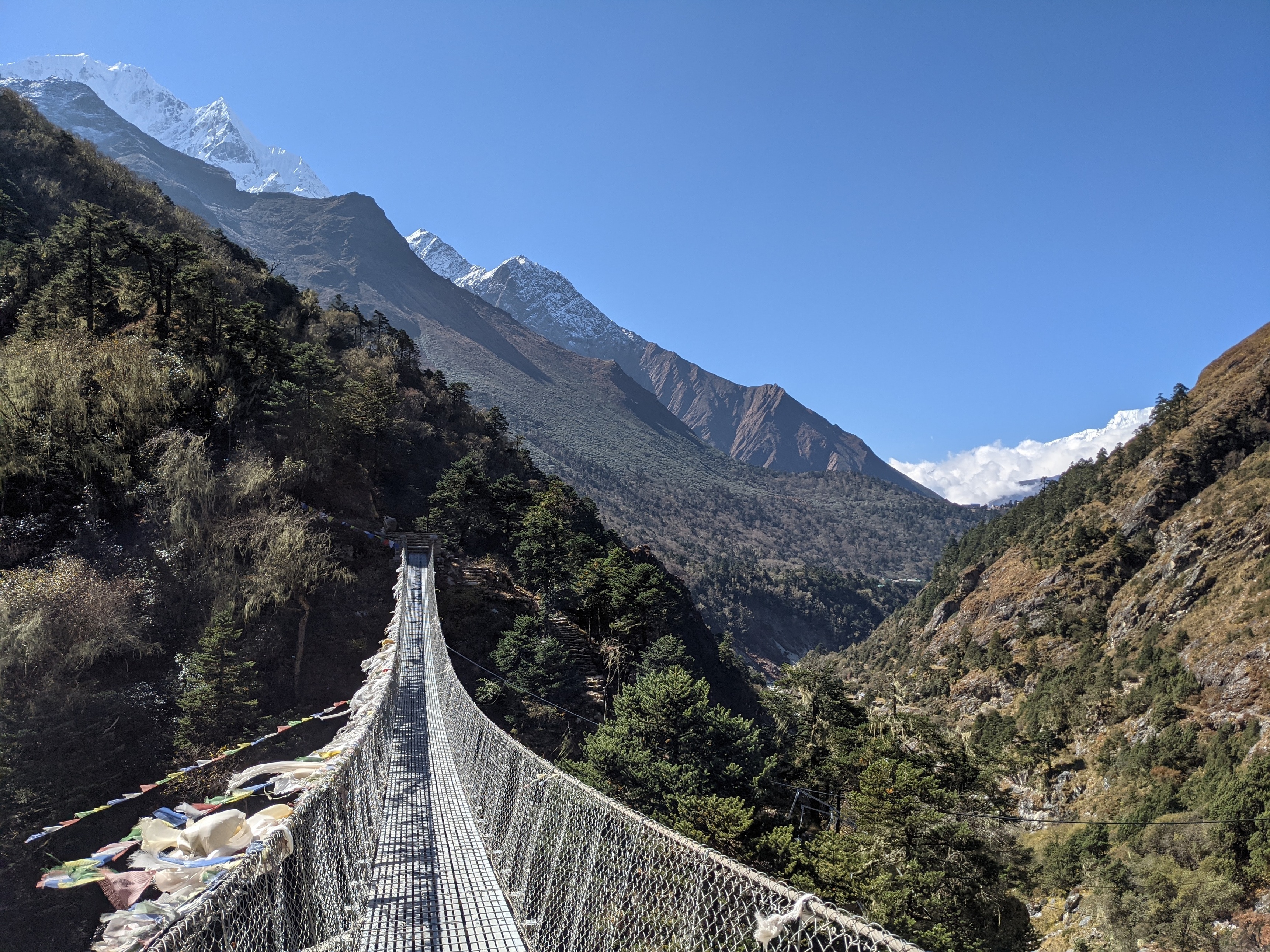
Suspension bridge on the Everest Base Camp trek, Nepal.
What changes at 65+ that you actually need to plan for
Here’s what a travel doctor would tell you, specifically for your age, not general altitude advice that applies equally to a 32-year-old. Before your Nepal trek, it is essential to consult a medical professional. All information in this article is general in nature and should not replace personalised medical advice from your GP or a travel medicine specialist, particularly in relation to your medications and medical history. With that in mind, here are the key factors to consider before heading to the Himalayas:
- Reduced thirst sensation: As we age, the body becomes less reliable at signalling thirst. At altitude, this matters more than most people expect. Dehydration can quickly intensify symptoms of Acute Mountain Sickness, which can include headaches, fatigue, and poor sleep. You may not realise you are under-drinking until symptoms are already present. Three litres of water per day is not a target; it is the minimum baseline.
- Medication needs careful review: Acetazolamide (Diamox) is commonly used to support acclimatisation. It acts as a diuretic and carbonic anhydrase inhibitor. If you are taking blood pressure medication, other diuretics, lithium, or certain diabetes medications, these combinations must be reviewed with your doctor in advance. Some require dose adjustments or closer monitoring. This is not something to address at check-in or on the mountain.
- Sleep disruption increases with altitude and age: Sleep at high elevation is lighter and more fragmented for everyone. For trekkers over 65, who may already experience changes in sleep quality, this can lead to faster cumulative fatigue. Rest days are not optional comfort stops; they are essential for safe acclimatisation.
- Thermoregulation becomes less efficient: The body becomes less efficient at both retaining and releasing heat with age. In Nepal, where temperatures shift from cold mornings to warm afternoons and freezing nights at altitude, this places additional strain on the system even when fitness levels are the same.
None of this is said to alarm you. It is said so you can plan properly. The reason is that at altitude, good preparation makes all the difference.
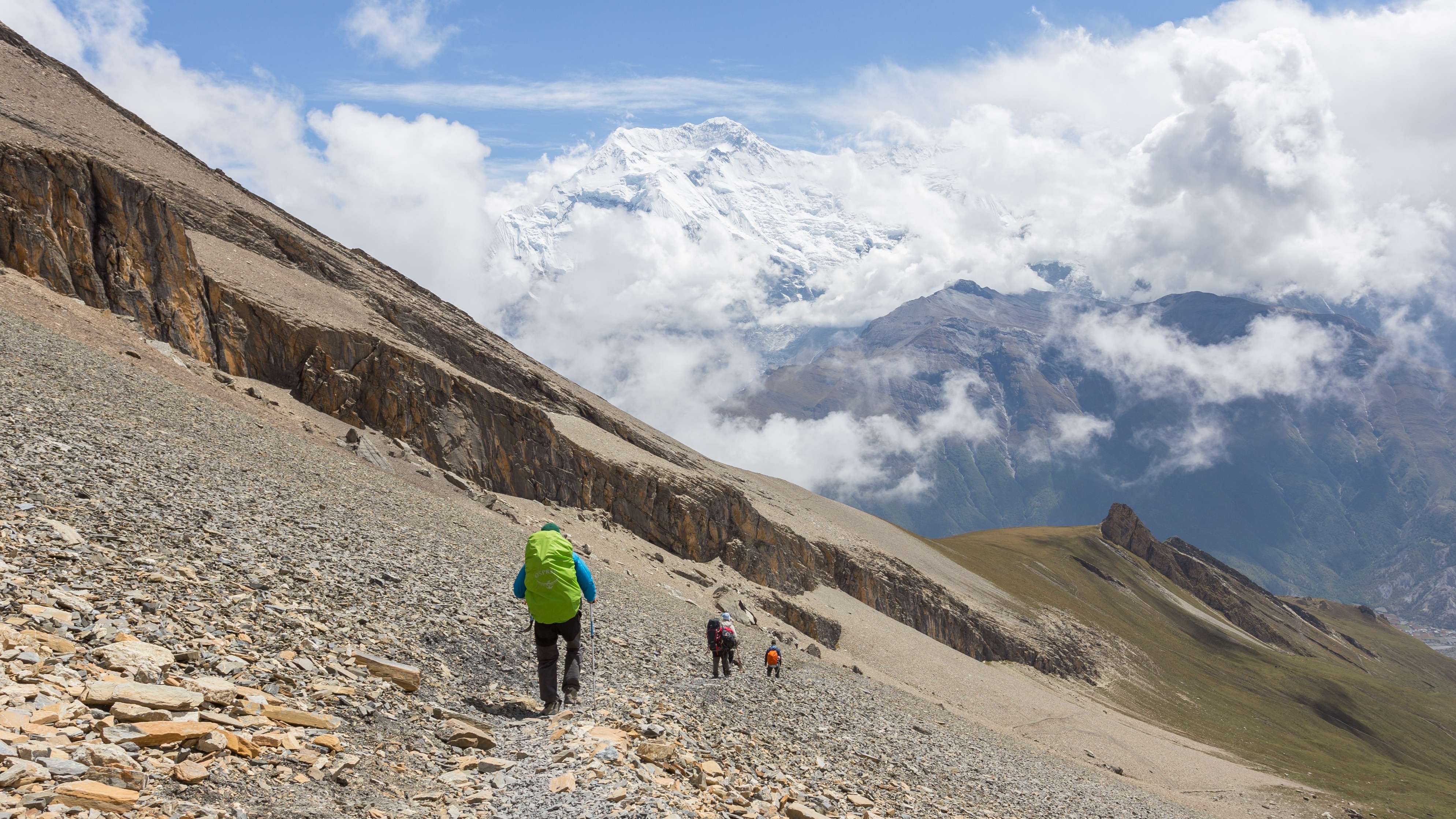
Treks in Nepal have steep elevations.
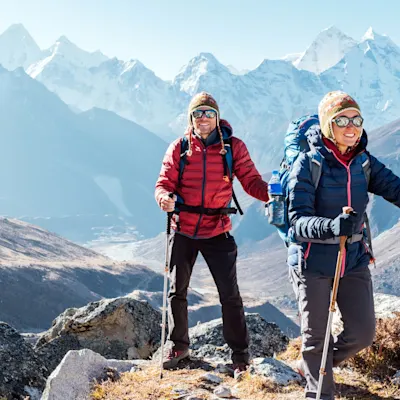
When you and your partner are not the same trekker
This is the conversation nobody wants to start. In truth, it is one of the most common situations we encounter with 65+ travellers when two people want the same trip, but whose bodies are working from very different starting points. One of you has been walking regularly for years. The other had a hip replacement eighteen months ago and is still rebuilding. One handles altitude well. The other finds the first two days above 3,500 metres genuinely hard. One wants to push to the next teahouse. The other needs an hour at this one.
The instinct is to stay together during your Nepal trek. It comes from love, from loyalty, from not wanting the other person to feel like they're holding you back or being left behind. The result of ignoring the gap is usually that the faster trekker spends the whole trip suppressing frustration, the slower trekker spends it feeling guilty, and neither person has the experience they came for.
Here is what actually works:
- Name it before you go: Talk about the fitness gap at home, not at altitude when one of you is already tired, and the other is ready to keep moving. Agree in advance that different paces are normal; they are logistics, not a problem.
- Build the itinerary around the less fit trekker: Set the pace, daily distances, and acclimatisation days based on the person who needs more time. Not an average between you. The stronger trekker will cope with a slower pace. The reverse is rarely true without strain or risk.
- Use a guide creatively: A good mountain guide can adapt the walk so both people get what they need. One can move ahead at one's own pace with a porter while the guide stays with the slower trekker. You then regroup at the end of the day. This is not splitting up; it is structured flexibility.
- Plan different descent options: Decide ahead of time what happens if one person needs to stop or turn back. A helicopter descent for one person while the other continues is a valid, practical option. The key is making that decision on a clear day at home, not at altitude under pressure.
Let go of the idea that you have to have the same experience to share it. You will both be in Nepal. You will both sleep under the same sky, eat at the same teahouses, and come home changed in ways you'll spend months figuring out. The view from Kala Patthar and the view from Namche Bazaar are both of the Himalayas.
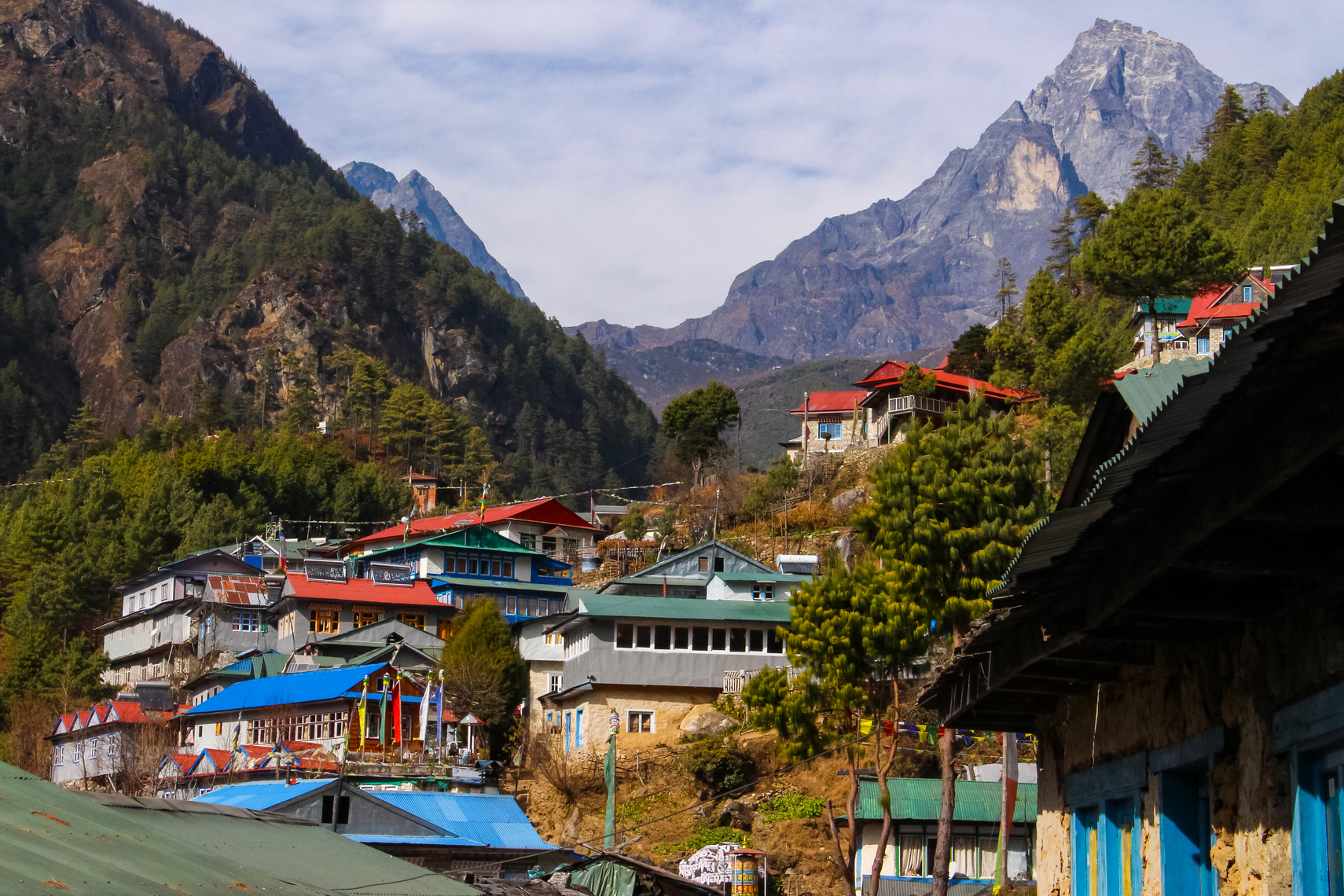
View of Namche Bazaar.
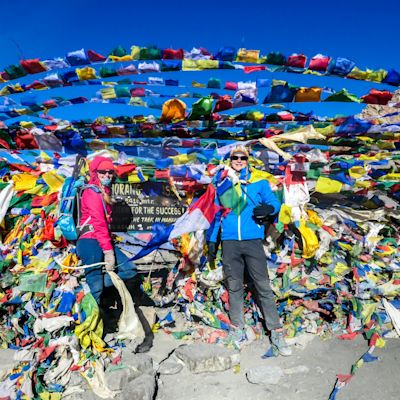
Choosing the right trek in Nepal
There are various routes or adventures you can embark on in Nepal. Here’s an honest decision framework built around the variables that matter at this stage of life. Let's take a look:
- If you have a history of knee or hip problems (including replacements), the descent is often harder than the ascent. Look for treks with shorter daily downhill sections, or plan for support such as a hired horse on specific stages. Before booking, speak to your surgeon about whether you are cleared for sustained downhill load-bearing, not just general hiking.
- If you are on multiple medications, altitude and medication management need careful thought. The Langtang Valley trek reaches lower maximum elevations than the Everest Base Camp and is often more manageable for trekkers who need closer monitoring. It is also quieter, which means more space to rest and recover in teahouses.
- If you are travelling solo after a significant life change, you are not alone in this. Nepal attracts people moving through transition, bereavement, retirement, or simply a desire to mark a new chapter. A guided group trek offers structure and safety, with the balance of independence and quiet company, without pressure to perform.
- If you have a limited time window (under two weeks), do not compress a high-altitude itinerary. If you cannot complete Everest Base Camp with proper acclimatisation days, choose a lower-altitude trek instead and do it well. Poon Hill or the shorter Annapurna routes are genuinely rewarding and far less punishing than a rushed EBC attempt.
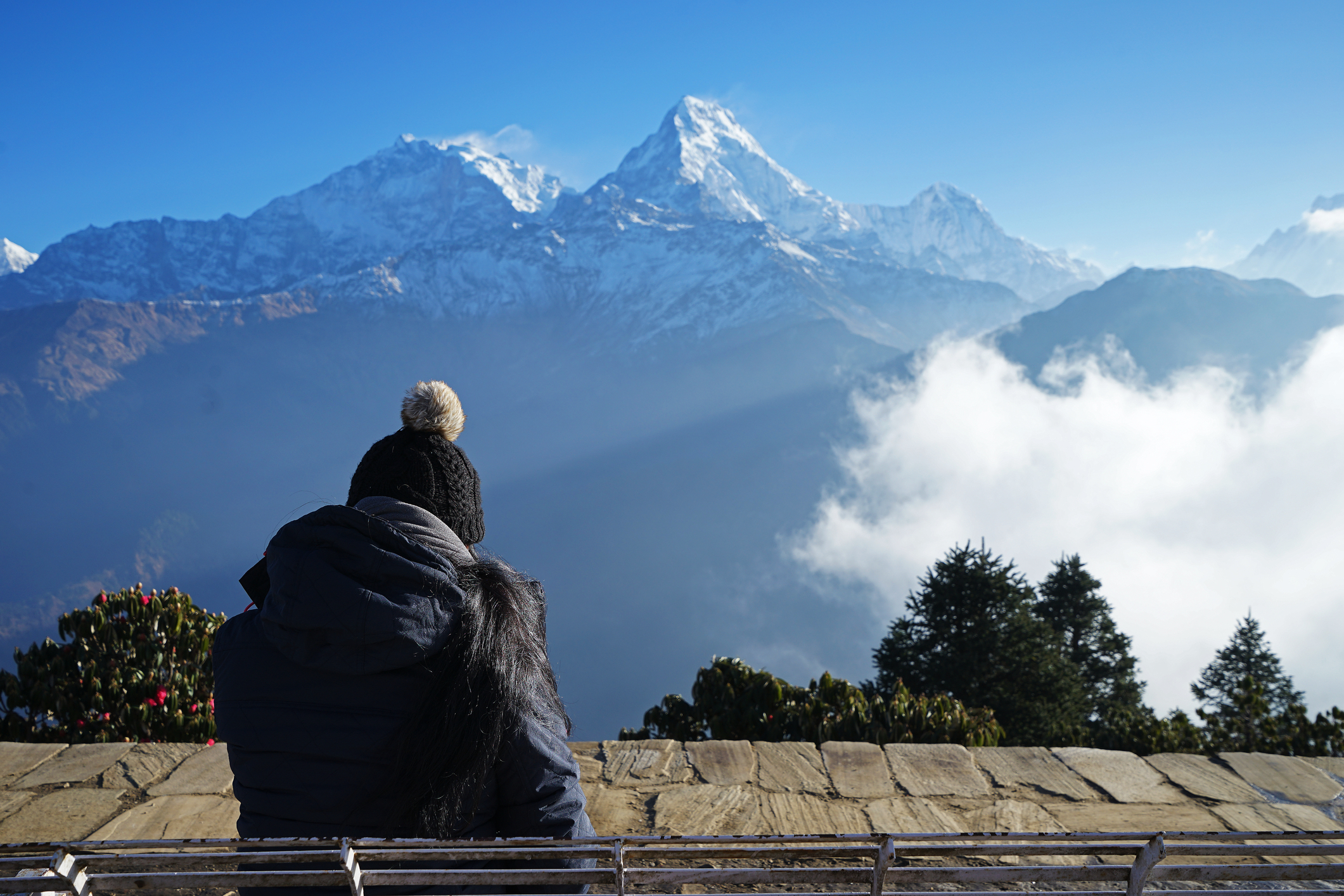
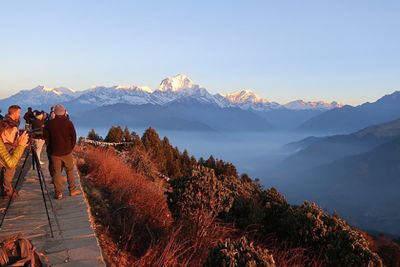
A tourist enjoying the views from Poon Hill.
Learn more: Ghorepani Poon Hill Trek: Expert Tips for an Unforgettable Adventure
Training for Nepal at 65+
Starting training three to six months in advance is standard advice. It is not wrong, but it does not tell a 65-year-old with mild arthritis and a lower cardio base what to actually do day to day. Here is what training looks like for a 65+ body, broken into practical, honest phases:
1. Foundation phase (months four to six)
The goal is not fitness yet. It is tissue adaptation. Walk every day, starting at 30 minutes on flat ground. Increase by about 10 minutes per week. After the first month, add a light pack (around 5 kg). Tendons, knees, and hips need a gradual load to adapt. Skipping this phase and going straight to hills increases injury risk.
2. Strength and elevation phase (months two to four)
Introduce hills or incline work. If you live somewhere flat, a step machine is a valid alternative. Walk uphill with a pack of 6–8 kg. Aim for 90-minute sessions, twice a week. If you have mild arthritis, trekking poles are important cause they can reduce knee load on descent by up to 25 per cent.
3. Specific preparation phase (last two months)
This is where you train for Nepal, not general fitness. Do longer walks and, if possible, back-to-back hiking days or multi-day trips. Pay attention to how your body responds on day two and day three; that data matters more than a single good hike.
4. If you have a knee replacement or significant joint history
Work with a physiotherapist, not just a trainer. Focus on targeted strength work for the VMO and glutes to support the joint under downhill load. Your physio can also advise whether trekking poles are sufficient or whether a knee brace should be used consistently.
This phase-based approach matters because the body does not respond to altitude training in theory; it responds to repeated, progressive load in practice.
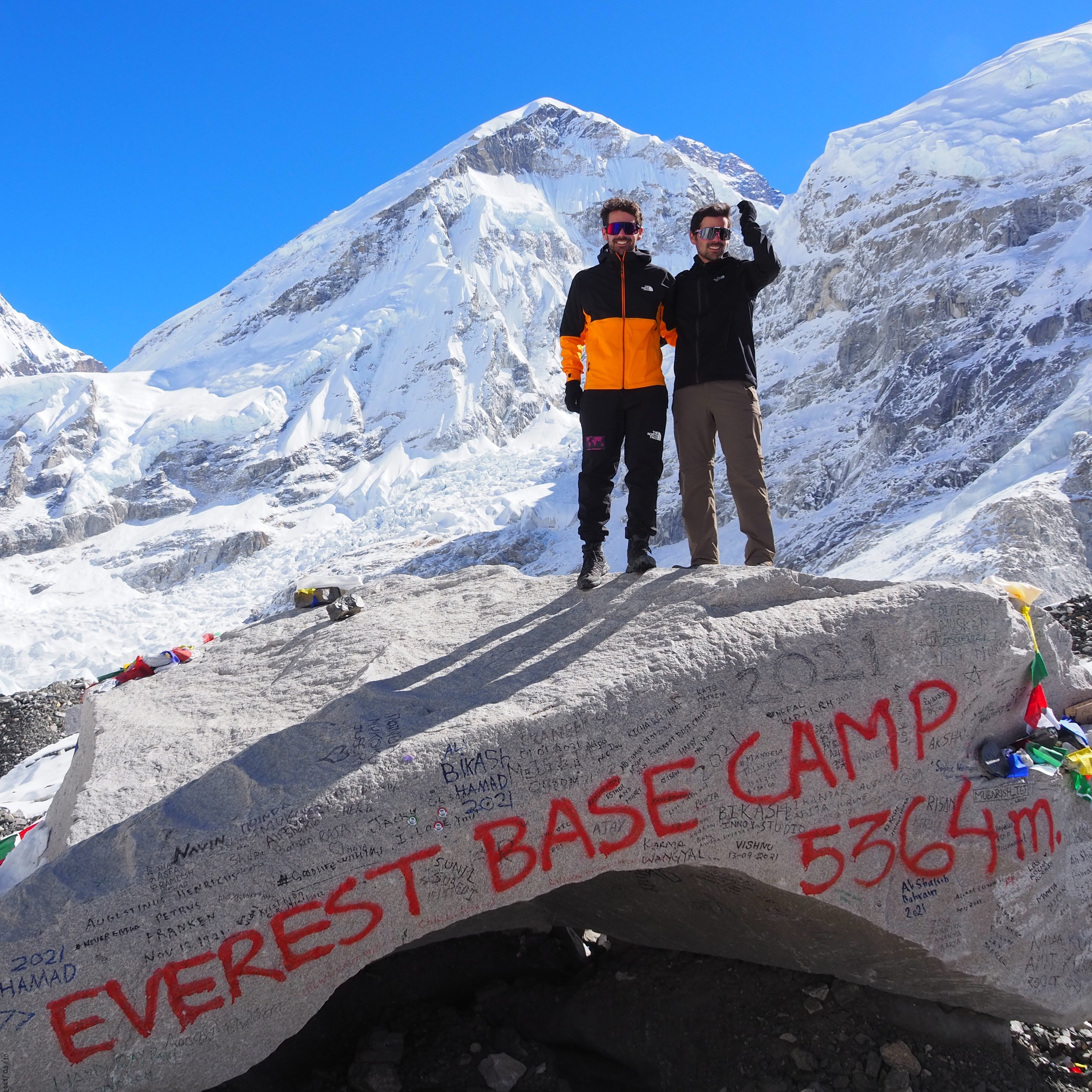
Trekkers pose at the Everest Base Camp.
The real talk about turning back on a Nepal trek
Turning back at the right moment is not failure. It is sound judgment. The mountain will still be there. What matters is your ability to recognise when continuing is no longer safe. The trekkers over 65 who struggle in Nepal are rarely the ones who turn around. They are the ones who do not know when they should have. Sometimes, even the most seasoned trekkers turn back because their bodies are just not adapting to altitude. With that said, it is important to pay attention to the signs, such as when you have a headache that does not improve after four hours, vomiting or persistent nausea, loss of balance or coordination, or confusion or unusual behaviour. These are not signs of tiredness. They are warning signs. The correct response is straightforward: descend, rest, and reassess.
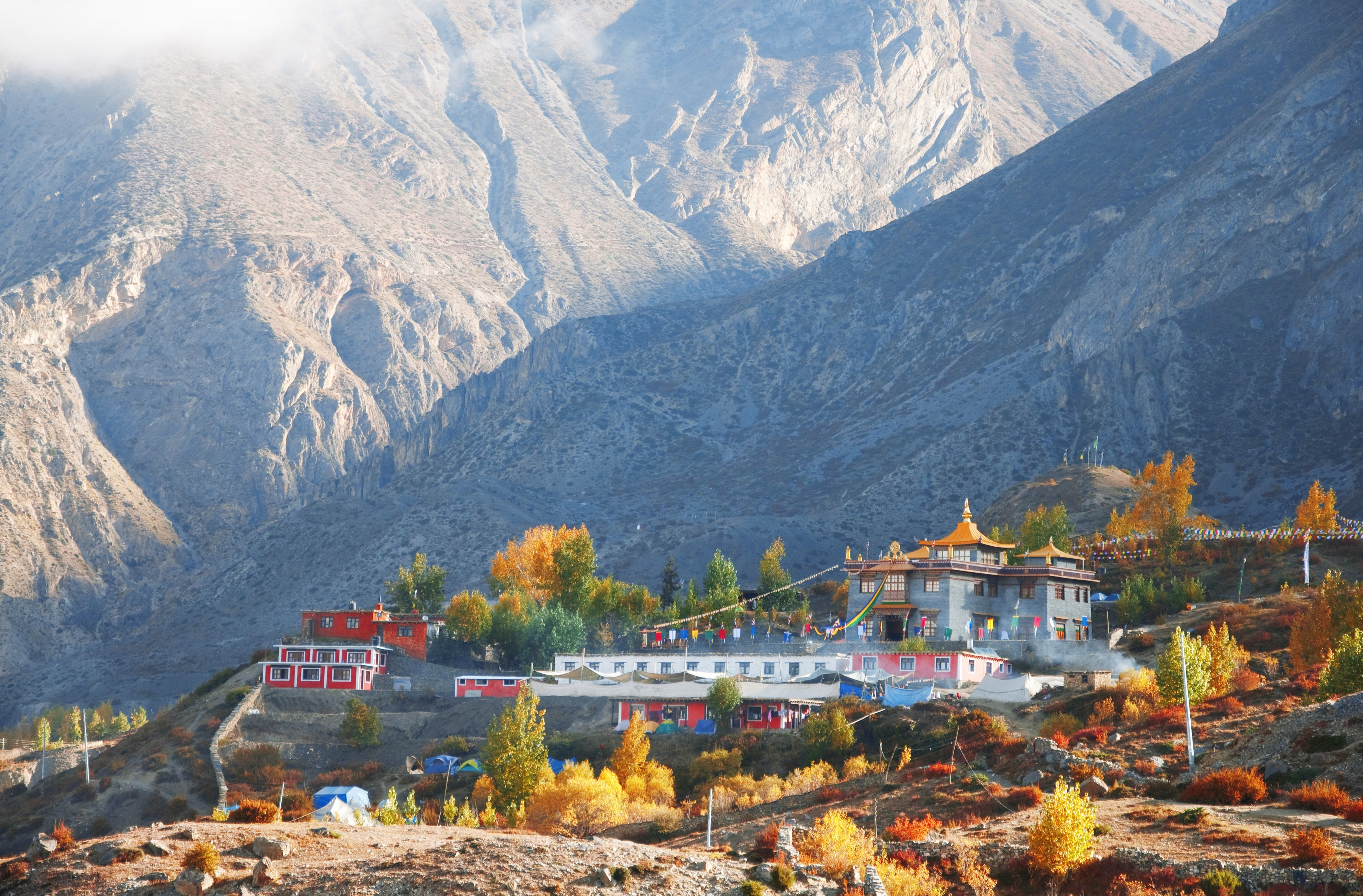
A view of a Nepali village.
{{leadmagnet-two}}
The Nepal helicopter option
A helicopter return should be seen as a tool, not a rescue. It can be planned before you leave. Many trekkers over 65 build it into their itinerary from the start, not as an emergency backup, but as a planned option for descent if their body needs it. Travel insurance that covers helicopter evacuation is essential for anyone trekking above 4,000 metres, at any age. If your knees can get you up but not safely back down, the helicopter is simply the way down. You can also end it in style.
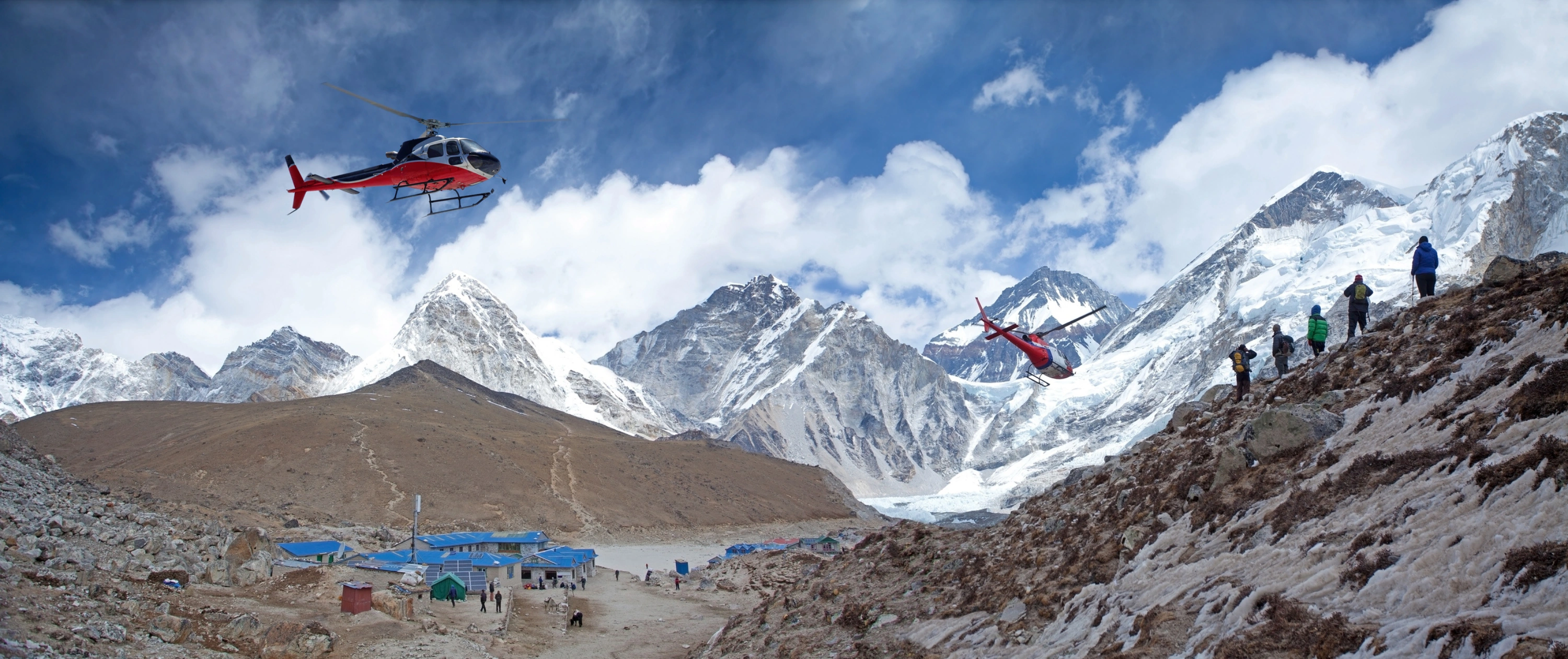
A helicopter taking off at the Everest Base Camp.
Learn more: Everest Base Camp in 5 Days: The Ultimate Guide to the Luxury Helicopter Trek
What to expect when you get home
The physical recovery from a trek like Everest Base Camp takes longer at 65 than it did at 40. Expect fatigue for two to three weeks. Sleep more than you think you need to. Your appetite may be suppressed or unpredictable. A follow-up with your GP to check blood pressure, iron, and general markers is sensible if you were on medications that required monitoring during the trek. The psychological landing is harder to predict. Many 65+ trekkers describe a version of the same experience: a strange flatness after returning, alongside a profound shift in how they understand their own capability. Things that felt like reasons not to do something no longer carry the same weight.Some people find it clarifying in ways they didn't expect. Some find it sad — the trip they'd saved for the future is now behind them, and the future feels shorter. Both responses are honest. Both are worth sitting with.Nepal tends to do that. It gives you exactly what you were strong enough to carry.
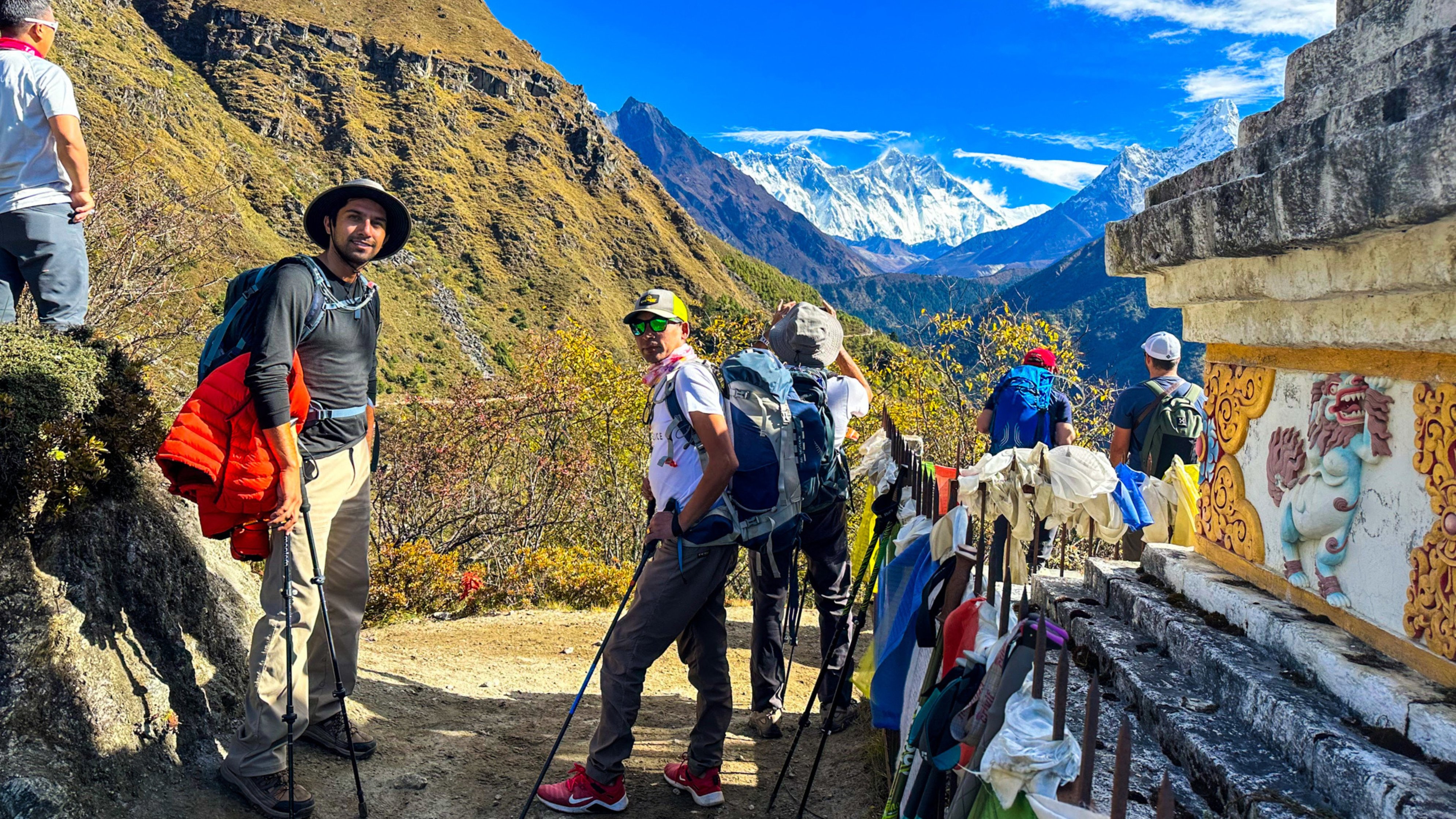
Trekkers on Everest Base Camp.
{{leadmagnet-three}}
Ready to start planning a Nepal trek?
If this article has answered some of your questions and raised a few more, that's exactly where you want to be. The best Nepal treks at 65+ are not improvised; they're built around your specific history, your travel companion if you have one, your medications, and your timeline.
We've guided trekkers in their mid-seventies to Everest Base Camp and beyond. We know what the planning looks like at this age because we've done it, not in theory, but on the trail. Get in touch with the Follow Alice team and tell us where you are, what you're considering, and what your honest concerns are. There is no pressure to book, just a proper conversation about whether Nepal is right for you, and if it is, how to do it well.