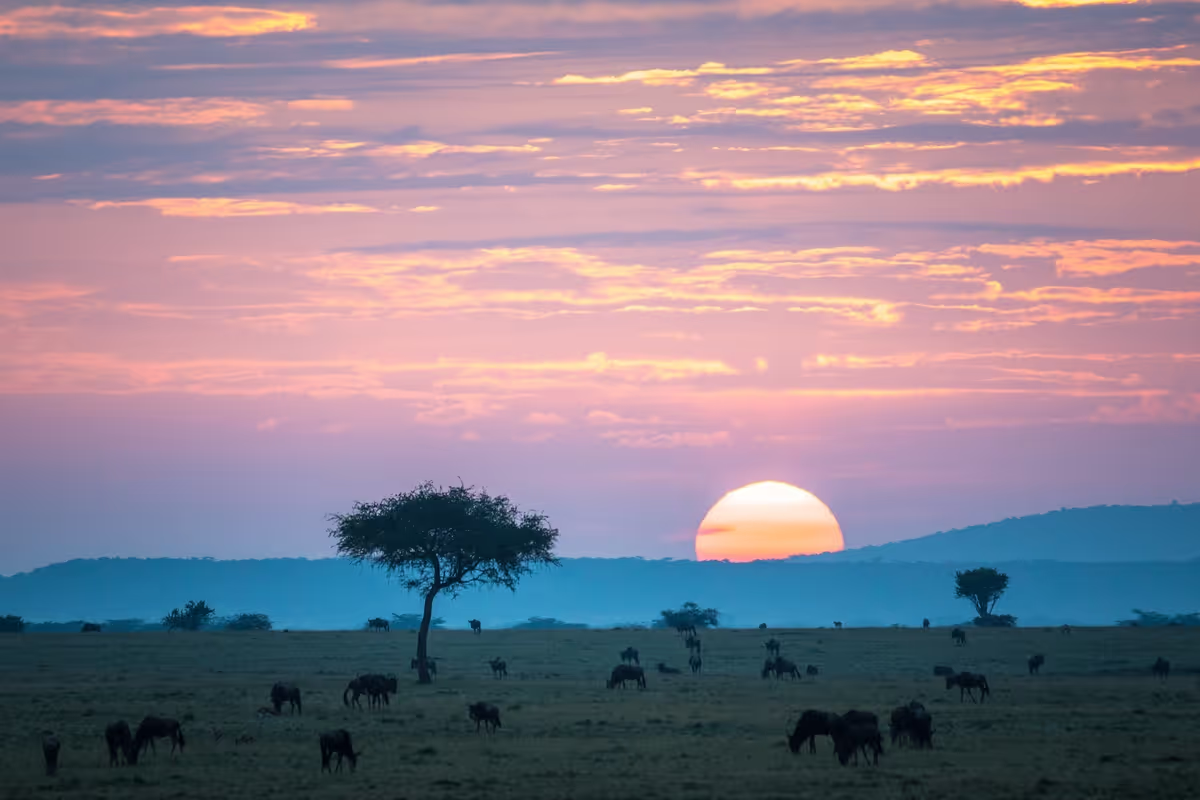



Hidden among the snow-capped peaks of the Greater Caucasus, Svaneti is one of those places that feels almost untouched by time. For centuries, its remote mountain valleys have helped protect a way of life that has stayed remarkably strong. Medieval stone towers still rise above old villages, and the rugged landscape tells a story of survival, tradition, and fierce independence.
Many travellers come to Svaneti for hiking and skiing, but this region offers so much more than outdoor adventure. It’s a place where history still feels close, where old customs continue to shape daily life, and where every village seems to have a story to tell. In this article, I’ll explore what makes Svaneti so special and why it’s well worth a visit.
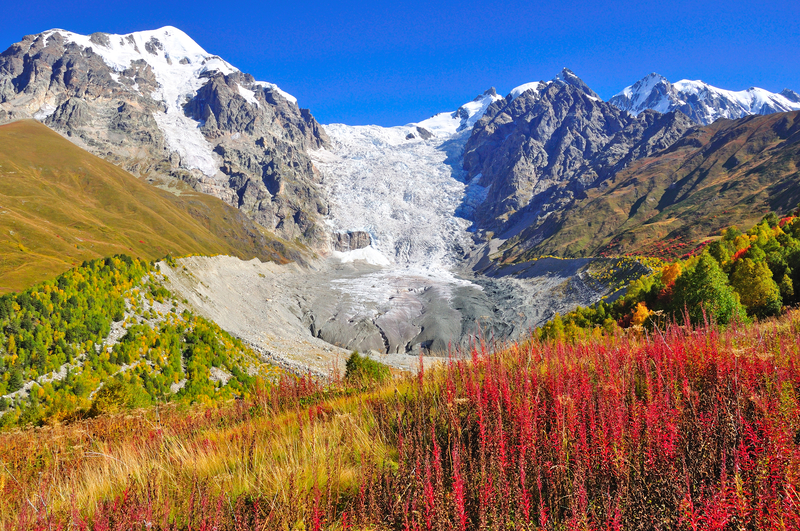
The glacier Adishi in the trek from Mestia to Ushguli, Svaneti region, Georgia.
Where is Svaneti?
Svaneti is a remote region in northwestern Georgia, set high in the Greater Caucasus Mountains near the Russian border. It is one of the highest inhabited areas in Europe, where people still live year-round among peaks that rise from 3,000 to over 5,000 metres. The region is split into Upper (Zemo) and Lower (Kvemo) Svaneti. Upper Svaneti is known for its towering mountains, historic villages, and some of the best hiking and climbing routes in the country, while Lower Svaneti opens into softer valleys and quieter landscapes.
For centuries, Svaneti’s villages were tucked into steep hillsides and hidden valleys, cut off from much of the outside world. That isolation helped the Svan people protect their language, customs, and way of life for generations. The mountains also acted as a natural defence, helping them withstand invasions from empires such as the Mongols, Persians, Ottomans, and Russians.
Today, reaching Svaneti is much easier than it once was, but it still feels wonderfully removed from the modern world. With its raw mountain scenery, deep-rooted traditions, and strong sense of identity, it offers a rare glimpse into one of Europe’s most enduring highland cultures.
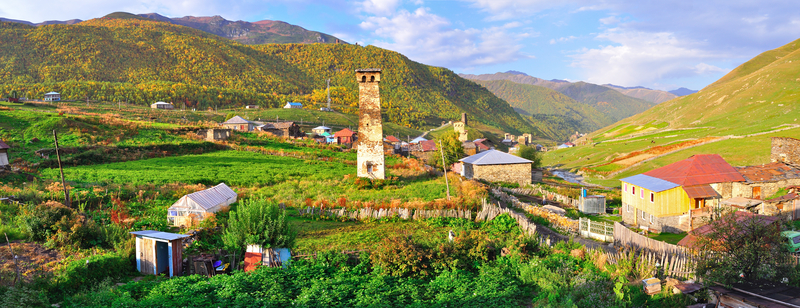
Ushguli village in the Svaneti region, Georgia.
Svaneti’s story of defiance
So what is the history behind this majestic province? Well, Svaneti’s story is one of strength and independence. The ancient mountain people of Georgia managed to protect their land from every invading army. Even when Mongol and Persian forces took over the lowlands, Svaneti stayed safe and became a place where some of Georgia’s most sacred relics were kept.
During the Middle Ages, Svaneti was almost completely isolated. While much of Georgia was under Ottoman or Persian influence, the Svans kept their own way of life, guided by family ties, unwritten rules, and warrior traditions. The mountains are still surrounded by medieval stone towers, which were both homes and forts, standing as reminders of their careful watch over the land.
Free Svaneti
In the 19th century, when the Russian Empire moved into the Caucasus, the Svans resisted. They only agreed to Russian rule in 1858, and even then, the mountains allowed them to stay mostly independent. Many villages refused to follow Russian laws, including taxes and imposed religious rules, which is why the region became known as “Free Svaneti.”
One of the saddest events happened in 1876 in the village of Khalde. Villagers who refused to pay taxes were attacked, where about 60 people were killed, 40 were deported, and all the family towers were destroyed. Khalde was not rebuilt until 1924, under Soviet rule.
Despite all this, the Svans kept their culture and independence. The mountains helped protect their traditions, language, and way of life. Even today, Svaneti feels like a world apart, a place that shows the courage and spirit of its people.
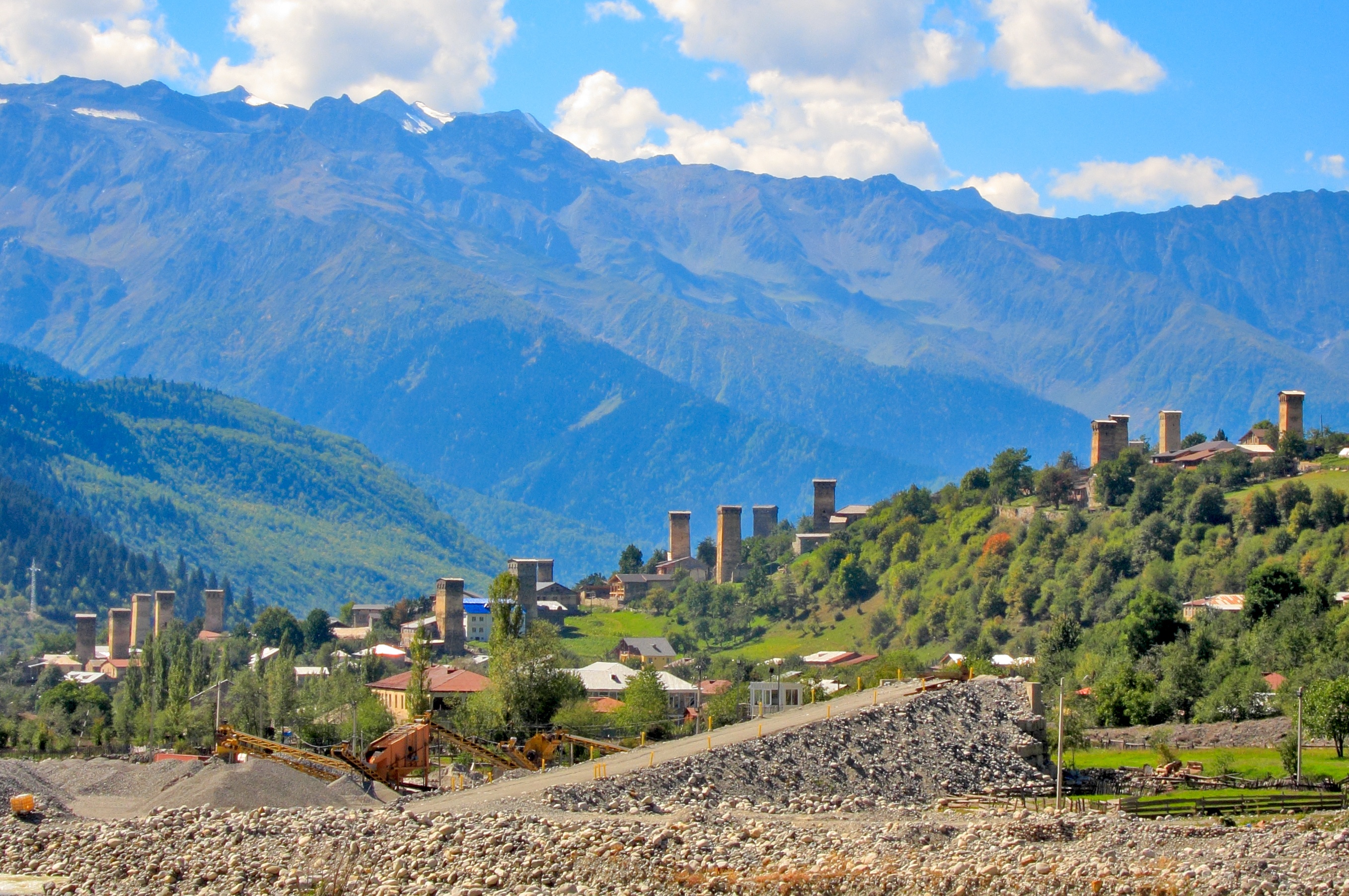
Mestia and its Svanetian towers in the Svaneti region, Georgia.
Learn more: 12 reasons why good tour guides are so important
What are the towers in Svaneti?
Now that we know the history, the stone towers of Svaneti make perfect sense. Known locally as koshki, these tall, narrow towers, which are usually three to five storeys high, were built between the 9th and 12th centuries. They served as both family homes and defensive shelters, showing the Svans’ resilience and cleverness.
The towers have a unique design: thick stone walls at the base that get thinner as they rise, small windows, and doors set above ground level. This made them hard to attack and easy to defend. The lower floors were often used to keep livestock and store food, while families lived on the upper floors. In times of danger, the towers offered a safe refuge from invaders or rival clans. Many towers were also linked to the main house by wooden corridors, which added both warmth and extra security.
The towers were not just practical, they also tell the story of Svan life. Each one belonged to a single family and stood for independence, strength, and clever thinking. In the rugged mountains of Svaneti, building tall stone towers was a smart solution where large walls or traditional castles would have been impossible.
Today, many towers can still be seen in Mestia, the regional centre. But it’s in Ushguli, in Upper Svaneti, where they really shine. Ushguli is one of Europe’s highest inhabited settlements, spread across four villages — Zhibiani, Chvibiani, Murqmeli, and Chazhashi. Here, the towers cluster together, set beneath Mount Shkhara, creating a striking silhouette against the mountains and giving visitors a vivid sense of the Svan people’s history and way of life.
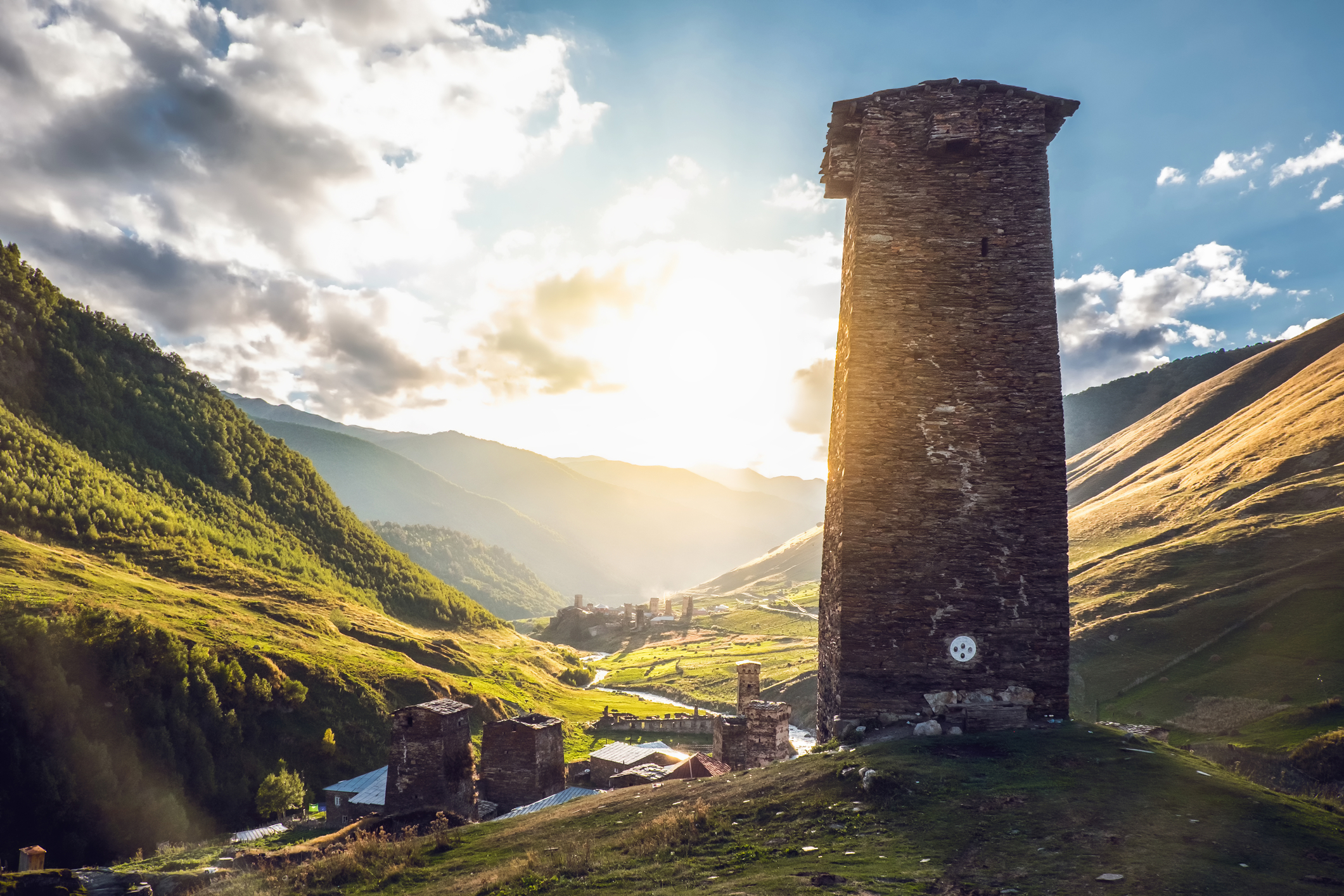
The Svan tower standing on a hill, viewed from the bottom.
{{leadmagnet-one}}
Why is Svaneti famous?
This remote corner of Georgia is celebrated for its breathtaking mountain scenery, ancient stone Svan towers, and a culture that has stayed alive for centuries. Walking through its villages, you can see how the Svan people built for survival, community, and life in harmony with the mountains.
Let’s take a closer look at what makes Svaneti so special:
Cultural treasures of Svaneti
Svaneti is full of cultural gems and natural wonders, and a few stand out for anyone visiting for the first time:
- Ushguli is one of Svaneti’s most iconic spots, perched at 2,134 m (7,000 ft) above sea level. From here, you get stunning views of Mount Shkhara, Georgia’s highest peak, while wandering among ancient watchtowers, centuries-old stone houses, and the 12th-century Lamaria Church.
- In Mestia, the Svaneti Museum of History and Ethnography is a must-visit for anyone wanting to understand the region’s heritage. Its collection of medieval manuscripts, carved crosses, and delicate gold and silverwork brings the history of the Svan people to life.
- Chalaadi Glacier is one of the easiest natural wonders to explore, reached via a short forest hike that ends with a walk across a charming suspension bridge.
- In winter, the slopes of Hatsvali and Tetnuldi attract skiers from across Georgia, offering runs for both beginners and experienced adventurers.
- For a quieter escape, the Koruldi Lakes, sitting at over 2,438 m (8,000 ft), offer a serene alpine setting where the surrounding Caucasus peaks are perfectly mirrored in the water.
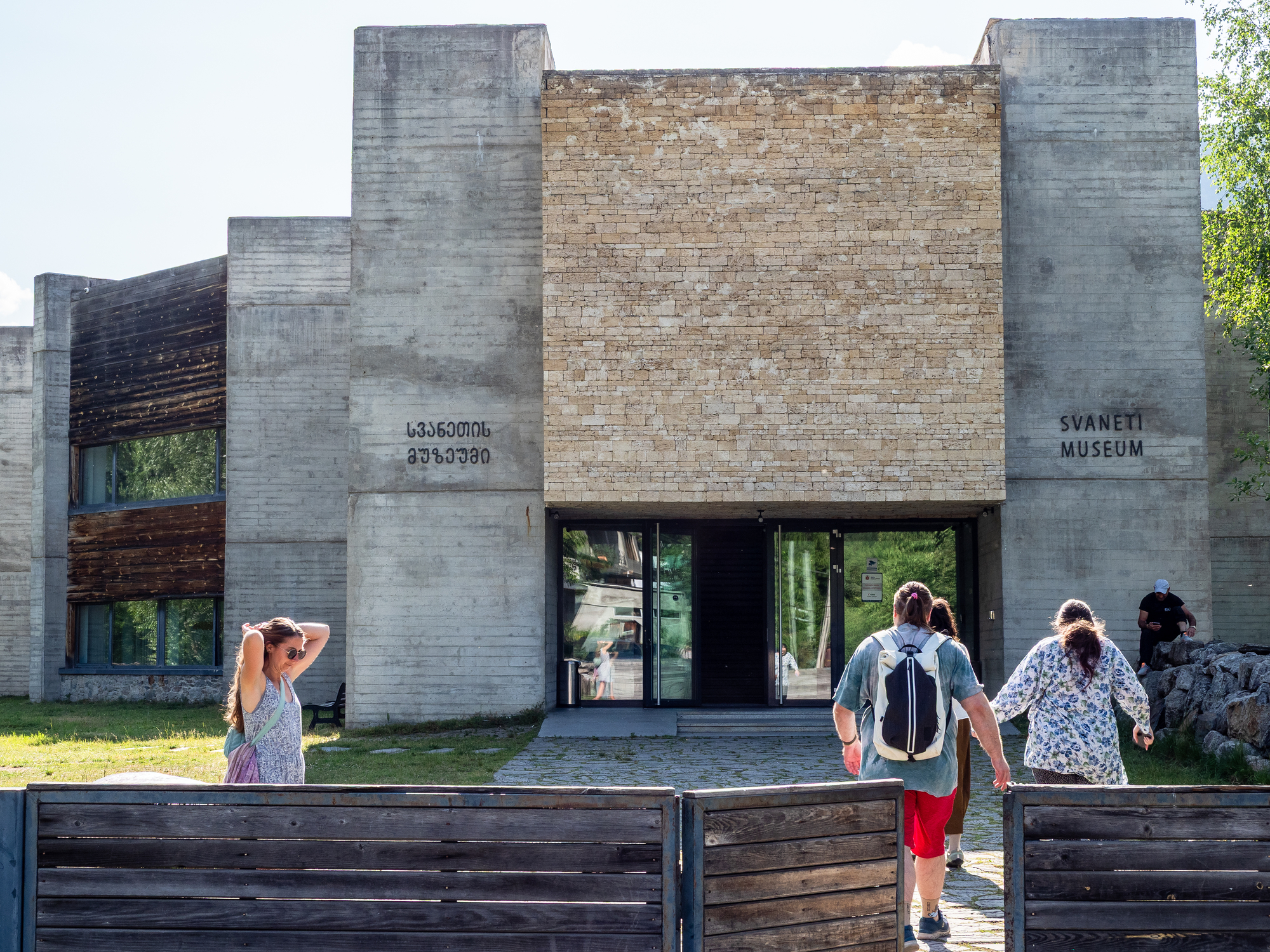
The outside of the Svaneti Museum of History and Ethnography.
Learn more: What we care about at Follow Alice – besides our clients!
A hiker’s paradise
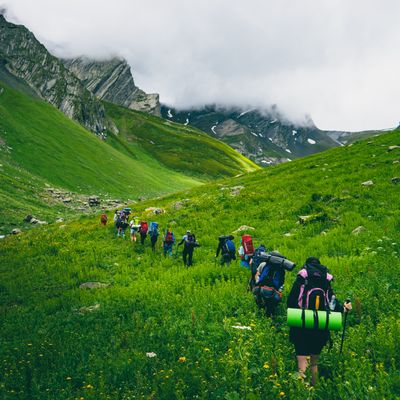
Svaneti is also famous for its hiking. Its trails wind through some of Georgia’s most breathtaking scenery, connecting remote villages, alpine meadows, glaciers, and high mountain passes. Mestia serves as the main base for exploring the region, while villages like Ushguli, Adishi, and Chvibiani give access to quieter, more remote corners of the mountains.
The most famous trek is the four-day journey from Mestia to Ushguli, taking hikers through valleys, meadows, and centuries-old villages. Shorter walks, such as the hike to Chalaadi Glacier or the climb up to Koruldi Lakes, are also popular. For those chasing bigger mountain views, the trail from Ushguli to Shkhara Glacier, or the more challenging route from Mazeri to Guli Pass, offers some of the most unforgettable experiences in the region.
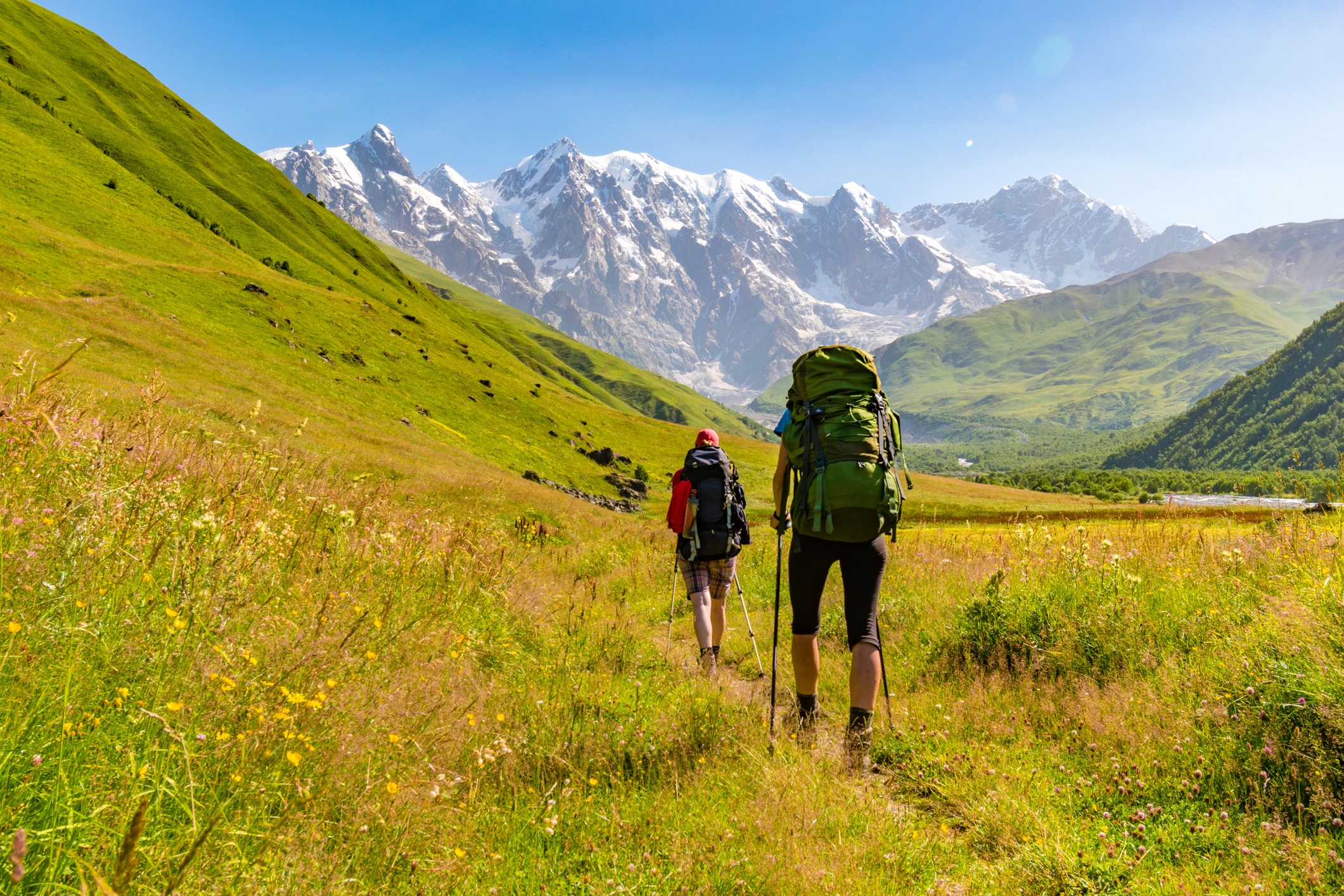
Tourists hiking in the Greater Caucasus mountains, Mestia district in the Svaneti region.
Learn more: Adventure Senior Travel: How to Prepare for Major Treks
Is hiking in the Caucasus Mountains popular?
The Caucasus Mountains stretch from southern Russia near the Black Sea all the way to Azerbaijan’s Absheron Peninsula on the Caspian Sea. Acting as a boundary between Europe and Asia, they are divided into two main ranges, namely the Greater Caucasus to the north, stretching about 1,200 km (746 mi), and the Lesser Caucasus to the south, around 600 km (373 mi). Between these mountain ranges, the plains of Georgia and Azerbaijan are dotted with fertile farmland, forests, and vineyards. The Greater Caucasus is also home to Europe’s tallest peak, Mount Elbrus (5,643 m / 18,510 ft), sitting across the Russian border.
Hiking in the Caucasus is still an adventure for the truly curious. Trails can be hard to follow, often little more than old cow paths disappearing into the wilderness. But for those willing to step off the beaten track, the rewards are extraordinary with vast alpine landscapes, quiet villages, and a sense of untamed freedom that few European mountains can match.
In Georgia, tourism is slowly improving hiking infrastructure, making treks more accessible. The most popular routes are in the north, near the Russian border, and many take several days to complete. The famous Mestia to Ushguli trek is a four-day, 45 km (28 mi) journey through rugged valleys and traditional villages, with cosy guesthouses along the way. Another incredible trek runs from Omalo to Shatili in the northeast, passing through Tusheti and Khevsureti, crossing the Atsunta Pass at 3,431 m (11,257 ft), and winding past meadows, rocky ridges, and centuries-old fortresses.
Nature lovers will also enjoy Lagodekhi National Park in eastern Georgia, where short hikes lead through lush forests, serene lakes, and wildlife-rich habitats. Keep an eye out for golden eagles, chamois, brown bears, and grey wolves. History and architecture are never far away, with sites like the Ananuri Fortress overlooking Jinvali Reservoir and the Gergeti Trinity Church situated near the Russian border.
Over in Azerbaijan, hiking trails are fewer and far less marked, but the mountains here offer a different kind of adventure. Regions like Quba, on the northeastern slopes of Shahdag Mountain, combine peaks with centuries-old villages and rich local traditions, giving hikers a truly authentic glimpse of mountain life in the Caucasus.
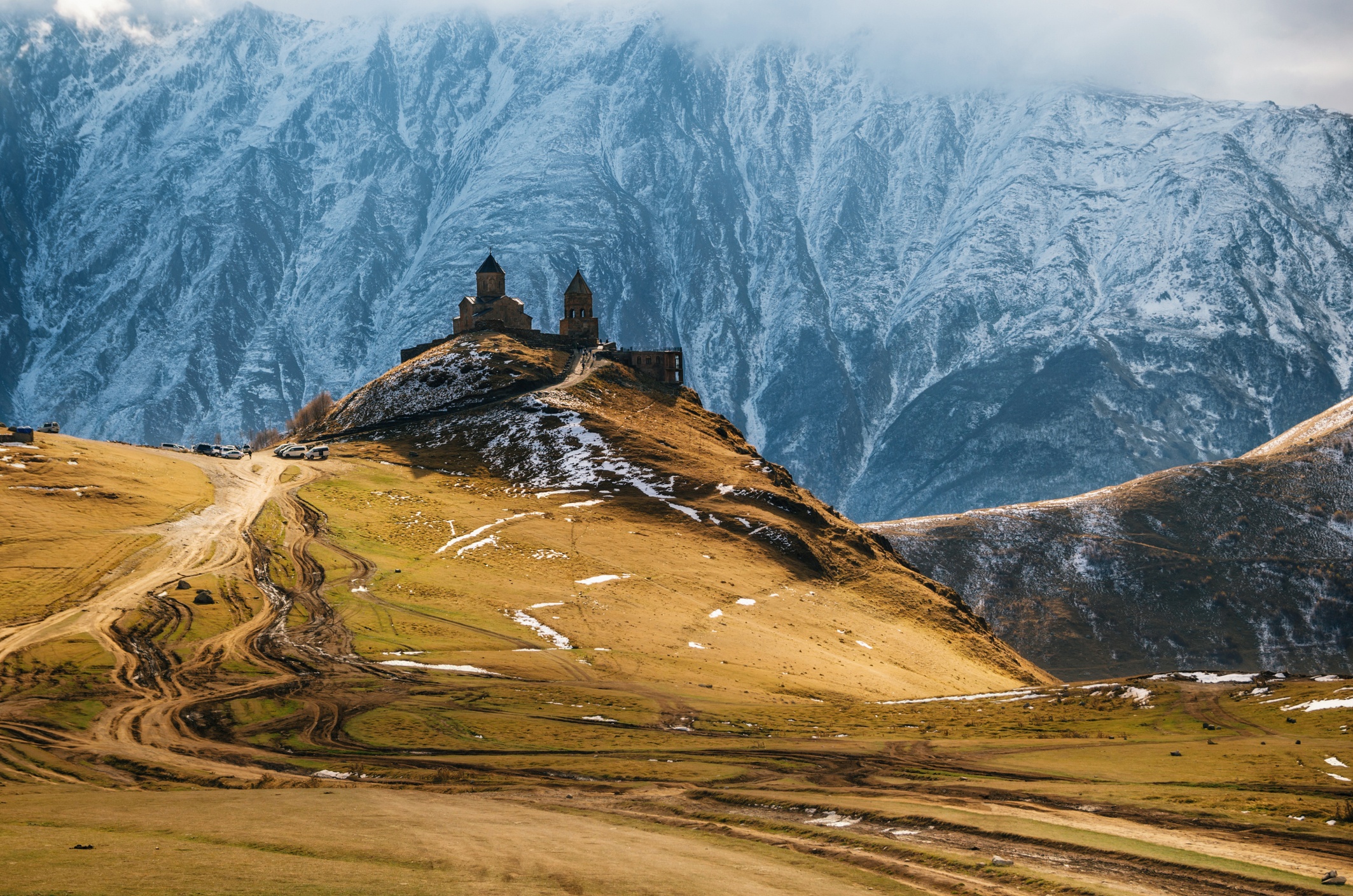
Caucasus Mountains, against the glacier near Mount Kazbek, a landmark of Georgia.
{{leadmagnet-two}}
What makes Svanetian culture unique?
Svaneti is home to the Svan people, an indigenous group who have lived in this area for centuries. Their culture is distinctive because it has developed largely in isolation, preserved by the towering peaks of the Caucasus that surround the region. This isolation allowed the Svans to maintain their own unwritten language, unique traditions, and way of life, largely untouched by outside influence.
Life here is shaped by the mountains, which are also a symbol of Svan independence. Each family’s tower offered protection from invaders, hostile neighbours, and even avalanches. For centuries, these structures reinforced a way of life based on self-reliance and freedom.
Modern conveniences arrived late, like the wheel, which only reached the region in 1935, so much of the lifestyle remained traditional for generations. Families farm the land, make their own food, and preserve provincial dishes like the famous Svan cheese, an essential ingredient in Georgian cuisine.
Ushguli is a perfect example of the Svan culture. The village is home to the Tower of Queen Tamar, a 12th-century ruler of Georgia whose leadership and resilience are celebrated in Svaneti to this day. Visiting Ushguli offers a glimpse into the region’s history, where the daily life of farmers and craftsmen has remained closely tied to the mountains for centuries.
Svaneti’s people have long been known for their independence and free spirit. Observers in the 18th century noted that the Svans “realised the new ideal of a society where the free will of the individual overrides all other considerations.” This attitude was reinforced by the region’s geography and the family towers, which allowed communities to live according to their own rules, even in the face of invasions or internal conflicts.
Today, Svaneti remains a living cultural museum. Visitors can explore the villages, see the towers, and hike through valleys and peaks, while witnessing traditions that have endured for centuries. The combination of stunning landscapes, resilient people, and preserved customs is what makes Svanetian culture unlike anywhere else in the world.
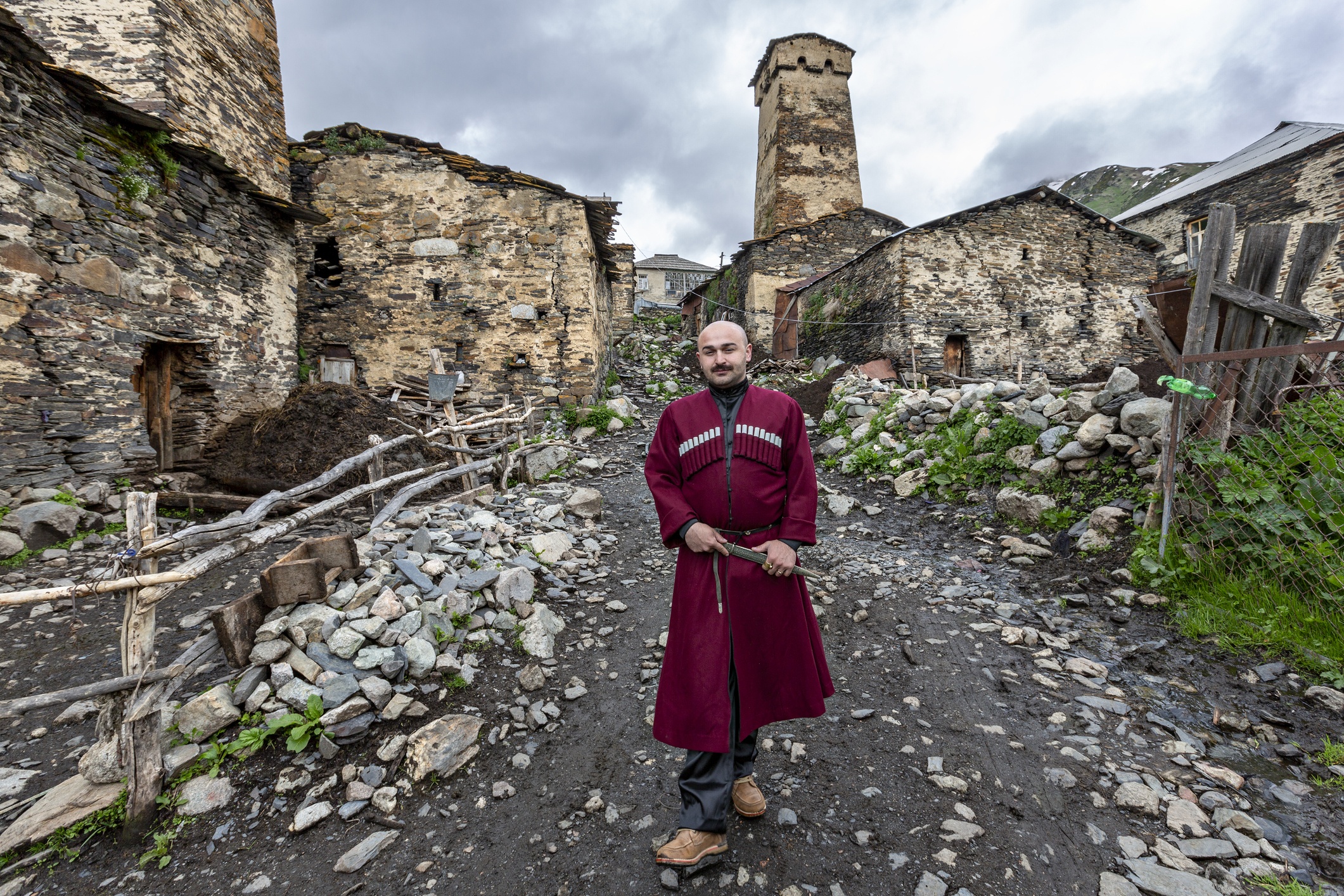
A man in a national costume walking in the streets of the village of Ushguli in Georgia
Learn more: From Porter to Partner: Chris Sichalwe’s Amazing Story
The Svan language
The Svans also have their own language, called Svan (or Lushnu), which is unwritten in its traditional form and spoken by roughly 15,000 people today. It belongs to the Kartvelian language family, alongside Georgian, Megrelian, and Laz. Historically, Svan was sometimes written using Georgian, Latin, or Cyrillic scripts, but today it survives mainly through oral tradition. Songs, laws, and ritual knowledge have been passed down this way for centuries, preserving a cultural heritage unique to the Caucasus.
Visiting Svaneti is more than a visual experience; it is also an immersion in a living linguistic tradition. The language has shaped local society, influenced social customs, and continues to reflect the Svan people’s identity and resilience. In many villages, Svan is still the language of daily life, storytelling, and music, making it an essential part of understanding the region’s culture.
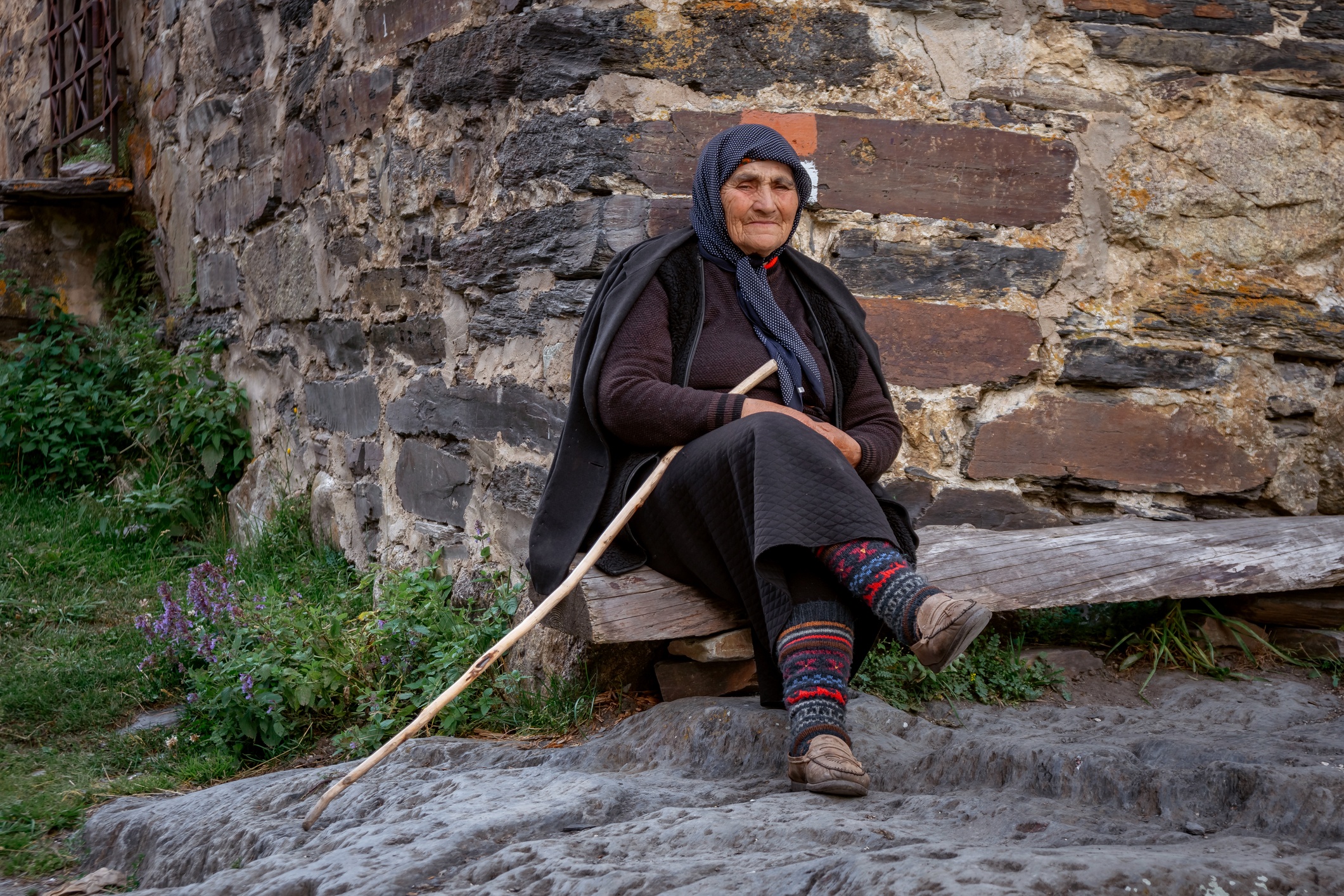
An elderly woman sits in front of the Svan tower with a wooden cane.
Learn more: A step-by-step guide for planning adventure travel
Syncretic religion
Religion in Svaneti is another aspect of its unique cultural identity. The region practices a form of syncretic faith, blending Orthodox Christianity with pre-Christian pagan traditions. The Svans incorporated Christian saints, like St. George, into older animist beliefs that venerate nature, fire, and the family hearth. This hybrid faith remains part of daily life and ritual, particularly in Upper Svaneti’s villages.
Svaneti was Christianised later than lowland Georgia due to its remote, mountainous geography, and local practices often developed independently of the Orthodox Church. Some religious responsibilities were handled by lay priests called bap, or by women in households, especially during paraliturgical celebrations. Animal sacrifices, sun prayers, and other pre-Christian rituals still occur, though most Svans see no conflict between these traditions and their Orthodox faith.
Music is a key expression of Svaneti’s syncretic culture. Traditional songs often retain pre-Christian elements, describing nature deities, but many have been adapted to Christian texts, creating a continuous thread between ancient belief and modern practice. These songs, alongside tribal customs that remain central to daily life, reflect a culture where faith, ritual, and tradition are connected and continue to shape life here.
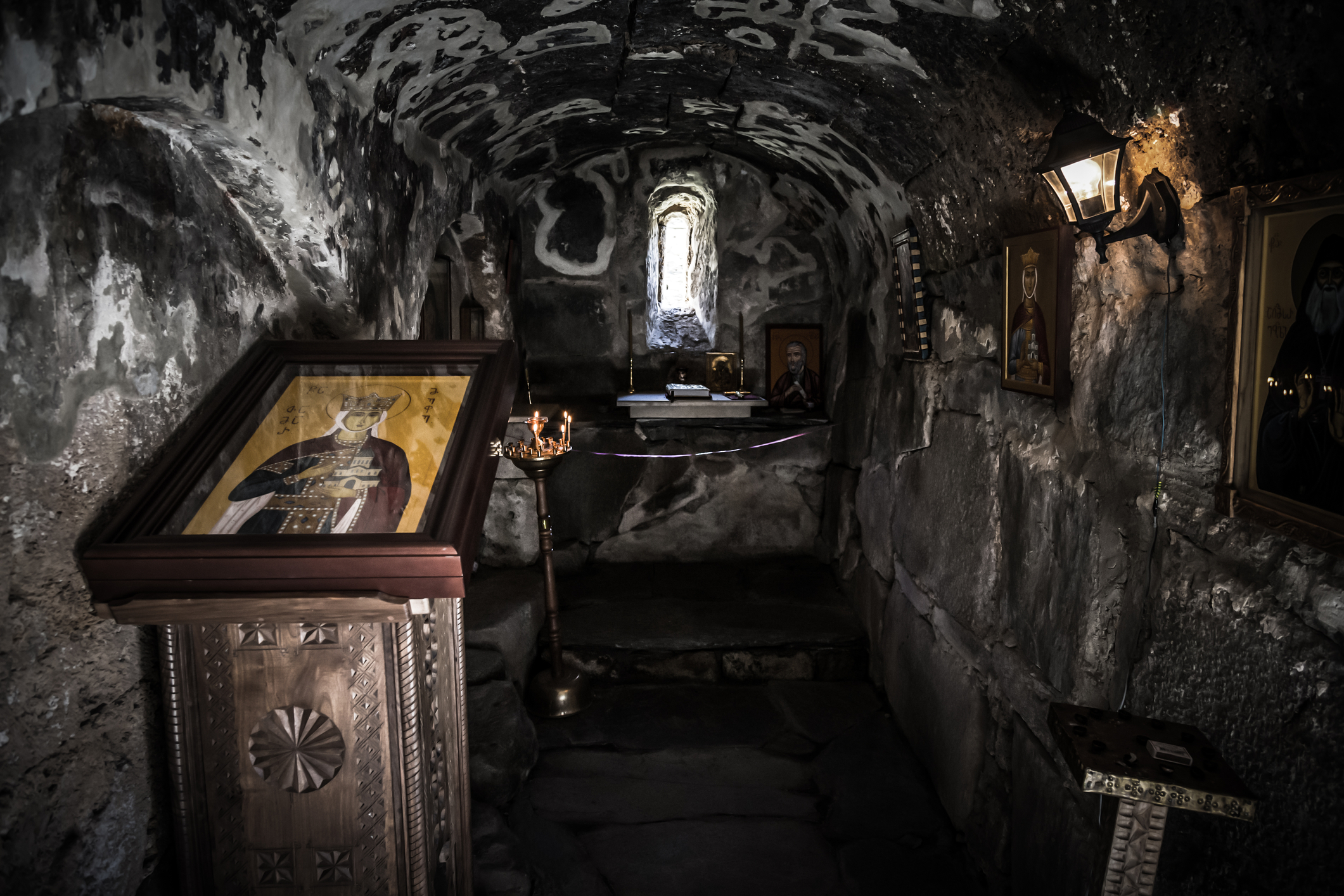
Small ancient church near the village of Ushguli in Svaneti.
Learn more: How to stay healthy when you travel – 13 solid strategies
Is Svaneti worth visiting?
Absolutely! Svaneti is one of Georgia’s most captivating regions, drawing hikers, walkers, and curious travellers alike. While it can get busy during peak summer and winter months, its charm and unique character remain undeniable. So if you’re planning a weekend getaway or a longer trip, Svaneti offers unforgettable adventures, stunning landscapes, and a rich cultural heritage.
The region is dotted with remote villages and settlements, each with its own stories and traditions. Adishi, for example, is a charming village and a great starting point for exploring the highlands, while Ushguli is a highlight for many visitors. Here, ancient Svan watchtowers stand alongside a 12th-century church, testifying to the resilience and history of the Svan people. Trekking through these landscapes, whether on foot, horseback, or by 4×4, immerses you in the wild beauty and enduring culture of the Caucasus Mountains.
Svaneti isn’t just a destination, it’s a story, a living museum of mountains, towers, and traditions that have survived for centuries. If you want to discover more stories from Georgia and beyond, feel free to reach out to our team with any questions you might have.