


Many people around the world don't know much about Bhutan, a small Himalayan country often compared in size to Switzerland. It has a population of close to 800,000, with young people making up the majority. The country faces a high unemployment rate, and many young people are leaving to seek better opportunities. With that said, Bhutan is also classified as one of the world's least developed countries, with a relatively small economy and low GDP per capita compared to global averages. As a result, Bhutan's tourism and wider economy are facing new questions as a surge in outbound migration leads more young, educated citizens to leave the Himalayan kingdom, according to a 2025 World Bank report.
The study, Migration Dynamics in Bhutan: Recent Trends, Drivers, and Implications, highlights a growing trend of Bhutanese, particularly skilled professionals and graduates, relocating abroad, most notably to Australia. While migration has long been part of the country's story, the scale and profile of recent departures mark a shift that could have ripple effects across key sectors, including tourism.
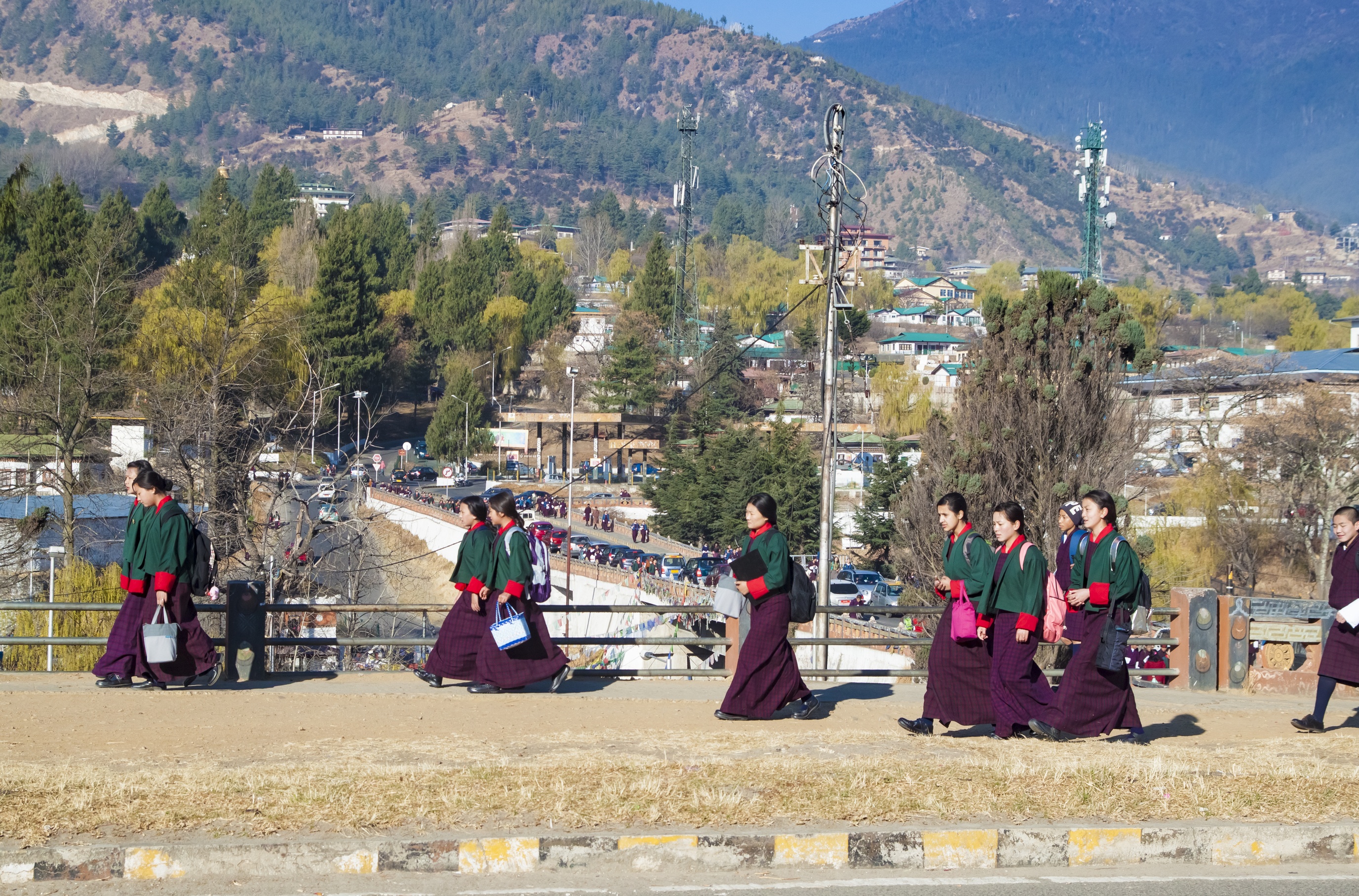
Young Bhutanese girls in uniform walking to school.
Bhutan's youth emigration crisis
For a destination known for its high-value, low-volume tourism model, the outflow of talent, especially from hospitality, education, and public services, raises concerns about maintaining service standards and supporting future growth for Bhutan. The report notes that more than half of migrants hold university degrees, with many coming from the civil service, including the education and health sectors. Xavier Furtado, World Bank Group Country Manager for Bhutan, said:
Bhutan's high levels of outbound migration reflect both rising aspirations and the need to create more opportunities at home.
Efforts to strengthen the private sector and improve job prospects could help retain talent, he added, while better-managed migration systems may allow the country to benefit from skills gained abroad. The findings also point to the lingering impact of the pandemic on Bhutan's labour market. As tourism ground to a halt during COVID-19, employment opportunities shrank, pushing many, particularly young people, towards opportunities overseas. Even as tourism has begun to recover, wage gaps remain significant, making international work and study an attractive option. Australia, in particular, continues to draw Bhutanese students and workers, thanks to accessible education pathways, favourable visa policies, and established diaspora networks. In 2024 alone, more than 13,000 Bhutanese students enrolled in Australian institutions.
Despite the outward flow, the report suggests there is potential for return. Many migrants indicated they would consider coming back if wages and career prospects improved, though expectations are often higher than what the domestic market can currently offer. For Bhutan's travel industry, the challenge and opportunity lie in adapting. Strengthening training, investing in local talent, and tapping into the global Bhutanese diaspora could help the country maintain its distinctive tourism offering while navigating a shifting workforce landscape.
{{leadmagnet-one}}
Bhutan's youth unemployment
According to the United Nations, youth unemployment has become a major concern for Bhutan's sustainable development. The issue was first identified as a growing national challenge in the Royal Government of Bhutan and UNDP's National Human Development Report 2005, titled "The Challenge of Youth Unemployment."
The report warned that Bhutan's ability to create sufficient and meaningful employment for young people has long been a structural concern, one that has only grown in recent years, particularly following the COVID-19 pandemic, which disproportionately affected young people and women in the labour market. According to the Labour Force Survey 2020, youth unemployment rose sharply from 11.9 per cent in 2019 to 22.6 per cent in 2020, more than doubling within a single year. Even prior to the pandemic, youth unemployment was over four times higher than the national average, underscoring a persistent imbalance in job creation.
With nearly half of Bhutan's population under the age of 27, the scale of the challenge is significant. The pandemic further intensified pressures by disrupting jobs, limiting educational opportunities, and affecting mental well-being among young people. The situation reflects a broader regional pattern across Asia and the Pacific, where youth unemployment remains a structural issue. However, Bhutan's demographic profile makes the challenge particularly acute, as a large and growing youth population enters a labour market that has struggled to expand at the same pace.
Despite these challenges, many Bhutanese youth continue to express a strong desire to contribute to national development. However, limited domestic opportunities have increasingly led some to look abroad, adding further pressure to an already evolving labour landscape.
Bhutan's Gross National Happiness (GNH) Index
Many have questioned the concept of Gross National Happiness (GNH). The term was coined in the late 1970s by Bhutan's Fourth King, Jigme Singye Wangchuck, who famously stated that "Gross National Happiness is more important than Gross Domestic Product." The idea was designed to redefine development by prioritising wellbeing and happiness over purely economic growth.
Since its introduction, GNH has become the foundation of Bhutan's development policy and has gained global recognition as an alternative development model. It led to the creation of the GNH Index, a practical policy tool used by government, NGOs, and businesses to measure and promote societal wellbeing in a more holistic way than traditional economic indicators.
The GNH Index is built on nine domains: psychological well-being, health, education, time use, cultural diversity and resilience, good governance, community vitality, ecological diversity and resilience, and living standards. These are measured through 33 indicators that reflect the underlying conditions of human flourishing.
Unlike conventional economic measures, the GNH Index goes beyond a simple "happiness score." It assesses whether individuals have achieved sufficiency across these 33 conditions. Using the Alkire-Foster multidimensional methodology, a person is considered "happy" if they meet sufficiency in at least 66 per cent of the weighted indicators. Each domain is equally weighted and includes a mix of objective and subjective indicators, many of which are directly responsive to policy. The index is disaggregated by geography and demographics, allowing policymakers to track well-being across districts, genders, age groups, and occupations.
However, despite this globally recognised framework, Bhutan is facing a growing disconnect between its development philosophy and labour market realities. A rising number of young, educated Bhutanese are leaving the country in search of higher wages and broader opportunities abroad. The trend raises questions about how effectively GNH translates into perceived opportunity on the ground.
While GNH measures wellbeing in a broad and multidimensional sense, many younger Bhutanese are increasingly weighing that against limited domestic career progression and income prospects. The result is a growing tension between Bhutan's guiding development philosophy and the economic motivations driving youth emigration, one that policymakers are now under pressure to address. Importantly, this work is guided in a way that respects Bhutan's unique history and future. While lessons can be learned from other countries, it is important to stay true to Bhutan's traditions to keep the work authentic. The principles of Gross National Happiness should guide progress and help with shared decision-making about the way forward.
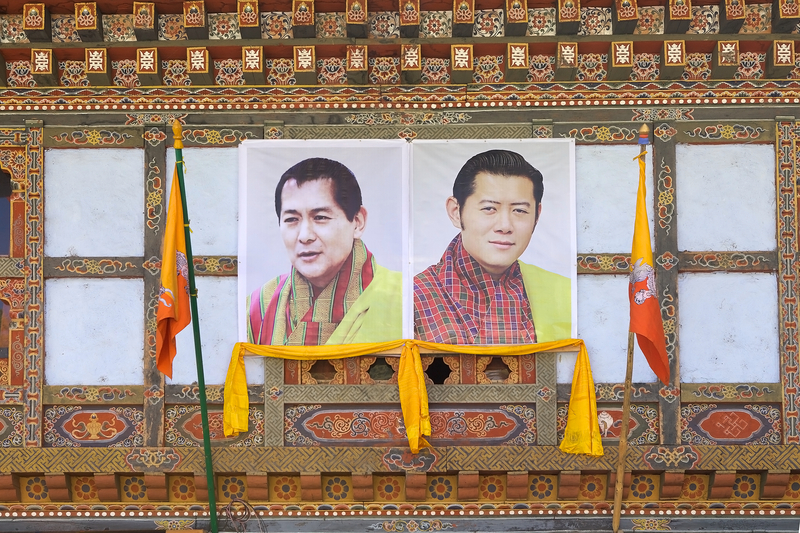
An image of the 4th and 5th Kings of Bhutan, Jigme Singye Wangchuck and Jigme Khesar Namgyel Wangchuck, displayed on the facade of a traditional building in Chhume village, Bhutan.
Learn more: How much does it cost to travel to Bhutan in 2026?
Bhutan's response to migration
The Bhutanese government has increasingly adopted a strategy of adapting to and potentially benefiting from rising levels of outward migration. Rather than viewing it purely as a loss, policymakers are exploring ways to harness diaspora engagement and financial flows to support domestic development.
Economists argue that Bhutan could mitigate some of the impacts of emigration by strengthening channels that reinvest remittances into the domestic economy. A key priority is building a stronger private sector capable of attracting both investment and skilled Bhutanese from abroad.
Since October 2023, the government has introduced measures to formalise and encourage diaspora investment. Through initiatives such as the Bhutan National Bank's "Bhutanese Living Abroad Investment Initiative," citizens overseas can direct funds into Bhutan's stock market rather than solely sending remittances to family accounts, potentially generating returns while supporting national growth.
Alongside this, major development projects are being positioned as long-term strategies to reshape the economy and encourage skilled workers to return. The most prominent is the proposed Gelephu Mindfulness City, a special economic zone near the Indian border designed to attract foreign investment and position Bhutan within emerging technology and innovation sectors.
However, these approaches have faced criticism. The opposition Bhutan Tendrel Party argues that the government is focusing too heavily on migration itself rather than the structural issues driving it, including widening inequality, persistent urban–rural disparities, and a still-limited private sector, all of which continue to constrain domestic job creation.
Bhutan remains one of the countries with the highest proportion of citizens living abroad, estimated at over 9 per cent. Analysts point to a combination of limited economic opportunities and post-pandemic mobility as key drivers of a largely youth-led migration trend. Internal migration is also rising, as rural communities face increasing pressure from climate change, infrastructure gaps, and uneven development.
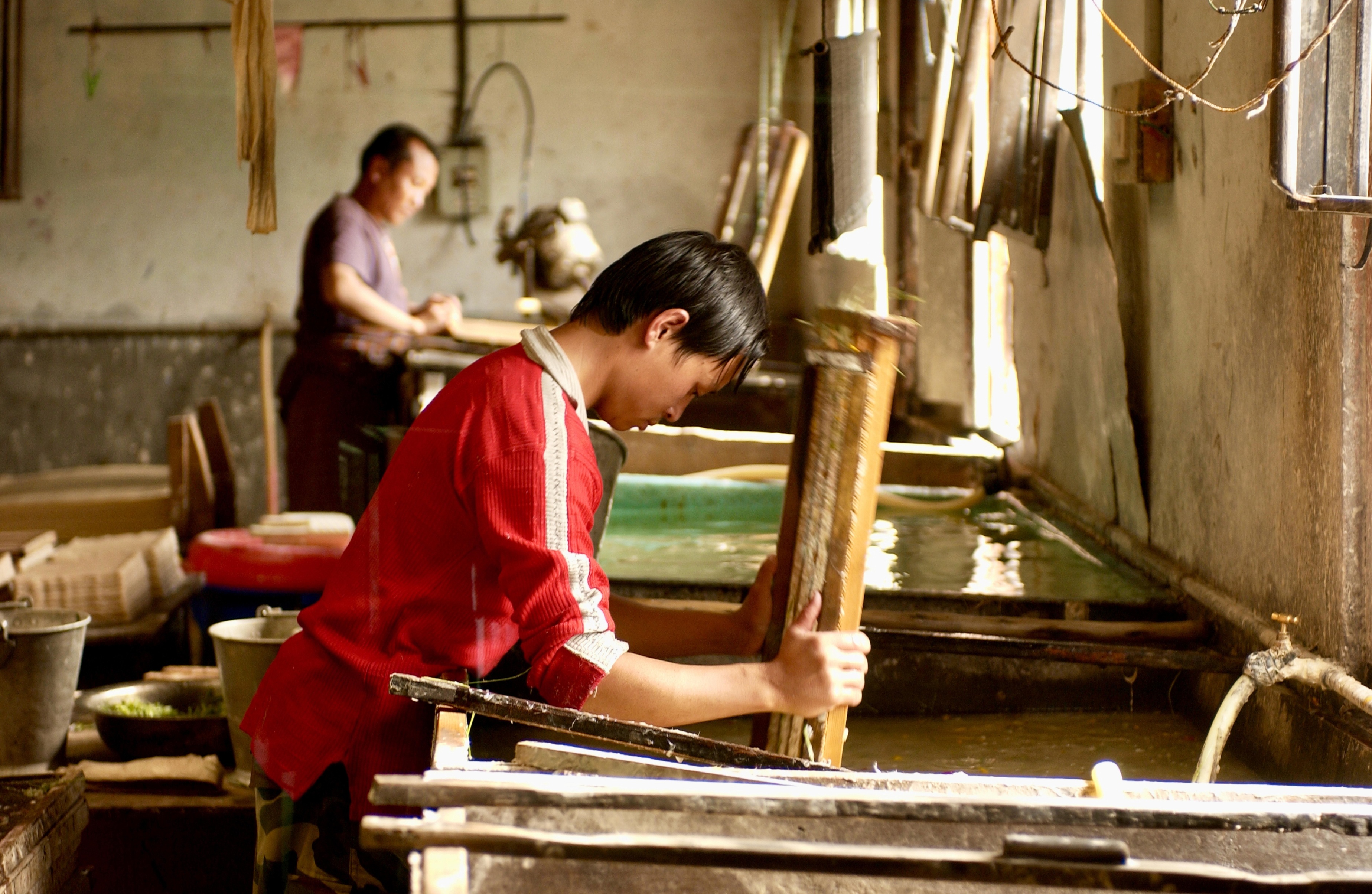
Young skilled worker working at the Jungshi Paper Factory in Thimpu, Bhutan.
Learn more: How to Book Your Bhutan Trek: A Complete Guide to Permits, Flights, and Trek Options
Tourism and the Sustainable Development Fee
Bhutan's tourism sector is an important pillar of the economy, and continues to recover more slowly than many of its regional counterparts. In 2023, international arrivals stood at roughly one-third of pre-pandemic levels recorded in 2019. To manage this recovery, the country continues to balance tourism growth with its long-standing "high-value, low-volume" model.
Central to this approach is the Sustainable Development Fee, which has been adjusted multiple times since Bhutan reopened in September 2022. Initially set at US$200 per adult per day, the fee has since been revised downward twice as authorities seek to attract more visitors while still preserving the exclusivity and environmental integrity of the destination. The current structure is as follows: adults pay US$100 per day, children aged 6–12 pay US$50 per day, and children under six are exempt.
The fee forms part of Bhutan's broader commitment to environmental and cultural preservation. The country's constitution mandates that at least 60 per cent of its land remain under forest cover, with more than a quarter designated as protected areas. This has helped preserve a landscape of exceptional ecological diversity, where visitors can experience Central Asian wilderness through guided hikes and nature trails. Travellers are required to explore with accredited guides, as encounters with wildlife are rare but possible.
Beyond its natural environment, Bhutan is defined by its spiritual and cultural heritage. The country is home to numerous temples, monasteries, and sacred sites that hold significant meaning for the Bhutanese people. Many of these locations are open to visitors, provided they are approached with respect for local customs and traditions. Through this model, Bhutan continues to position tourism not simply as an economic driver, but as a carefully managed experience aligned with its wider development philosophy.
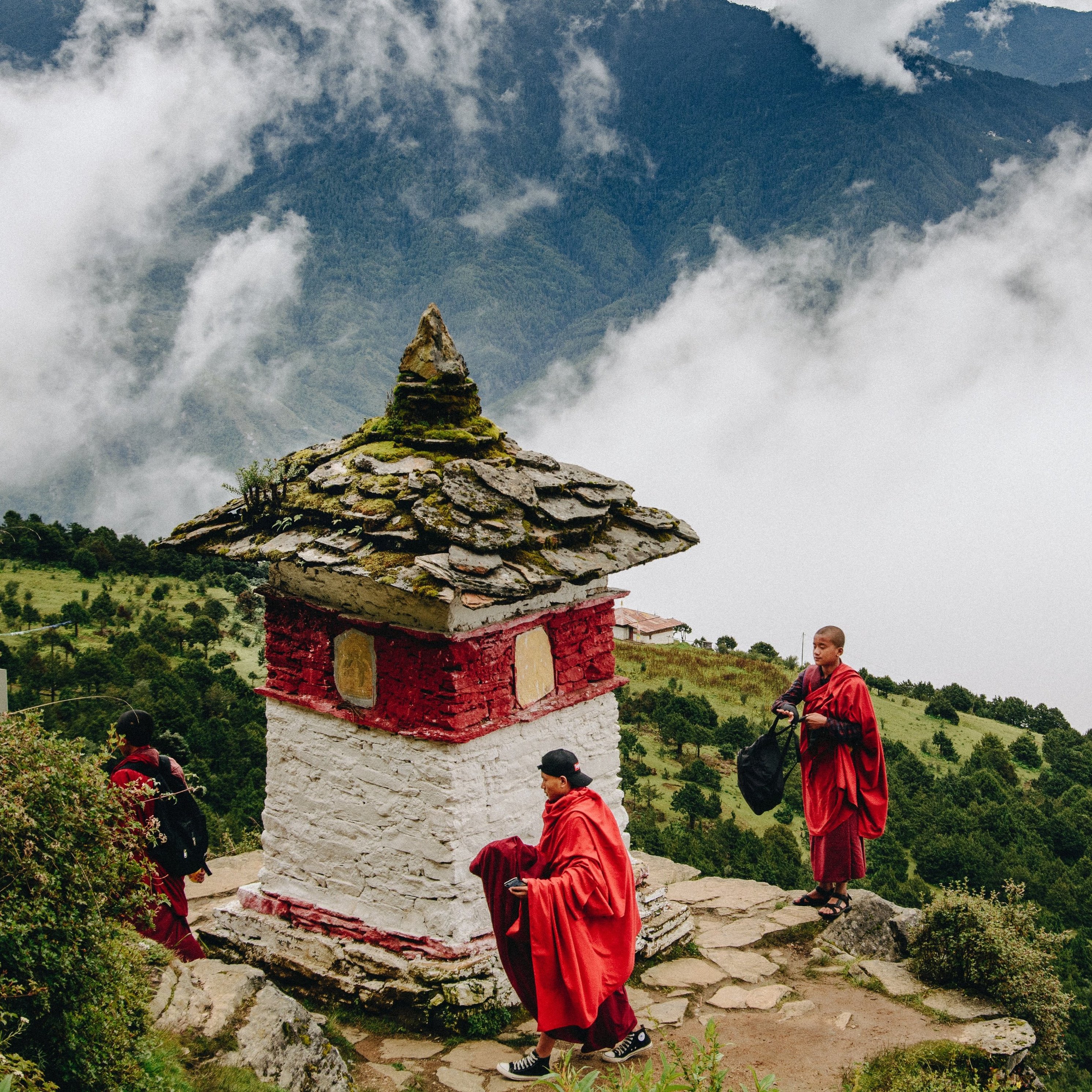
Bhutanese monks.
Learn more: Why Bhutan Limits Tourist Numbers — The Real Impact of Bhutan’s SDF Tourism Fee
Is Bhutan still worth visiting?
Not all is doom and gloom. Bhutan, the "Land of the Thunder Dragon," remains one of the world's most quietly extraordinary destinations, an isolated Himalayan kingdom nestled between India and China. The nearest major city is Kathmandu in Nepal, just a one-hour flight away, yet stepping into Bhutan feels like entering an entirely different world.
This is a country that prioritises Gross National Happiness over GDP, where wellbeing, culture, and nature are placed at the centre of national life. It is also one of the few places where it genuinely feels like time slows down. Traditional architecture lines the valleys, prayer flags ripple across mountain passes, and daily life is still deeply shaped by Buddhist practice.
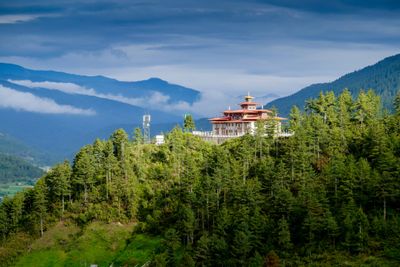
For travellers interested in Buddhism, Bhutan is especially meaningful. Monasteries cling dramatically to cliffsides, festivals bring masked dances and centuries-old rituals to life, and sacred sites are woven into everyday landscapes. The temples here are among the most striking in the Himalayas, and traditional dress remains widely worn, adding to the country's distinct cultural identity.
Bhutan is often compared to Japan for how safe it feels, Iceland for its quiet landscapes, and Switzerland for its mountain beauty, but it feels less developed and far less visited than all three. What stands out most is its calm, unhurried atmosphere. Life moves slowly here, and that simplicity is part of what makes travelling in Bhutan so distinctive. Even experienced travellers often describe it as deeply peaceful and unlike anywhere else they've been.
The country only opened to tourism in 1974 and has maintained a tightly controlled approach ever since. That limited access has helped preserve its environment and culture in a way few destinations have managed to sustain. In many ways, Bhutan truly walks the talk when it comes to sustainability. It is also one of the world's environmental success stories. Its constitution requires at least 60 per cent forest cover, though today, closer to 70 per cent of the country remains densely forested. Bhutan generates most of its electricity from hydropower and is widely recognised as one of the few carbon-negative nations in the world.
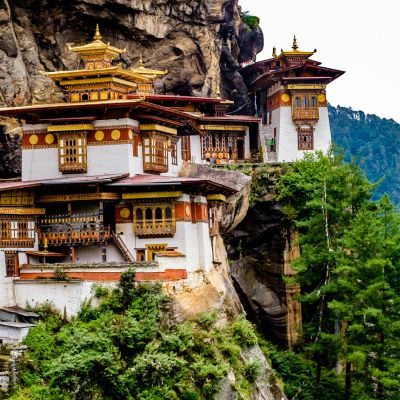
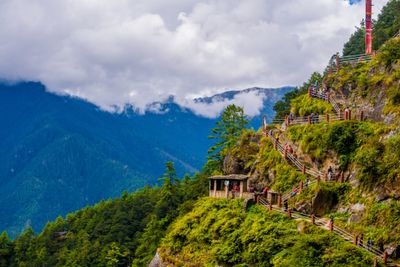
Highlights include exploring Trongsa Dzong, the ancestral home of the Royal Family, hiking to the iconic Tiger's Nest Monastery, crossing the Punakha Suspension Bridge, and viewing the towering Buddha Dordenma statue in Thimphu. Archery competitions, traditional museums, hot stone baths, and Bhutanese cuisine round out a truly immersive journey. Travel here is not about ticking off sights quickly; it is about slowing down, absorbing the landscape, and engaging with a culture that has consciously chosen a different path to modernisation. This is exactly why Bhutan is still very much worth visiting.
As Bhutan continues to balance development with its unique approach to tourism, how it manages migration may play a key role in shaping the visitor experience in the years ahead. If you would like to find out more, feel free to contact our team about our trips to this majestic country.