


Most climbers want to stay connected on Mount Kilimanjaro; it could be for safety reasons, navigation, sharing updates with their loved ones, or sending a message home. Until a few years ago, that was difficult. Kilimanjaro was known for long stretches with little or no mobile reception, and internet access was almost non-existent. This changed with Tanzania’s national broadband expansion.
Since August 2022, climbers have been able to use mobile internet up to 12,200 feet after Tanzania Telecommunications Corporation and Huawei Tanzania upgraded the network. The experience is not the same as being in a town or city, but climbers can access voice calls, mobile data, and even hut-based WiFi on selected routes. So, Kilimanjaro's connectivity is better than many people think. Most days you'll get some signal, usually at camp, but it's intermittent even in the good spots and not something to rely on, least of all for work.
In this guide I'll cover what you can expect, from my own Lemosho climb and from what our crew and climbers report: which networks work best, where to buy a SIM card, how reliable the connection is, and how to keep your devices charged. If you have any questions, please don't hesitate to schedule a call with our team.
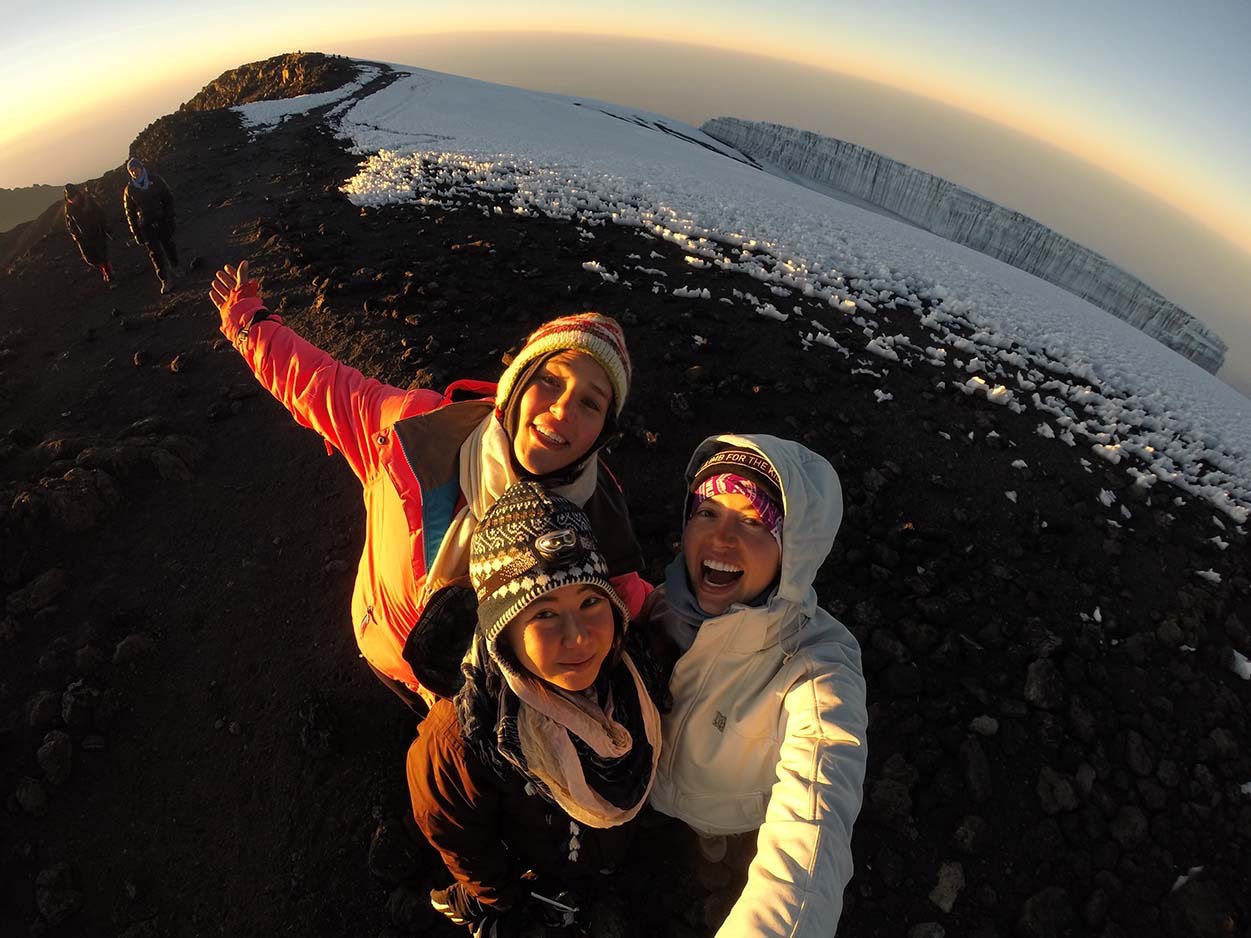
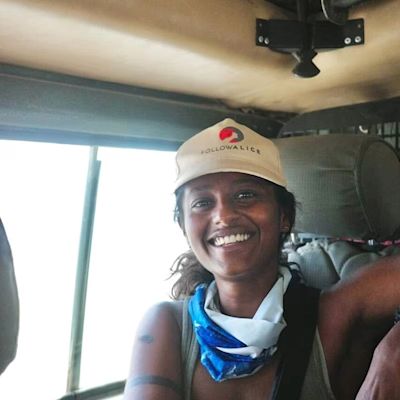
Friends take a selfie on Mount Kilimanjaro.
Learn more: How much does it cost to climb Kilimanjaro?
What I actually got on the Lemosho route
On a recent climb on the Lemosho route, I was able to send WhatsApp messages from every camp and upload to Instagram. What I couldn't do was have a live back-and-forth conversation from my tent. To get anything through, I had to walk to a particular spot at camp and wait for the signal to connect. Send, wait, check, repeat.
That's pretty typical. Messages go through. A photo or a short video will often upload if you're patient. Calls are difficult, and if you need to be reachable for work, I'd sort out cover before you go.
Follow the crew
The most useful tip I can give you: when you get to camp, look for where the crew are congregating with their phones. They're on this mountain week in, week out, and they know exactly which corner of each campsite picks up signal.
How Kilimanjaro got connected
A turning point came in 2022 when the Tanzania Telecommunications Corporation began extending the national ICT broadband backbone network up the slopes of Kilimanjaro. This project was carried out with support from Huawei Tanzania, which donated much of the specialised equipment needed to withstand the mountain’s extreme conditions. Engineers worked through ice, high winds, and steep rock to install reliable infrastructure from the lower slopes to the summit at 5,895 metres.
Earlier in the rollout, all rest camps below 3,795 metres were connected to high-speed internet. Coverage was later extended to higher elevation camps before finally reaching the top of the mountain. The full system is now in place and continues to operate to date, making it possible for climbers to stay connected through large sections of their trek.
Tanzanian leaders described it as a milestone that strengthened national identity, promoted tourism, and improved safety for visitors. Tanzania’s former Minister for Information, Communications and Information Technology, Nape Moses Nnauye, at that time spoke of how the connection of Africa’s highest peak symbolised confidence and progress for the country. The result is a stable, high-speed network that now links a UNESCO World Heritage Site visited by around 50,000 trekkers every year. Tourism remains important to Tanzania’s economy, contributing billions of dollars and providing jobs in communities across the country. Improved connectivity strengthens the visitor experience while supporting the long-term development goals of the region.
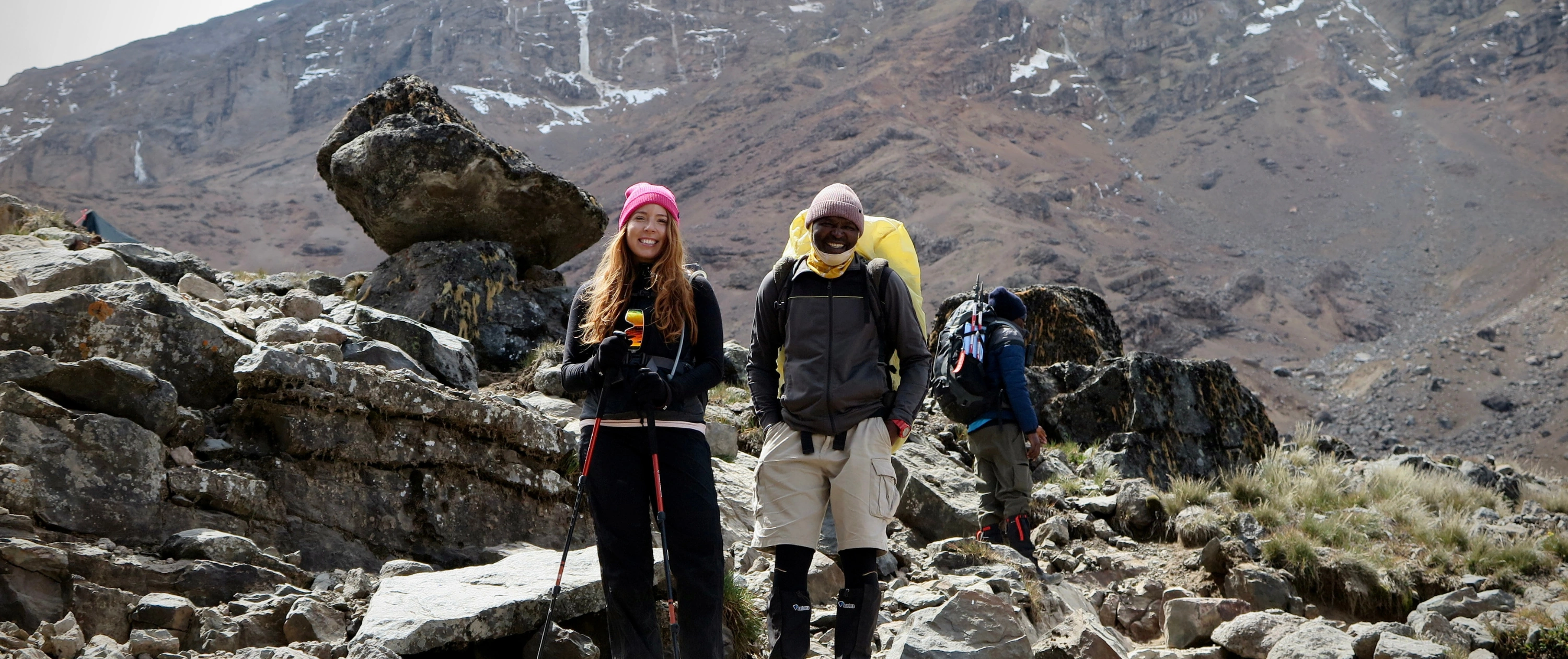
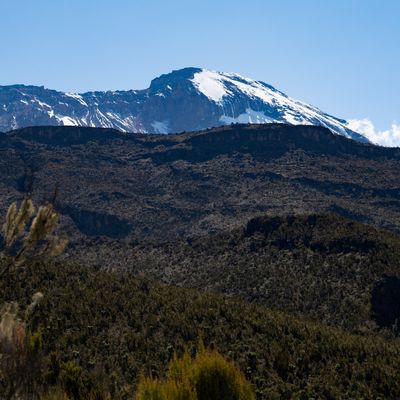
Trekkers enjoy their break on Mount Kilimanjaro.
Learn more: Kilimanjaro vs Everest Base Camp: which is harder?
Mobile reception on Kilimanjaro
Mobile reception varies depending on your route, altitude, and the weather. Lower sections near the trailheads usually have a strong signal. As the path climbs through forest and moorland, the signal can weaken or drop entirely before returning at exposed ridges or camps. Higher up, network points installed through the broadband project restore more consistent access.
Messaging is what works best. Apps like WhatsApp usually get through on even a weak connection, because they queue your message and send it as soon as a signal appears. Calls are much harder: the signal drops in and out, so expect them to cut off rather than give you a proper conversation.Certain areas offer surprisingly strong data speeds, and many climbers manage to upload photos or short videos at camps. It is still important to expect some quiet zones. No high-altitude network is constant, and storms or heavy clouds can interfere with coverage. Guides continue to rely on radios and satellite communication for safety.

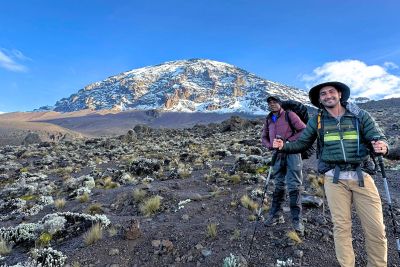
Trekker tries to get a signal on Mount Kilimanjaro.
Learn more: Mount Meru vs Kilimanjaro: Which Trek Should You Choose?
Is there WiFi on Kilimanjaro?
You might be surprised at how much connectivity exists on Kilimanjaro, though it’s far from consistent along the route. Some parts of Kilimanjaro, especially along popular routes like the Marangu Route, now have WiFi hotspots at their main huts. Mandara Hut, Horombo Hut, and Kibo Hut are among the locations where climbers can connect. These systems run on solar power, and on good days, the signal is strong enough for calls or even video chats. However, power management means the service may be turned off at night.
Mobile reception is also available in sections of the mountain, but it becomes increasingly patchy as you ascend. Local Tanzanian SIM cards from Vodacom, Airtel, or Tigo offer the best chance of getting a signal at lower and mid-altitude camps.
WiFi and mobile signal on the mountain
There are occasional reports of weak signal or even brief WiFi access near the summit, but these are rare and highly dependent on your exact location, the weather, and network load. Most guides and recent climber accounts advise treating summit day as offline. Even where WiFi is listed, it’s often intermittent, and you may find it unavailable when you need it most.
What this means for climbers
- Bring an eSIM or local SIM, plus a power bank, ideally a solar one
- Don't plan on working from the mountain. Sort out cover before you go.
- Think of connectivity as a bonus, not a guarantee.
- Handle important messages, uploads, or downloads at lower camps or base lodges rather than relying on summit access.
In short, yes, there is WiFi on Kilimanjaro in specific locations, but the mountain is still largely an offline adventure. Summit day is best enjoyed disconnected, letting the experience speak for itself.
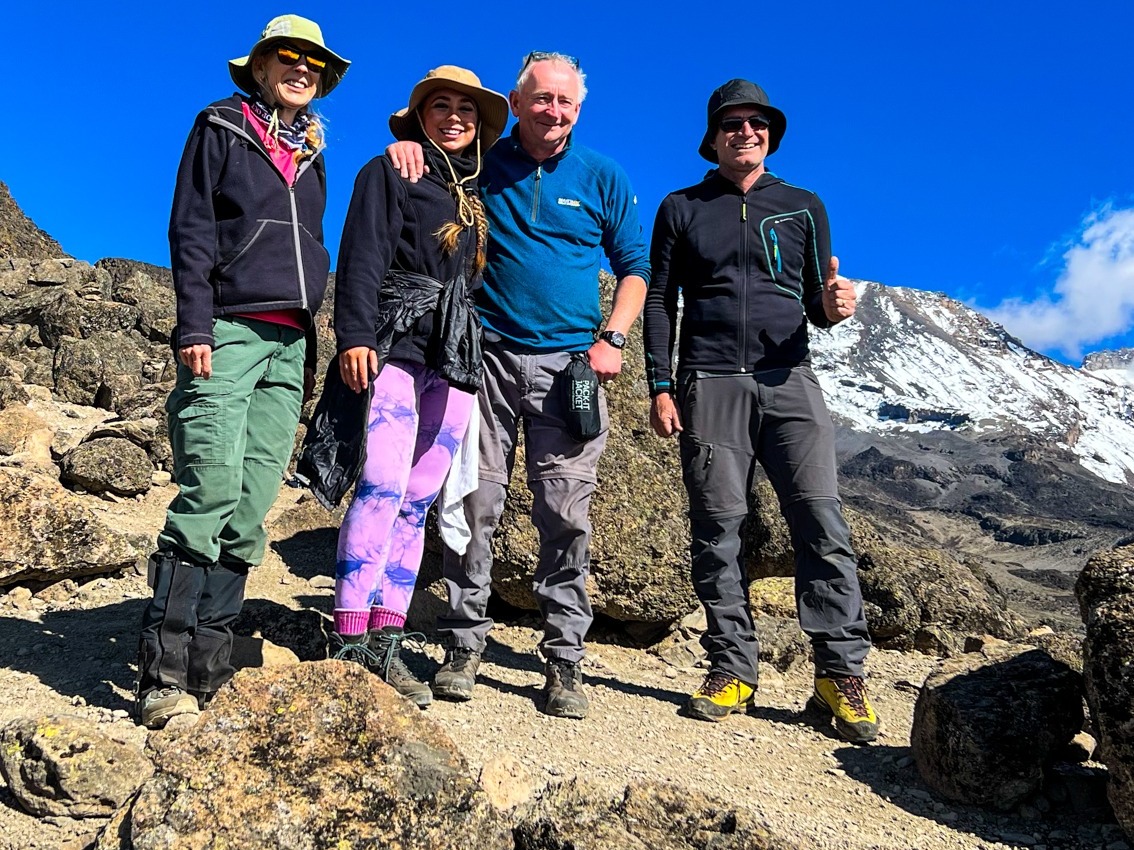
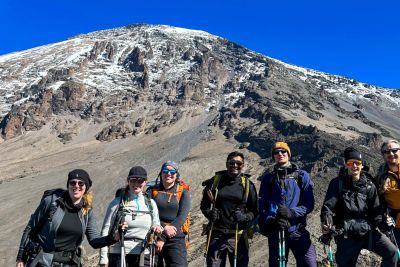
Group of trekkers standing on Mount Kilimanjaro.
Learn more: Meet Follow Alice's awesome Kilimanjaro mountain crew
Tanzania SIM cards and the best networks
As previously mentioned, buying a local SIM card is the easiest way to stay connected during your trek. You can purchase a SIM in Arusha or Moshi before your climb. Registration requires your passport.
The main providers in Tanzania include:
- Vodacom Tanzania: This is the most popular choice for Kilimanjaro, with wide national coverage and a strong network presence around the mountain. Vodacom offers a variety of data bundles suitable for short trips.
- Airtel Tanzania: Is a major operator with reliable coverage in towns and generally good performance on the mountain. Airtel offers competitive data packages.
- Tigo Tanzania: Is known for fast mobile internet in urban centres. Coverage on Kilimanjaro varies by altitude but performs well in many areas.
- Halotel: A fast-growing provider with competitive pricing and improving mountain coverage.
- Zantel: Has variable coverage but good for travellers heading to Zanzibar before or after their climb. Limited performance at higher elevations on Kilimanjaro.
The best approach is to check coverage maps and compare packages, but most Kilimanjaro operators recommend Vodacom for the most reliable performance on the mountain.
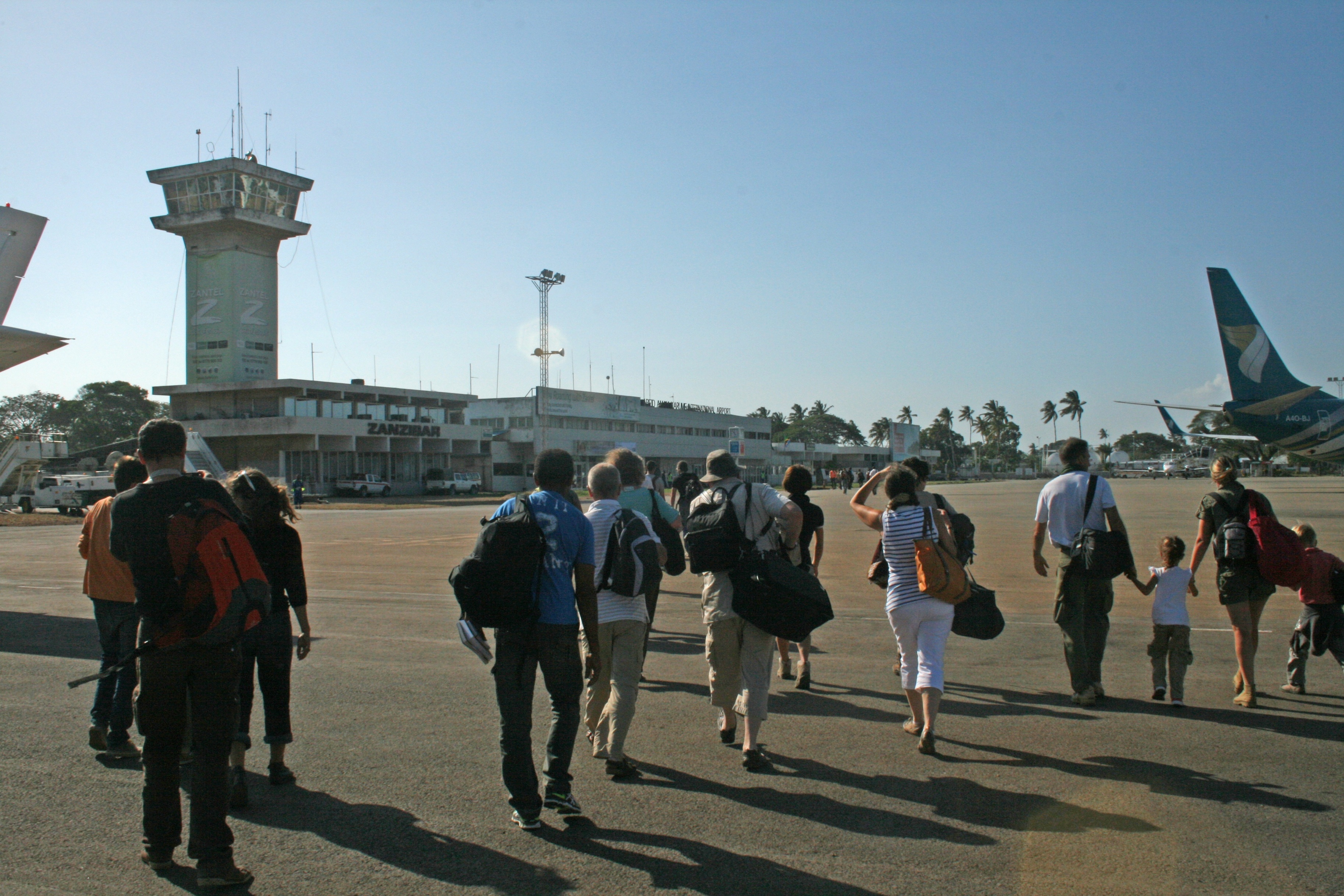
Travellers arrive in Tanzania.
Learn more: Our Kilimanjaro porters receive first aid training
Kilimanjaro WiFi and mobile signal on routes
While Kilimanjaro remains primarily an offline adventure, connectivity has improved along certain routes. Here’s what climbers can expect:
1. Marangu Route
- WiFi: Available at Mandara Hut, Horombo Hut, and Kibo Hut.
- Mobile signal: Stronger at lower and mid-altitude camps; patchy near the summit.
- Tips: The most established network on the mountain. Solar-powered WiFi may be turned off at night.
2. Machame Route
- WiFi: Limited, mainly at high camps if supported by tour operators. Not officially guaranteed.
- Mobile signal: Usable at most camps. The upper camps are shared with the Lemosho route, where I got messages through from every camp on my recent climb.
- Tips: Best chance for connectivity is early morning or near ridges that catch the signal.
3. Lemosho and Shira Routes
- WiFi: Very limited; some private operators offer hotspots at select huts.
- Mobile signal: On my recent climb I could send messages from every camp, usually from a particular spot at camp rather than from my tent. Calls are unreliable.
- Tips: Watch where the crew gather with their phones at each camp. That's where the signal is.
4. Umbwe Route
- WiFi: Rarely available and mostly offline.
- Mobile signal: Minimal; lower sections might get a weak signal.
- Tips: The steep and remote nature of this route makes connectivity unlikely.
5. Rongai Route
- WiFi: Extremely limited. Only at lodges near the trailhead.
- Mobile Signal: Weak to patchy; improves closer to the base.
- Tips: Best for climbers looking for a quieter, more disconnected experience.
Summit day (Uhuru Peak)
- WiFi and signal: Very unreliable. Any connection at the summit is rare and intermittent. Climbers should treat it as offline.
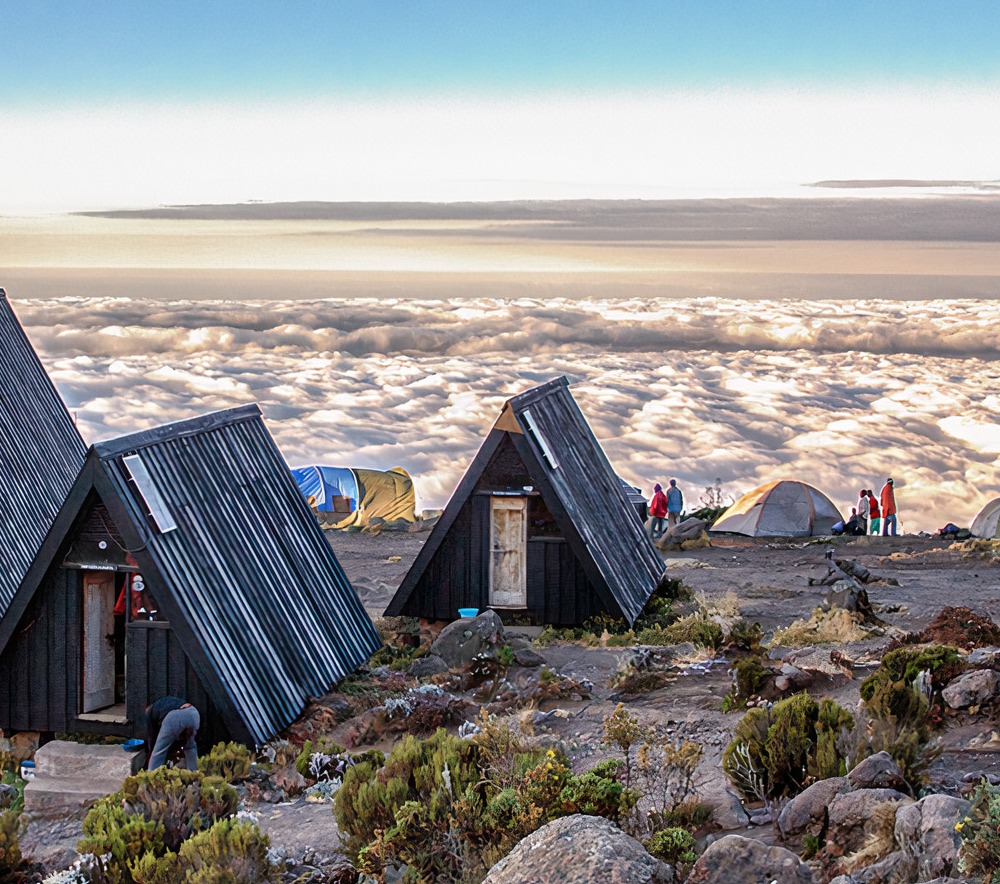
Huts seen along the Marungu Route.
Learn more: Staying at Mandara Hut on Kilimanjaro – a trekker’s guide
Internet on Kilimanjaro
Even with the broadband rollout, mobile internet on Kilimanjaro is not identical to a town-based connection. Data speeds can fluctuate and high-altitude weather may influence the signal. Service is usually strongest at rest camps, especially those located on exposed ridges.
WhatsApp messaging is generally the most dependable communication method. Social media uploads and short videos often work at camp if you're patient. Plenty of our climbers post a progress update to Instagram at the end of each day, and I did the same on Lemosho. Don't count on streaming or video calls. Climbers often wait until camps or rest spots to upload images or text. At the summit, connectivity is available but sensitive to conditions. Climbers who reach Uhuru Peak early in the morning often find the best chances for a stable connection.
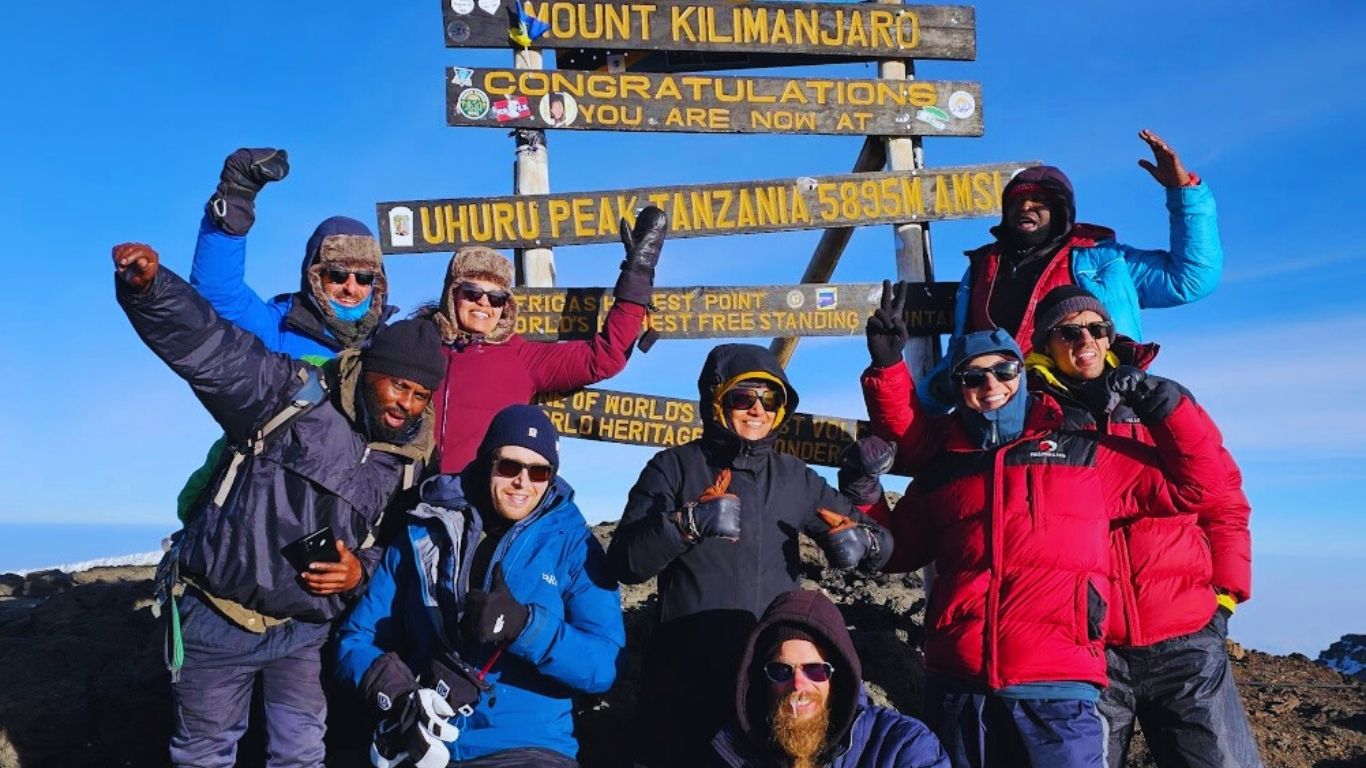
A group of trekkers summit Mount Kilimanjaro.
Charging devices on Kilimanjaro
There are no conventional charging outlets on the mountain. All power must come from what you bring. Power banks are the most reliable method. Bring high-capacity power banks and charge them fully before your trek. Airlines require lithium batteries in carry-on bags, so do not pack them in checked luggage.
Solar is worth having too. On one climb I took two standard power banks and ran both flat. A fellow climber had a solar power bank she charged at camp each day, and by the end of the trek we'd all borrowed a little from it. Charging slows down in cloud, so bring a standard power bank as well rather than relying on solar alone. Cold drains batteries far faster than usual, so keep your devices and power banks inside your sleeping bag at night.
Learn more: The best sleeping bags for Kilimanjaro
Should you rely on internet for navigation or safety?
Despite improved coverage, climbers should not depend on internet access for emergencies or navigation. All reputable Kilimanjaro operators like Follow Alice carry radios, satellite communication devices, and trained mountain guides. Connectivity is a bonus for communication and sharing moments, not a replacement for proper safety systems.
Staying connected on Kilimanjaro
Kilimanjaro is one of the few high-altitude destinations where climbers can access mobile reception and internet from the lower slopes all the way to the summit. Tanzania’s broadband project has improved the experience, making it easier to stay in touch with friends, family, and your trekking team. While service is far better than in the past, climbers should still expect variations in signal strength and occasional periods without reception. With an eSIM or local SIM, realistic expectations and a solar power bank, you should be able to get a message home most evenings. Treat anything more as a bonus. If you've got questions about this or anything else before you go, book a call with Follow Alice's Kilimanjaro team.