


Before you understand the Maasai, the first thing you will notice is the cloth. A flash of deep red moving through the savannah. A warrior standing at the edge of the road, one shoulder bare, the fabric catching the wind. If you have ever been on safari in Kenya or Tanzania, the image is probably already fixed in your mind. What you may not know is what it means.
The shuka is the length of cloth worn by the Maasai people of East Africa, draped and knotted around the body in a simple way that reflects a much deeper cultural meaning. To understand the shuka is to understand something essential about the Maasai identity, history and the complicated relationship between African tradition and the outside world. This is that story.
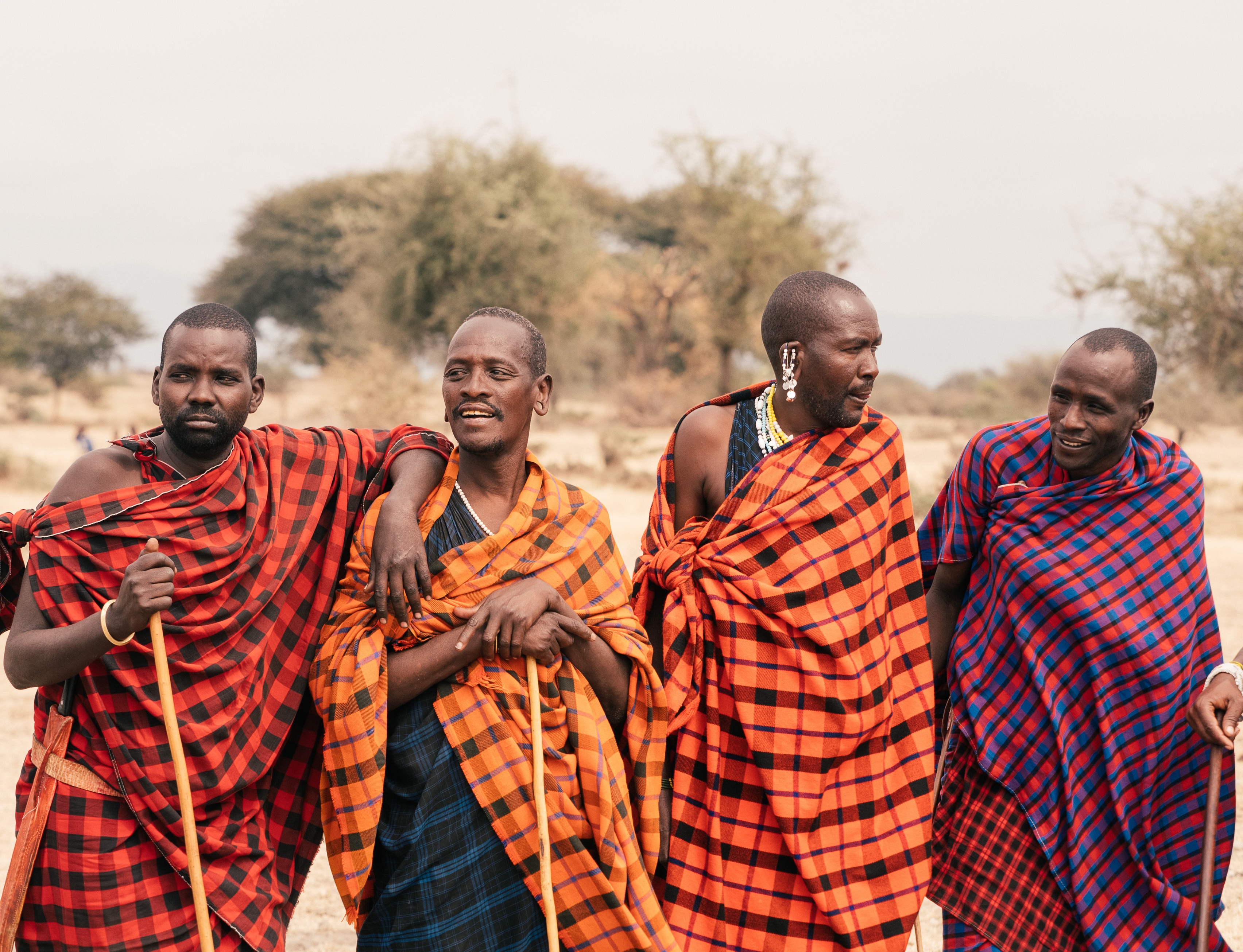
Four Maasai men in traditional robes standing together.
Learn more: The 4 best walking safaris in East Africa
What is a shuka?
The word shuka comes from the Maa language, the mother tongue of the Maasai people. It means, quite literally, 'body wrappings'. There is something instructive in its plainness. The shuka is not ceremonial dress worn only for special occasions, but clothing in its most fundamental sense, as it's worn every day, across all age groups, and adapted to life on the East African plains.
As Maasai clothing goes, the shuka is the foundational garment. Both men and women wear it, though the way it is draped, its colour and its pattern communicate a great deal about the wearer, their age, their gender, their status within the community, and whether they are recently initiated or elder. What looks to an outsider like a single garment is, on closer inspection, a visual language of deeply rooted traditions.
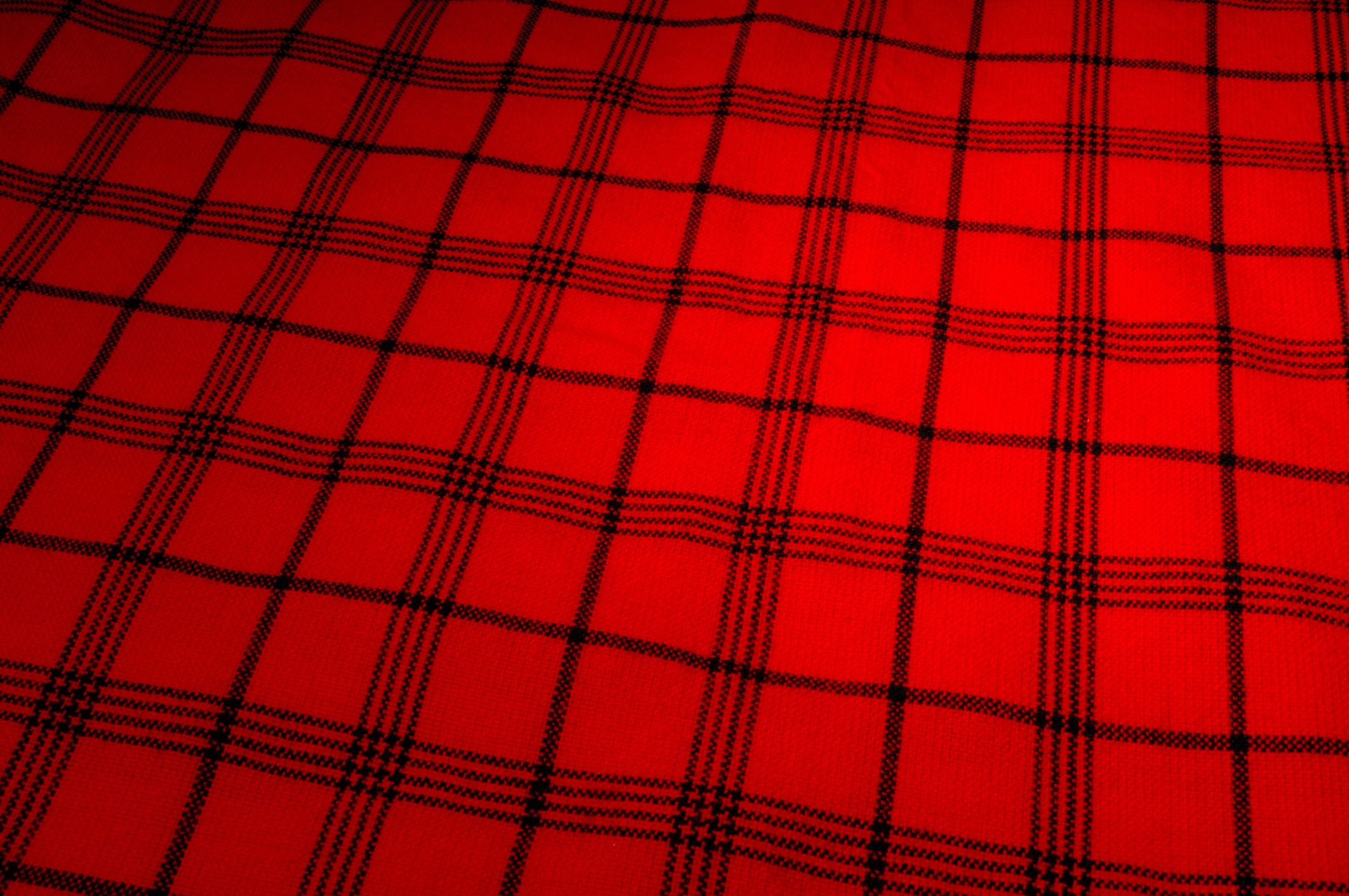
Massai shuka cloth.

The Maasai shuka history
The history of the shuka falls into three distinct phases, and understanding them changes how you see the garment entirely.
The first chapter begins more than 1,500 years ago, when the Maasai wore clothing made from animal hides, primarily cattle and sheep. The hides were softened, treated and rubbed with red ochre, the iron-rich clay that the Maasai have long used for body decoration, hair preparation and ritual purposes. The colour red became closely associated with Maasai identity, carrying both cultural and spiritual meaning.
The second chapter opens in the nineteenth century, when American unbleached muslin cloth, known as 'Amerikani', began arriving along the East African coast by ship. The Maasai adopted it with characteristic pragmatism. They rubbed the white fabric with animal fat and red ochre, making it resemble, in texture and colour, the hides they had always worn. The fabric changed, but the visual identity remained. This period lasted well into the early twentieth century and represents a remarkable example of cultural continuity achieved through adaptation.
The third chapter begins in the 1960s, when factory-produced cotton cloth became widely available and affordable across East Africa. It was during this period that the mass-produced, brightly coloured, striped or checked cotton shuka became the standard form of Maasai attire as it exists today. The shift from ochre-treated muslin to commercial cotton was practical rather than ideological, but it introduced something new, a wider range of colours, each of which carried meaning.

Maasai warrior men with one blowing into an antelope horn during a Kenya safari.
Learn more: When can I see the Great Migration in Maasai Mara, Kenya?
Maasai shuka colours and what they mean
The dominant colour of Maasai traditional clothing is red, and it is not accidental. Red is the colour of cattle blood, of the ochre that has marked Maasai skin and fabric for centuries, and of bravery and strength in Maasai culture. Warriors, known as moran, wear red predominantly. It is also said to deter wild animals, which is a practical consideration for people who live in proximity to lions and whose warriors have historically been expected to face them. But the Maasai shuka colours are more varied than the outside world tends to assume. Each colour communicates something specific:
- Red signals bravery, strength and unity. It is the colour most associated with the moran, the young warriors who form the backbone of Maasai society.
- Blue represents the sky and the importance of water. In a semi-arid landscape where rain determines survival, blue carries a weight that is difficult to overstate.
- Green speaks to land and sustenance. It is associated with health and the cattle-herding life that underpins Maasai identity.
- Orange and yellow are associated with warmth, hospitality and generosity, colours worn more commonly by women and elders.
- Black, worn less frequently, is associated with the people themselves and with the difficulties and transitions of life.
The patterns are also important, ranging from simple stripes to complex plaids, which are designed to be read by others within the community, signifying clan identity and social standing. For instance, the checked or striped designs that have become most recognisable in the Maasai tribe's clothing are not randomly chosen. Elders wear different patterns from warriors. Women's shuka attire differs from men's as the styling, accompanying beadwork, and specific plaid patterns can differ. The cloth is a code, but it's readable to those who know how to interpret it.
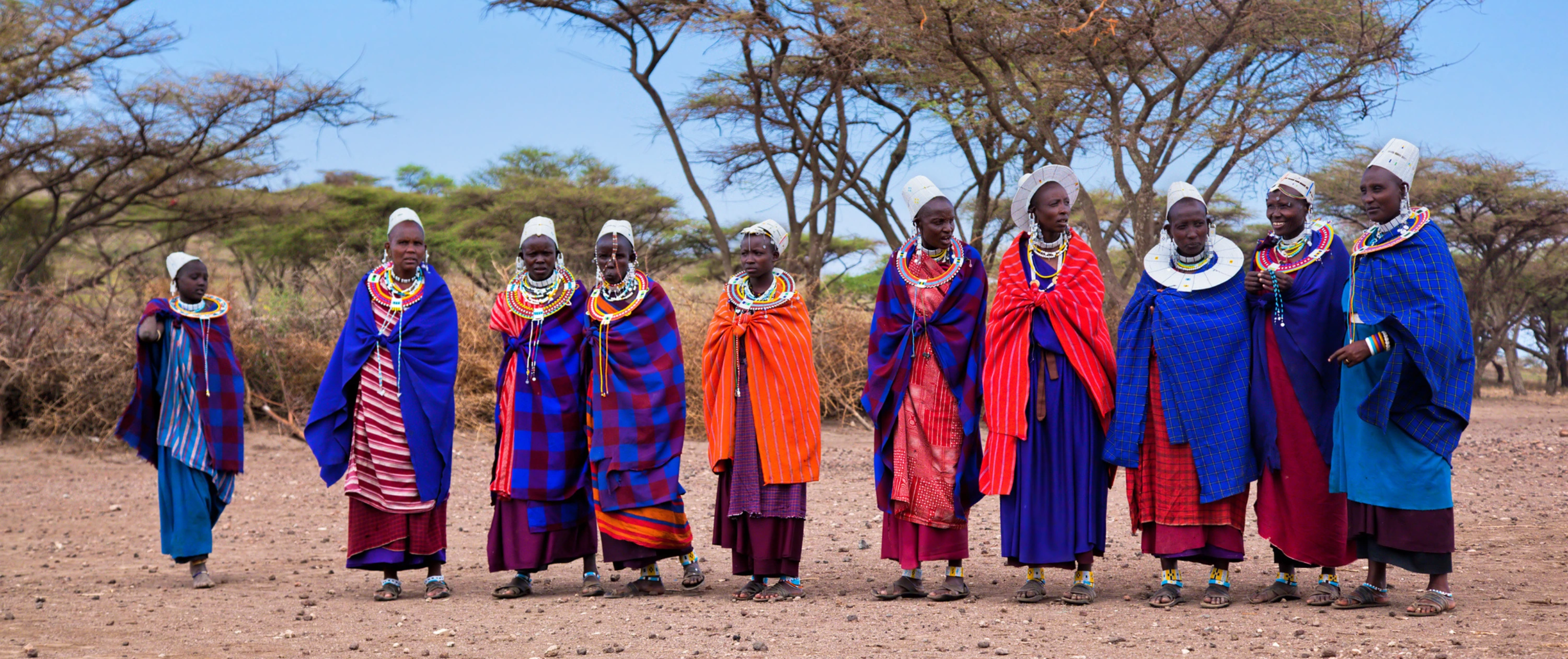
The different attire worn by the Maasai tribe.
Learn more: What are the 'Elusive Eleven' of an African safari?
Did the Maasai get the shuka from Scottish missionaries?
One of the most persistent stories about the shuka is that its checked pattern was inspired by Scottish tartan, introduced by missionaries in the colonial era. The theory is attractive in its neatness, and it circulates widely. The truth, as is usually the case with widely circulating theories, is more complicated.
There were indeed Scottish missionaries active in East Africa during the nineteenth century, and it is plausible that some contact occurred between tartan fabric and Maasai textile traditions. But the Maasai were already wearing ochre-dyed animal hides long before any missionary arrived, and the checked pattern itself has parallels in many African textile traditions that predate colonial contact. The theory cannot be entirely dismissed, but it should not be accepted as a settled fact.
What it tends to do, when repeated uncritically, is position African culture as derivative of European influence rather than as a living tradition with its own long history. The more honest answer is that the shuka's visual identity evolved over centuries from Maasai sources, absorbed practical influences from trade and contact, and arrived at its current form through a process that belongs primarily to the Maasai themselves. While Scottish missionaries and traders did influence the type of cloth available in East Africa, the shuka's development is a case of cultural adoption and adaptation, not a direct replication of Scottish kilts.

Maasai jumping dance is one of the top 10 attractions in Tanzania.
Learn more: Kenya safari tours: your guide to the ultimate wildlife experience
The shuka on the global stage
In 2017, Louis Vuitton sent a collection down the runway that drew heavily on Maasai shuka patterns. The collection attracted international attention, was photographed and reported widely, and generated significant commercial returns. The Maasai community received nothing, and this was not an isolated case. Over the years, the distinctive checked and striped patterns of Maasai clothing have appeared in collections from major international fashion houses, in homeware ranges, in hotel decor and in retail products around the world, almost always without acknowledgement, attribution or compensation.
The Maasai Intellectual Property Initiative, known as MIPI, was established to address exactly this. MIPI estimates that the Maasai community is owed in the region of ten million US dollars per year in licensing fees from international brands using their cultural identity commercially. The figure is almost certainly conservative. The shuka and the wider visual iconography of the Maasai have become one of the most recognisable and commercially exploited cultural aesthetics on the planet, and the people it belongs to have seen almost none of the financial return. This is a story that deserves more attention than it receives. It sits at the intersection of intellectual property law, cultural rights and the long shadow of colonial economic extraction, and it does not have a resolution all these years later.

Walking with a Maasai in the Hell's Gate gorge.
Learn more: Black Leopards in Kenya: Everything You Need to Know About Them
Should tourists buy or wear a shuka?
If you spend time in Kenya or Tanzania, you will likely have the opportunity to buy a shuka. In Maasai markets and community bomas, shuka cloth is sold to visitors, often by the Maasai themselves. More travellers are beginning to ask whether buying or wearing one constitutes cultural appropriation, and the question deserves a straight answer.
Buying a shuka from a Maasai market or a community-run shop is not appropriation. It is commerce, and it directly supports the community. The Maasai have been trading cloth and crafts with outsiders for a very long time. Purchasing from a Maasai seller, paying a fair price and understanding what you are buying is an entirely respectful act.
Wearing a shuka as a tourist is a more nuanced question. Draping one around your shoulders on a chilly evening at a safari camp is different from adopting full Maasai attire as a costume. Context, intention and self-awareness are what matter in this context. The Maasai are not a fragile culture requiring protection from outside contact. They are a living, adaptive community who have navigated colonialism, land displacement and globalisation with extraordinary resilience. What they ask for is respect, understanding and, where their cultural property is being used commercially, fair compensation.
The most important thing a visitor can do is learn. Understanding what the Maasai shuka means, where it comes from, and what it represents is the difference between seeing a red blanket and understanding a civilisation.

Maasai women in traditional dress sell their products to tourists.

Seeing the shuka in person
No photograph prepares you for the first time you see a Maasai warrior in full dress on the open savannah. The red of the shuka against the yellow grass, the blue sky, and the acacia trees is one of those images that lodges itself permanently. It is the kind of moment that makes you understand why people come back to East Africa again and again.
When Follow Alice takes travellers to the Maasai Mara in Kenya or to the areas around the Ngorongoro Crater and Serengeti in Tanzania, visits to Maasai bomas are one of the most requested and most remembered parts of the experience. A boma is a traditional Maasai homestead, a circle of low mud-and-dung houses enclosed within a thorn fence. Visiting one with a knowledgeable guide, and with the genuine engagement of the community, is something different from the staged cultural performances that pass for cultural tourism in too many parts of the world.
You will see the shuka worn not as a display but as daily clothing. You will see mothers carrying children wrapped in its fabric, elders sitting in its shade, young moran standing with the particular ease that comes from wearing something you have worn all your life. If you have read this article before you arrive, you will understand what you are looking at.
That is the point. The Maasai shuka is not a piece of backdrop for a safari photograph. It is a living piece of cultural history, with 1,500 years of meaning woven into its threads. Knowing that story makes the encounter richer, more respectful, and considerably more worth having.
Follow Alice's plans for tailor-made Kenya and Tanzania safaris that include genuine, respectful visits to Maasai communities. Get in touch to start planning a trip that is really on the next level.