



When most people think of Kenya, images of golden savannahs dotted with acacia trees and herds of elephants or lions often come to mind. But another predator is hiding in the shadows, one so rare that even seasoned guides usually whisper about it rather than speak openly about it. For years, black leopards were considered almost mythical. Stories circulated in the guiding and wildlife communities, and local folklore often mentioned them.
The hard evidence was scarce until a few years ago. In Laikipia County, a remote and semi-arid wilderness in central Kenya, researchers and photographers began capturing clear images, confirming that these cats are very much real. Unlike their golden-spotted family, black leopards carry a coat so dark it seems to absorb the light around them. If the sun catches them just right, faint patterns of rosettes emerge. These cats have always been part of local folklore, but only recently has science confirmed their existence in Kenya, turning this myth into a reality. If you would like to find out more about these magnificent creatures, and if you want to spot them on a Kenyan safari, feel free to book a call with us.
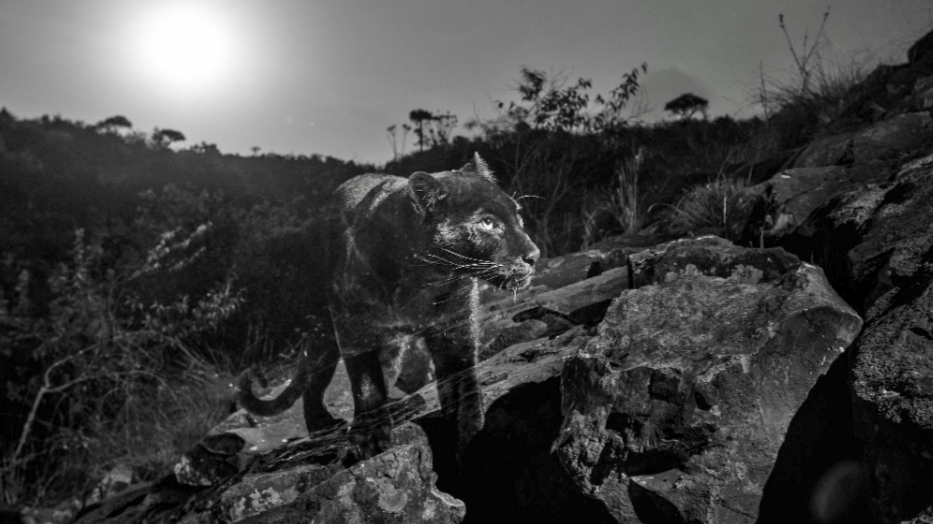
A British wildlife photographer set up motion-sensitive cameras in central Kenya after hearing the elusive cats were there. Photo credit: Will Burrard-Lucas.
Learn more: How much does a Kenyan safari cost?
Origins and why they are black
The black coat of these leopards is caused by melanism, a genetic trait that produces an excess of the pigment melanin. This gives the leopard its striking dark colour, while its characteristic rosette patterns often remain subtly visible when in the sunlight. Globally, only about 11 per cent of leopards display melanism, and in Africa, sightings are extremely rare.
Historical records are few. The first confirmed photograph of an African black leopard was taken in 1909 in Addis Ababa, Ethiopia. After that, documented sightings were almost nonexistent until recently, when researchers and photographers in Laikipia captured clear evidence of these animals. These sightings confirm that black leopards have lived under the shadows, quite literally adapting to the challenges of their environment despite habitat loss and prey decline.
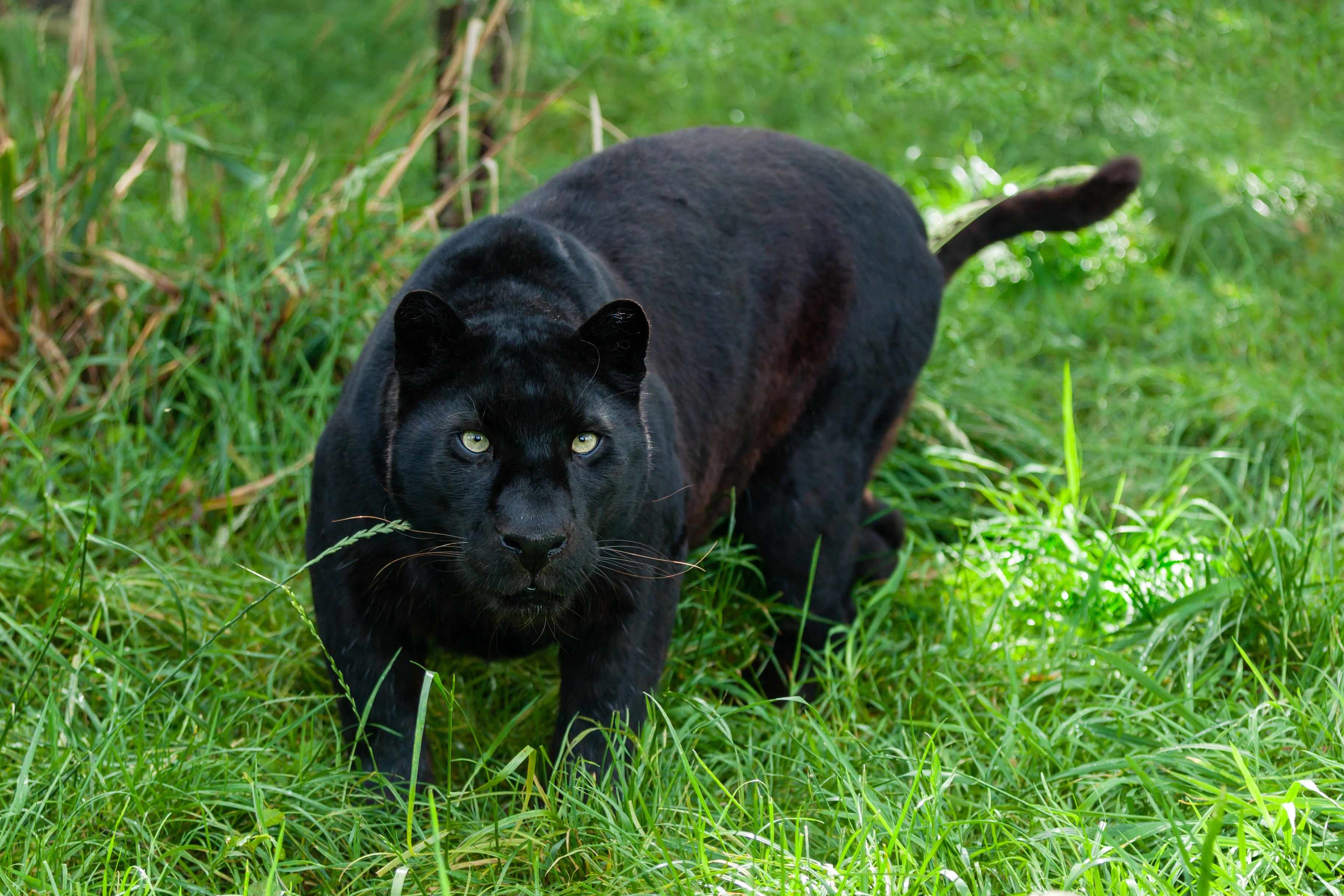
Black leopard hunting in the long grass.
{{leadmagnet-one}}
Where to find black leopards in Kenya
Laikipia County is now the primary confirmed home of African black leopards. Its rugged landscape, scattered with scrub, rocky outcrops, and riverine forests, offers both cover and hunting grounds. Prey species, including dik-diks, impalas, and other small antelopes, support these predators’ survival.
For travellers hoping to spot one, you have to be really patient. Black leopards are elusive by nature, often active in the early morning or late evening. Most sightings come through camera traps or long hours spent quietly observing their territory. While Laikipia is the most reliable place to encounter them, there may be small populations elsewhere in Kenya’s remote wilderness, though confirmation has been rare.
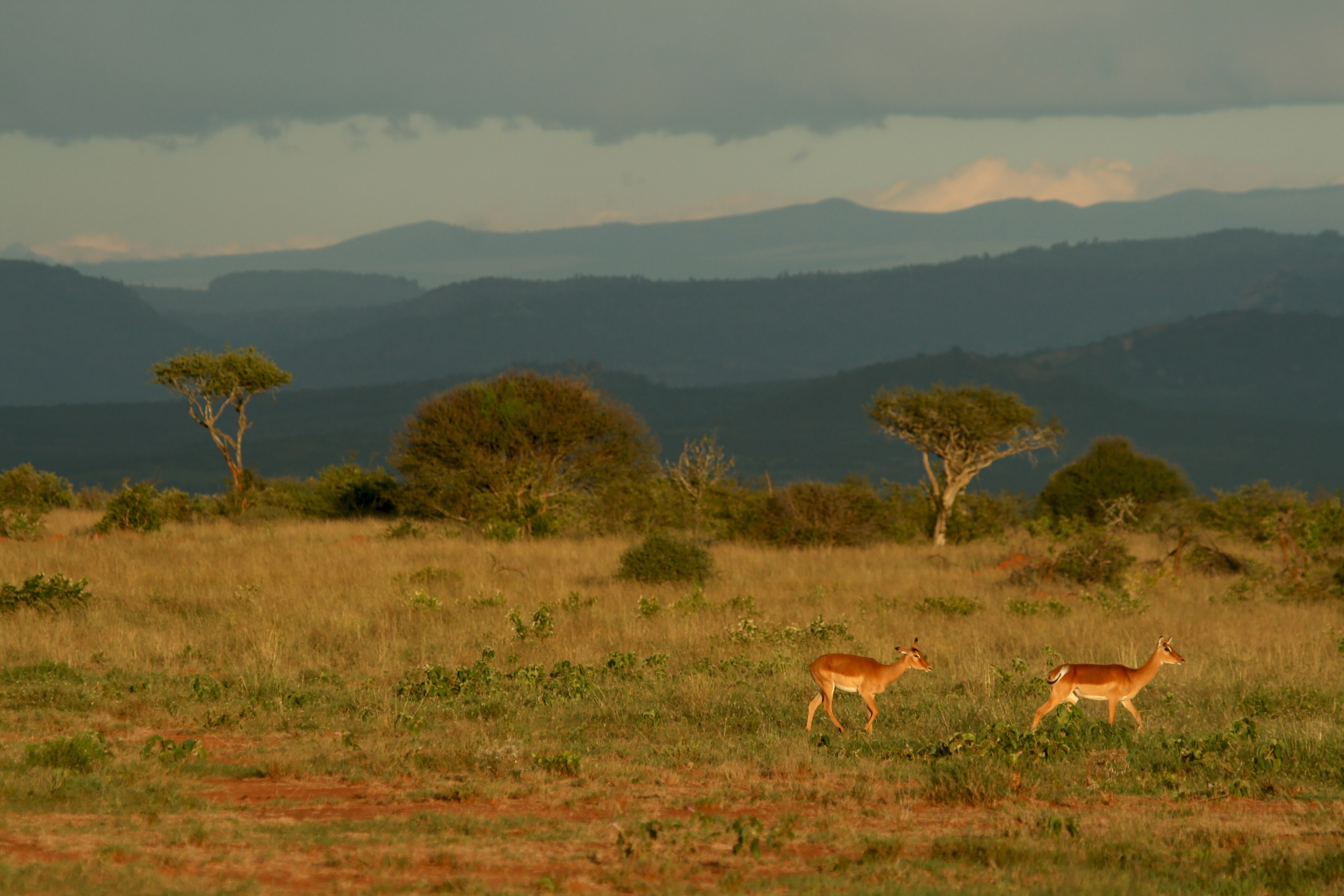
The open wilderness in Laikipia, Kenya.
Giza: Kenya’s most observed black leopard
Among the stories of Kenya’s black leopards, none is more captivating than Giza, which means “darkness” in Swahili. She was a tiny cub during the severe 2022 drought in the East African country. She was introduced to the world by her golden-spotted mother a few kilometres from the Laikipia Wilderness Camp. The harsh conditions made survival a challenge as prey moved long distances or died, but predators like Giza and her family flourished in this environment.
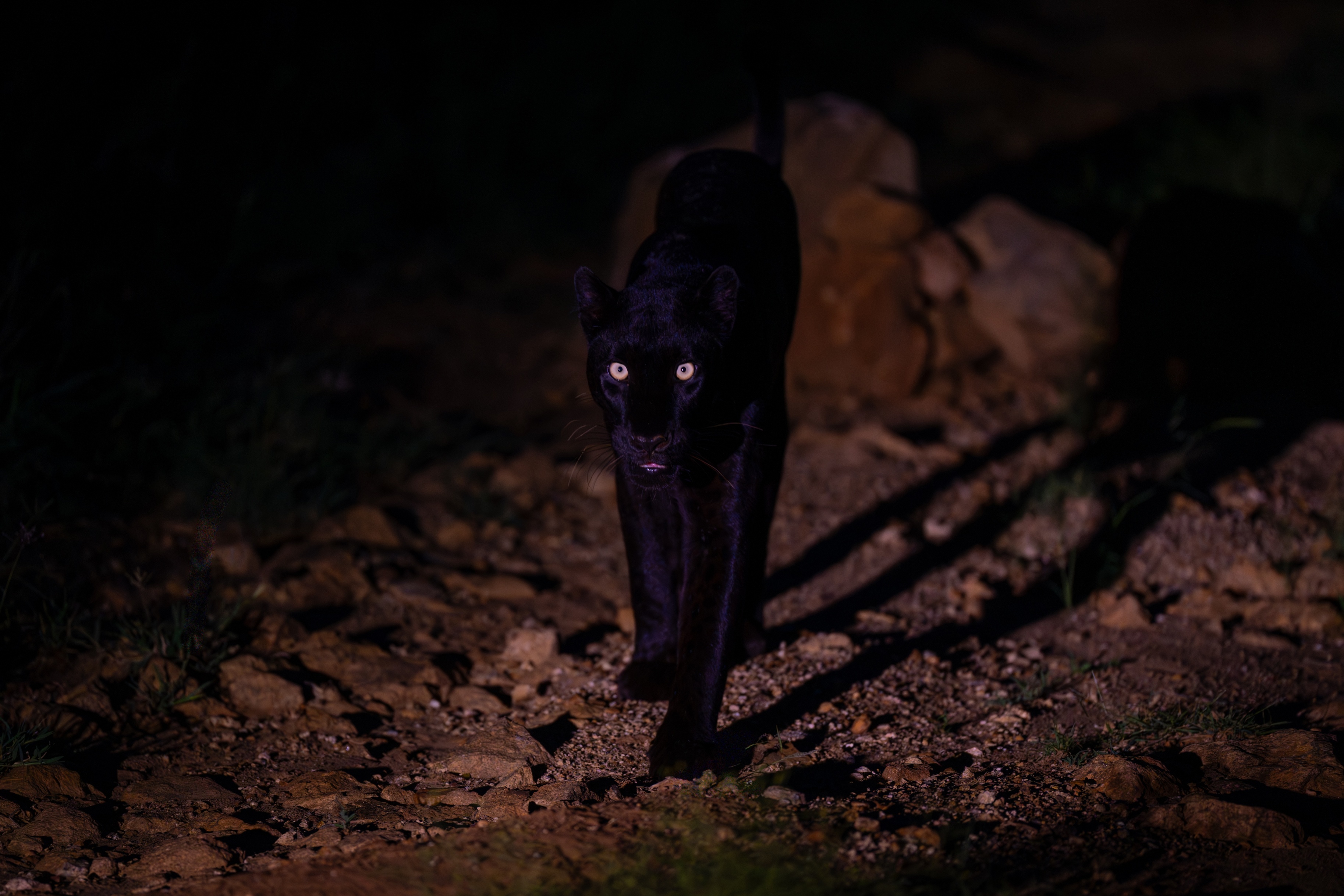
Giza walks towards the camera at night in Laikipia North, Kenya.
Giza’s behaviour has captivated researchers and photographers alike. Unlike typical leopards, who rely heavily on camouflage, Giza moves boldly across her territory. She covers large distances in search of prey, relying on speed, agility, and the element of surprise rather than stealth. Her preferred targets are dik-diks, which she hunts with amazing accuracy. Her encounters with a male leopard show the complex social dynamics of big cats. The male began to steal nearly every kill Giza made, forcing her to adapt.
Rather than leaving her territory or challenging him directly, Giza learned to hunt two dik-diks per night, offering the first as a peace gesture to appease the male and consuming the second herself. This strategy demonstrates both intelligence and resilience, qualities that have allowed her to survive in this environment. Over the course of two years, observers have witnessed Giza grow from a playful cub into a skilled huntress. She is seen fairly regularly and is especially relaxed around vehicles, which provides tourists with the most impressive sightings.

Giza posing on a rock in her natural environment.
It’s important to remember that sightings happen entirely on her terms. No attempts are made to track or approach her cubs. As a naturally secretive mother, any pressure could cause her to relocate them to a more remote area. Conservationists remain careful and deliberate by prioritising respectful, low-impact viewing. Giza and her cubs are protected, ensuring that future generations can continue to experience these rare and extraordinary encounters.
Learn more: Kenya vs Tanzania – which offers the better African safari?
Black jaguar vs black leopard
There has always been a long-standing debate about what is the difference between a black leopard and a black jaguar. These two magnificent spotted big cats are both members of the Panthera genus, muscular ambush predators, and so similar in coat appearance that even experienced animal lovers can have trouble telling them apart in photos. A black panther, on the other hand, is easier to identify because of its striking black coat, but many people mistakenly think it’s a separate species. It isn’t. The term “panther” simply refers to a melanistic variant of either a leopard or a jaguar.

Jaguars are the third largest cat in the world after the tiger and lion, and the biggest in the Americas.
The easiest way to tell them apart is by location. Jaguars live in Latin America, while leopards are found in Africa, Asia, the Middle East, and Russia. Jaguars are stockier and more muscular, with rosettes that often contain smaller dots inside. Leopards are more slender and agile, with smaller rosettes. Black leopards are a melanistic variant, with faint rosettes sometimes visible in sunlight, depending on the individual and lighting.
Here is a table that shows the difference between these two majestic creatures:
Understanding these differences helps travellers and wildlife enthusiasts correctly identify the animals and appreciate the rarity of seeing a black leopard in Kenya.
Learn more: Maasai Mara National Park: A Complete Guide for Visitors
Conservation and challenges
Even in Laikipia, black leopards face challenges. Habitat loss, declining prey numbers, and human-wildlife conflict threaten their survival. African leopards, in general, are listed as vulnerable by the IUCN. Conservation efforts in Laikipia focus on protecting habitats, supporting community-led anti-poaching programmes, and encouraging responsible tourism. For travellers, visiting these areas is an opportunity to see rare wildlife firsthand while contributing to their protection.

Green landscape of the Maasai Mara in Kenya.
Why black leopards captivate travellers
Black leopards, those shadowy hunters of the African wilderness, hold a mysterious allure that few animals can match. Moving silently through the forests and grasslands, they vanish into the shadows, appearing only to the most patient observers. Their rarity makes every encounter feel truly magical. These leopards are not just predators; they are a living reminder of Africa’s rich biodiversity and the intricate ecosystems that support it.
For travellers, seeing a black leopard is more than ticking a box on a safari; it’s connecting with the heartbeat of the wilderness, understanding the fragility of these habitats, and feeling the magic of witnessing something almost mythical in real life. By supporting ethical wildlife tourism and community-led conservation, visitors help protect these extraordinary cats, ensuring that future generations can continue to marvel at the ghosts of the shadows.

A safari in Kenya is a once-in-a-lifetime experience.
Facts about African black leopards
As we have been saying throughout this article, the black leopards are the stuff of legend, rare, secretive, and utterly captivating. They’ve intrigued wildlife lovers and storytellers alike for decades.
Take a closer look at what makes these shadowy cats so extraordinary:
- Only 11 per cent of leopards worldwide are melanistic.
- Laikipia hosts the largest known population of black leopards in Africa.
- Confirmed sightings in Africa were nearly 100 years apart until 2019.
- Black leopards are intelligent hunters, capable of adapting their strategies.
- Threats include habitat loss, prey decline, and human conflict.
- They are primarily nocturnal, using the cover of darkness to hunt and avoid detection.
- Their dark coat provides excellent camouflage in dense forests and shaded savannahs.
- Mothers, like Giza, are highly protective of their cubs and teach them survival skills through careful guidance.
- Sightings are extremely rare, making encounters a once-in-a-lifetime experience for travellers.
- Like all leopards, black leopards are solitary and territorial.
- They adapt to various habitats but prefer dense, covered areas.
- Black leopards are elusive and often spotted by camera traps.
- They can run up to 36 mph (58 km/h) in short bursts.
- They live 12-17 years in the wild and up to 20 years in captivity.
Every black leopard sighting is a reminder of the wild wonders that still exist in Africa and the responsibility we have to protect them. By supporting ethical wildlife tourism, respecting natural habitats, and backing community-led conservation, travellers play a vital role in ensuring that these magnificent cats continue to live.
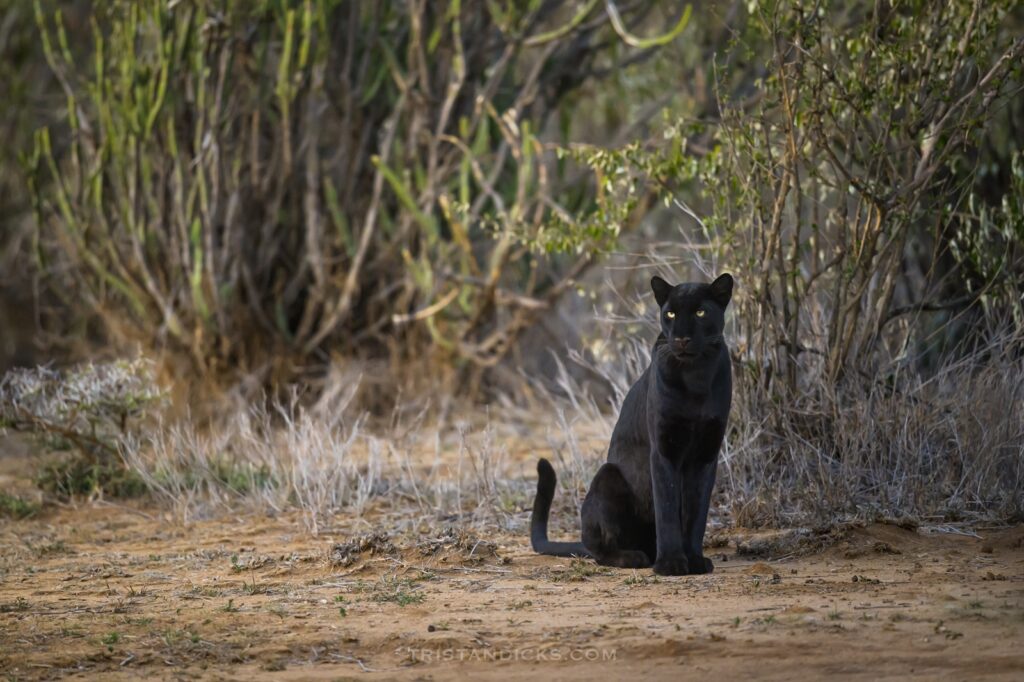
Giza just relaxing and watching her surroundings.
Learn more: Best time to visit Kenya for safaris, beach holidays and diving
Experiencing a rare wildlife encounter
For anyone exploring Kenya’s wilderness, black leopards offer a unique wildlife experience. Observing Giza and other black leopards in Laikipia is not just about seeing a rare animal; it is about connecting with Kenya's wild, understanding the delicate balance of ecosystems, and appreciating the intelligence and resilience of one of Africa’s most elusive big cats.
Responsible travel and support for conservation ensure that these extraordinary animals will live on for generations to come. In Kenya, the story of the black leopard is ongoing, and for visitors who venture into the right corners of the wilderness, it’s a story you can witness firsthand. If you would like to go on a safari in Kenya and witness this, feel free to contact our team.