


I will always vouch for doing a safari. You get to see the Big Five, and if you're lucky, you can come face-to-face with mountain gorillas, depending on whether you're heading to Rwanda or Uganda. It is an experience that only a few people have the opportunity to have. So if you are reading this, chances are you want to know how to make it work in a single trip. The good news is that this is entirely doable. East Africa’s geography means Kenya, Uganda, and Rwanda are closer together than most travellers realise, and the routes between them are well established.
Nairobi to Kigali is about 1,200 kilometres by road and roughly a two to three-hour flight. Nairobi to Entebbe is about 740 kilometres by road, or roughly an hour and twenty minutes by regional flight. Most travellers use a combination of short flights between capitals and drive for shorter safari tours. This makes it possible to combine a Kenya safari with gorilla trekking in a single itinerary without long or complicated travel days.
In this article, I will break down the logistics for you, when to go, how long you need, which gorilla destination pairs best with a Kenya safari, and the honest trade-offs so you can book with peace of mind. Alternatively, you can contact our team, and they will be happy to answer any questions you might have.
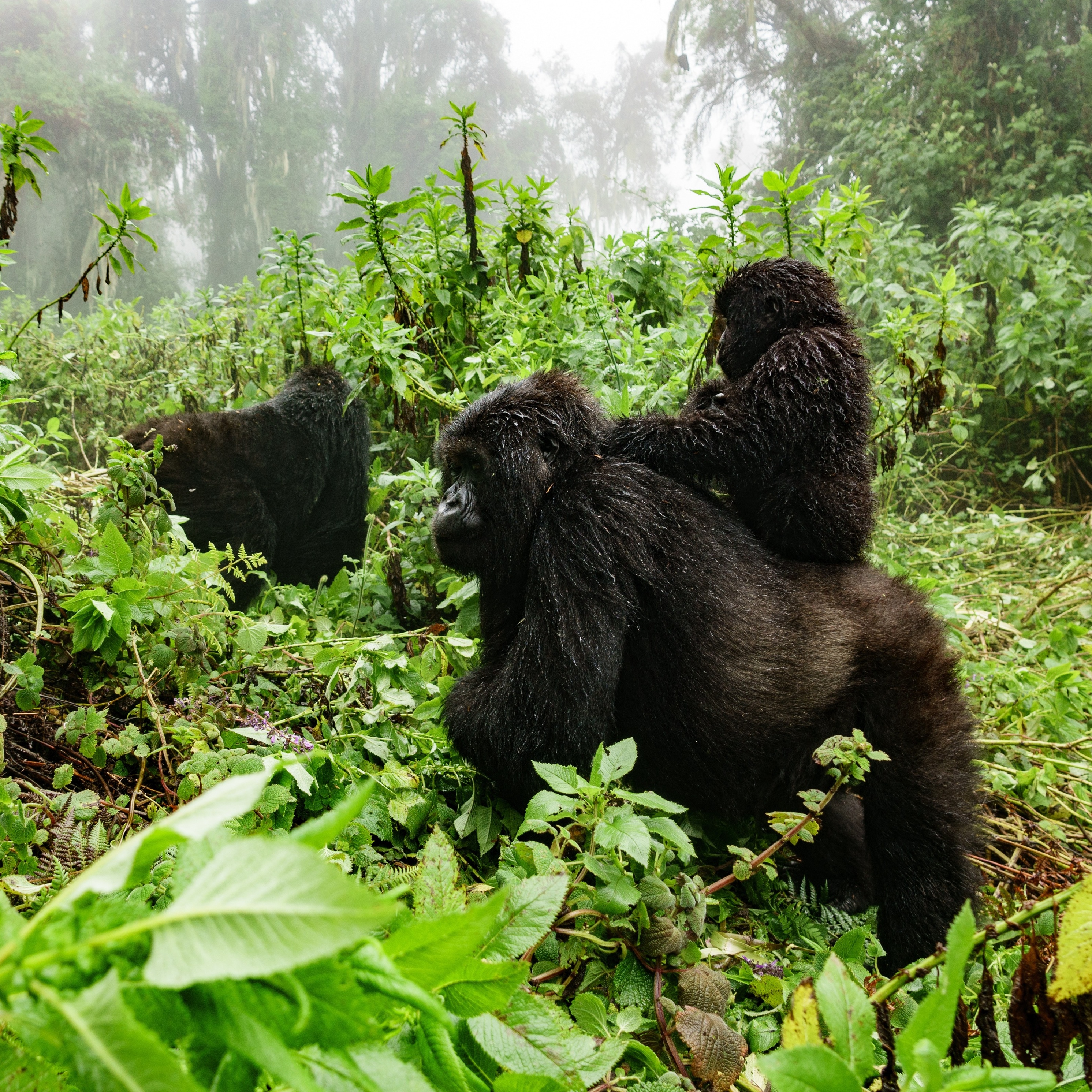
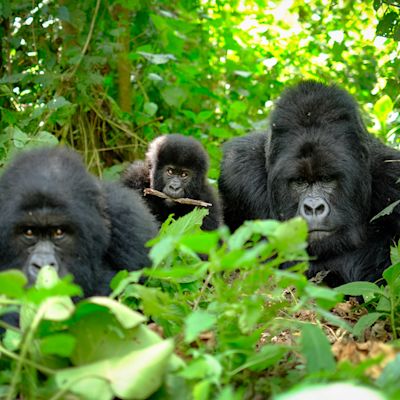
Mountain gorillas relaxing in their natural habitat.
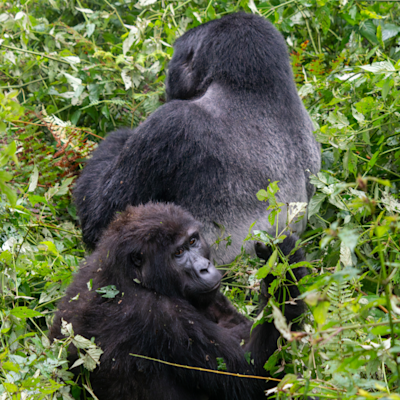
Why Kenya and Gorilla trekking make such a natural pairing
A Kenya safari and gorilla trekking trip covers two of Africa's most iconic wildlife experiences, which are rarely found in the same ecosystem. The Maasai Mara sits at 1,600 metres above sea level and showcases the open savannah, the Big Five, and the Great Migration spectacle. Gorilla habitat, by contrast, is dense Afromontane forest at 2,000 metres-plus in the Virunga massif or Bwindi Impenetrable Forest. The contrast is part of the appeal. Three countries, two completely different wilderness settings, but what a beautiful adventure it will be. The practical link is Nairobi. It serves as the natural gateway for a Kenya safari and acts as the most convenient hub for flights to Kigali in Rwanda or Entebbe in Uganda. The good news is that this will not be a backpacking experience; you are simply extending east-to-west through the region.
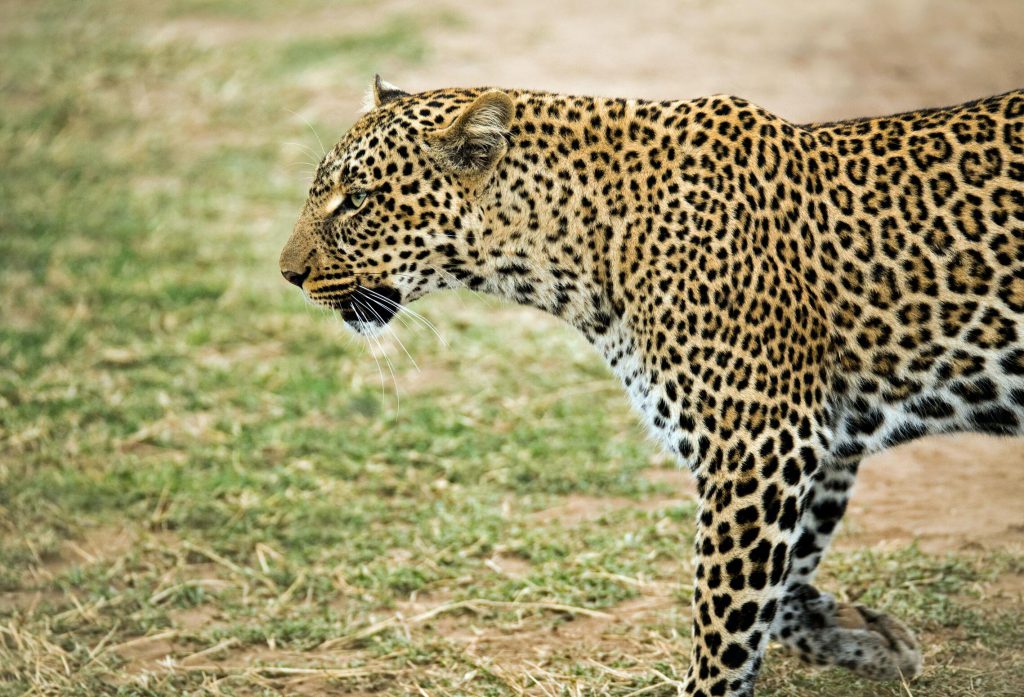
On a Kenyan safari, you may be lucky enough to see leopards, a rare sight in the wild.
Kenya safari first or gorilla trekking first?
From experience, most itineraries work best with the Maasai Mara safari first and gorilla trekking at the end, and there is a simple reason for that. Travellers usually arrive in Nairobi on an international flight, so it makes sense to begin with a few days on safari while they are still fresh. From there, they continue west or south-west into gorilla territory in Uganda or Rwanda before flying home. That said, the order is flexible and often depends on flight routing. If it is easier to fly into or out of Entebbe or Kigali, starting with gorilla trekking can work just as well.
In reality, many travellers overthink which experience should come first. There is a concern that gorilla trekking might be too demanding at the start, or that a safari will leave them too tired for the trek. In practice, neither is usually an issue. Safaris are not physically exhausting in the way people often assume. Guests spend most of their time in a 4x4 vehicle with regular stops, early nights, and a comfortable pace. Gorilla trekking does require more effort, but it is a guided experience with clear rules, steady pacing, and support from armed rangers and trackers.
What is important to understand is that these are two very different experiences. A safari is about observing wildlife from the comfort of a vehicle with a pop-up roof, moving through open landscapes. Gorilla trekking is a hike through dense forest and steep terrain that can last anywhere from two to eight hours before reaching the gorillas. It basically comes down to your personal preference. In the end, it does not matter too much which comes first. The best choice is the one that aligns with flight connections and allows the trip to flow smoothly and without rush.
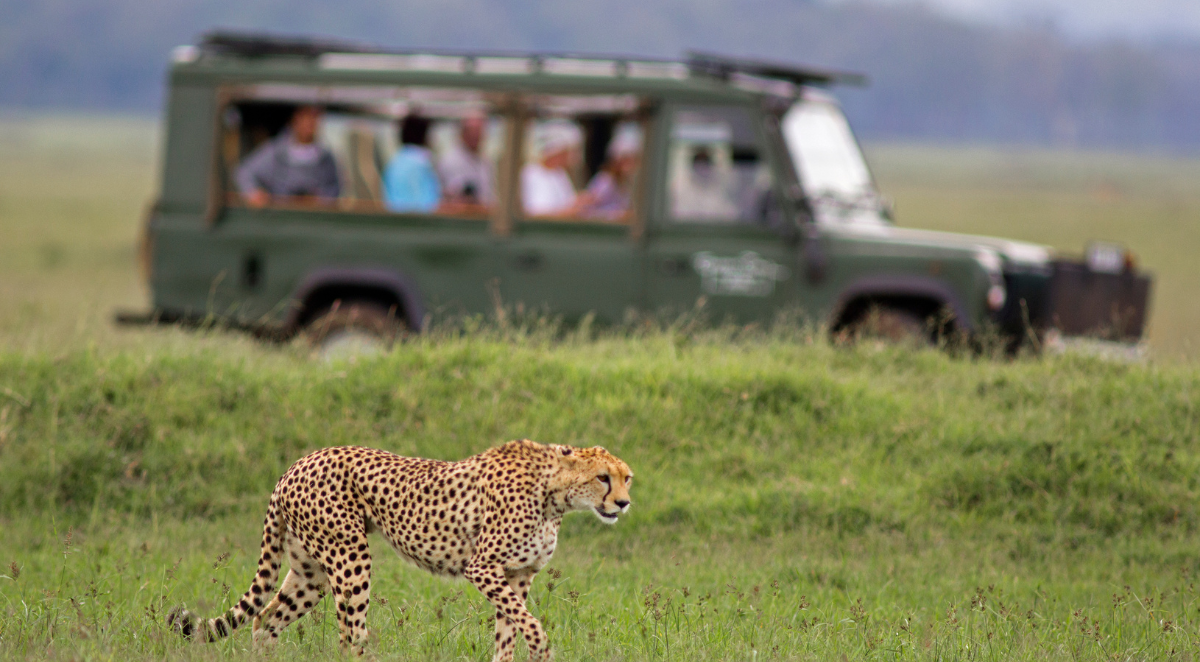
A cheetah spotted in Kenya.
How long do you actually need?
The short answer for a combined Kenya safari and gorilla trekking trip is a minimum of ten days, and twelve to fourteen days is more comfortable.
A realistic ten-day breakdown could look like this:
- Days 1–2: Fly into Nairobi. One overnight in the city before transferring to the Mara.
- Days 3–6: Maasai Mara safari — four days give you time to witness the landscape properly and increase your Big Five chances.
- Days 7–8: Return to Nairobi, fly to Kigali (Rwanda) or Entebbe (Uganda). Travel day plus gorilla permit briefing.
- Days 9–10: Gorilla trekking. At minimum one full trek day; two is strongly recommended for the experience to breathe.
- Day 11: Fly home or back through Nairobi.
Adding two extra days, one more in the Mara and one more trekking or exploring a secondary park, turns a tight itinerary into a genuinely relaxed trip. If you need more information regarding this, contact our team, and we can map out an itinerary that suits your needs.

A giraffe in the national park with the Nairobi cityscape in the background.
{{leadmagnet-one}}
The gorilla destination decision: Uganda vs Rwanda
This is the most consequential planning choice you will make after booking your Kenya safari. Both Uganda and Rwanda offer outstanding gorilla trekking experiences, but they differ in cost, accessibility, atmosphere, and what else you can do on the ground.
Let's have a look at the difference:
Gorilla trekking in Uganda
Uganda is the world's premier gorilla trekking destination by volume, as roughly half of all remaining mountain gorillas live in Bwindi Impenetrable Forest, a UNESCO World Heritage Site in the south-west of the country. Gorilla trekking in Uganda is logistically more involved than in Kenya, but rewards travellers who make the effort.
Getting there: Fly Nairobi to Entebbe (approximately 1.5 hours), then transfer overland or by light aircraft to Bwindi. The drive from Entebbe to Bwindi takes six to eight hours; a charter flight to Kihihi or Kisoro airstrip cuts that to about 45 minutes in the air.
Permit cost (2026): USD 800 per persona per trek. Permits must be booked well in advance, ideally three to six months out during peak season (July to September and December to February).
Trek character: Bwindi is a dense jungle. Treks can last anywhere from 30 minutes to eight hours, depending on where the gorilla family has moved. It is physically demanding and genuinely wild, which for many travellers is exactly the point.
Uganda also allows you to combine gorilla trekking with chimpanzee tracking in Kibale Forest, a boat safari in Queen Elizabeth National Park, or white-water rafting on the Nile. If you have four or more days to spend on the Uganda portion, the wider circuit is exceptional. Maasai Mara and Bwindi offer the sharpest contrast of any combined safari and gorilla trekking itinerary in Africa: open savannah meeting dense forest, horizon to canopy, in a single trip.
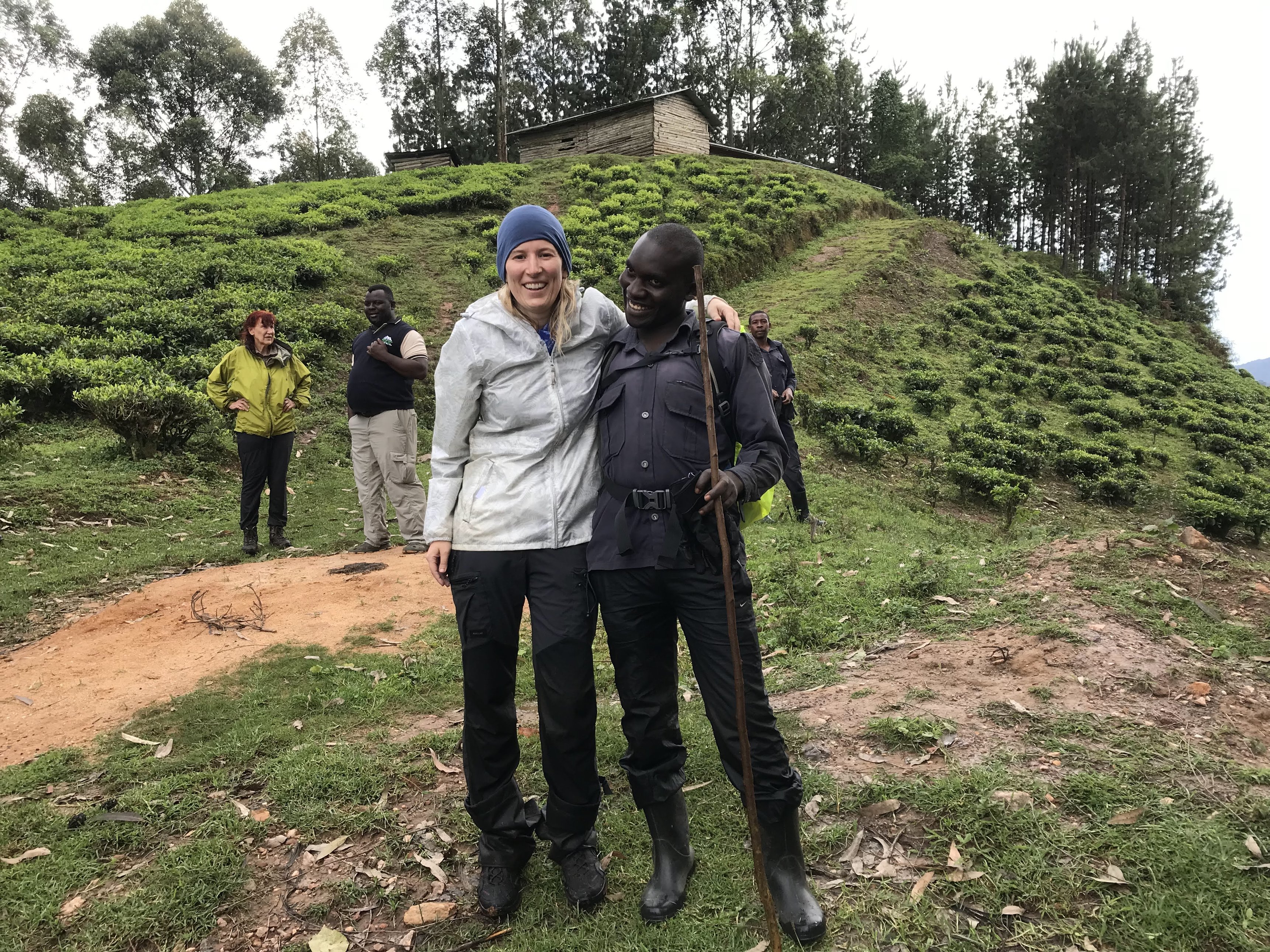
Tourist with a Follow Alice gorilla trek guide in Bwindi, Uganda.
{{leadmagnet-two}}
Gorilla trekking in Rwanda
Gorilla trekking in Rwanda is built around Volcanoes National Park in the Virunga mountains of the north-west, a beautiful setting of bamboo forest and volcanic peaks. Rwanda is the easier gorilla destination to add to a Kenya safari trip, particularly if you want to keep the itinerary compact.
Getting there: Fly Nairobi to Kigali (approximately 1.5 hours), then drive two to three hours to Musanze, the gateway town for Volcanoes National Park. The route is well-maintained and straightforward.
Permit cost (2026): USD 1,500 per persona per trek. Rwanda's permits are the most expensive gorilla permits in the world, but they are also the most reliably available through the official Rwanda Development Board.
Trek character: Rwanda's gorilla treks tend to be shorter and more predictable than Uganda's Bwindi equivalent. You are typically trekking for two to four hours each way. The habitat is open enough that photography is often easier, and the gorilla families are well-habituated.
Rwanda also allows you to add golden monkey tracking, Dian Fossey research centre visits, and a stop in Kigali, one of Africa's most modern and walkable capitals, which you can do before or after your trek.
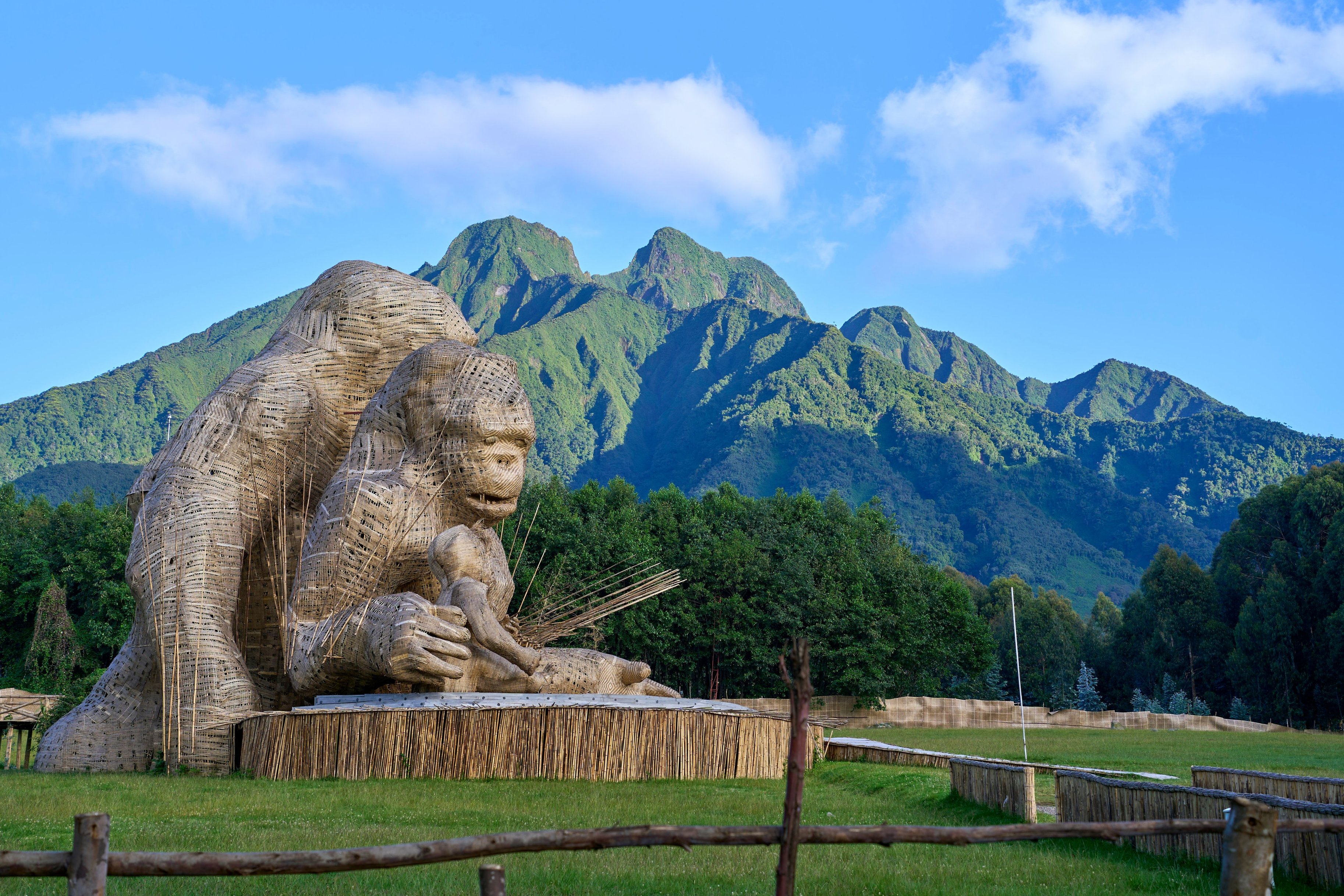
View of the mountain peaks in Volcanoes National Park, Rwanda.
Uganda vs Rwanda
Learn more: Gorilla trekking in Uganda vs Rwanda – which is better?
Visa and entry requirements
Both Uganda and Rwanda offer e-visas, which most travellers can apply for online before departure. Kenya also uses an online system, now operating through an Electronic Travel Authorisation (ETA). It is important to check the latest entry requirements on the official eCitizen Kenya portal before booking, as policies can change.
The East Africa Tourist Visa is worth knowing about as it covers Kenya, Uganda, and Rwanda on a single USD 100 visa and allows multiple entries between the three countries. This is the most cost-efficient route for travellers doing the combined trip. Note that it must be applied for on arrival at certain ports of entry or online. Please check current availability with your tour operator when planning. Always verify current requirements before travel, as policies can change.

A rare golden monkey couple together in a bamboo forest caught on a trip to the country of Rwanda.


Best time of year for a combined Kenya safari and gorilla trekking trip
With global warming, there isn't really a time when we can say for sure if the weather will behave. But based on experience, the sweet spot where conditions in the Maasai Mara and gorilla country align best is July to September. This is Kenya's dry season and the peak of the Great Migration river crossings in the Mara, while in Uganda and Rwanda, dry weather makes forest trekking paths more manageable, and gorilla visibility is generally better.
The second dry season across the region runs from late December to February, which is another strong window. The Mara is drier and less muddy than the long rains period, and gorilla trekking is comfortable. If you have flexibility, avoid April and May for the Kenya safari portion; the long rains can make Mara tracks difficult. That said, gorilla trekking happens year-round, permits are issued regardless of season, and even in the wetter months, the gorilla experience itself is rarely compromised.
Remember, during peak season, you have to book gorilla permits as early as possible if travelling July–September or December–February. Uganda's Bwindi permits sell out several months in advance during high season. Rwanda's permits are more reliably available but still worth booking early. If you have an operator like Follow Alice, this can be handled so that you do not have to worry about this.
Learn more: Kenya safari tours: your guide to the ultimate wildlife experience
The Maasai cultural experience
A Kenya safari itinerary often includes a half-day visit to a Maasai community around the Mara, and this is genuinely worth adding. The Maasai people have co-existed with wildlife on these plains for centuries and are central to understanding the broader conservation picture in southern Kenya. You will see traditional homesteads, hear about land stewardship, and learn why keeping wildlife corridors open matters as much to local communities as it does to visiting travellers. Choose operators that work directly with Maasai-owned conservancies — Ole Maiyan, Naboisho, and Olare Motorogi are among the best-managed community conservancies in the Mara ecosystem and offer both exceptional safari game viewing and genuine cultural access.

Tourists take photos of Maasai men performing their traditional jumping dance.

Booking tips
Here are some tips I suggest before booking the trip:
1. Use a specialist East Africa tour operator
Trying to self-book gorilla permits, light aircraft transfers, and lodges simultaneously across three countries is genuinely complex. An operator with ground teams in Kenya, Uganda, and Rwanda earns their fee on a combined trip. Here at Follow Alice, we are fortunate to have that.
2. Gorilla permits cannot be transferred or refunded
Build travel insurance into your budget that specifically covers permit non-refundability if you are ill or delayed. You are able to change dates, though. These strict rules are in place to prevent the illegal resale of permits and to ensure that the limited revenue directly supports gorilla conservation and local communities. In both Uganda and Rwanda, it is sometimes possible to reschedule a trekking date rather than cancel, provided sufficient notice is given, usually 30 days or more, and a rescheduling fee is paid.
In cases of illness on the day of the trek, and where the warden confirms it, partial refunds may be offered in Uganda, often around 50 per cent, particularly when arranged through a tour operator. If gorillas are not seen after completing the trek, which is very rare, Uganda Wildlife Authority or the Rwanda Development Board may offer a partial refund, typically around 75 per cent, or the option to trek again the following day.
3. Physical fitness matters more for Uganda than for Rwanda
If you have mobility concerns or want a more accessible gorilla experience, Rwanda's Volcanoes National Park is the better fit as some sectors even offer gorilla 'hikes' that are shorter and more manageable.
4. The Mara is at its most dramatic from July to October
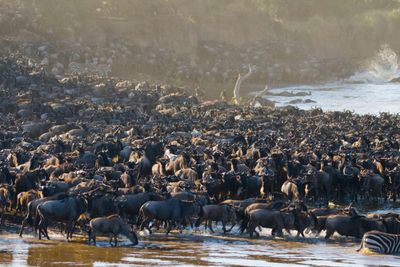
If flexibility allows, align your Kenya safari with this window, and you will be watching wildebeest river crossings while most of the world is at the office.
5. Pack layers for gorilla trekking
Forest temperatures at altitude are significantly cooler than the Mara, especially early morning when treks begin. A light waterproof shell and long trousers are essential even in the dry season.
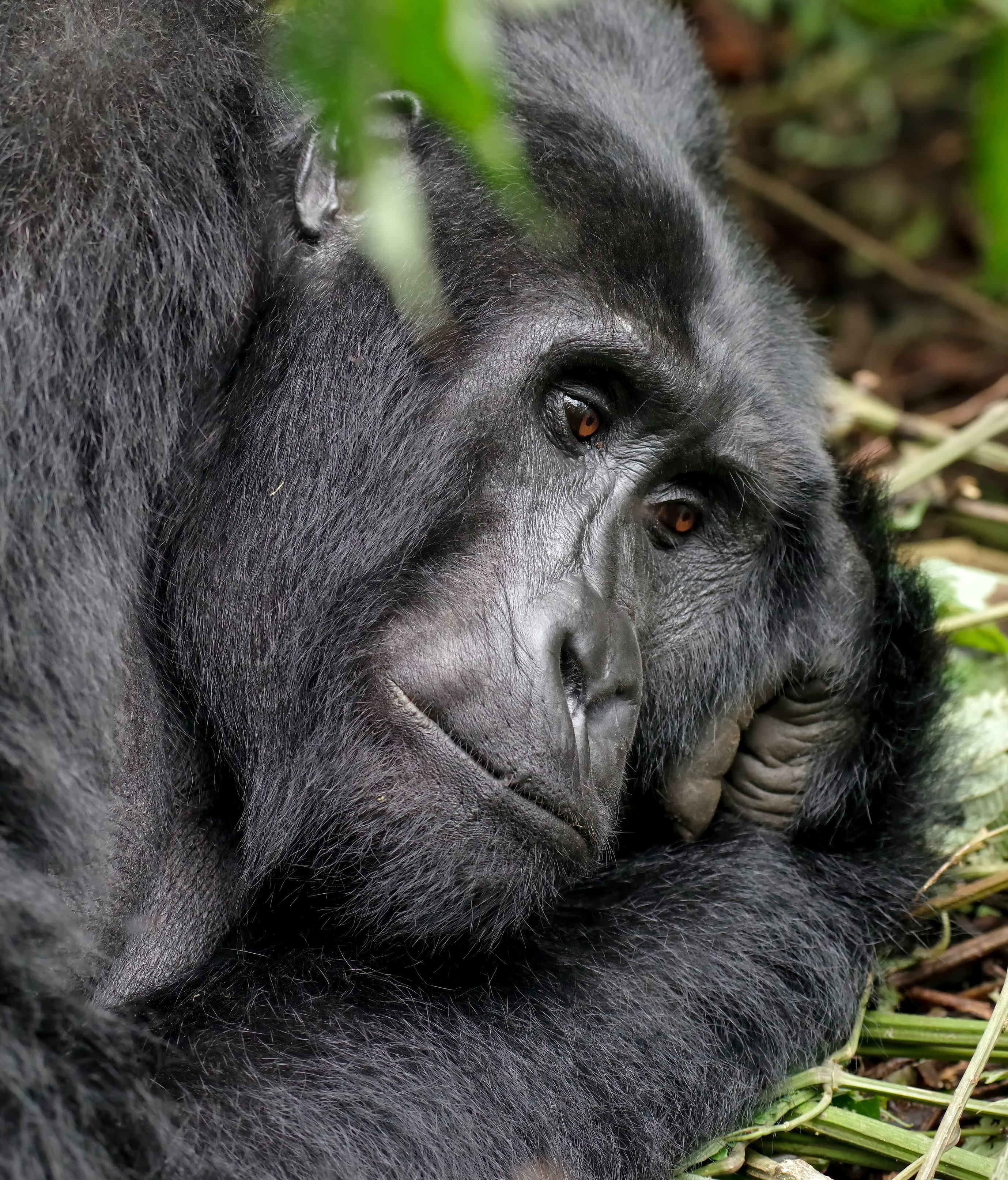
Close up of a mountain gorilla lost in thought.
{{leadmagnet-three}}
Should you book a Kenya safari and a gorilla trekking experience?
A Kenya safari paired with gorilla trekking is not an over-ambitious wish list. It is a well-loved East Africa journey that fits together naturally, made possible by the region’s geography and the well-travelled routes between Kenya, Uganda, and Rwanda. The decision between gorilla trekking in Uganda and gorilla trekking in Rwanda comes down to your budget, the time you have, and how much raw adventure versus smooth logistics you want. Both gorilla destinations are extraordinary. Both pair seamlessly with the Maasai Mara. Get the permit booked, lock in the Mara dates, and the rest of the trip, like the routing, the connections, and the conservancy choices, falls into place. This is one of the great wildlife journeys on the planet, and the planning is simpler than it looks. If you wish to find out more, contact our team, and they will be happy to assist.