



Tenzing-Hillary Airport, better known as Lukla Airport, has earned the reputation as one of the world’s most dangerous airports. This is because it sits at 2,860 metres in Nepal’s Khumbu region and serves as the gateway for trekkers heading to Everest Base Camp, and even the most experienced pilots have to land with extreme care. The runway is short, the mountains are super close, and the weather in the Himalayas can shift within minutes. Pilots have just seconds to land, stop, and take off again. Despite the risks, thousands of travellers still fly to Lukla every year to start their trek to the world’s highest mountain.
There are other options as well. For travellers seeking a safer or quicker way to reach the Everest region, helicopter rides are becoming very popular. The flight from Kathmandu is short, just 25–30 minutes, but the difference between the airports is striking. One minute you’re in Nepal’s busy capital, the next you’re navigating a tiny airstrip clinging to the edge of a cliff. Every take-off and landing demands skill, precision, and nerves of steel.
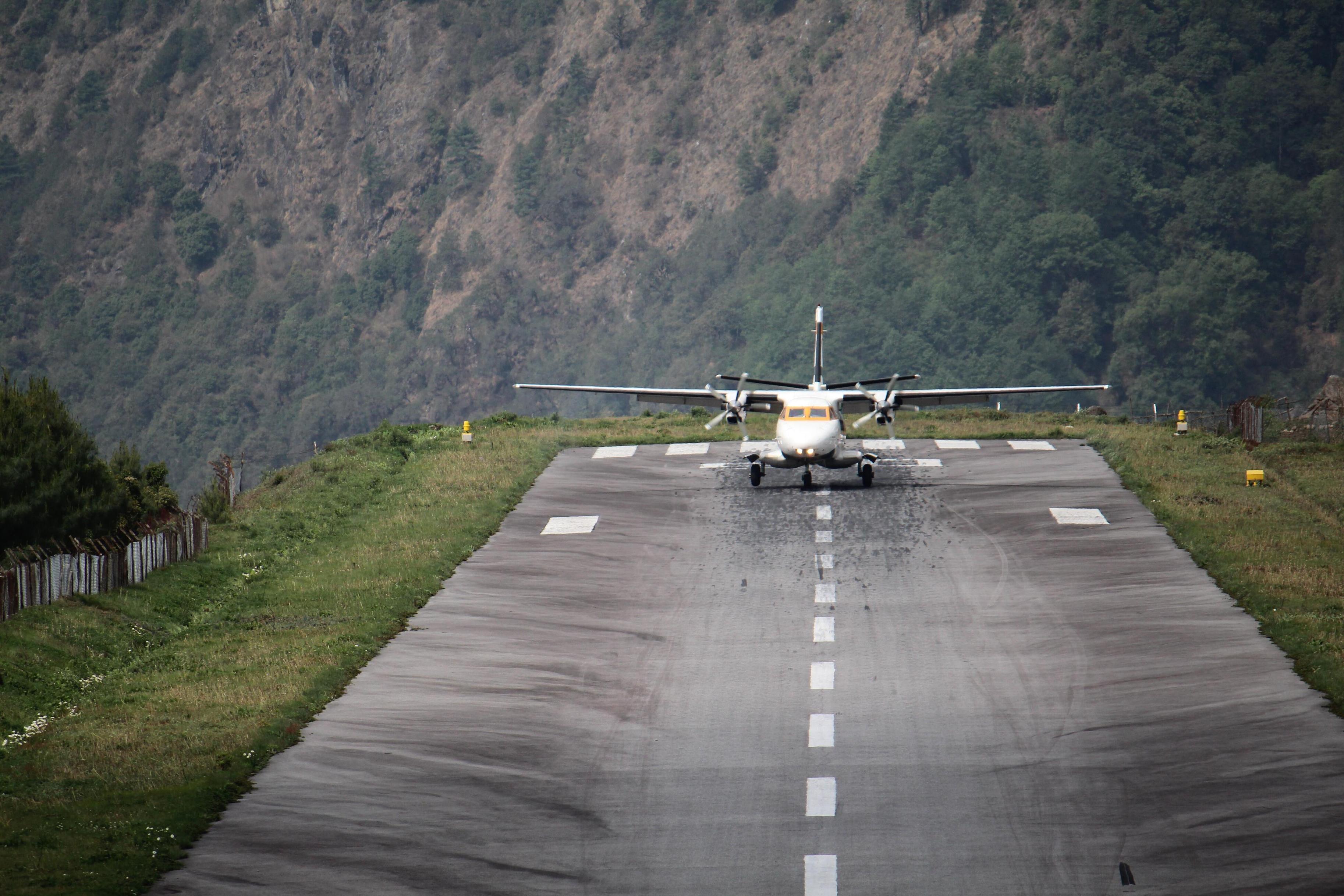
Flight about to take off at Lukla airport.

Why is Lukla considered the most dangerous airport in the world?
High-altitude airports around the world, like Innsbruck in Austria or Gibraltar, present challenges for pilots, but Lukla combines altitude, steep drops, and unpredictable mountain weather in one heart-stopping package. For many trekkers, getting to Lukla is only the start of an amazing adventure and the first glimpse of the Everest region’s wild and stunning landscape.
Surrounded by towering Himalayan peaks and narrow valleys, Lukla’s tiny runway is nestled on a mountain shelf with steep drops at both ends. Every landing and take-off is a delicate operation, made more challenging by sudden weather changes, high winds, and low air pressure. Several factors make Lukla Airport one of the riskiest airports on the planet:
1. Short runway: The single asphalt runway is only 527 metres (1,729 feet) long, leaving very little room for error during take-off and landing.
2. Steep terrain: One end of the runway drops sharply into a valley, while the other ends at a mountainside. This makes precise landings essential.
3. Unpredictable weather: The Himalayan region is known for sudden fog, strong winds, and low visibility, which can delay or cancel flights at the last minute. Even experienced pilots face challenges from Lukla’s high altitude.
High altitude effects: Air at 2,860 metres (9,383 feet) is thinner than at sea level, reducing engine power and lift while making it harder for planes to slow down. This is because of a short runway and surrounding mountains; there is no opportunity for a missed approach; once the plane starts its landing, it must touch down.
Limited aircraft types: Due to these risks, only helicopters and small fixed-wing propeller planes are allowed to land at Lukla, keeping operations as safe as possible under extreme conditions.
Despite the risks, flights to Lukla are generally safe thanks to highly experienced pilots, and thousands of trekkers travel this route every year. Helicopters, however, offer extra flexibility in the mountains. They can adjust more easily to sudden weather changes and limited landing space, making them a practical alternative for those seeking a safer or faster way into the Everest region.
Puru Sharma, Trip Manager for Bhutan and Nepal at Follow Alice, who knows this region very well, says:
Lukla flights are operated safely by highly experienced pilots, and thousands of trekkers take them every year. Helicopters, however, provide additional operational flexibility in mountainous terrain and can adapt more easily to changing weather and landing conditions.
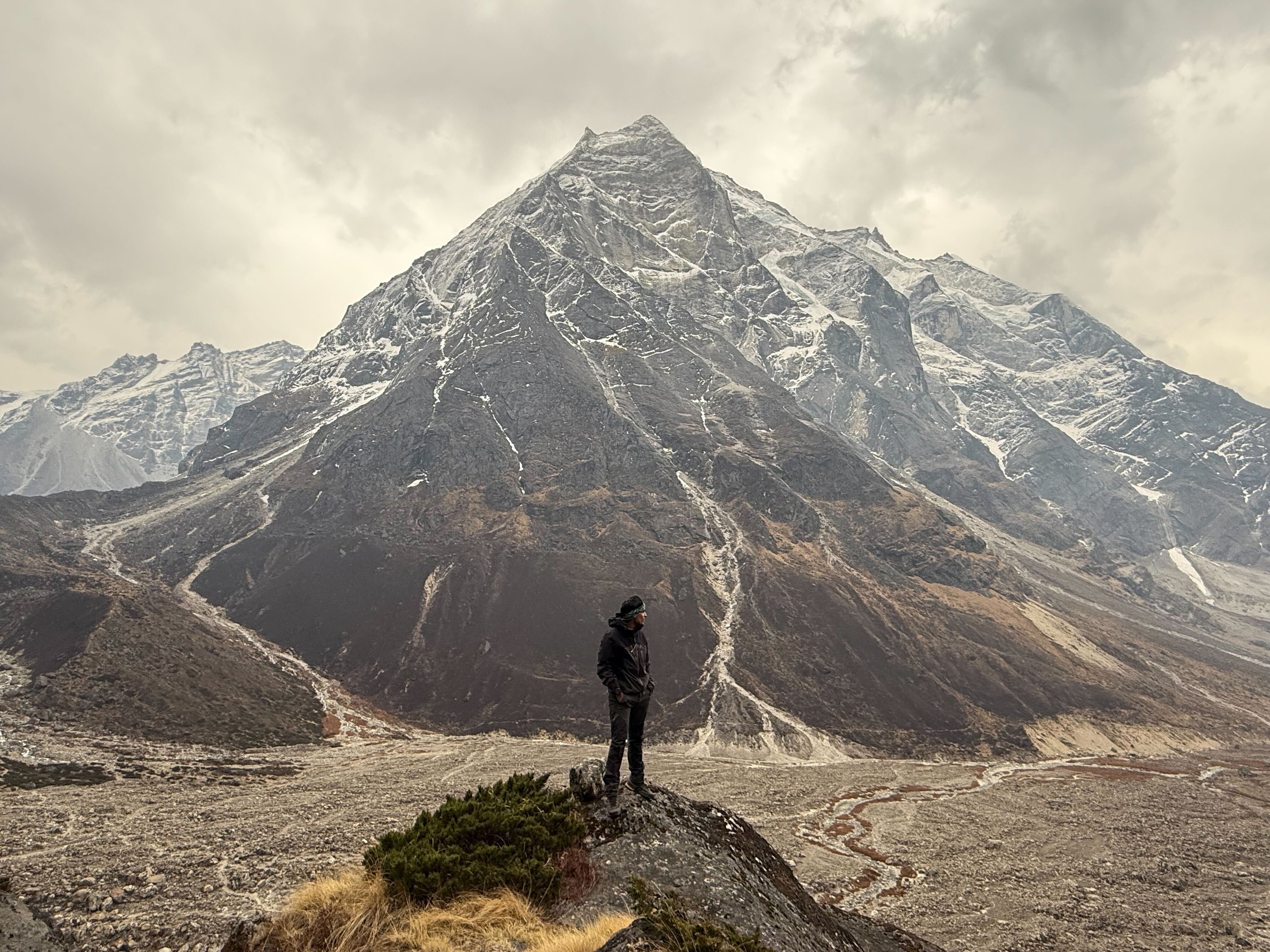
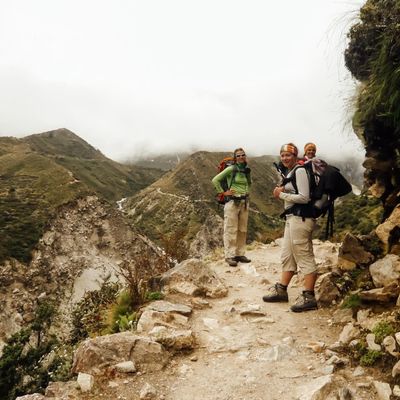
Follow Alice's Puru, taking in the sights in the Everest region.
Learn more: Ghorepani Poon Hill Trek: Expert Tips for an Unforgettable Adventure
Challenges with Lukla Flights
Puru also shared that during peak trekking seasons, most fixed-wing flights to Lukla operate from Manthali Airport in Ramechhap rather than Kathmandu. This requires travellers to leave very early for a five to six-hour road journey before reaching the flight. Flights are highly dependent on weather, and sudden fog, strong winds, or low visibility can cause delays or cancellations, affecting the entire trekking schedule. The region’s notorious weather can still ground flights for days at a time, as happened in November 2025, when multimodal flights were suspended for three days due to low visibility and heavy rains.
Puru adds that:
Helicopter transfers usually depart directly from Kathmandu, saving time and making the start of the trip far more comfortable.
Despite these challenges, according to reports from the Civil Aviation Authority of Nepal (CAAN) in recent seasons, Lukla’s Tenzing‑Hillary Airport has handled record levels of traffic, with a single day in late 2024 seeing 184 flights, including more than 150 helicopter operations into the region. By 2025, domestic helicopter services carried over 51,000 passengers, highlighting how helicopters are increasingly central to mountain access.
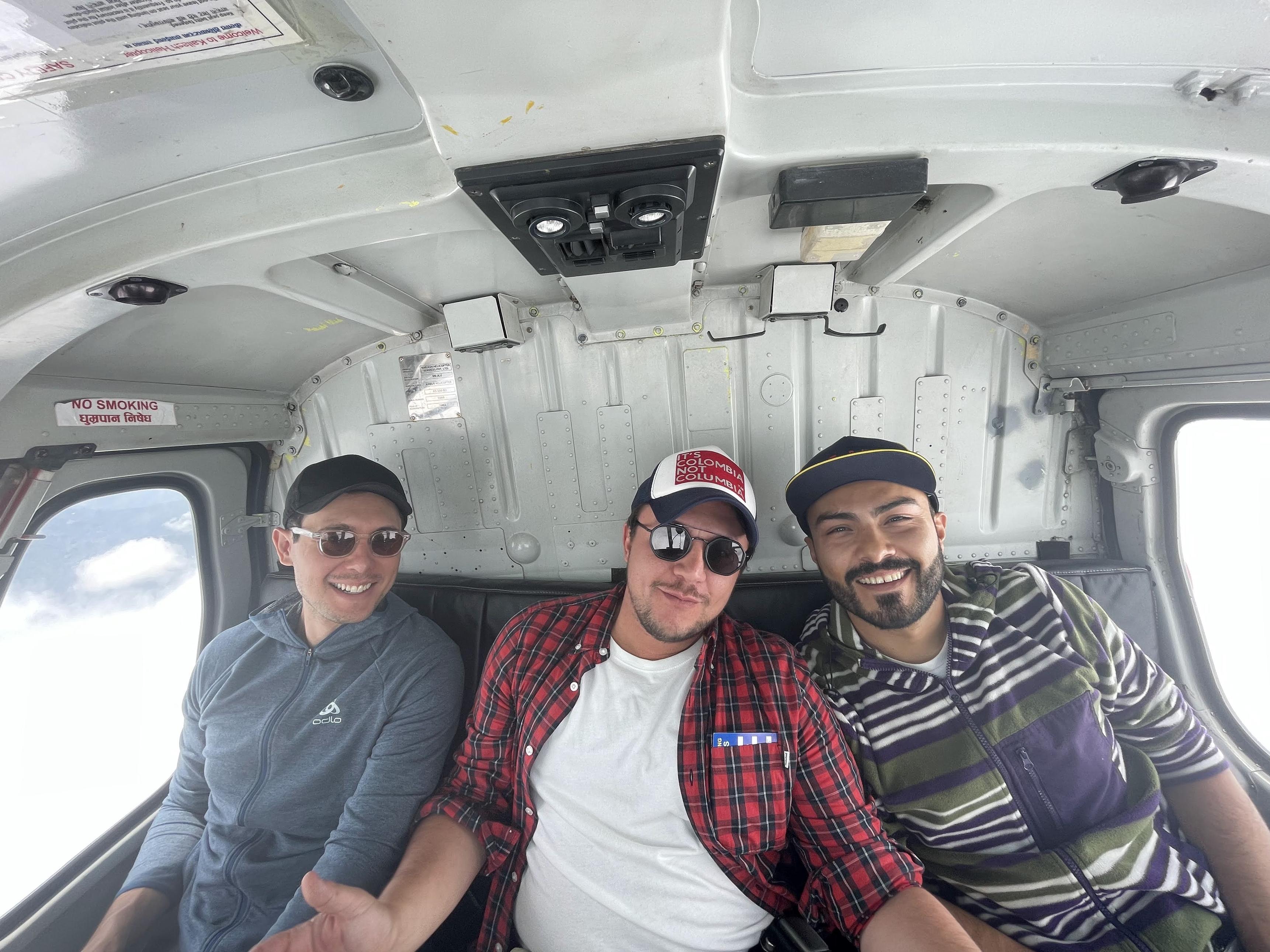
Three trekkers smiling inside a helicopter returning from Everest Base Camp.
Learn more: Your complete Everest Base Camp packing list
Everest Base Camp with a helicopter return
With all the dangers being presented, helicopter transfers are becoming a more popular option for trekkers seeking both safety and comfort. Helicopter transfers depart directly from Kathmandu, saving time and providing a much more comfortable start to the journey. Let's look at why helicopter rides are becoming the next best option:
1. Direct departure from Kathmandu
Unlike Lukla flights that may depart from Ramechhap, helicopters typically leave directly from Kathmandu, eliminating the early-morning road trip and saving several hours.
2. Greater flexibility with the weather
Helicopters can operate in slightly more variable conditions than fixed-wing aircraft, reducing delays during busy trekking seasons. This operational flexibility ensures smoother itineraries and a more predictable start to the journey.
3. Comfort and streamlined experience
Helicopter transfers usually involve smaller groups, shorter waiting times, and simplified departure procedures. Passengers enjoy a smooth boarding process and a more relaxed start to their adventure.
4. Exceptional aerial views
A helicopter ride is more than transportation; it offers stunning, close-up views of the valleys, glaciers, and peaks of the Everest region. Many travellers consider the flight itself a highlight of the journey.
5. Safety and operational advantages
Helicopters provide additional operational flexibility in mountainous terrain and can adapt more easily to changing weather or landing conditions. While Lukla flights remain safe with experienced pilots, helicopters offer an added margin of safety and versatility.
Here is a table to help you choose between taking a flight to Lukla or a helicopter ride.
Puru says:
For luxury treks where comfort, time efficiency, and minimising logistical stress are priorities, helicopter transfers are often the preferred option.
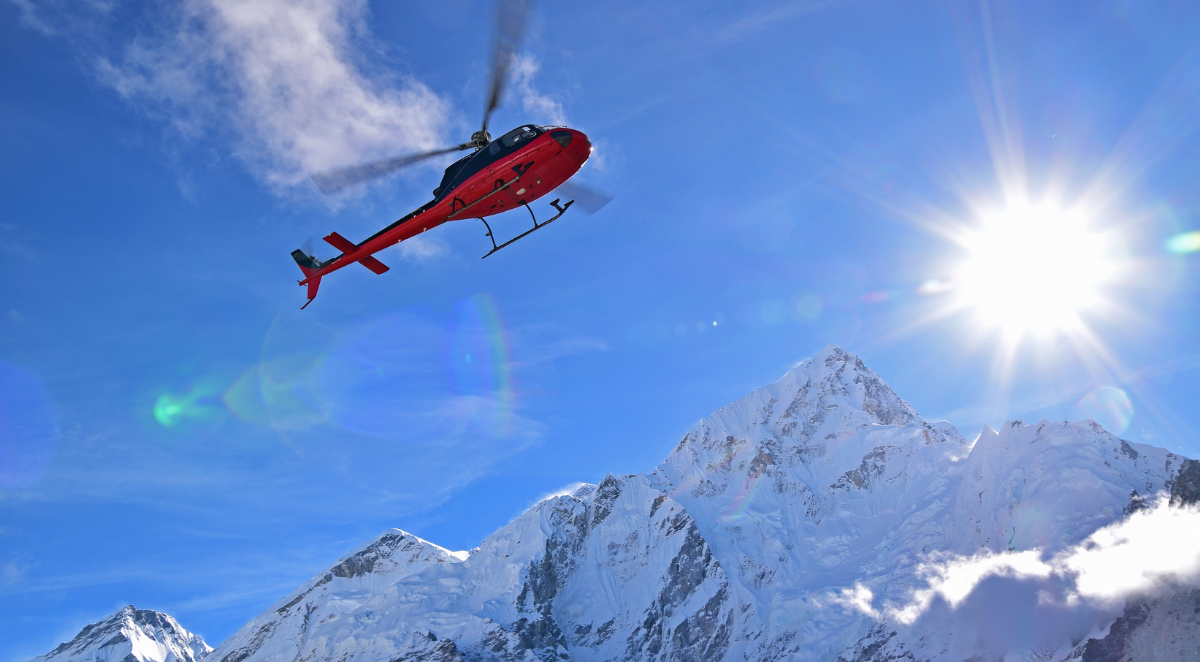
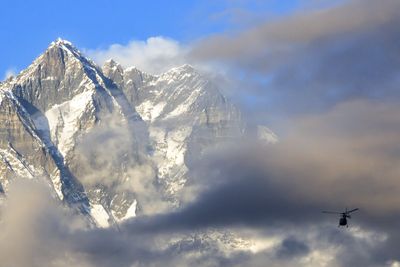
A helicopter taking flight in the Everest.
{{leadmagnet-one}}
Travellers' experience with Follow Alice helicopter transfers
If you are still confused between Lukla and a helicopter option, many adventurers see the helicopter transfer to Everest Base Camp as more than just a practical solution; it was a highlight of the journey itself. Travellers consistently praise the combination of safety, comfort, and breathtaking aerial views, showcasing why helicopter transfers are both a safer and more luxurious alternative to Lukla flights.
Let's have a look at what some of them had to say:
Daimon Riley described this as a once-in-a-lifetime experience:
I have just returned from the EBC trek in Nepal with Follow Alice, which included a helicopter return to Lukla. This adventure of a lifetime exceeded all of my expectations! What an amazing experience. Pre-trip guidance from Puru was excellent, our guides Dawa and Ferba were knowledgeable, caring and fun. We were well looked after on the trek and Sonam G made sure all of the logistics happened when it was needed most. A massive thank you to the whole Follow Alice team.
While Charles Blackwell was happy with choosing the helicopter ride as an alternative:
Thanks to Sonam for bringing helicopters into our lives when we most needed them! The meals, teahouses and additional bits of sightseeing really added to the whole experience. I have no hesitation in recommending Follow Alice for this trip!
Jon Stevens also shared his experience with the weather changes and how they had to opt for a helicopter ride to keep their trip on track:
We were lucky with the weather until the end when it turned and now flights out of lukla. Sonamg was top who sorted us helicopters there and back, not only saving us a couple of days hanging around(and a 5hr trip either way on terrible roads) but also organsied us some sight seeing in Kathmandu all at only a slight expense.
Dan Shepard praised the team for how they can handle the logistics of getting a helicopter at such short notice:
I have just returned from Nepal after completing a trek to Everest Base Camp with FA. The whole trip was very well organised with good pre-travel advice from Puru and a great guiding team led by Dawa. Also a special shout out to Sonam in Kathmandu who managed to sort out helicopter transfers at very short notice when the weather turned against us.
These first-hand experiences show how helicopter transfers offer a safer, faster, and more comfortable way to travel, giving trekkers a smooth and memorable start or end to their journey.
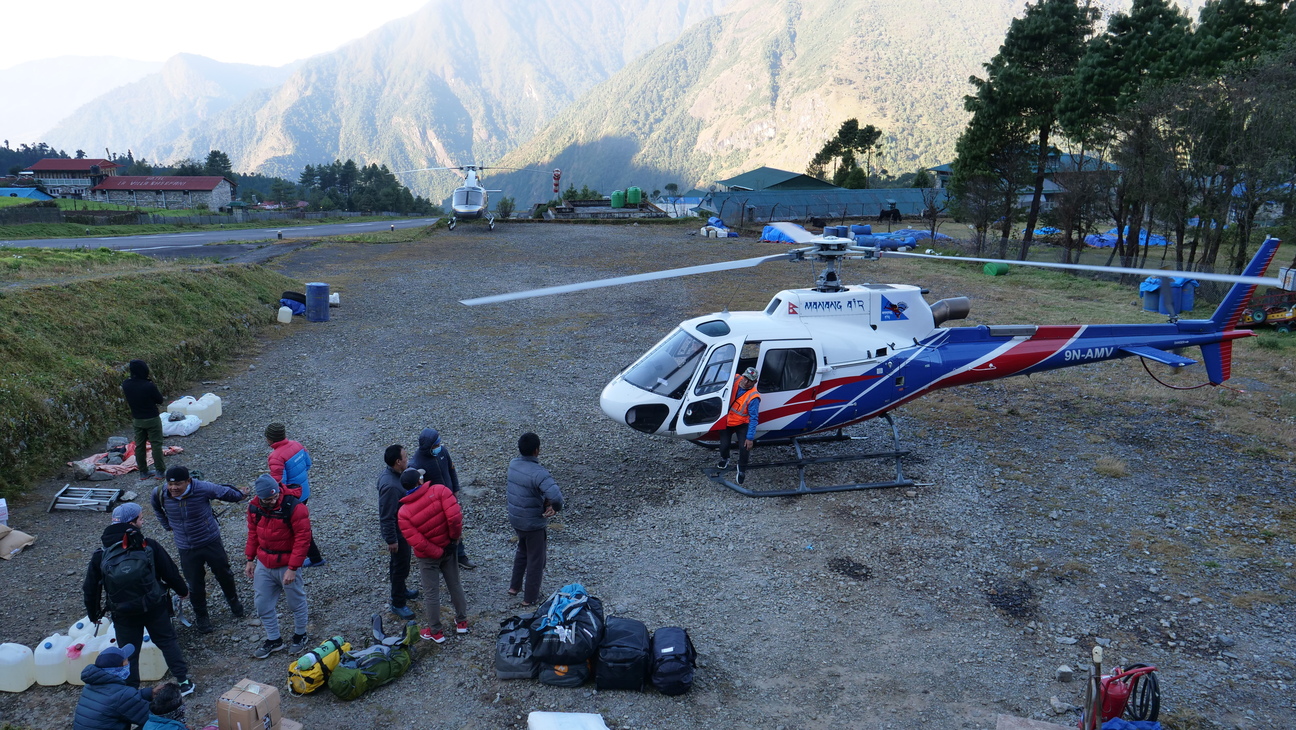
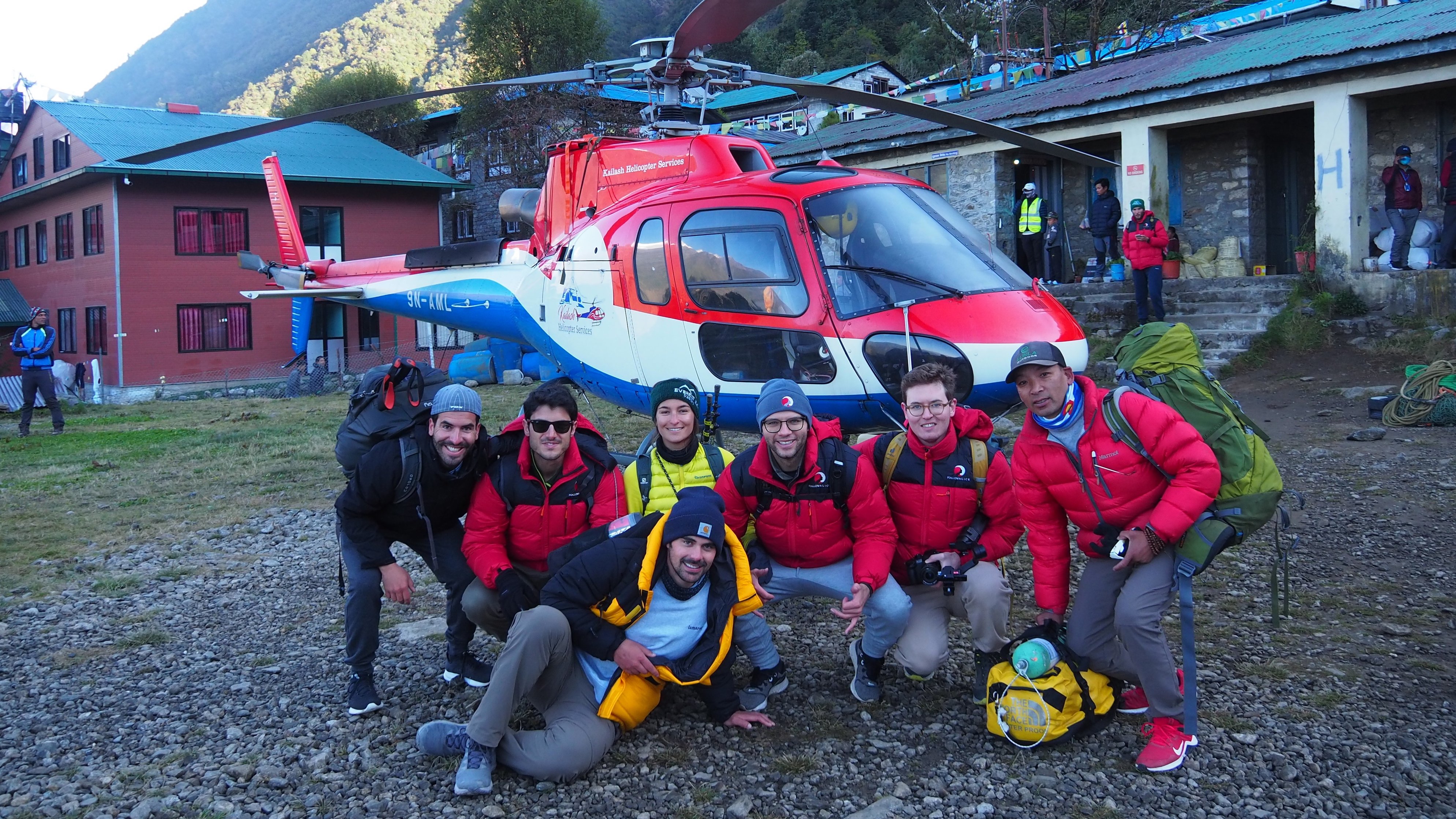
Trekkers waiting ot board their helicopter ride.
{{leadmagnet-two}}
Luxury treks made safer
For luxury trekking itineraries, helicopter transfers are especially appealing for travellers who value comfort, efficiency, and a smoother start to their adventure. Instead of long road journeys or waiting for weather-dependent flights, helicopters can depart directly from Kathmandu, allowing trekkers to reach the Everest region more quickly and with far less logistical stress.
At Follow Alice, luxury treks are designed to balance adventure with comfort. Small group sizes, experienced local guides, and carefully planned itineraries allow travellers to explore the Himalayas while still enjoying a higher level of support and service throughout the journey. Helicopter transfers complement this approach by reducing travel uncertainty and making the first stage of the trek more relaxed.
Puru says:
For luxury treks where comfort, time efficiency, and minimising logistical stress are priorities, helicopter transfers are often the preferred option.
Flying by helicopter also offers a completely different perspective of the Himalayas. Travellers can take in sweeping views of deep valleys, glaciers, and towering peaks long before they reach the trail. For many guests, the flight itself becomes a memorable highlight of the journey. By choosing a helicopter transfer, adventurers can experience the Everest region in a way that feels both safe and comfortable, while still embracing the spirit of exploration that makes trekking in Nepal so special.
{{leadmagnet-three}}
Lukla Flights or helicopters
While Lukla Airport has a reputation as the most dangerous airport in the world, it is important to see this in context. Thousands of trekkers land there safely every year, and experienced pilots manage the challenges of the mountain airstrip with great care.
For travellers who want added comfort, flexibility, and a more premium experience, helicopter transfers offer a practical alternative. They remove the long road journey to Ramechhap, help avoid some weather-related delays, and provide incredible aerial views of the Himalayan landscape along the way. If you have any questions regarding this, feel free to contact our team, and we will be happy to answer any questions you might have. So if travellers choose a traditional flight to Lukla or a helicopter transfer, careful planning and experienced local guidance remain essential for a safe and memorable journey to Everest Base Camp.