


The trek to Everest Base Camp (EBC) is one of the most recognised hiking routes in the world. Set in the Himalayas of Nepal, the trail winds through traditional Sherpa villages, alpine forests, and vast glacial valleys before reaching the base of Mount Everest inside Sagarmatha National Park.
Along the way, trekkers pass through famous mountain settlements such as Namche Bazaar and Lukla, while surrounded by some of the highest peaks on Earth. The journey offers a rare chance to experience Himalayan culture, Buddhist monasteries, and dramatic mountain landscapes while walking beneath the world’s tallest mountain, Mount Everest. For many travellers researching the trip, one of the first questions is how much does the Everest Base Camp trek cost? Let's break it down for you:
Everest Base Camp cost breakdown
In 2026, the Everest Base Camp trek costs typically range between $1,500 and $8,000 per person. The final price depends on several factors, including a guided expedition, the size of your group, the level of accommodation you choose, and the quality of support on the mountain.
Budget travellers organising the trek independently may spend closer to the lower end of that range. This usually means booking local teahouses, arranging permits individually, and travelling without a guide or porter. On the other hand, many trekkers choose to join a fully guided expedition, which includes experienced local guides, porters, permits, domestic flights, and logistical support throughout the journey. More comfortable or boutique expeditions may cost more, especially when they include higher-end lodges, additional acclimatisation days, or smaller group sizes that allow for more personalised support. At Follow Alice, we offer a range of options suited for everyone, and if you have any questions, feel free to schedule a call with our team, and we will be happy to answer any questions you might have.
We cannot stress this enough, but understanding the full cost of trekking to Everest Base Camp is an important part of planning the adventure. Beyond the headline price, travellers should also consider additional expenses such as permits, flights to the mountain airstrip at Lukla, accommodation in mountain teahouses, meals on the trail, guide and porter support, and travel insurance. When all of these factors are considered together, trekkers can plan their budget more accurately and choose the expedition style that best matches their expectations for comfort, safety, and support on the trail.
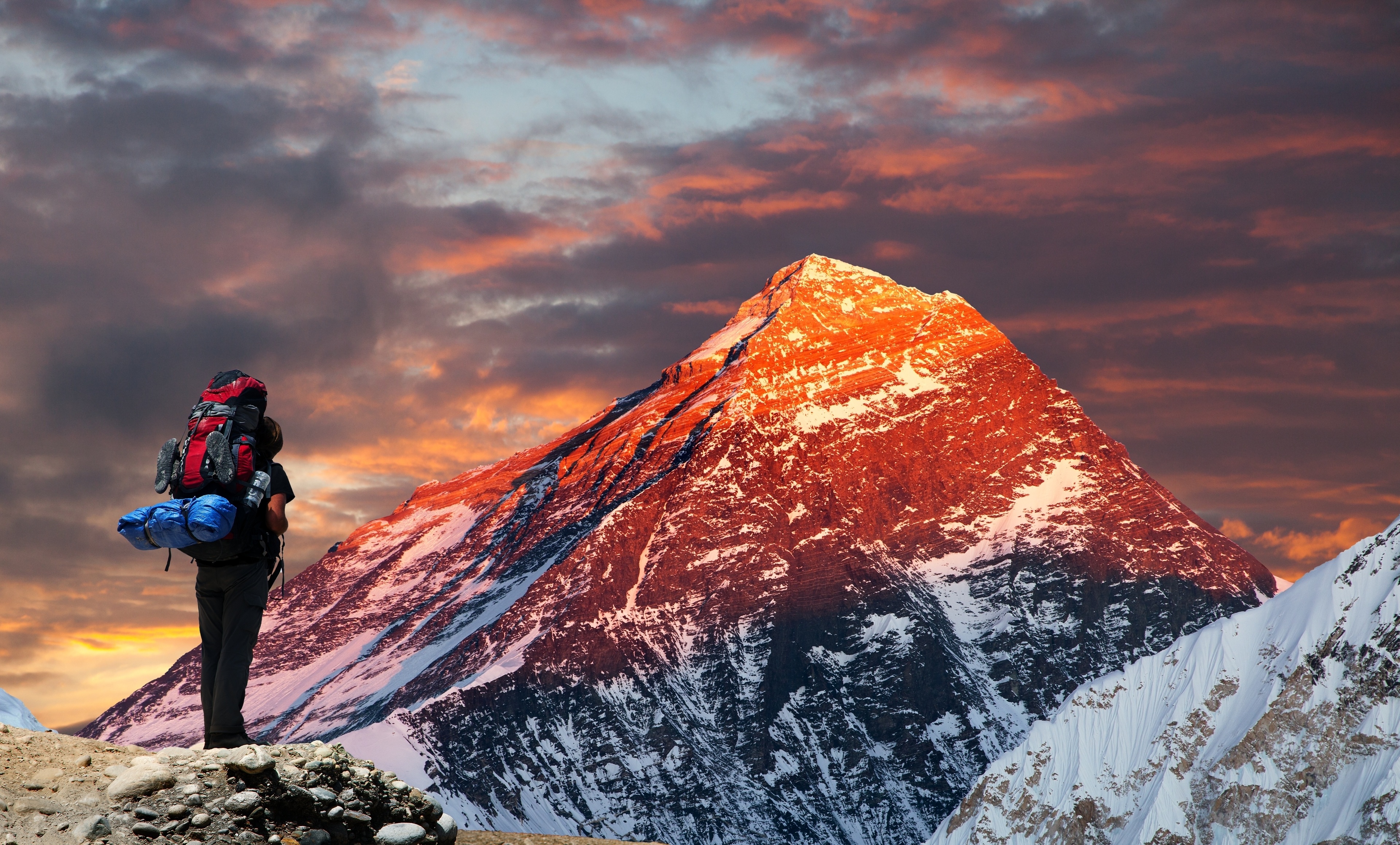
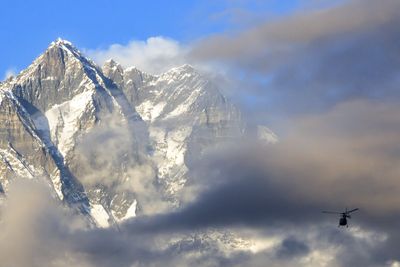
View of Mount Everest.
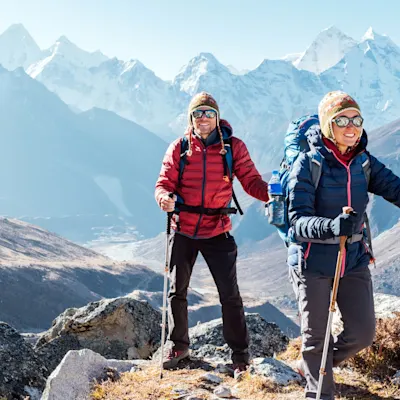
Why budgeting for the Everest Base Camp trek is important
Planning a clear budget is one of the most important steps when organising the Everest Base Camp trek. Trekking in remote mountain environments comes with many small expenses that can quickly add up. Understanding total costs helps trekkers prepare for permits, accommodation, food, equipment, guides, and personal expenses. Knowing these costs in advance reduces the risk of financial surprises along the way.
Budget planning also helps with resource allocation. When travellers understand where money will be spent, they can ensure funds are set aside for important items such as guides, accommodation, or emergency supplies. Another advantage is that it helps avoid unexpected costs. Many trekkers underestimate small expenses such as charging electronics, hot showers, Wi-Fi access, or bottled water in mountain villages. A detailed budget prevents these surprises from disrupting the trip.
Budgeting also allows travellers to optimise choices. Some trekkers prefer basic teahouses and minimal support, while others opt for guides, porters, or higher comfort lodges. Finally, a clear financial plan improves the overall trekking experience. When travellers know their budget is secure, they can focus on enjoying the landscapes and culture of the Everest region instead of worrying about expenses.
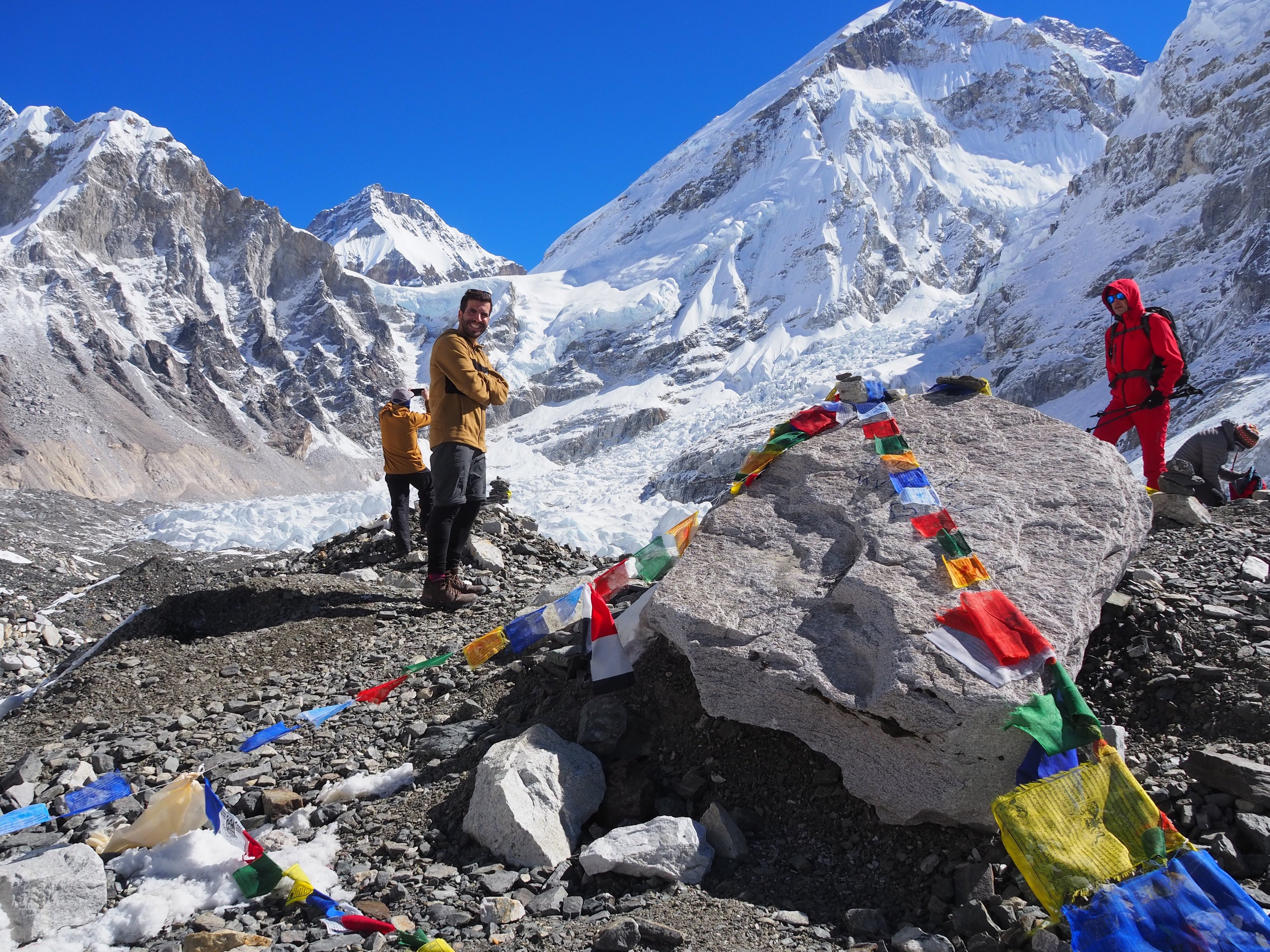
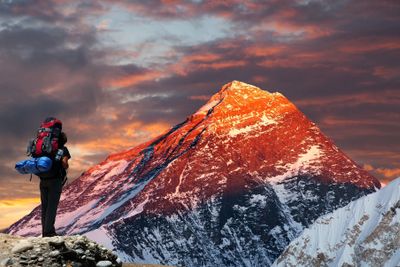
Trekkers take in the moment of being on the Everest Base Camp.
Learn more: Your complete Everest Base Camp packing list
Main costs for the Everest Base Camp
Several major expenses contribute to the overall cost of trekking to Everest Base Camp. Understanding these costs in advance helps travellers plan their journey effectively, budget appropriately, and avoid unexpected expenses on the trail. Let's break it down for you:
1. Trekking permits for the Everest Base Camp Trek
All trekkers entering the Everest region are required to obtain official permits. These permits are mandatory and are checked at multiple points along the trail, including Lukla airport and park checkpoints. The costs for these permits also differ according to nationalities, so please check the Nepal Tourism Board for the latest prices.
For most foreign trekkers, the total cost of the three essential permits: the TIMS card, Sagarmatha National Park Permit, and Khumbu Pasang Lhamu Rural Municipality Permit, is roughly $60 USD. Indian nationals pay the same fees as other foreign visitors, while Nepali citizens typically pay minimal or no fees. These permit costs are fixed year-round, although demand is higher during the peak trekking seasons of spring and autumn. For a typical Everest Base Camp (EBC) trek, the three essential permits lets break down the cost for you:
- Sagarmatha National Park Permit – Approximately 3,000 Nepalese rupees ($25–$30 USD). This permit provides access to the national park, which encompasses Mount Everest and the surrounding protected area.
- Khumbu Pasang Lhamu Rural Municipality (local area entry) permit – Around 3,000 Nepalese rupees ($15–$25 USD). This local permit supports community development in the Khumbu region.
- TIMS Card (Trekkers’ Information Management System) – While some sources suggest trekkers can complete the Everest Base Camp trek without a guide, regulations now clarify otherwise. The Trekkers’ Information Management System (TIMS) card, costing around $10–$20 USD for foreign visitors, registers trekkers for safety tracking and emergency purposes.
Under the Revised TIMS Provision, which came into effect on 31 March 2023, anyone trekking in the Everest region must be accompanied by a licensed guide and carry a TIMS card issued by a recognised trekking agency. This ensures proper monitoring and safety in one of the world’s most remote and challenging trekking areas. Even for experienced hikers, hiring a guide on the EBC route is highly recommended, as guides manage logistics, monitor for altitude-related illnesses, and navigate unpredictable conditions, making the trek safer and smoother from start to finish.
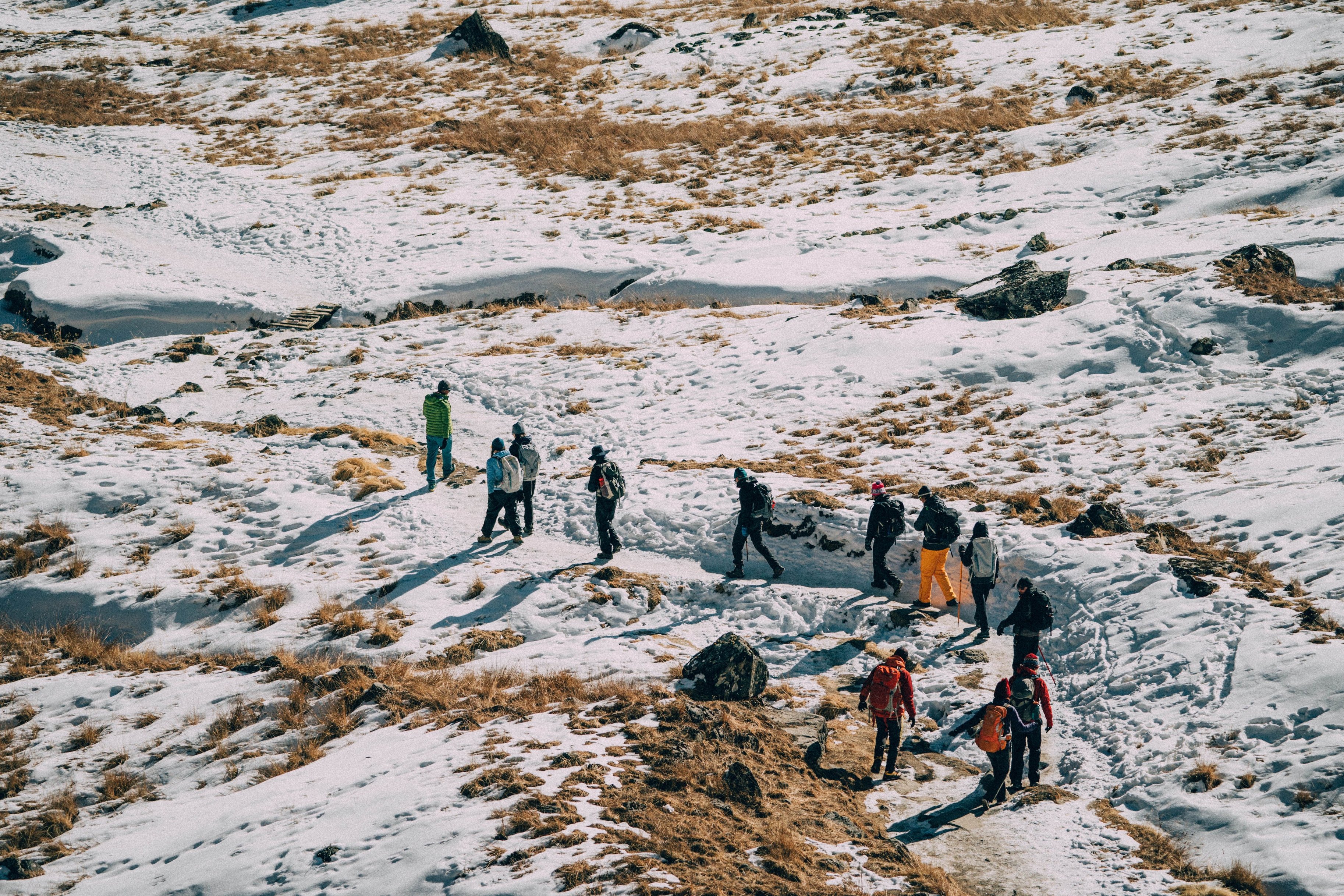
A group of trekkers is taking in the scenery as they walk up the Everest Base Camp trek.
Learn more: 15 things you need to know before doing the Everest Base Camp trek
Why permits are important
Permits serve several purposes. They regulate visitor numbers, contribute to the maintenance of trails and facilities, support local communities, and fund emergency and rescue services. Carrying proper permits ensures your trek is both legal and responsible, helping protect the Everest region’s environment and local culture.
How to obtain permits
Trekking permits can be obtained in one of two ways:
- Through a travel agency: Most trekkers choose this option. Agencies handle all the paperwork in advance, including arranging the TIMS card, Sagarmatha National Park Permit, and Local Area Entry Permit. This is the easiest and most reliable method, particularly for first-time trekkers.
- Directly from government offices: Individual trekkers can apply at the Nepal Tourism Board in Kathmandu or the Department of National Parks and Wildlife Conservation. While this is possible, it is more time-consuming and requires careful documentation.
Please note that the Local Khumbu Area Entry Permit cannot be obtained in Kathmandu. It is issued along the trail, either near Lukla or at Monjo, which is the official entry point to Sagarmatha National Park.
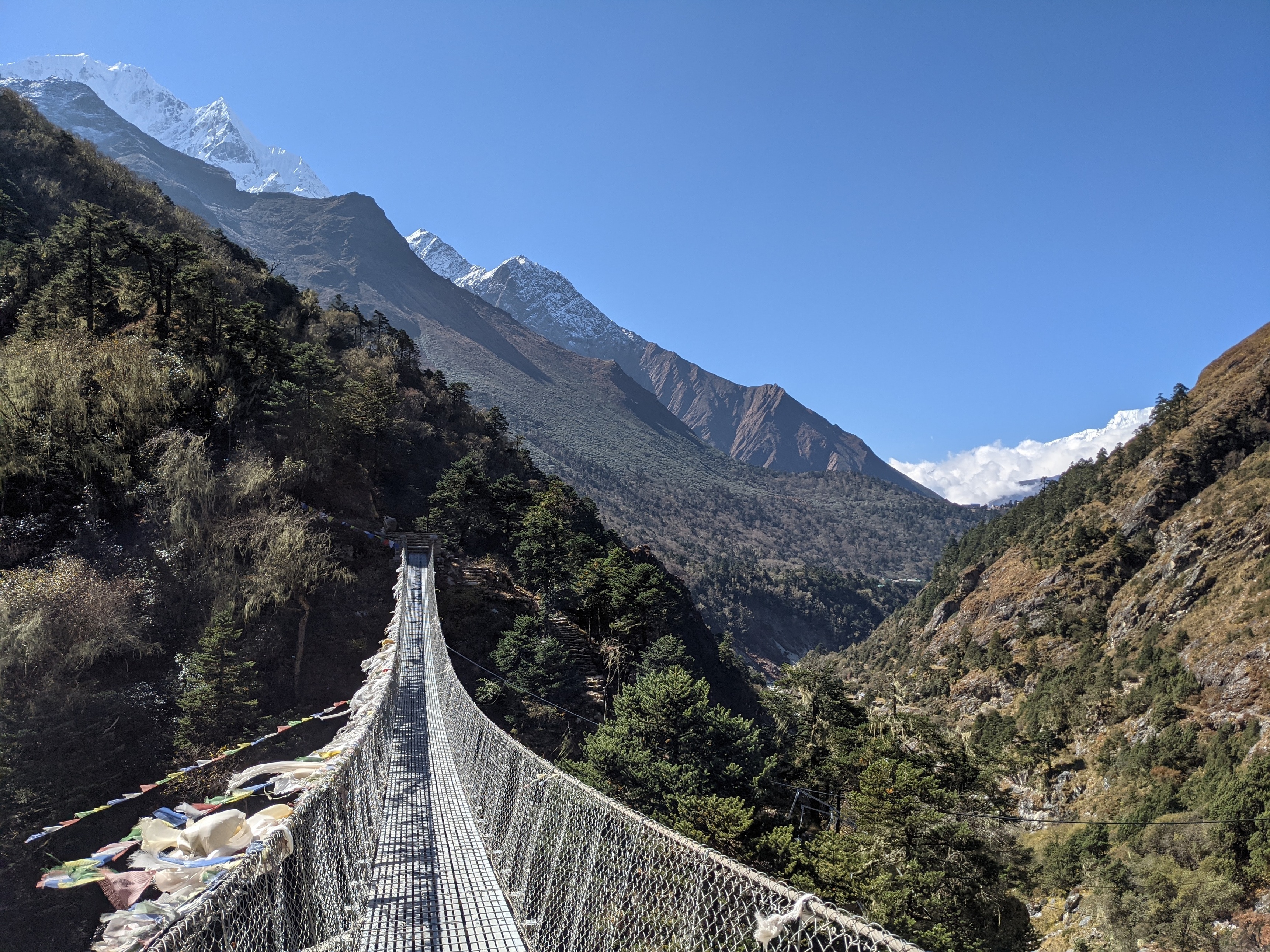
View of the EBC trek in Nepal.
{{leadmagnet-one}}
2. International flights and travel insurance
Flights to Nepal vary depending on your departure city, with typical fares ranging from $600 to $1,500 USD. Booking in advance and comparing multiple airlines can help secure the best price, particularly during peak trekking seasons.
Travel insurance is also essential for anyone trekking to Everest Base Camp. Policies should specifically cover high-altitude trekking, emergency medical treatment, and helicopter evacuation, as these are crucial for safety in the remote and challenging Himalayan environment.
It’s recommended to use a reputable provider, such as World Nomads or Rise and Shield, but it’s important to carefully review coverage limits, altitude restrictions, and exclusions before purchasing. Having comprehensive travel insurance ensures you are protected against unexpected events and gives peace of mind throughout the trek.
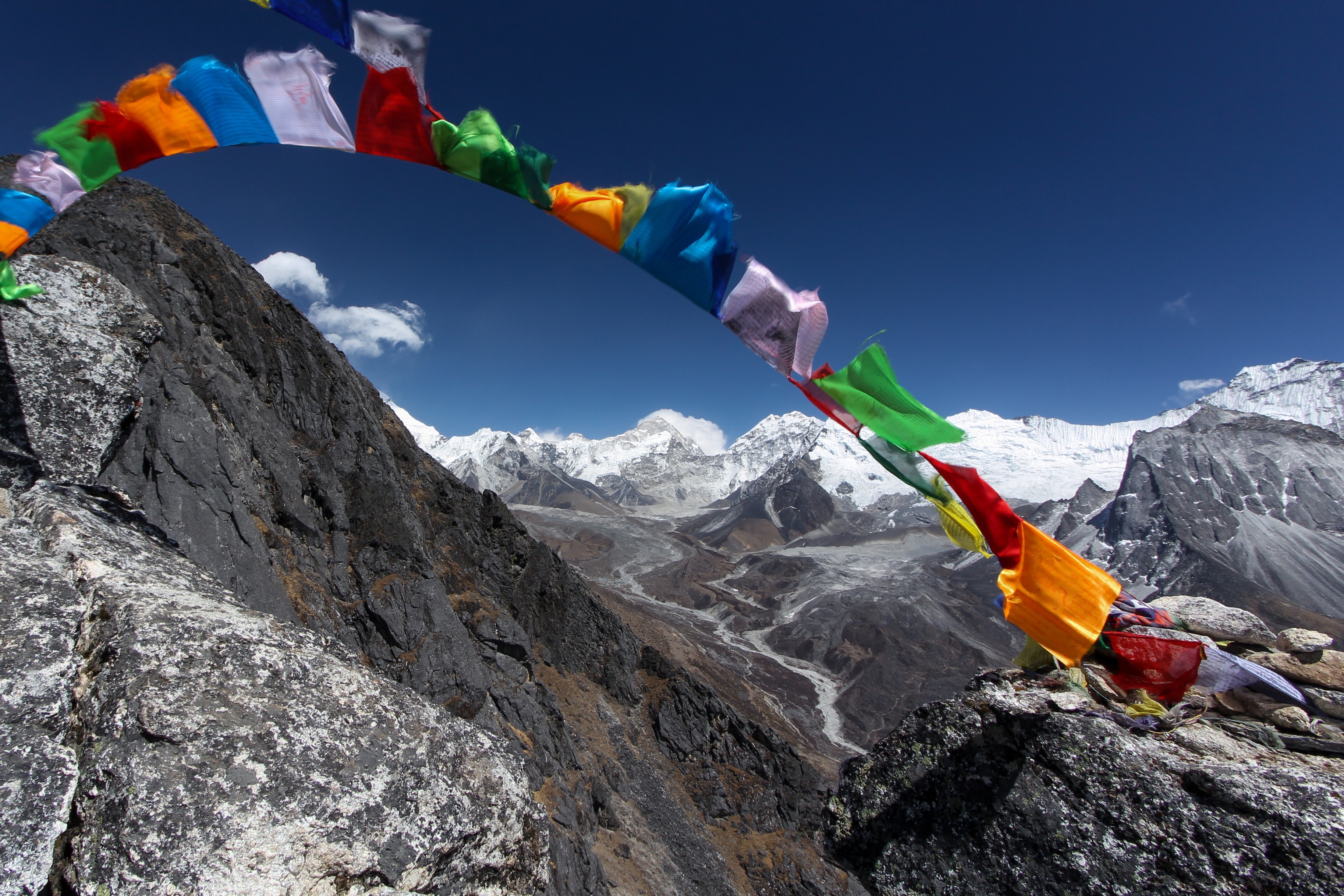
Prayer flags seen on the EBC trail.
Learn more: 7 Mount Everest facts that will surprise you
3. Getting to Everest Base Camp
Reaching Everest Base Camp begins long before the trail itself. The trek starts with travel to Kathmandu, followed by the iconic flight to Lukla, which is the main gateway to the Khumbu region. The main costs here will be flights and transport to and from the airport.
Arriving in Kathmandu
All international trekkers arrive in Kathmandu, Nepal’s capital. Tribhuvan International Airport (KTM) serves flights from major hubs across Asia, America, Europe, and the Middle East.
- Visa: Most foreign visitors obtain a tourist visa on arrival at the airport or online before travel.
- Accommodation: Kathmandu offers a range of options, from budget guesthouses to boutique hotels. Staying 1–2 nights allows trekkers to recover from long-haul flights, purchase or rent trekking gear, and finalise permits.
- Transport to domestic flights: Domestic flights to Lukla depart from Kathmandu’s domestic terminal. It’s important to arrive at least two hours before your flight, as security and check-in procedures can take time.
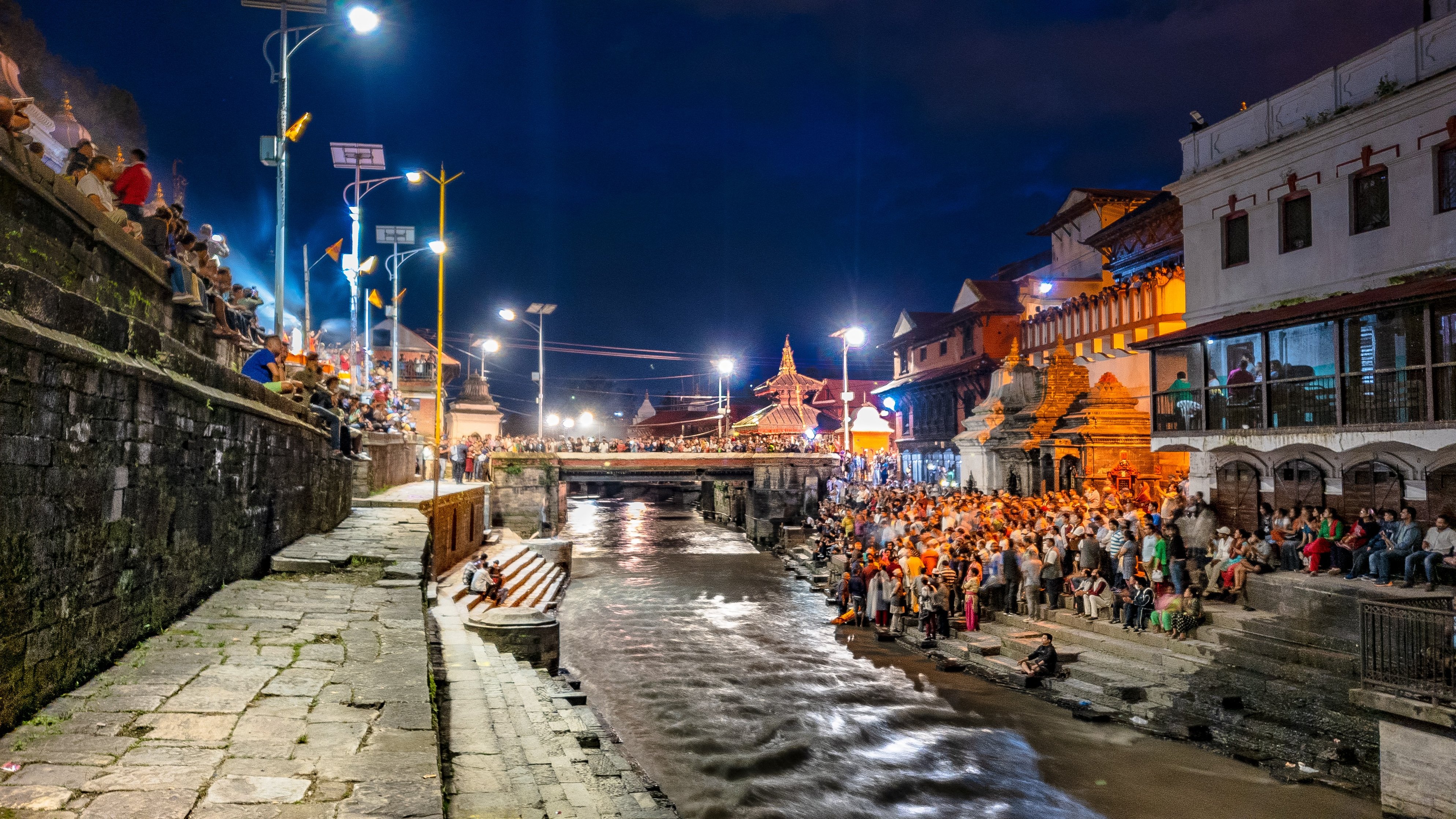
Beautiful sights of Kathmandu at night.
Learn more: Tibet Everest Base Camp vs Nepal Everest Base Camp
Flying to Lukla
The journey from Kathmandu to Lukla Airport (Tenzing-Hillary Airport) is one of the most iconic parts of the EBC trek. Situated at 2,860 metres, Lukla has a short 527-metre runway that slopes uphill, ending at a mountain wall with a steep drop-off on the other side. Its dramatic Himalayan backdrop and challenging runway make it one of the most famous and demanding airports in the world. Let's look at the costs:
- Cost: Round-trip flights typically range from $360–$450 USD, depending on season and demand. Peak trekking months (spring and autumn) are more expensive and fill quickly.
- Weather-dependent: Flights are often delayed or cancelled due to fog, wind, or snow. It is standard to include buffer days in your itinerary for potential disruptions.
- Baggage limits: Most airlines allow 15 kg checked baggage plus 5 kg carry-on; extra weight may incur fees.
- Experience: The flight itself offers breathtaking views of Mount Everest, Lhotse, Nuptse, and the surrounding peaks, its a memorable start to the adventure.
Tips for Lukla flights:
- Book as early as possible, especially during peak season.
- Be ready for early morning departures, as flights often operate in the morning when weather conditions are most stable.
- Keep essentials in your carry-on in case of delays or luggage issues.
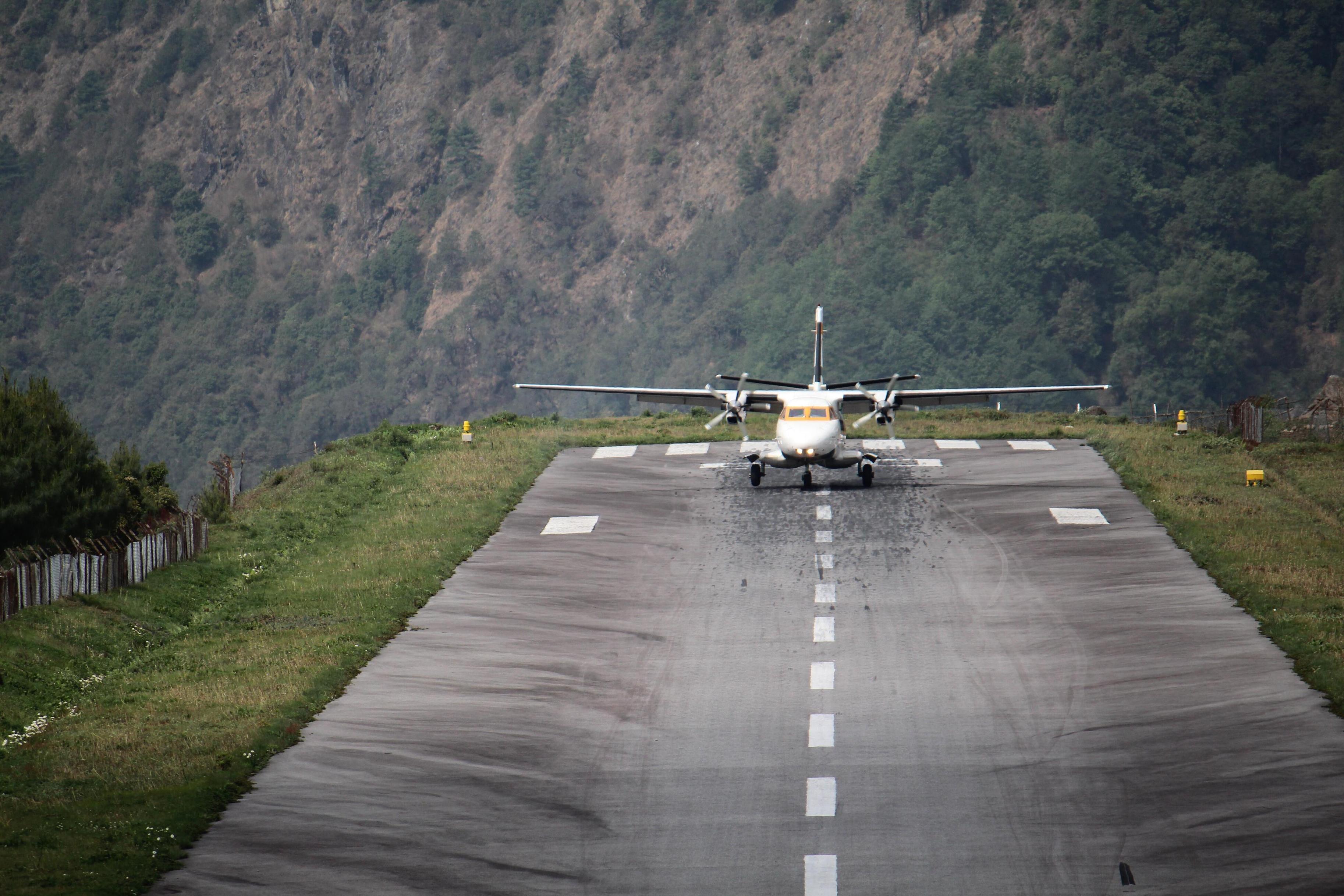
A photo of a flight ready to take off at the Lukla airport.
Learn more: Budget Trekking in Nepal: The High-Value Way to Explore the Himalayas
Other transport options
While flying to Lukla is by far the most common route, some trekkers opt for an overland approach via Jiri, Salleri, or Phaplu. These routes offer a longer, more gradual trek to Everest Base Camp and are ideal for those who want extra acclimatisation and adventure before the main trail.
- Time: Overland treks add 7–10 days to the journey to reach Lukla, depending on the starting point.
- Experience: This route passes through remote villages and less-visited landscapes, giving a more immersive cultural experience.
- Logistics: Arrangements are more complicated and usually require a local guide or travel agency.
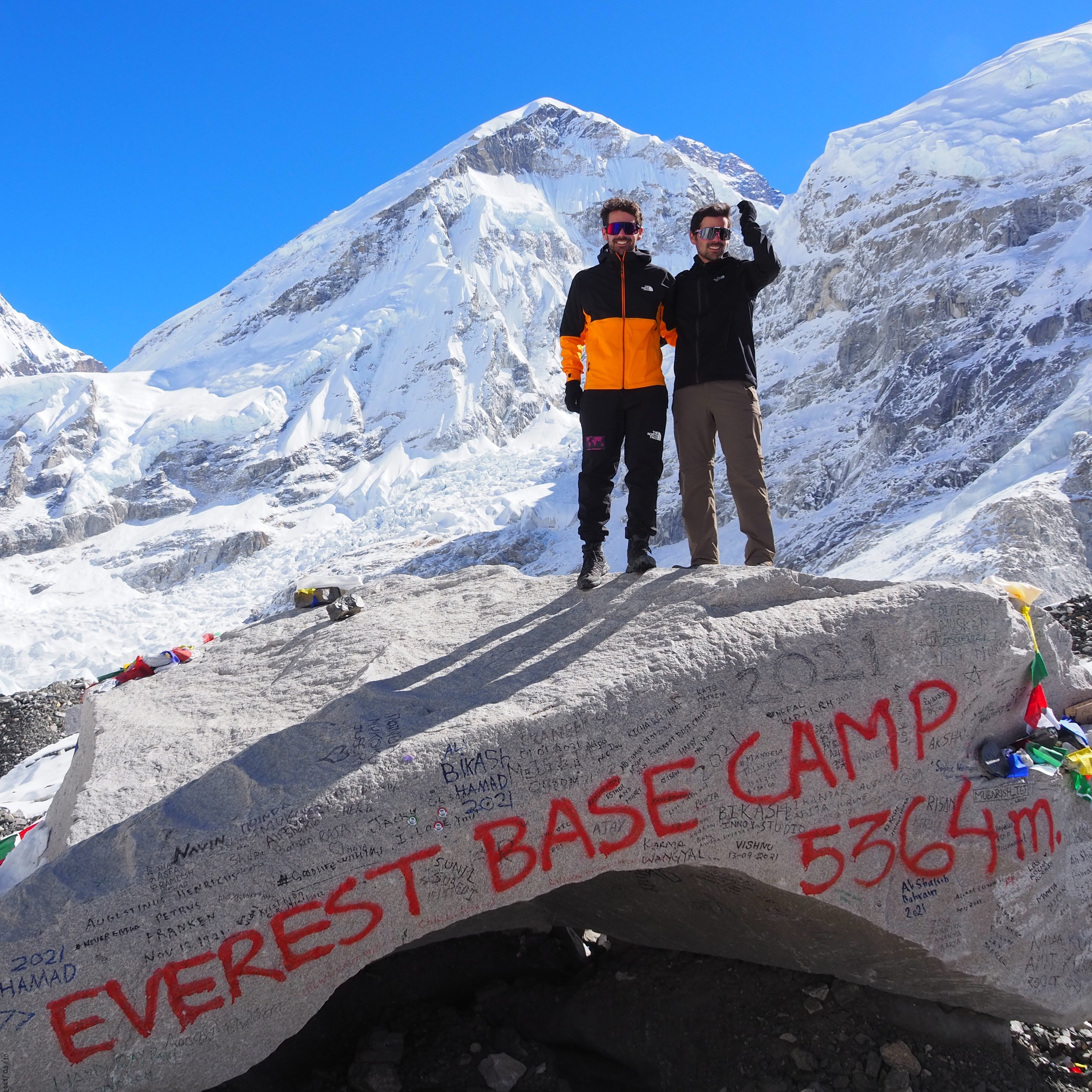
Trekkers pose at Everest Base Camp.
{{leadmagnet-two}}
4. Guides and porters
Hiring a guide is compulsory for the Everest Base Camp trek and is now the standard for most travellers. Licensed guides like Follow Alice provide expert navigation, local knowledge, and support in case of altitude sickness or other emergencies. They also help with logistics, from planning the daily route to arranging accommodation and meals. Porters are commonly hired to carry luggage, helping trekkers navigatethe trail and acclimatise. Typical costs are:
- Guide: $30–$40 per day
- Porter: $20–$30 per day
For a 12- to 14-day trek, this usually adds $400–$800 to the overall budget. Beyond practical support, hiring local guides and porters directly benefits Sherpa communities in the Khumbu region, creating meaningful local employment. The rates for your trip often do not include tips, which are considered mandatory in Nepalese trekking culture to supplement low base salaries.
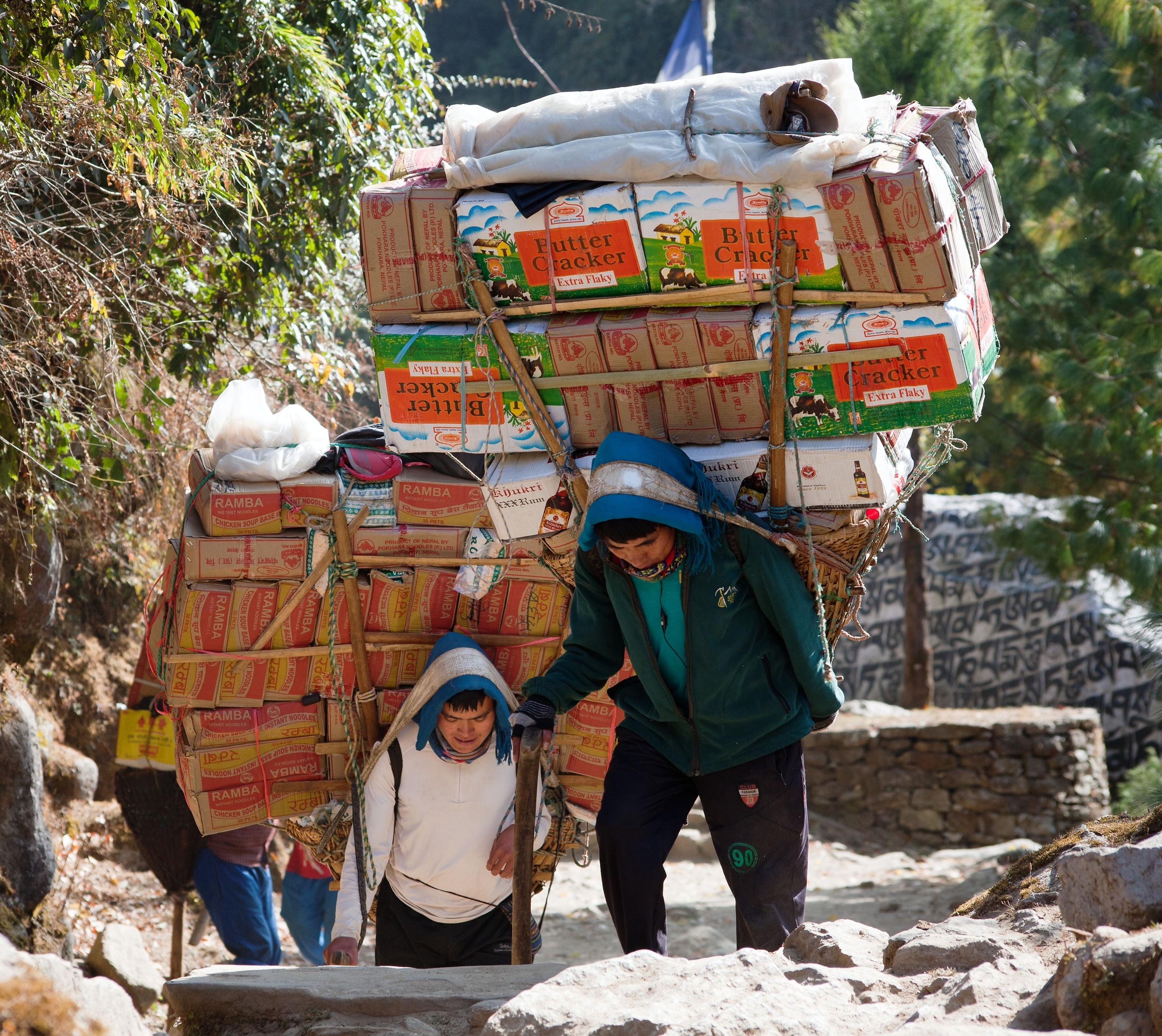
Sherpas carry a load of luggage on their backs.
Learn more: The Most Challenging Trekking Peaks in Nepal – And Why They’re Worth the Effort
5. Accommodation and food along the Everest Base Camp Trek
Along the Everest Base Camp route, trekkers stay in teahouses, small mountain lodges typically run by local families. These lodges provide basic rooms with beds and blankets, and some offer shared bathrooms. Accommodation costs generally range from $5–$15 per night, with prices increasing slightly at higher-altitude or more remote stops, such as Dingboche or near Everest Base Camp. During peak trekking seasons, it’s common for popular lodges in villages like Namche Bazaar or Tengboche to fill up quickly, so early booking or flexibility in your itinerary can be helpful.
Food costs along the trail usually fall between $25–$35 per day, covering three meals. Standard options include dal bhat (rice and lentils), noodles, soups, or simple rice dishes, with occasional snacks like eggs, toast, or energy bars. Prices rise at higher elevations because all supplies must be carried up by porters or, in some cases, flown in by helicopter, reflecting the logistical challenges of the region.
Most teahouses also offer hot drinks, such as tea, coffee, or hot chocolate, for $2–$3 each. Staying hydrated and enjoying warm beverages is important, especially at higher altitudes where cold temperatures and dry air can be taxing. Some lodges charge extra for hot showers (typically $2–$5), and electricity is often limited to a few hours per day, so planning for phone charging or battery use is recommended.
Tips for accommodation and meals:
- Carry cash in small denominations, as ATMs are scarce and card payments are rarely accepted along the trail.
- Consider packing your own snacks or energy bars for long trekking days, as they can save money and provide quick energy between meals.
- Be flexible with meal choices, as at remote stops, the menu may be limited.
By budgeting carefully for teahouse lodging and meals, trekkers can enjoy a safe and comfortable experience without overspending, while also supporting the local communities that run these essential mountain services.
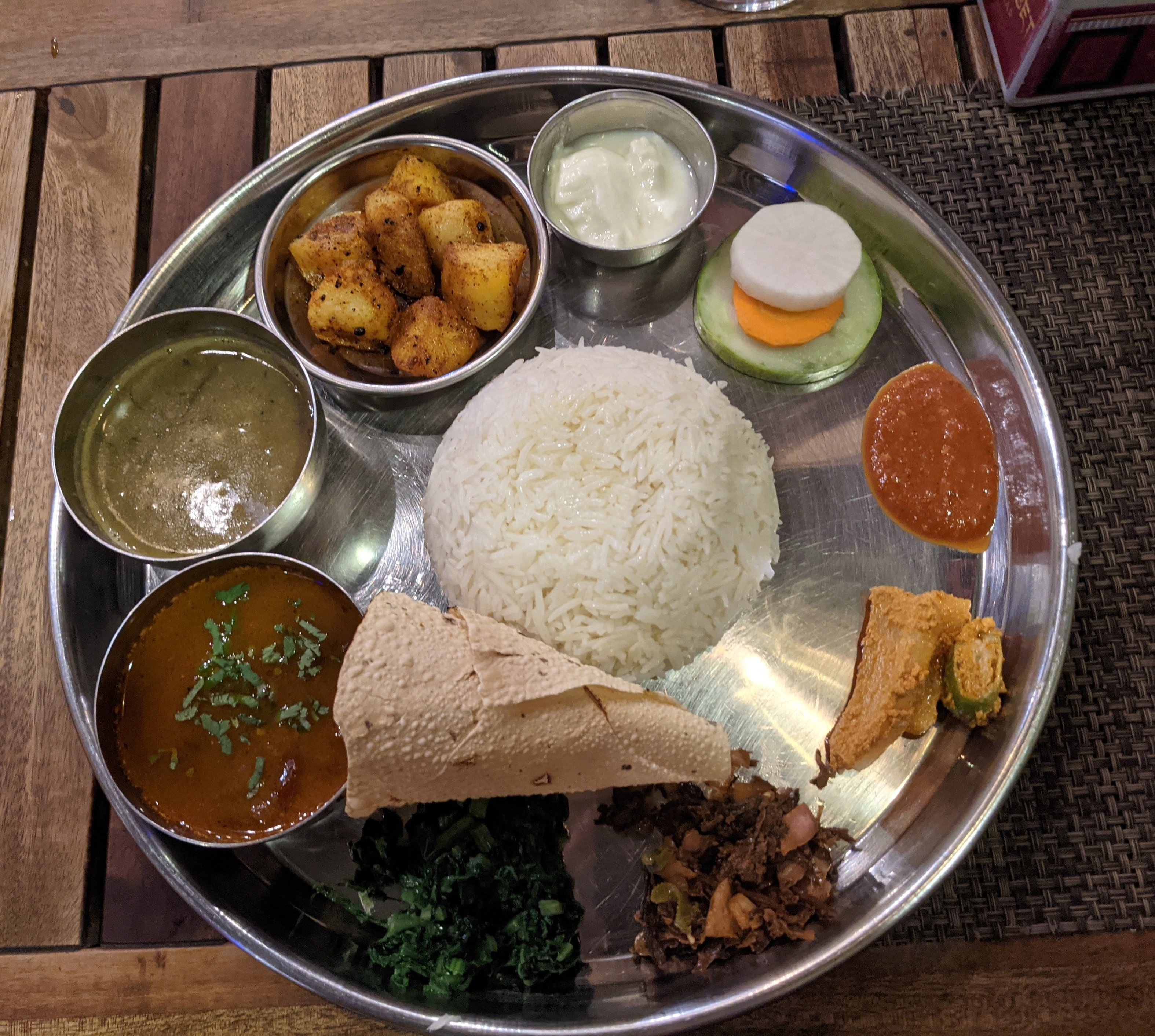
What a typical meal looks like at a teahouse.
Learn more: Exploring the lesser-known peaks near Everest
7. Extra costs on the EBC trail
While the main costs are predictable, several smaller expenses appear along the trek. These include:
- Wi-Fi access in teahouses ($5–$10 per day)
- Charging electronic devices ($1–$3 per device)
- Hot showers ($2–$5 per shower)
- Bottled drinking water ($1–$2 per litre)
Most trekkers budget $200–$400 for these extras. Many also bring water purification tablets or portable filters, which reduce costs and minimise plastic waste.
Typical Everest Base Camp Trek budget
A realistic mid-range budget for a trek with Follow Alice might look like this:
Everest Base Camp with Follow Alice
Planning a budget for Everest Base Camp can feel daunting, given the variety of costs involved from flights and permits to accommodation, food, and guides. To give trekkers a practical starting point, we’ve created a realistic mid-range budget based on experience from Follow Alice expeditions.
These figures are informed by:
- First-hand trekking experience: Our team regularly leads guided trips along the EBC route and tracks real costs for accommodation, meals, and local services.
- Local knowledge: We work closely with teahouses, guides, and porters, giving us insight into typical pricing and seasonal fluctuations.
- Official sources: Permit costs, TIMS fees, and park charges are taken from the Nepal Tourism Board and Sagarmatha National Park authorities.
- Travel logistics data: Flight costs, transport options, and gear rental fees are based on current 2026 rates from airlines, trekking agencies, and Kathmandu suppliers. You will be able to see all the inclusions and exclusions on our website.
By combining these sources, we always present a reliable and practical budget that reflects the true cost of a safe, enjoyable, and comfortable Everest Base Camp trek with a mid-range travel style. This budget is designed to help trekkers plan, avoid surprises, and make informed decisions about where to spend and where to save. We also offer a range of lush trips for those who want the added extra costs.
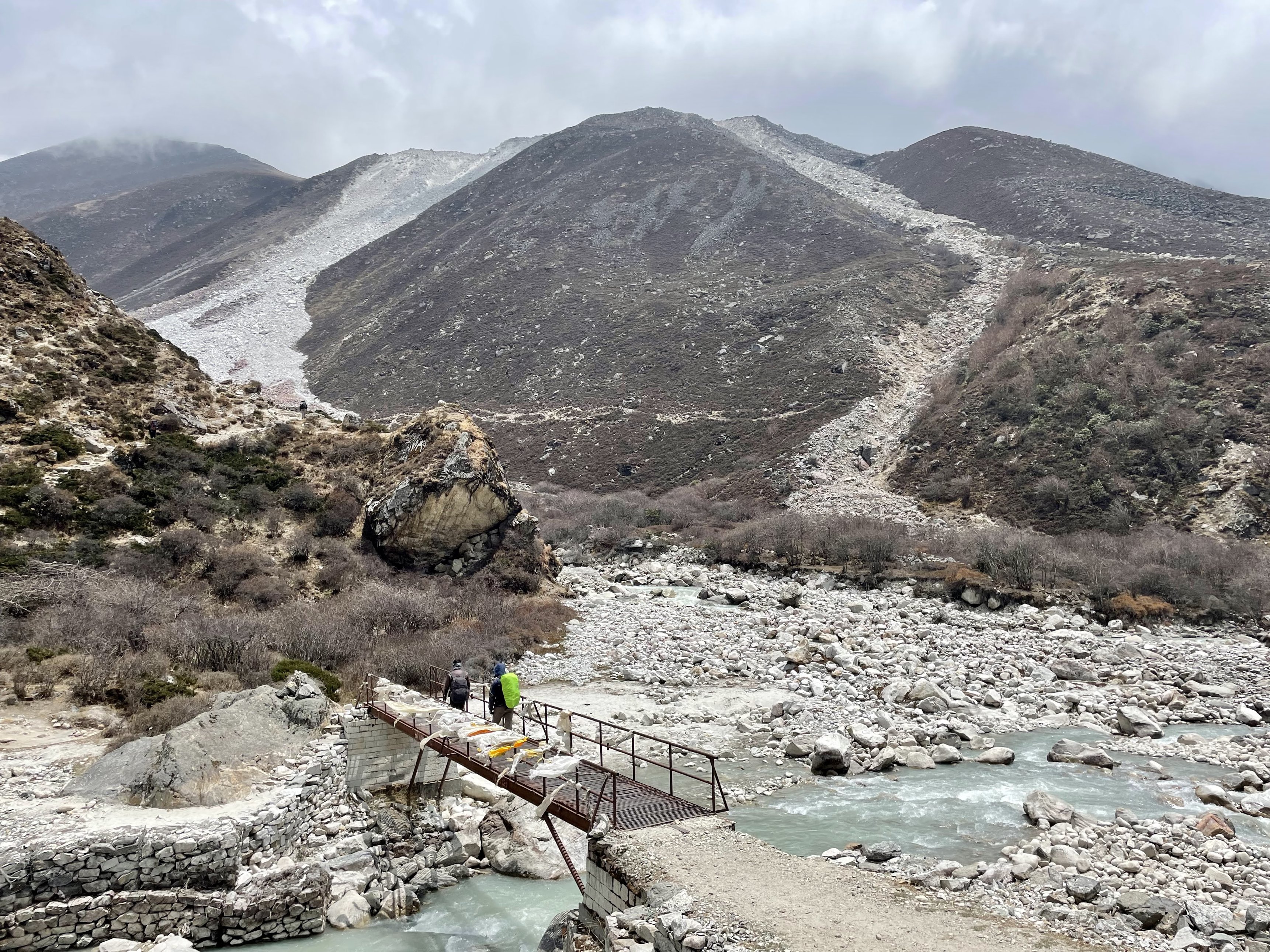
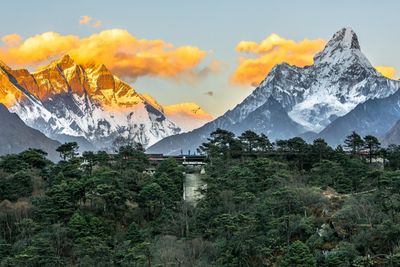
Beautiful sites from the Everest Base Camp Trek.
Learn more: North Face of Mount Everest: History, Routes and How to Visit
Plan your Everest adventure with Follow Alice
The Everest Base Camp trek is a chance to experience the Himalayas in all their raw beauty, from glacial valleys and towering peaks to the Sherpa villages. Costs vary depending on your style of travel, but most trekkers spend between $1,500 and $4,000 for a mid-budget journey.
With careful planning and budgeting, the trek is achievable for a wide range of travellers. Knowing the costs in advance allows you to focus on the adventure itself, rather than unexpected expenses. Imagine standing at the base of the world’s tallest mountain, breathing in crisp Himalayan air, and feeling the sense of triumph for reaching a goal that few achieve.
Travelling with Follow Alice takes the stress out of planning. With our expert local guides, well-paced itineraries, and logistical support make it easier to concentrate on the journey, the landscapes, and the sense of accomplishment that comes with every step. Explore Follow Alice’s Everest Base Camp treks today and start planning your adventure.