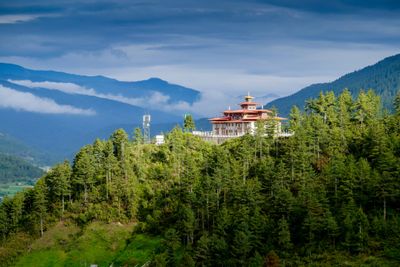




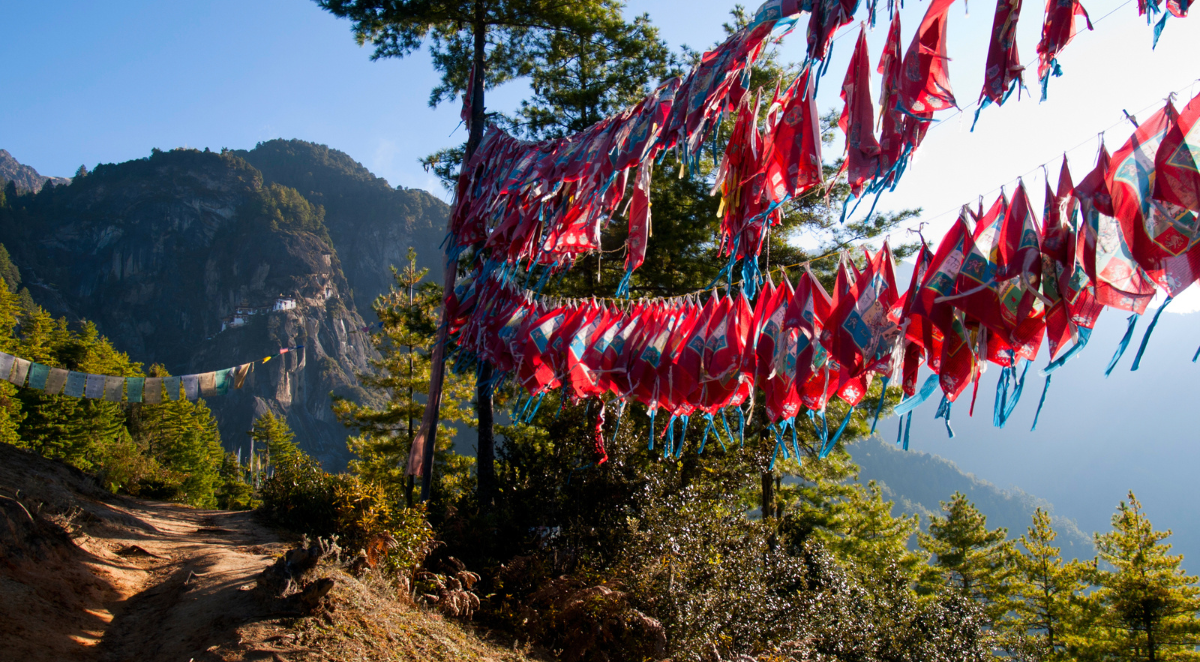
Paro, Bhutan, has a quiet charm that settles in before you even realise it's happened. Terraced fields slope toward the river in neat rows, wooden farmhouses sit under strings of bright prayer flags, and cool mountain air gives the whole valley the kind of clarity that makes every colour seem fresher.
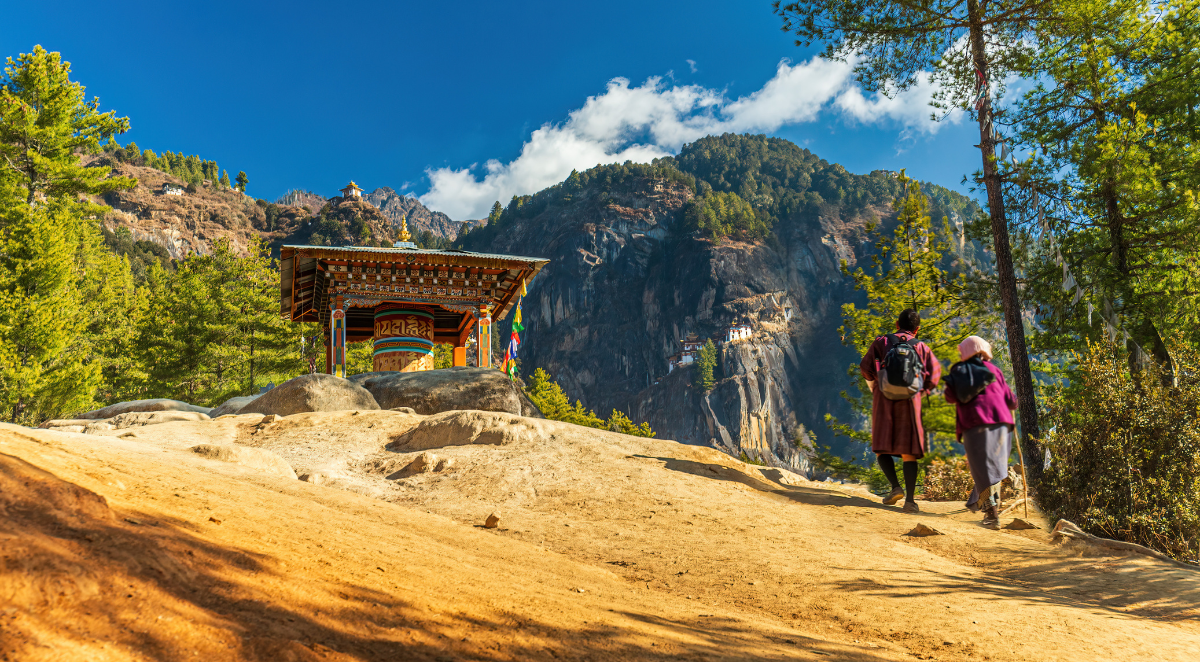
Then you lift your eyes to the cliffs. Perched impossibly high above the valley is Tiger’s Nest Monastery. That first sight is the moment people talk about the most. It starts as a tiny white shape tucked into a dark cliff face. As you continue the climb through the forest and viewpoints, it slowly grows clearer. Eventually, the view becomes so clear that it’s easy to think the monastery is closer than it really is. The hike shifts it from something you’ve only seen in photos to something you can observe in real time, and the gradual approach is a big part of what makes the experience memorable.
This guide walks you through how Paro, Bhutan, feels, how the hike unfolds, and everything you need to know to experience Tiger’s Nest Monastery respectfully and confidently.
Why Paro, Bhutan, belongs on your bucket list
Paro, Bhutan, is usually the first valley travellers explore when they arrive. It’s a gentle introduction to the kingdom. There’s enough altitude to feel the crisp mountain air, yet the pace is slow enough that you can adjust without rushing. The combination of scenery, culture, and easy access to important landmarks makes it one of the most popular places to go in Bhutan.
There’s a reason many visitors choose to spend more than one night here. The valley is beautiful in a way that’s hard to put into words. Light shifts across the rice terraces, people wave as they walk past farmhouses, and the sense of calm is immediate. It also helps that Paro has some of Bhutan’s most iconic sites, with Tiger’s Nest Monastery being only one of them.
Travellers often say they fall for Paro before they fall for the rest of the country. It’s familiar enough to settle in quickly, yet different enough to make you curious about everything that lies ahead.
Here’s what travellers love about Paro, Bhutan:
• Easy access to famous hikes and monasteries • A gentle introduction to Bhutanese architecture and way of life • Views from nearly every turn in the valley • A natural pairing with valleys like Thimphu, Haa, and Punakha
If you’re planning a route and want a sense of how Paro fits into the bigger picture, our Bhutan travel guide to the top places to visit is a great place to start. It shows how Paro, Bhutan, is linked to other one-of-a-kind places to visit in the kingdom.
The story and significance of Tiger’s Nest Monastery
Tiger’s Nest Monastery, or Paro Taktsang, is widely recognised as one of Bhutan’s key religious sites. The setting alone is striking. The buildings sit against a vertical cliff above Paro Valley, and the location gives the place a presence that’s hard to ignore. Once you understand how it came to be, the site makes even more sense.
Bhutanese tradition holds that Guru Rinpoche, the figure credited with bringing Buddhism to Bhutan, reached this cliff on the back of a tigress. He meditated in a cave here for three months, and the monastery was later built around that cave to honour the event. The story forms part of Bhutan’s spiritual history, and the cave still draws pilgrims who come to visit and pay respect.
Tiger’s Nest continues to function as a working monastery. Monks live, study, and pray here, and the daily activities keep the place moving. The buildings you see today are the result of both centuries of care and significant restoration after fires. The commitment to rebuilding it reflects how important the site remains to Bhutanese people. Many locals still make the hike for blessings, quiet time, and personal reflection rather than for the view.
Before you go, here are some important things to know:
• The original meditation cave was used to build the monastery. • It has survived fires and has been rebuilt with care and precision. • Pilgrims travel from across Bhutan to visit its temples and shrines. • It’s a functioning spiritual site and not simply a viewpoint.
Understanding simple etiquette makes the experience more meaningful. If you want a quick guide to greetings, behaviour, and dress, Bhutan travel etiquette is a useful reference before your hike.
Photos of Tiger’s Nest are dramatic, but the atmosphere is what travellers remember most. The quietness in the courtyards, the scent of butter lamps, and the stories that echo through the chambers give the site a depth that can’t be captured in a single picture.
What the Tiger’s Nest hike feels like
The hike to Tiger’s Nest Monastery begins on the edge of Paro, Bhutan, and climbs steadily through a forest of tall pines. It’s not a technical hike, but it does rise continuously, so the best way to approach it is with a relaxed pace.
Before diving into the atmosphere of the walk, here’s a quick overview of the route:
- Distance: about six kilometres (3.7 miles) for the full round trip.
- Elevation gain: around 500 metres (1,640 ft)
- Total time: four to six hours, including breaks
- Difficulty: moderate and suitable for most reasonably fit travellers
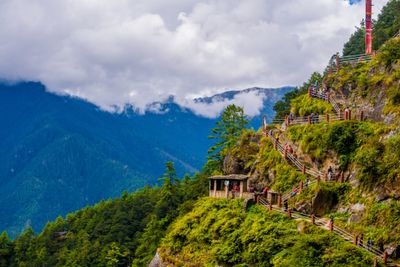
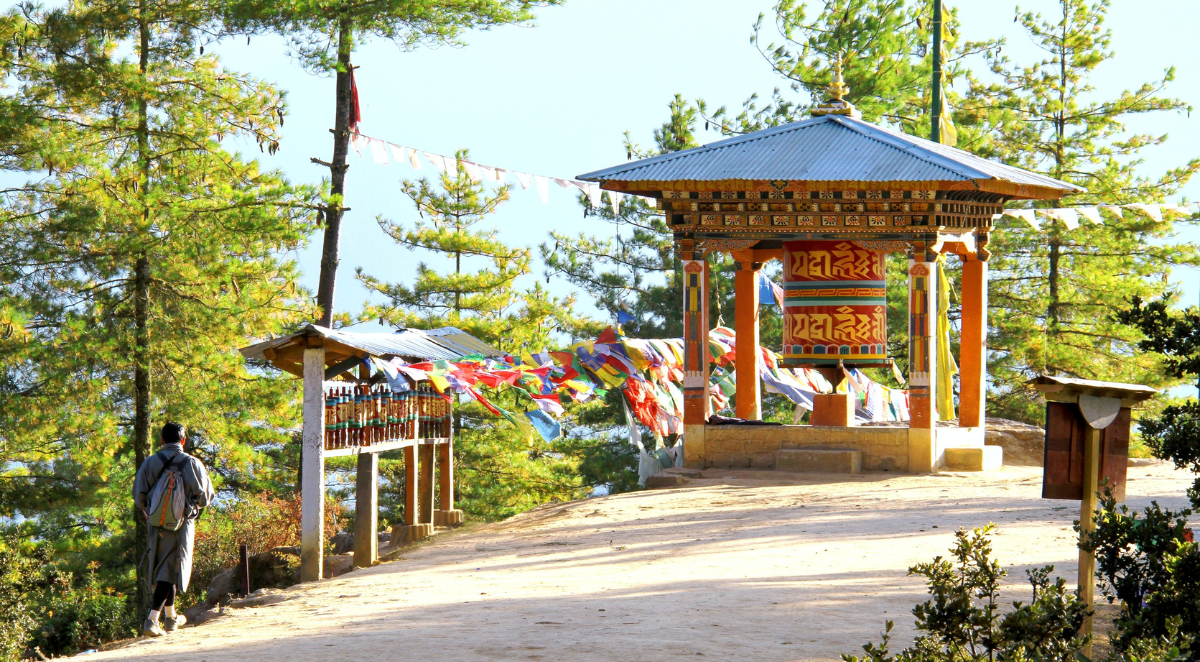
The first section winds through a forest where prayer flags stretch between trees, and horses sometimes pass by with riders. Pine needles soften the path underfoot, and every few steps you’ll catch glimpses of the cliff high above. The trail isn’t exposed, and the shade makes the climb feel manageable even in warmer months.
Halfway up, you’ll reach a well-known café with a terrace overlooking the monastery. Many travellers say this is where the reality of the experience hits them. The view is close enough to feel almost unreal. It’s also a lovely place to pause for Bhutanese tea, stretch your legs, and take in the view before continuing.
What makes the hike special isn’t only the scenery. It’s the small moments that build the experience:
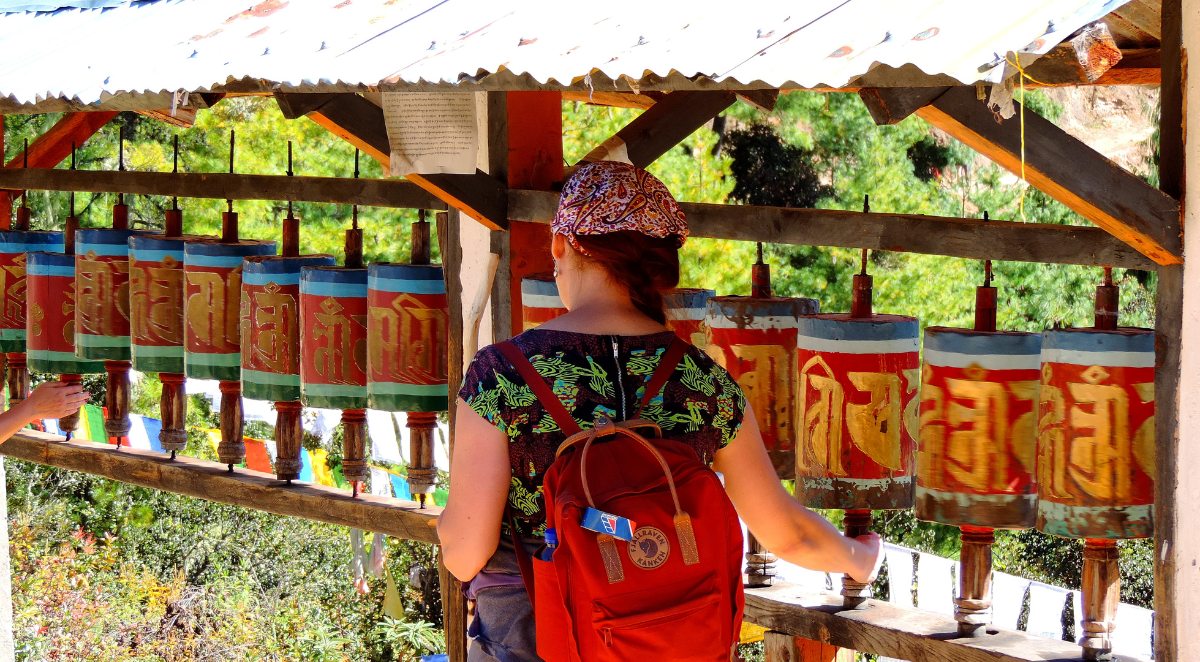
• The scent of incense in the forest • Spinning a prayer wheel beside the trail • Watching horses navigate the lower path • Crossing the waterfall near the final stretch of stairs
The final descent to the waterfall and the climb up the stone steps to the entrance are the most dramatic parts of the route. This section gives you views of the monastery from several angles, each more striking than the last.
If you want a more detailed breakdown of timing, pacing, and what to expect, our guide All you need to know to hike Tiger’s Nest goes into step-by-step details.
Best time to hike Tiger’s Nest
Tiger’s Nest Monastery can be visited throughout the year, but weather and light make a big difference to the experience. Spring and autumn are the most popular seasons because the skies are clear, temperatures are mild, and views stretch across the valley.
Ideal months include:
• Spring from March to May • Autumn from September to November
A sunrise or early morning start offers three simple benefits. The air is cooler, the light is soft enough to make the forest glow, and the trail is much quieter before the midday rush.
If you’re planning your route around Bhutan’s festivals or seasonal weather patterns, the best time to visit Bhutan explains how each season shapes travel.
How to prepare for Tiger’s Nest
Preparing well makes the hike smoother and far more enjoyable. You don’t need heavy gear, but you do need comfortable clothing, water, and a respectful approach for entering the monastery.
Bring:
• At least one litre of water • Snacks or energy bites • Comfortable shoes with good grip • Lightweight layers for changing weather • Sun protection • Cash for the tea stop and monastery fee
Dress modestly for entry. Shoulders and legs should be covered, and shoes should be removed before entering sacred rooms. A scarf or light jacket is an easy way to make sure you’re prepared for both weather and etiquette.
If this is your first visit to the kingdom, Six Things to Know Before Visiting Bhutan offers a simple overview of customs and expectations that helps you feel at home from day one.
Rules and etiquette inside the monastery
Tiger’s Nest Monastery has straightforward guidelines in place to protect the site. Photography is limited once you pass the inner checkpoint, and phones must stay tucked away inside the temples. Sound carries easily through the wooden rooms, so voices naturally fall to a whisper.
Here’s what to keep in mind:
• Move quietly and with intention • Avoid pointing your feet toward shrines. • Follow guidance from monks and your local guide • Keep cameras stored where restrictions apply.
For background on how Bhutan maintains a mindful approach to tourism, you can read Why Bhutan limits tourist numbers or check visitor information on the official tourism website.
What else is there to do in Paro, Bhutan?
Paro, Bhutan, is much more than the monastery, and extra time in the valley reveals a lot of its character. It’s a place where you can move slowly, walk through villages, and watch everyday life unfold in the fields.
Ideas for a full day or two include:
• A visit to Paro Dzong and its impressive courtyards • Exploring the National Museum for a look at Bhutanese history • Enjoying a traditional hot stone bath or farmhouse lunch • Short forest trails or gentle riverside walks • Linking your visit with Thimphu or Punakha for a broader itinerary
Nature enthusiasts might enjoy reading The three national parks in Bhutan every foreigner should visit for ideas that extend well beyond Paro, Bhutan, into wilder landscapes.
And if you’re curious about the emotional pull the kingdom has on travellers, Why Everyone Loves Bhutan explains the deeper connection many people feel here.
When you’re ready to organise the practical side of your trip, guides such as How much does it cost to travel to Bhutan and How to book your Bhutan trek walk you through fees, visas, and planning steps.
Planning your own journey
A quick visit to Paro, Bhutan, is possible, but travellers often find that a multi-day trip gives them space to combine Tiger’s Nest with dzongs, rural walks, and longer treks. Bhutan rewards slow travel, and Paro is a comfortable starting point for a longer route across the valleys.
It helps to know the basics:
• Guided travel is standard throughout Bhutan. • Visas and tourism fees apply to all international travellers. • Local guides add insight and depth to the monastery experience. • Weather, festivals, and altitude all shape your itinerary.
If you’re curious about what a full route could look like, explore the options on our Bhutan adventure trip page. It’s a great place to start sketching a personalised trip.
Is Paro, Bhutan, worth it?
Absolutely. Paro Bhutan is a rewarding place to visit, and the hike to Tiger’s Nest Monastery is one of its most recognisable experiences. The path is steady, the forest provides shade for most of the climb, and the views become clearer as you gain height.
Reaching the monastery helps explain why it holds such cultural importance. The setting is unusual, the cliff is far steeper than it appears from below, and the position of the buildings makes the site feel unlike anything else in the valley.
Inside the complex, the courtyards and temples have a quieter pace. Visitors move through the rooms with their guides, and the views across the valley give a clear sense of how high the monastery sits. The walk back down often feels easier, partly because the route is familiar and partly because the descent gives you more time to look at the surrounding forest and cliffs from different angles.
Paro Bhutan remains popular among travellers who want a mix of nature, culture, and accessible hiking. Tiger’s Nest Monastery plays a large role in that. The combination of the trail, the history, and the location has made it one of the most well-known places to visit in the country.