


There is no single best place to see the Northern Lights, but there is almost certainly a best place for you. The answer depends on whether you want the highest odds of clear skies, a full destination holiday, a once-in-a-lifetime remote experience, or serious photographic access to dramatic landscapes. This article will guide you through the key factors to consider, including what to expect from seasonal cloud cover.

Northern Lights in 2026
We are currently living through a solar maximum. The sun runs on an 11-year cycle of activity, and between 2024 and 2026, it is producing more solar storms than at any point since 2014. This means aurora borealis displays are more frequent, more intense, and visible further south than usual. It's important to remember, though, that Solar Cycle 25, our current solar cycle, peaked around October 2024. So yes, the official solar maximum has technically passed. But that doesn’t mean the show is over. The sun doesn’t simply switch off after its peak as activity tapers off gradually over several years. In fact, the period just after a solar maximum often brings some of the most striking aurora displays. Geomagnetic storms remain active, solar wind continues to flow, and powerful bursts of energy from the sun still reach Earth regularly.
If you have been waiting for the right moment to plan a Northern Lights trip, this is a strong time to do it. But timing alone is not enough. The destination you choose, the time of year you travel, and the type of experience you are looking for all matter just as much. Places like Norway, Iceland, Sweden, Finland, Greenland, and Alaska all offer excellent opportunities to see the aurora. However, they are not all the same as they differ in important ways, including how likely you are to have clear skies, how easy it is to get around, the overall cost, and what the wider travel experience feels like. The right destination depends on the kind of trip you want. Some travellers are looking for remote, wild landscapes, while others prefer comfort, ease, and well-developed infrastructure. Choosing with that in mind makes all the difference, and if you have any questions regarding this, feel free to contact our team.
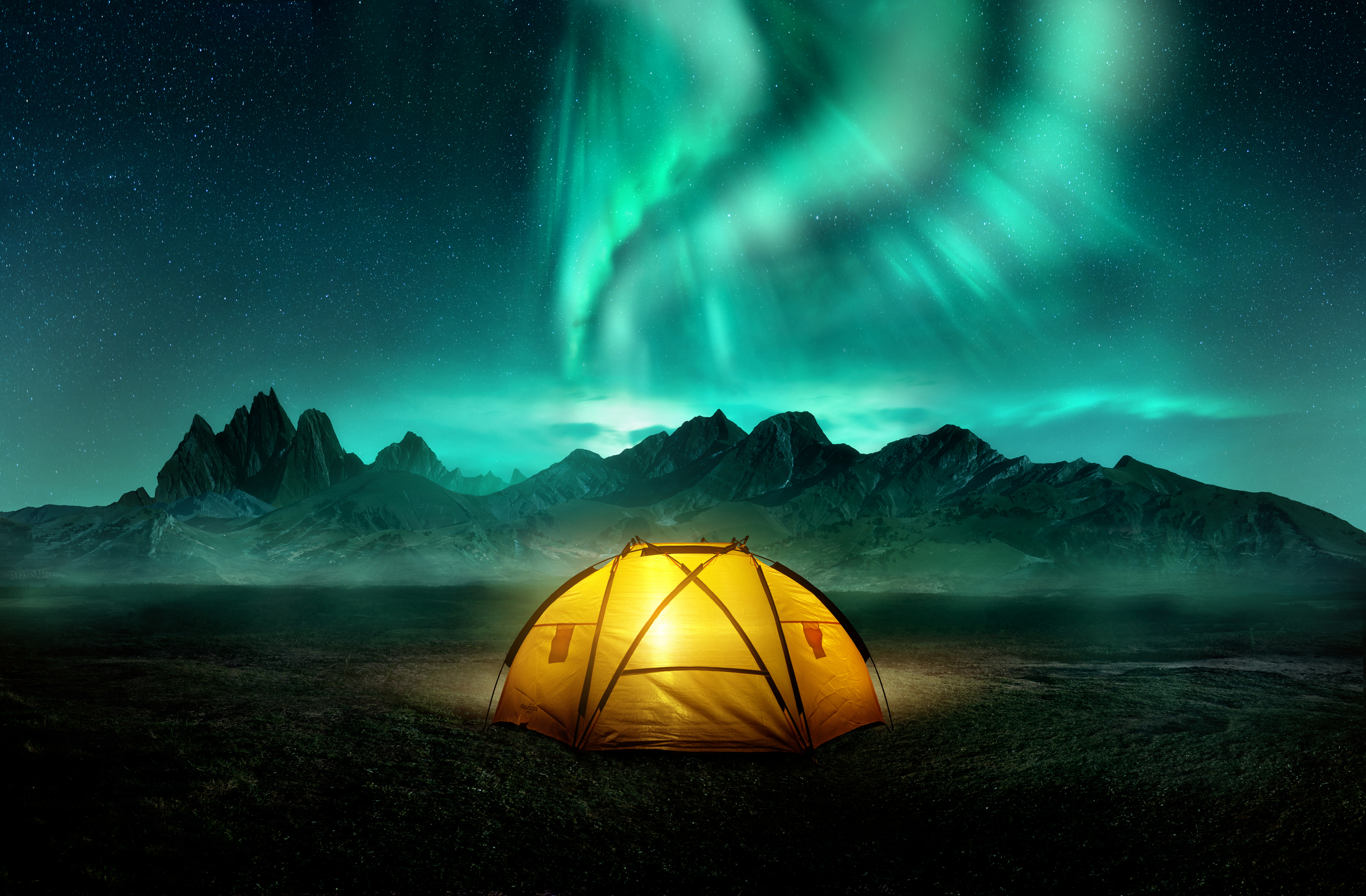
Tent camped out with the Northern Lights as their background.
Learn more: Is 2026 Still a Good Year to See the Northern Lights?
Northern Lights Destinations to Consider
If this is your first time chasing the Northern Lights and you want to give yourself the best possible chance of seeing them, where you go matters more than anything else. Some destinations offer far more reliable conditions than others, especially when it comes to clear skies and accessibility. Choosing carefully can make the difference between a fleeting glimpse and a truly unforgettable display. Here are the destinations that consistently offer the strongest chances of success.
1. Abisko, Sweden
Abisko, Sweden, is widely considered one of the most reliable destinations for Northern Lights viewing. It's a small village in Swedish Lapland, sitting at roughly 68 degrees north, which is well inside the auroral zone. What sets it apart is not just its latitude. The town sits adjacent to Lake Torneträsk, and the combination of the lake's relatively warm water and the surrounding mountain topography creates what local guides call the “Blue Hole,” a local phenomenon in which clear skies often form even when surrounding areas are clouded.
Measured across winter months, Abisko typically sees clear or partly clear skies on around 60 to 70 per cent of nights, compared to 40 to 50 per cent in parts of northern Norway, and sometimes lower in Iceland during unsettled Atlantic weather. These are not dramatic-sounding numbers, but in aurora chasing terms, the difference between a 65 per cent and a 40 per cent clear-sky rate across a five-night trip is the difference between almost certainly seeing the lights and genuinely risking a miss.
The Aurora Sky Station is a cable car facility that rises above the town, offering a viewing platform that sits above low-lying cloud on nights when ground-level mist rolls in. So even when conditions are marginal, you have options.
Abisko is also well set up for first-timers. It is accessible by train from Stockholm or by flying into Kiruna, is genuinely dark in winter (the sun does not rise at all for several weeks around the solstice), and is surrounded by the kind of snow-covered Lapland landscape that makes the whole experience feel complete even on the nights when the lights are quiet.
If you have never seen the aurora and want the strongest realistic chance of success on a one-week trip, Abisko is one of the first places to consider. Despite this, it is often overlooked in favour of more widely known destinations, even though its conditions make it one of the most reliable locations for Northern Lights viewing.
We recommend planning a trip to Abisko between mid-November and late February. January is often considered the best month, offering a strong combination of long nights and some of the clearest viewing conditions.
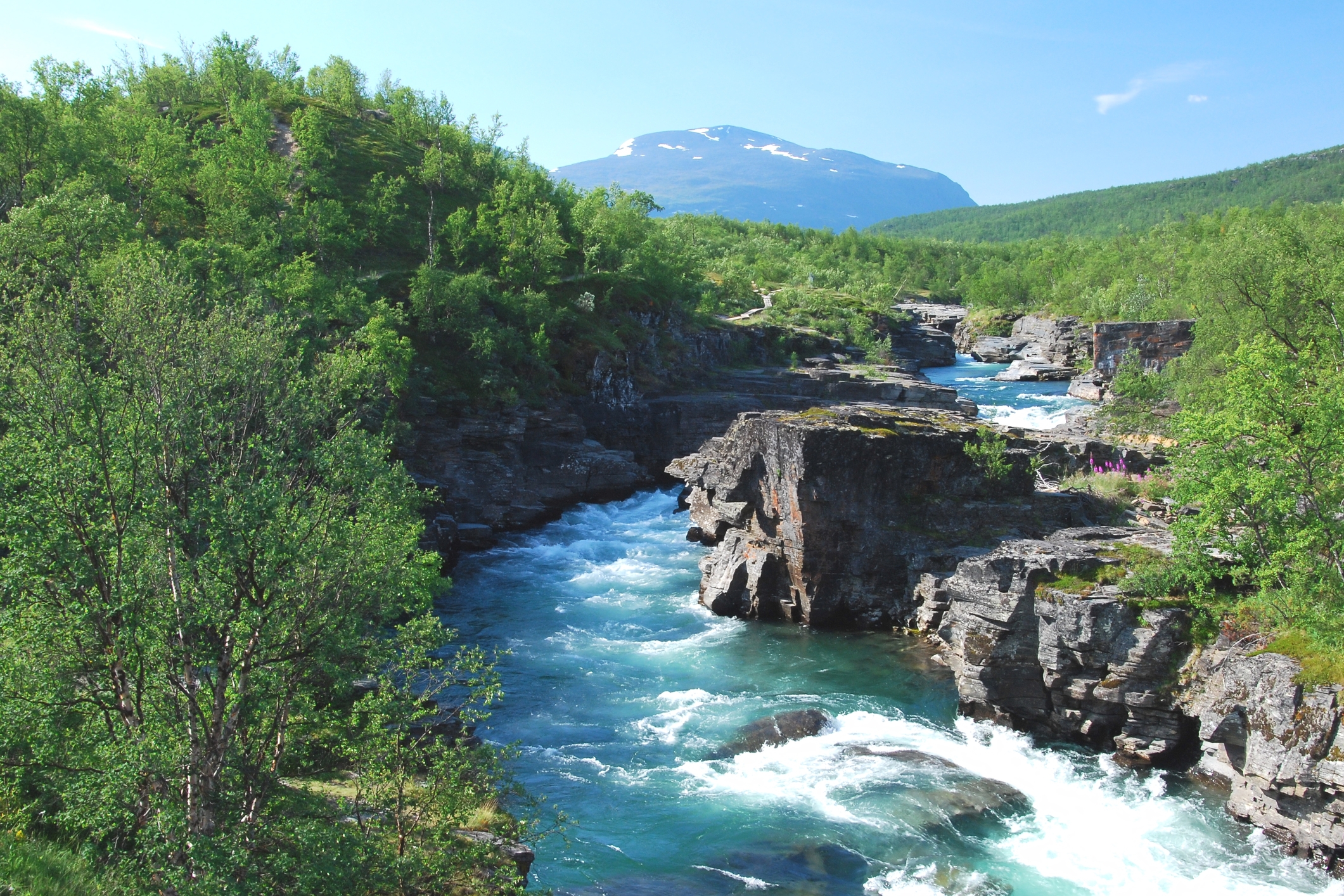
Abisko National Park, Swedish Lapland.
2. Iceland
Iceland is the destination that works best for travellers who want the northern lights to be one element of a genuinely memorable trip, rather than the sole reason they booked flights.
The truth about aurora chasing in Iceland is that the weather is changeable. The island sits in the North Atlantic and is subject to rapidly shifting systems. For instance, a clear forecast at noon can become overcast by evening, and a grim-looking sky can surprise you at midnight. Across much of Iceland, clear skies occur on perhaps 40 to 50 per cent of winter nights, and in particularly stormy periods, that figure drops further. The south and southwest, where most visitors spend their time, tend to be more exposed to the weather than the north.
So Iceland is not where you go if maximising aurora odds is your primary objective. But it may well be where you go if you want three or four full days of daytime experiences that are remarkable in their own right, with the aurora as a potential bonus on clear evenings.
The Golden Circle at the Þingvellir National Park, the Geysir geothermal area, and Gullfoss waterfall can be done in a day and is genuinely extraordinary. The south coast, from Seljalandsfoss to Skógafoss to the black sand beaches at Reynisfjara, is unlike anywhere else in the world. The Blue Lagoon is tourist-heavy but also, by most accounts, worth it. In winter, the geothermal landscape under snow, with the possibility of catching the lights reflected in a hot spring, makes for a particular kind of magic that no other destination quite replicates.
Iceland also has the most developed tourism infrastructure of any aurora destination. Car hire is straightforward, the Ring Road is mostly manageable in a well-equipped vehicle, and the range of accommodation from guesthouses to glass-roofed lodges built for aurora watching is wide. For travellers who are not experienced backcountry adventurers but want a proper Arctic winter experience, Iceland handles the logistics in a way that feels accessible rather than daunting.
The best place and time to see the Northern Lights in Iceland is the Snæfellsnes Peninsula, and the north near Akureyri tends to have slightly more stable weather than the south coast. Visit between October and March, with January and February offering the longest hours of darkness. Get away from Reykjavik because the light pollution in the capital will wash out weaker displays.

Aurora Borealis over the famous Skogafoss waterfall on the Skoga river in Iceland.
Learn more: Planning a Trip to Iceland: Everything You Need to Know
3. Svalbard, Norway
If money is not your primary constraint and you are looking for something genuinely extraordinary, some destinations offer a truly once-in-a-lifetime Northern Lights experience. At 78 degrees north, which is roughly halfway between the Norwegian mainland and the North Pole, Svalbard sits in a category of its own. This is polar bear territory. Residents are required to carry firearms when leaving the settlement of Longyearbyen. The landscape in winter is lunar: dark, vast, and silent except for the wind. From late October through mid-February, the sun does not rise at all.
The perpetual darkness of polar night means that if the sky is clear, you will see the aurora regardless of what time it is. You do not need to stay up until 2 am and hope, as you are in darkness all day. That changes the nature of the experience fundamentally. You can see the lights mid-morning, at lunch, and reflected in the ice at three in the afternoon. The aurora becomes ambient in a way that it cannot be further south.
Cloud cover in Svalbard is real. The archipelago sees roughly 50 to 60 per cent overcast nights in winter, but the compensation is that clear spells often deliver some of the most dramatic aurora displays on earth, above an Arctic wilderness that looks like no other place you have seen.
Access to Svalbard requires flying via Oslo or Tromsø to Longyearbyen. Activities here go well beyond aurora watching, as there are snowmobile expeditions across the glacier fields, dog-sledging, ice cave exploration, and guided polar night hikes, among the experiences that make Svalbard exciting rather than just a successful tick on a bucket list.
It's worth noting about the cost, as Svalbard is very expensive. Guided activities are almost mandatory for safety reasons (you cannot wander alone into the wilderness without proper equipment and a trained guide). But for travellers who are prepared to invest in something they will talk about for the rest of their lives, there is nowhere quite like it.
The best time to go is from November through January, during the polar night. February and March bring twilight and pastel skies during the day, which makes the landscape even more beautiful, though aurora-watching hours shrink. Booking well in advance is essential as guide services fill up quickly.
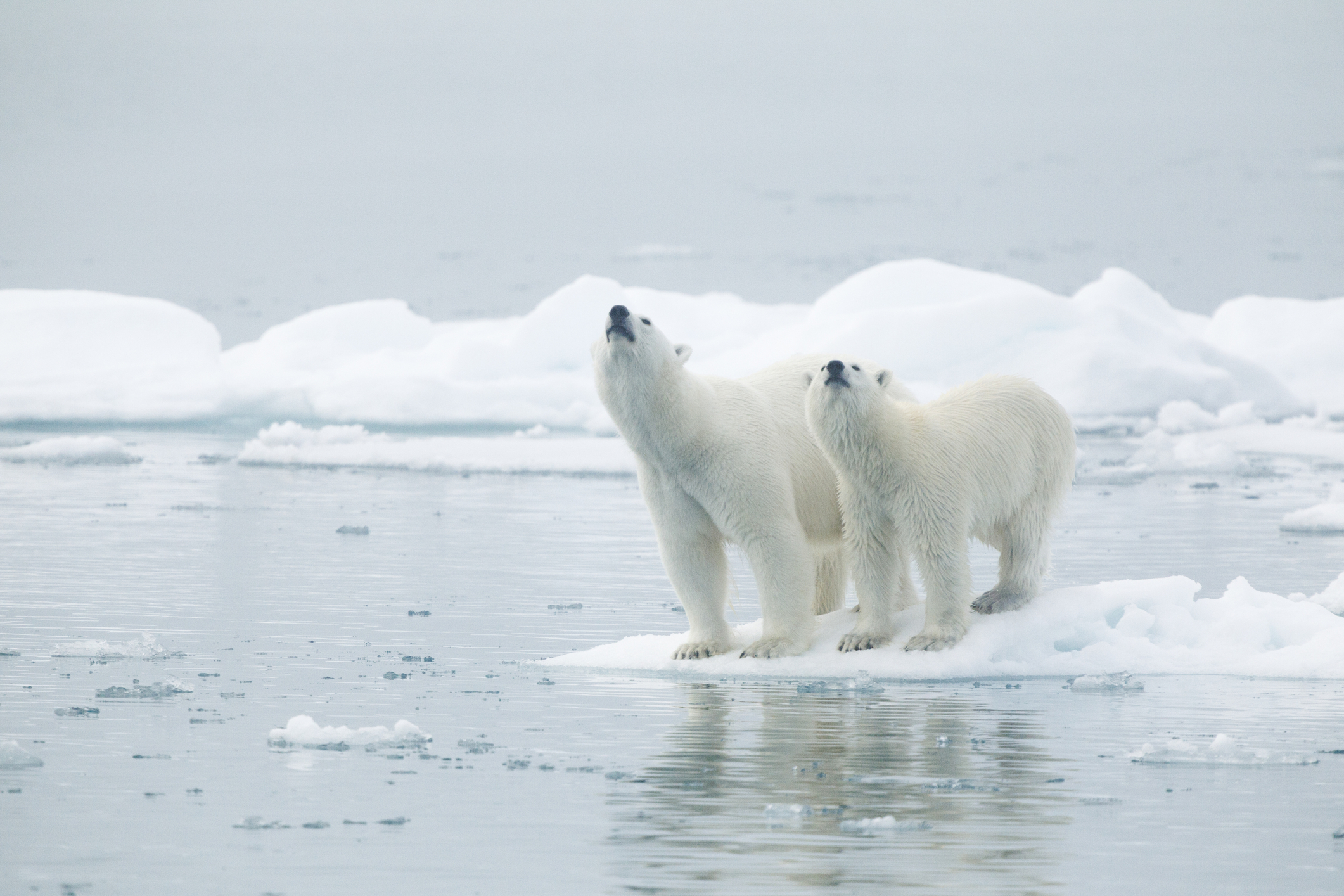
Male and female polar bears on an iceberg in the sea near Svalbard, Norway.
4. Northern Norway (Tromsø and the Lofoten Islands)
If you are a photographer or a serious aurora chaser, some destinations offer especially strong conditions and opportunities for capturing the Northern Lights. Northern Norway is where the northern lights look the way they do in the photographs. The reason is the landscape underneath them, as there are fjords, jagged peaks, fishing villages reflected in still Arctic water, snow-covered ridgelines against luminous green skies. The visual potential is extraordinary. No other destination in the aurora zone offers this combination of dramatic topography and strong aurora activity in the same geographic area.
Tromsø, the largest city in Arctic Norway, is the most popular base for aurora tourism in the world. It has good flight connections, a lively town centre, and an extensive infrastructure of guided tours, photography workshops, and multi-night expeditions. The aurora activity here, sitting directly under the auroral oval, is strong and frequent.
Tromsø sits directly under the auroral oval, which means auroral activity here is strong and frequent. However, it is also important to understand the local weather patterns. Tromsø lies at the meeting point of warm Atlantic air and cold Arctic air, which results in variable cloud cover throughout the winter months. On average, a significant number of nights are fully or partly overcast, and some winters are cloudier than others. This is an important factor to keep in mind when planning an aurora trip to the region, as it influences your overall chances of clear-sky viewing.
What this means in practice is that photographers and serious chasers who base themselves in Tromsø almost always need to move. The standard approach is to hire a car and be prepared to drive inland or along the coast to find a hole in the cloud. Guided tours designed specifically for aurora chasing with experienced guides monitoring multiple weather stations in real time are worth the investment precisely because they give you the best chance of being in the right place when the sky opens.
The Lofoten Islands, a three-hour drive or short flight south of Tromsø, offer a slightly different proposition. Cloud cover is similarly variable, but the landscape of the iconic Norwegian fishing villages, the dramatic Fiskebøl and Nusfjord scenery, is arguably even more photogenic. The islands reward travellers who are prepared to be flexible and patient rather than those who need guaranteed results.
For photographers willing to work for their shot, willing to drive at midnight chasing a gap in the clouds, and who want images with genuine emotional depth, northern Norway is the right choice. Go knowing the cloud situation honestly, plan for at least five to seven nights, and do not be surprised if two or three of those are overcast.
The best time to go is from October to early April, with the Lofoten Islands offering a slightly longer season thanks to their milder temperatures. March, when snow cover remains but days are lengthening, is particularly beautiful for photography.
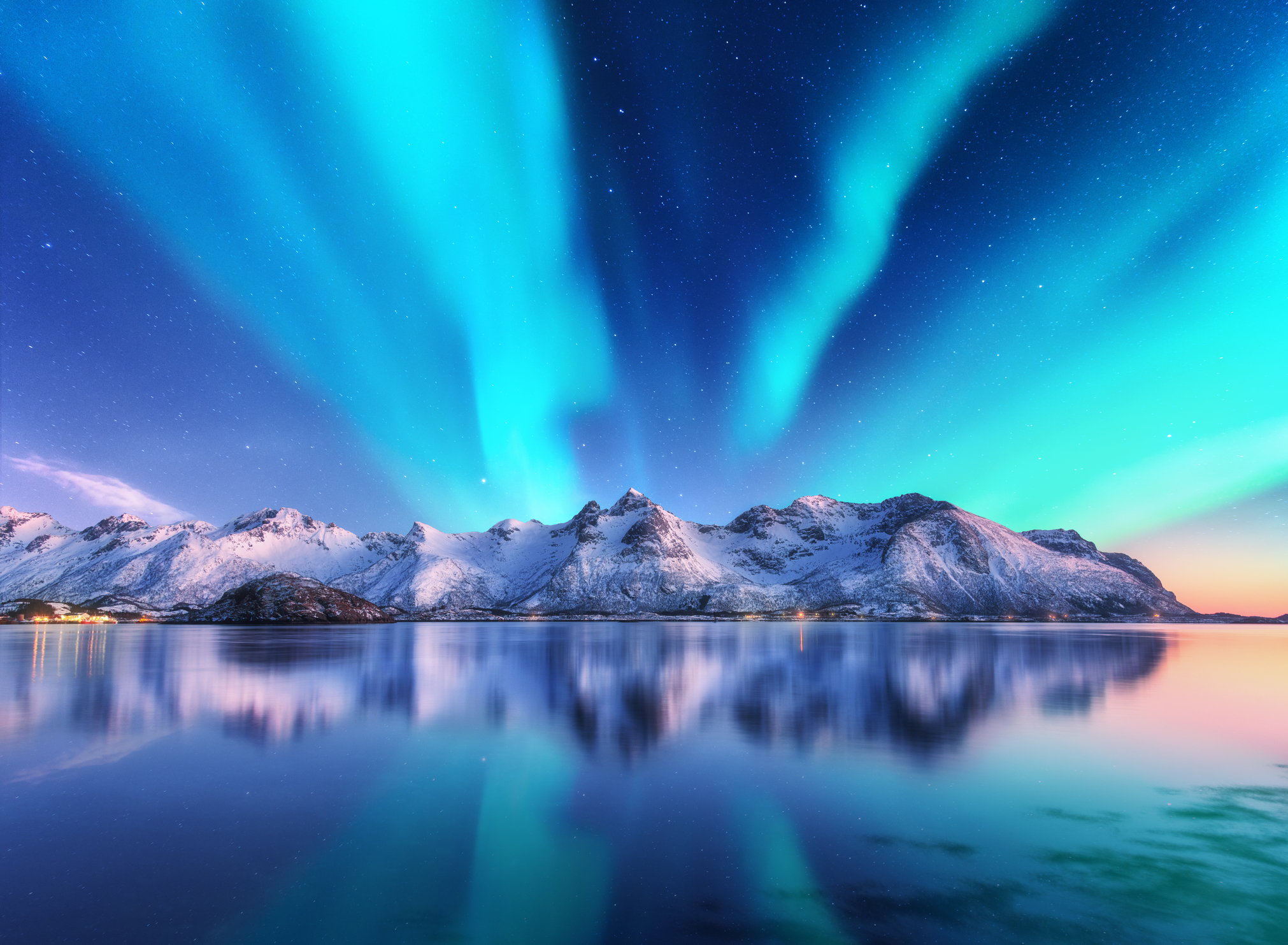
Northern lights and snow-covered mountains in the Lofoten islands, Norway.
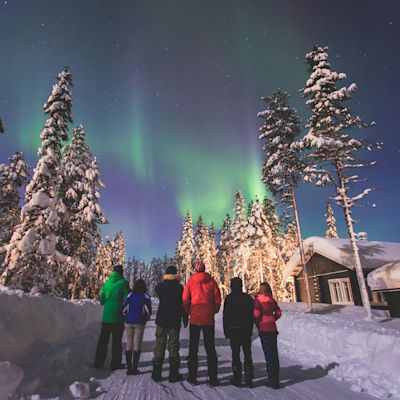
Why cloud cover matters for Northern Lights viewing
If there is one practical takeaway from this article, it is that cloud cover is often the deciding factor in whether you see the Northern Lights on any given night, and it varies significantly from one destination to another.
A rough guide, based on typical winter conditions:
Abisko, Sweden, has the most consistently clear skies of any Aurora Belt destination, with roughly 60 to 70 per cent of nights offering usable viewing conditions. Finnish Lapland (Saariselkä, Levi, Rovaniemi) follows closely, with cleaner continental weather patterns and clear nights on perhaps 55 to 65 per cent of evenings. Northern Norway's coastal areas, including Tromsø and Bodø, sit at roughly 40 to 50 per cent with strong aurora activity, but cloud is a persistent opponent. Iceland varies by region but averages 40 to 50 per cent in the south and west, improving slightly in the north around Akureyri. Svalbard averages around 50 to 60 per cent overcast, though its perpetual polar night means even partial windows are usable.
None of these destinations is a sure thing on a single night. The solar maximum we are currently experiencing increases the frequency and intensity of aurora events, but it cannot improve local weather. The destinations with the highest clear-sky probability give you the best chance of capitalising on that increased activity.
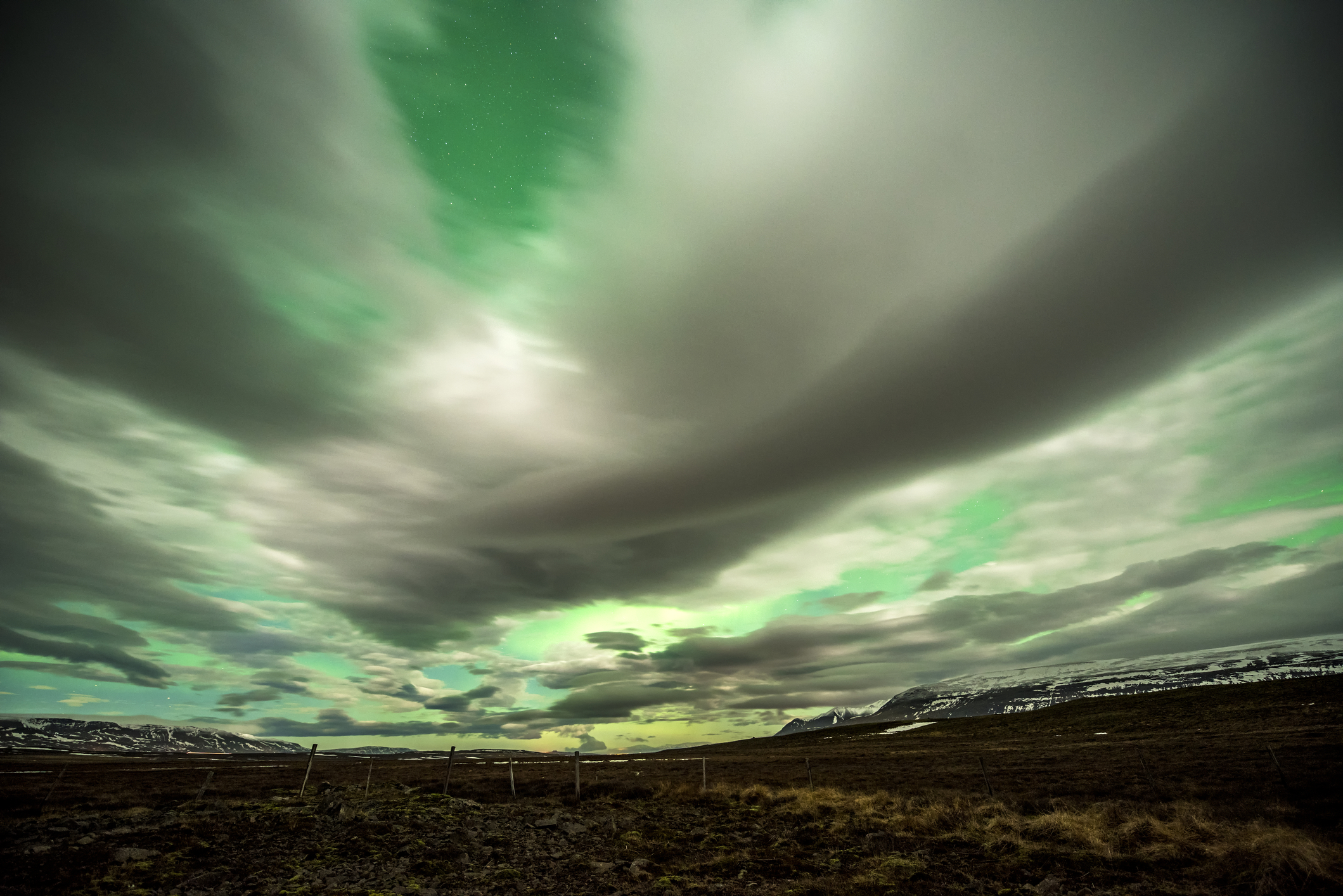
Aurora Borealis glows over a frozen lake surrounded by low cloud cover and stars
{{leadmagnet-one}}
Best place and time to see the Northern Lights
We are currently in one of the strongest Northern Lights periods in over a decade. Solar Cycle 25, which peaked between 2024 and 2025, has increased geomagnetic activity and made aurora displays more frequent and more intense across the Arctic region. During stronger Kp levels, the lights can be seen well beyond the usual auroral zone, but the most reliable and consistent viewing still happens between roughly 65 and 80 degrees north.
The best destinations lie within this auroral zone, where conditions are most stable, and sightings are most common. Places such as Norway, Iceland, Finland, and Sweden all offer strong opportunities, with the best locations combining dark skies, northern latitude, and favourable winter conditions.
The prime season runs from late September to early April, when nights are long enough for aurora activity to appear. Within this period, winter months from November to February typically offer the darkest skies and most consistent chances of clear viewing, depending on local weather patterns.
For travellers, this means conditions are currently exceptionally favourable, but success still depends on choosing the right destination for the kind of experience you want, whether that is remote wilderness, easy accessibility, or a balance of both. If you want to book a trip or have any questions regarding the Northern Lights, feel free to contact our team.