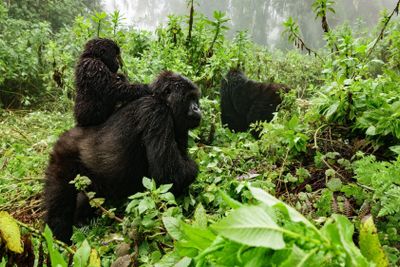




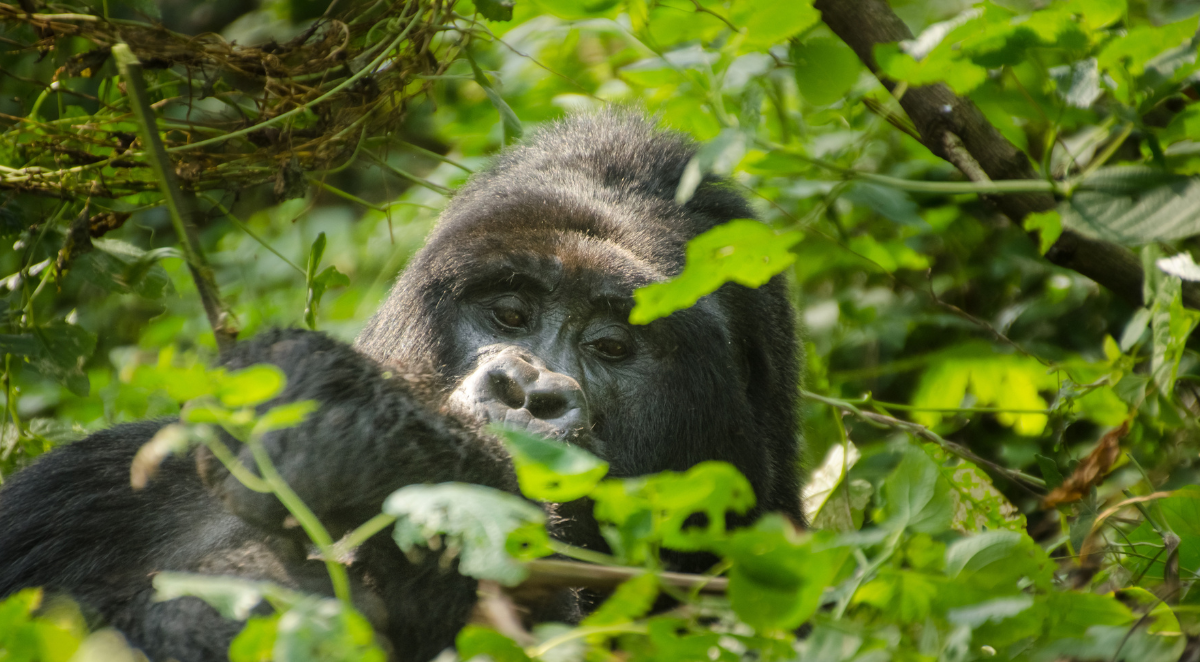
There’s something about seeing silverback gorillas in the flesh that catches people off guard. They’re huge, of course, but it’s the way they hold themselves that stays with you. They move slowly at times, almost deliberately, and the forest seems to settle around them. The strength is obvious, yet there’s a steadiness in their behaviour that feels very different from how they’re often portrayed.
A silverback isn’t a separate species. He’s simply a mature male gorilla taking on responsibilities that younger males grow into over time. Once you understand how his role fits into the family structure, the behaviour of the entire troop becomes much easier to read.
In the following sections, we look at what defines a silverback gorilla, how big and strong these males can be, how they behave within their families, and why their presence is so important to the survival of gorilla groups in the wild.
What defines a silverback gorilla?
A silverback gorilla is simply a fully grown adult male. As he matures, the dark hair on his back lightens into a silvery band, and that’s where the name comes from. It’s an easy way to spot a male that has reached full size and strength.
Before that stage, younger males are called blackbacks. They’re still growing, still learning how the family works, and still watching the older males for cues. When a blackback becomes a silverback, the others treat him differently. He’s no longer a youngster but a mature male with a recognised place in the group.
The change isn’t only about the silver hair. A mature male carries more weight, moves with more confidence, and has a presence that the rest of the family pays attention to. That’s really what sets a silverback apart.
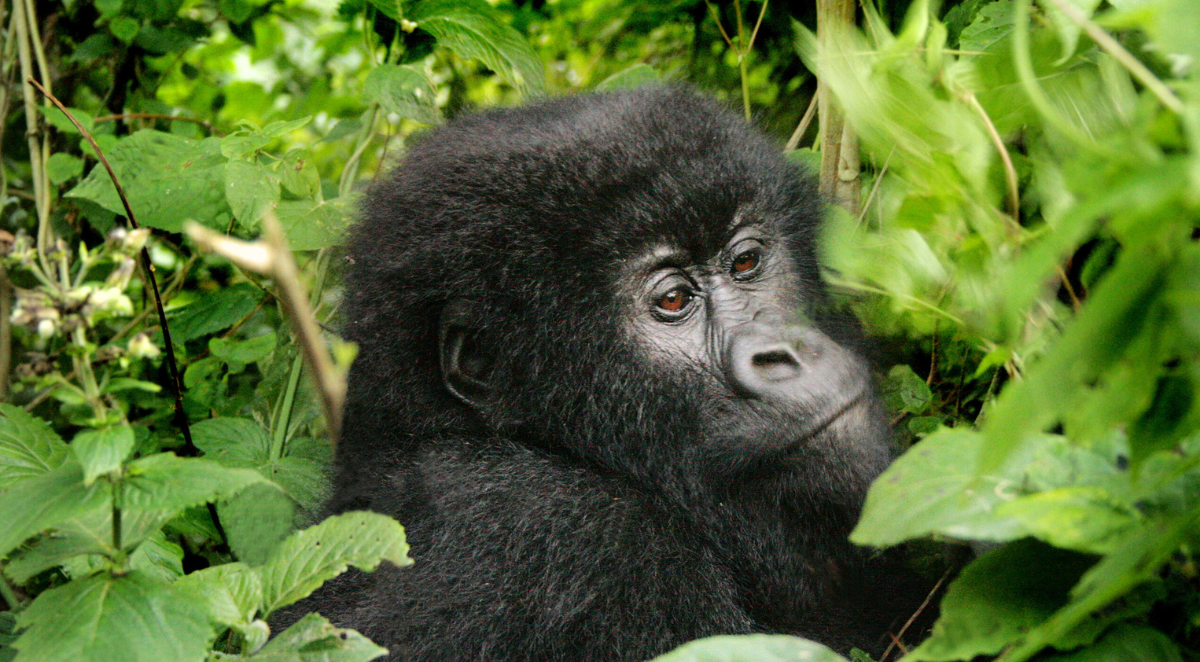
Physical characteristics: size, weight, and strength
It only takes a moment in the forest to realise how impressive silverback gorillas truly are. Their presence alone reveals the impact of years of evolution. They're the largest primates on Earth, and when you watch a silverback gorilla move through the trees with quiet confidence, you understand why travellers talk about the experience for years afterwards.
1. How big is a silverback gorilla?
Trying to imagine the size of silverback gorillas never quite does them justice. A fully grown male stands at roughly 1.6 to 1.8 metres (5.2 to 5.9 feet) when upright, although they spend most of their time moving on all fours. That posture makes them look even wider across the chest, with long, powerful arms that seem perfectly made for climbing and tearing through dense vegetation.
Most travellers say the same thing afterward: you know a silverback gorilla is big, but seeing one shift its weight a few metres away is a whole different story.
2. The weight of a silverback gorilla
A healthy silverback usually weighs between one hundred and forty and two hundred kilograms (140-200kg). The exact figure depends on the subspecies and the environment they live in.
Mountain gorillas often fall at the heavier end of the range because of the cooler climate and the high-calorie plants found in their cloud forests. When you watch one sit calmly among the leaves, the weight makes sense. Everything about them is built for strength and stability.
3. How strong is a silverback gorilla?
Strength is one of the first things people associate with silverback gorillas, and for good reason. Their power isn’t exaggerated; it’s just simply difficult to quantify because wild gorillas aren’t tested in controlled conditions. What researchers do know comes from field observation. A mature male can pull down heavy branches, push through dense vegetation that would stop most animals, and lift his own weight up steep forest terrain with ease.
Their upper body strength develops from a lifetime of climbing, feeding, and moving through uneven ground, yet what stands out most is how rarely they rely on force. A silverback usually keeps the group in order through presence alone, only reacting physically when he believes the family is under threat.
If you’re curious about gorilla behaviour in the wild, our article on wild facts about mountain gorillas offers more insight.
4. Behaviour and temperament
From a distance they look powerful, even intimidating, but that impression changes quickly. Most of the time they move slowly, pausing to feed or watch the youngsters, and there’s a sense of calm that spreads through the whole group when the silverback is relaxed. Their day is a mix of eating, resting, and keeping an eye on whatever is happening around them, and the interactions within the family are usually soft and gentle.
There are moments when a silverback needs to be more assertive, but even then it’s usually for show rather than aggression. A chest beat, a sharp grunt, or a sudden pull at nearby vegetation is often enough to warn another male or remind the youngsters to settle. These displays look dramatic to us, but for gorillas they’re simply ways of communicating without letting things turn into a real fight.
Movement within the group often starts with the silverback, too. He takes a few steps or looks toward a new patch of forest, and the rest follow without hesitation. It’s an easy rhythm that you only notice after watching them for a while, and it’s one of the reasons the troop stays safe and together in such dense terrain.
For travellers planning encounters, our guide on whether gorilla trekking is hard can help you prepare.
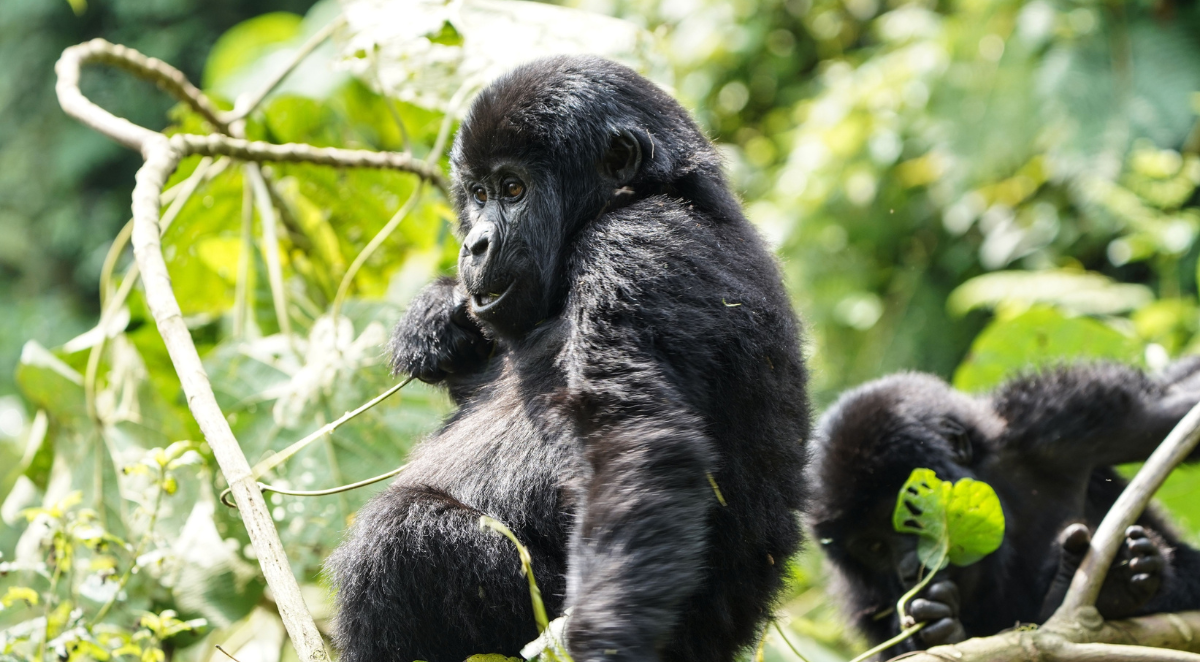
A Silverback's role in the gorilla family
A gorilla family revolves around the silverback. His responsibilities are varied, but all of them are essential for survival.
1. Protection
A silverback’s first responsibility is to keep the family safe. When something unusual moves through the forest, he’s the one who steps forward and places himself between the group and the disturbance.
Actual predators are uncommon, but the forest is full of surprises, from the sound of a large mammal moving nearby to the appearance of a rival male. In most cases, the silverback’s sheer size and posture are enough to settle the situation long before it becomes serious.
2. Leadership
A silverback doesn’t lead the way people imagine. There’s no dramatic moment where he announces himself. Instead, it shows in small things. He shifts his weight and starts walking, and the rest of the group drifts after him without thinking about it. If he pauses, they pause. If he turns back because something doesn’t feel right, they turn too.
After a while, you realise the others are watching him constantly, not out of fear, but because his choices usually take them to food, shelter, or safer ground. It’s leadership that comes from experience rather than force.
3. Social stability
Life inside a gorilla family works because the silverback keeps it steady. Young gorillas often look to him before they do something bold, almost like they’re checking whether it’s wise.
The females relax more when he’s nearby, too. Even small arguments between the youngsters tend to fade once he glances their way. He doesn’t need to intervene loudly. His presence alone keeps the group balanced.
4. Teaching the young
Most learning happens quietly. Young gorillas spend a lot of time watching the dominant male, picking up how he reacts to noises in the forest, when he chooses to move, and how he approaches the rest of the family. They copy those behaviours long before anyone would call it teaching. A single look from the silverback gorilla can tell them more than any obvious lesson, and those small moments shape how they’ll behave as adults.
If you’re curious about the differences between gorilla species, our article on Eastern vs Western gorillas breaks it down clearly.
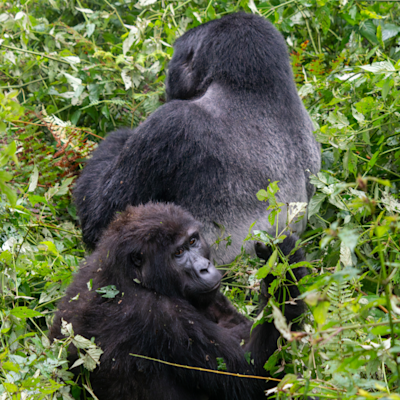
Communication and social hierarchy
Gorillas rely on simple signals to stay connected, and the silverback sets most of the social rhythm. He keeps the group organised, notices changes around them first, and the rest of the family responds to him without needing much noise or fuss.
1. Vocal sounds
A silverback uses a mix of soft grunts, low calls, and occasional deeper sounds to guide the group. These noises help the family stay together and move when needed, and the troop understands them instantly.
2. Body language
A silverback communicates through posture and gesture. Standing tall can signal authority. Turning his back can show acceptance. Chest beating is a well-known display used to show strength or warn another male, but it’s rarely followed by physical confrontation.
3. Facial expressions
Gorillas read each other through quick changes in the face. A relaxed look tells the group everything is calm. When a silverback’s expression tightens, or he fixes his eyes on something, the others notice and adjust straightaway. It is a quiet way of keeping everyone aware of what is happening around them.
4. Hierarchy within the group
A typical troop includes the dominant silverback, several females, offspring of different ages, and occasionally one or more subordinate males. The hierarchy is stable because the silverback keeps peace, settles disputes, and ensures that young gorillas are protected.
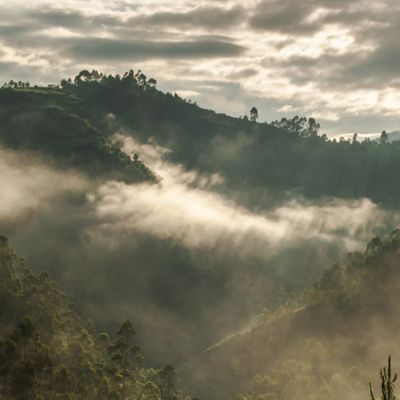
If you’re interested in the wider ecosystem where gorillas live, our Uganda guide offers a wonderful overview. You can watch it here for a glimpse of the landscapes and primate diversity.
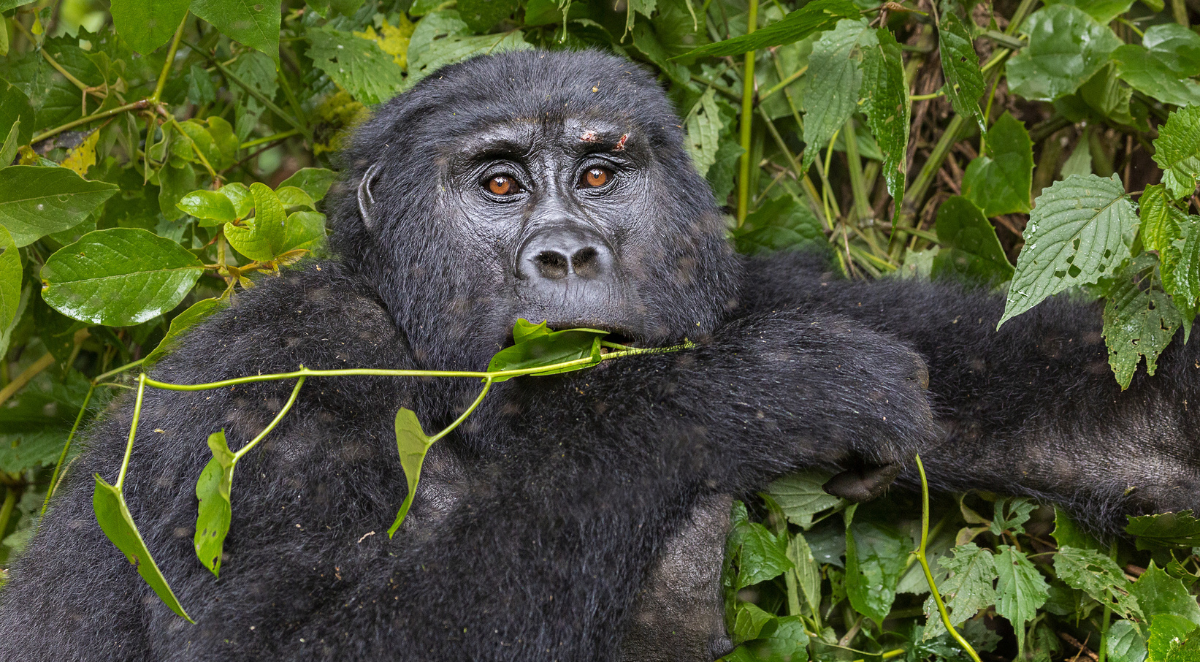
Interactions with other gorillas and predators
Silverback gorillas manage most outside interactions, and their responses depend on the situation.
1. Interactions with rival males
When two silverbacks cross paths, the encounter is usually more about assessing one another than fighting. They may stand tall, beat their chests, or make deep vocal sounds, and that’s often enough for both to understand who wants to hold ground and who is simply passing through.
Actual fights are rare because the risk of injury is high, and both males know it.
2. Predators
Adult gorillas don't have many natural enemies, but younger gorillas are more likely to be attacked. The silverback stays alert when the group is eating or moving for this reason.
His size and confidence usually stop a situation from turning into anything more serious. Most threats fade quickly once he positions himself in front of the troop.
3. Interactions with humans
Gorillas that travellers meet on treks have gone through a gradual habituation process, where trained rangers spend long periods helping them grow comfortable with human presence. The gorillas stay completely wild, but they learn that people aren’t a danger. This allows trekkers to watch them safely while the animals continue with their normal behaviours.
If you want to explore this experience yourself, you can read more about gorilla trekking tours.
{{leadmagnet-one}}
Conservation status and importance
Silverback gorillas belong to a species that is endangered or critically endangered, depending on the subspecies. Mountain gorillas, for example, have shown a remarkable recovery thanks to focused conservation work in Uganda, Rwanda, and the Democratic Republic of the Congo. Their numbers are still low, but they’re increasing.
Why conservation matters
Protecting silverbacks protects entire gorilla families. Without them, group structures collapse. Their leadership ensures the well-being of infants, mothers, and younger males. Their influence on the forest also matters. Gorillas spread seeds, prune vegetation, and keep the ecosystem balanced.
Community involvement
Local communities play a central role in conservation. The tourism revenue supports ranger salaries, anti-poaching programmes, and community development. This approach has proven extremely effective and is one reason mountain gorillas are a rare conservation success story. You can explore how tourism supports wildlife in our article on whether gorilla trekking helps conservation.
Where can you see silverbacks today?
Countries like Uganda, Rwanda, and the Democratic Republic of the Congo are home to the last remaining wild mountain gorilla populations. For a closer look, our guide on whether there are gorillas in Uganda explains what makes the region vital.
Why silverback gorillas matter so much in their own society
Silverback gorillas sit at the centre of family life. Their strength keeps the group safe, but it is their steadiness that holds everything together. They guide the day without rushing it, notice changes in the forest before anyone else, and give the troop a sense of direction that younger gorillas naturally follow.
Their influence shows in the small moments. A look that settles the youngsters. A calm posture that puts the females at ease. Even choosing a resting spot shapes how safe the family feels. When a silverback is confident, the whole group moves with the same certainty.
They also play a quiet role in the health of their environment. By moving through the forest, feeding, and spreading seeds, gorillas help the ecosystem recover and grow. Protecting them means protecting the families they lead and the forests they support.
If you would like to understand what it is like to see these remarkable primates in the wild, our gorilla trekking page is a good place to begin.