



There’s a moment before every big trip when you crouch over a suitcase and realise you have no idea which adapter to pack.
Kenya is one of those destinations where you’ll likely carry more gadgets than usual, especially if you're planning a Kenya safari filled with early morning drives, photo stops, and long days in the bush. Powering everything smoothly can make a noticeable difference to how relaxed your journey feels. Knowing the Kenya outlet type ahead of time saves you stress, guesswork, and a frantic dash around the airport.
Below, we break down the Kenya plug type, voltage details, adapter needs, and a few safari-specific charging tips that travellers often wish they’d known earlier.
What plug type does Kenya use?
Kenya uses the Type G outlet. It’s the same three-pronged plug used in the United Kingdom, with rectangular pins arranged in a neat triangle. You’ll see this Kenya outlet type across Nairobi hotels, guesthouses, and most safari camps. What you find in the city tends to match what you’ll find at a tented camp overlooking the Mara plains, which makes things wonderfully straightforward.
If you want a sense of the region before you go, our Kenya safari trips offer a clear overview of landscapes, routes, and accommodation styles.
Voltage and frequency in Kenya
Kenya runs on 240 volts and 50 hertz. Travellers from regions using 220 to 240 volts can usually plug their devices straight in once they’ve got the correct Kenya plug type adapter. Travellers from 110 to 120 volt regions should check that their chargers and appliances are dual voltage. Most modern laptops, phones, tablets, e-readers, and camera chargers are designed to handle both ranges.
Heat-based appliances are where issues often arise. Older hairdryers, straighteners, or clippers sometimes support only one voltage and can overheat. It’s worth checking the fine print on the plug before travelling, especially for a Kenya safari, where many lodges rely on solar energy and low-watt systems.
Do you need a travel adapter in Kenya?
Most travellers do. Unless you already use Type G plugs at home, you’ll need an adapter suitable for the Kenya outlet type. It’s the simplest way to ensure you can charge phones, power banks, cameras, and GPS devices without searching for alternatives.
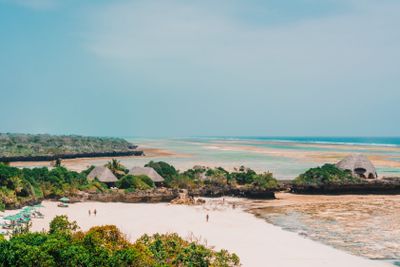
You’ll use your adapter in Nairobi hotels, lodges near Amboseli, coastal stays, and throughout the Maasai Mara. Travellers visiting the Mara for the first time can read more about the area in our guide to Maasai Mara National Park, which pairs well with planning a Kenya safari.
Compatibility with common devices
Most modern electronics charge without difficulty once you have the correct Kenya plug type adapter. Phones, laptops, camera chargers, and power banks generally come with built-in voltage protection, which means the plug shape is the main thing you need to solve.
Larger heat-based appliances can be more sensitive. They often draw too much power or support only one voltage, which makes them less ideal for travel. Many safari lodges provide hairdryers on request, though they’re usually low-watt versions suitable for the region’s power systems.
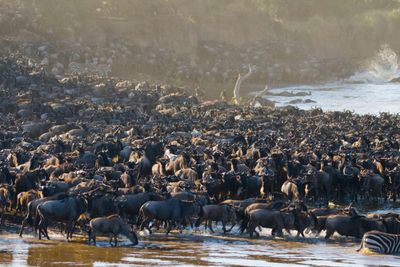
If you're planning to photograph wildlife during the Great Migration, the right gear matters. A well-prepared charging setup keeps everything running smoothly during a Kenya safari covering long days out on the plains.
Where will you use outlets on safari?
You’ll find outlets in most permanent safari lodges and many tented camps. Some camps offer shared charging stations in common areas, especially those running on solar power. Electricity is often available during set windows of the day, usually early mornings and evenings, so it’s wise to plug in your equipment whenever power is switched on.
Photographers and travellers who love sunrise game drives tend to carry a small multi-USB hub. It lets you charge several devices at once without monopolising a socket. Camps generally appreciate this because it prevents queues of guests waiting to recharge camera batteries after a long day out on a Kenya safari.
If you’re still planning your route, our guide to booking a Kenya safari offers helpful insight into timing, accommodation styles, and the best regions to explore.
Tips for travellers
Charging in Kenya becomes easier with a few simple habits. Before your safari begins, write a quick checklist of everything that needs charging each night. It removes the guesswork the following morning when you’re trying to photograph elephants wandering through soft dawn light.
A reliable adapter for the Kenya outlet type really does make packing feel lighter.
Here are a few more things to keep in mind.
Pack a backup power bank for long game drives or days away from camp.
- Choose a universal adapter if you're travelling through other countries before or after Kenya.
- Charge your devices whenever electricity is available in camp.
- Keep camera batteries and SD cards in a small dry pouch to protect them from dust.
- Bring a lightweight multi-port USB charger if you're travelling with several devices.
These small steps make a noticeable difference once you're deep in the bush. If you’re looking for the ideal season for photography, wildlife activity, and clear skies, our guide to the best time to visit Kenya gives an easy breakdown of weather and safari conditions.
Before you zip up your suitcase
Kenya uses the Type G plug, and you’ll see this Kenya outlet type everywhere from Nairobi to the coast. The country runs on 240 volts at 50 hertz, which suits most modern devices as long as you have an adapter for the Kenyan plug type. Travellers from 110-volt regions should double-check that their chargers and small appliances are dual voltage before packing.
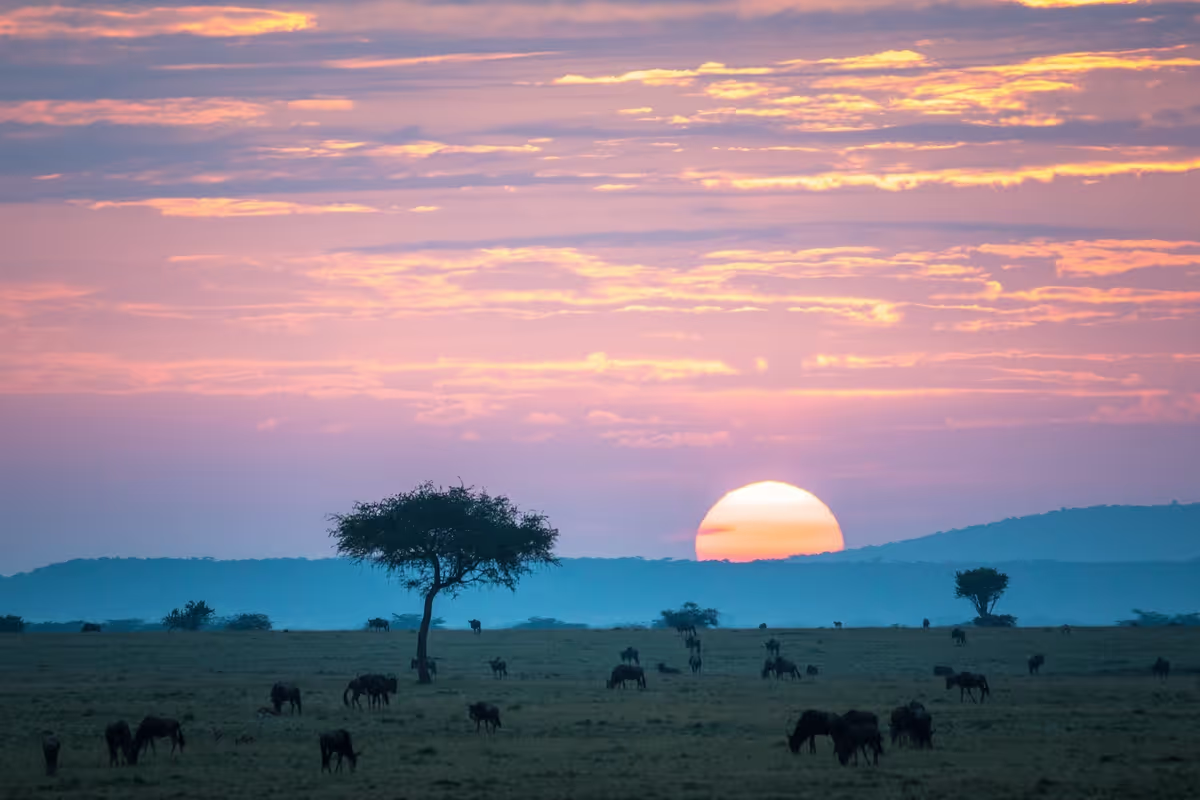
A Kenya safari often includes early mornings, long days, and plenty of photography, so charging becomes part of the rhythm of your trip. Camps tend to offer outlets either in rooms or shared areas, though electricity may run on a schedule. A good adapter, a power bank, and a simple USB hub keep everything running smoothly from your first game drive to your last sunset.
{{leadmagnet-one}}