


Imagine my fascination when I discovered that there was once a language written only for women, and deliberately kept away from men. Not a spoken tongue, but a secret script. A way of writing that existed quietly for centuries in rural China, allowing women to share their grief, joy, longing and friendship beyond the reach of a society that always silenced them. This is the story of the Nüshu language, China’s only known female writing system, which was born in the mountains of Hunan province and, against the odds, is now finding new life.
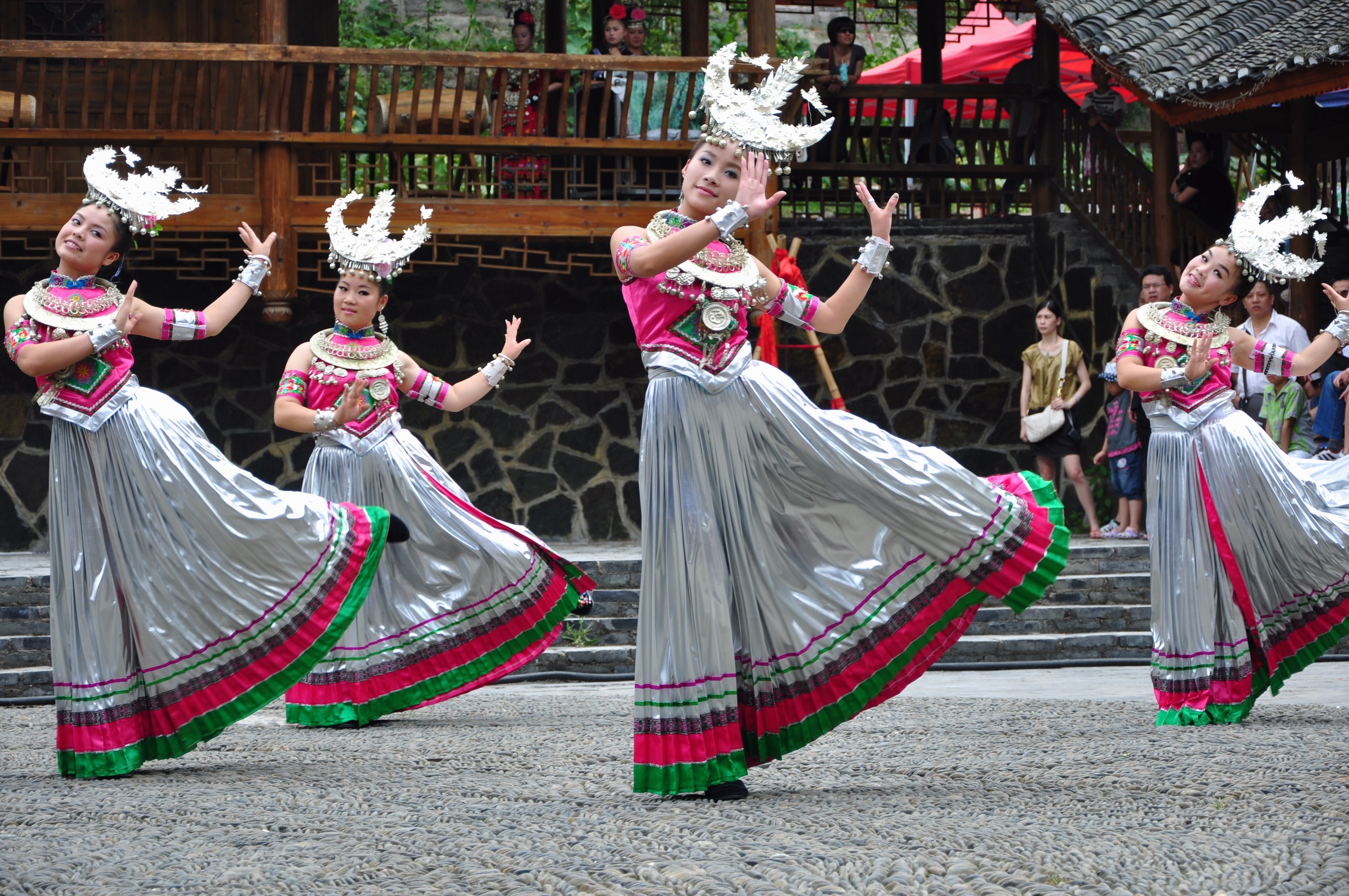
A group of Chinese women dressed in traditional folk costumes standing on the shore of the Tuojiang River in Fenghuang Old Town, Hunan Province.
Where the Nüshu language was born
Nüshu is considered the world’s only writing system created and used exclusively by women. According to UNESCO, it was developed among the rural women of the Xiao River valley, in the Jiangyong county of China’s Hunan province, where there is a mixture of Han culture and Yao folkways. In this part of southern Hunan, villages were isolated by rivers and hills.
For generations, women were denied access to formal education, while men learned to read and write Chinese characters, Hanzi. Faced with these restrictions, women created their own system. Nüshu became their voice, passed quietly from mother to daughter, friend to friend. Letters, poems, and embroidered cloths carried their thoughts and feelings, joys, grief, hopes, and sorrows, all hidden from the male gaze. If you look back, it was definitely an act of resilience, a quiet defiance in a society that often silenced them.
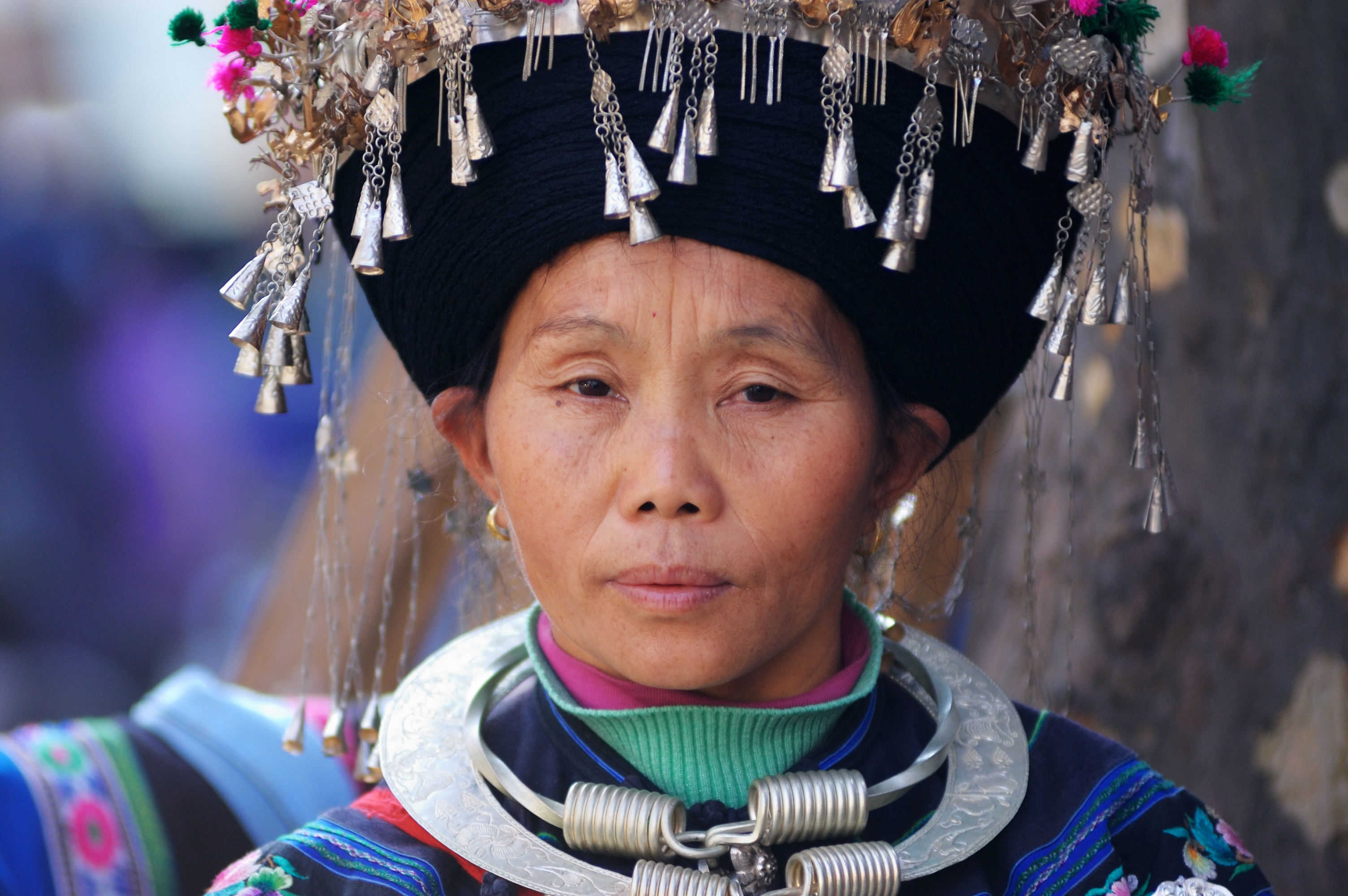
Chinese woman wearing silver ornaments at a wedding ceremony in Fenghuang county, Hunan province, China.
How old is the Nüshu script?
Scholars trace Nüshu back to a simplification of Chinese characters, likely developing during the Song dynasty (960–1279), though some suggest its roots may reach as far back as the Qin dynasty (221–206 BCE) or even earlier. What is clear is that it was passed down informally, from mothers and grandmothers to daughters, learned by copying rather than through formal teaching.
Various legends suggest that Nüshu may have roots in a tribal language more than 2,000 years old, or that it was invented by a clever girl from Jiangyong who, forced to become an imperial concubine, devised a secret way to write home.
The earliest surviving Nüshu artefacts date to the nineteenth century, though the script may have been in use long before that. Records are scarce, but one notable find is a bronze coin from Nanjing, mid-1800s, etched with eight Nüshu characters reading: “All the women in the world are members of the same family.” The script gave women a private way to offer support to one another. For centuries, possibly even millennia, Nüshu remained a secret of Jiangyong. It wasn’t until the 1980s that the wider world became aware of this unique script and the quiet culture it preserved.
{{leadmagnet-one}}
What is Nüshu?
Nüshu literally means “women’s writing” in Mandarin and is a syllabic script created and used only by women. Unlike standard Chinese writing, which is logographic (where each character carries meaning), Nüshu is phonetic. Each slender, rhomboid character represents a syllable.
The script is written in vertical columns, read from top to bottom and right to left. There are roughly 600–700 characters, many influenced by Chinese characters, while others draw inspiration from embroidery patterns and textile designs. Locals sometimes referred to it as “mosquito writing” because of its elongated, thread-like strokes that slope diagonally downwards.
Nüshu was written using sharpened bamboo sticks and ink made from burnt residue left in a wok. It appeared on paper, in handmade books and on fans, but also embroidered into cloth, stitched onto handkerchiefs, belts and headscarves.
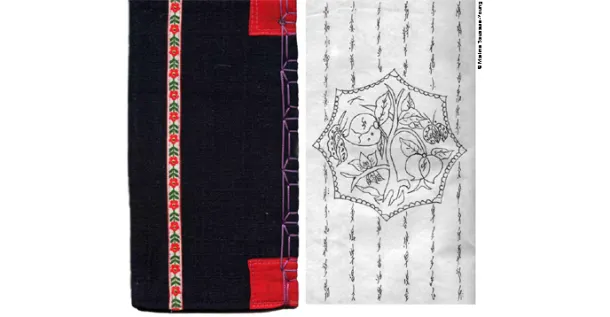
Cover and inside page of a sanzhaoshu or “third day letter” given to a newly married woman three days after her wedding. Photo credit: UNESCO
A language of emotion and friendship
Men could not read it, which made Nüshu a private language for women. That alone is fascinating for me, especially in a time when women had little opportunity to make their voices heard or participate equally in society. Through Nüshu, they developed a discreet but meaningful way to communicate, almost like a “hidden code.”
Letters, poems, and songs carried expressions of love, grief, hardship, and friendship. It wasn’t a language for everyday use; rather, it appeared in song and chant during social gatherings, from playful nursery rhymes and birthday tributes to songs and poems about married life and personal reflections. In these moments, women could share their experiences in a way that was entirely their own.
Women who formed particularly close bonds became “sworn sisters.” These were usually small groups of three or four unrelated women who pledged lifelong friendship, supporting one another through arranged marriages, domestic labour, and strict social expectations.
Older women often composed autobiographical songs, recording their struggles or offering moral guidance on navigating married life with piety, respect, and endurance. In this way, Nüshu became, as one modern inheritor calls it, an “encyclopaedia of women’s lives” quietly preserving emotional histories that might otherwise have been lost.

"Sworn sisters", playing a game together, around 1900. Photo Credit: Getty Images.
From near extinction to revival
By the late 20th century, Nüshu was on the brink of disappearing. The last known fluent native speaker, Yang Huanyi, passed away in 2004 at the age of 98, and for a time the script was thought to be “dead.” More recently, He Yanxin, the final natural inheritor of Nüshu, died on 23 October 2025, aged 86.
Nüshu preserved the experiences of women navigating the challenges of rural life and marriage, recording feelings of grief, frustration, and resilience. Initially, He Yanxin was reluctant to share the language outside her community, but over time, doing so became a way to honour these stories and keep them alive.
Much of what we know today is due to the work of Zhou Shuoyi, a researcher who began documenting the script in the 1950s after encountering Nüshu through family connections. His work was interrupted during the Cultural Revolution, but later proved invaluable.
The centre of Nüshu’s modern revival lies in Puwei village, a tiny island settlement surrounded by the Xiao River and accessible only by a suspension bridge. In the 1980s, researchers discovered several Nüshu writers there, making it the focal point for preservation efforts.
In 2006, Nüshu was officially recognised as part of China’s National Intangible Cultural Heritage. A year later, a museum was established on Puwei Island, and local women were trained as interpreters and “inheritors” of the script – learning to read, write, sing and embroider Nüshu.
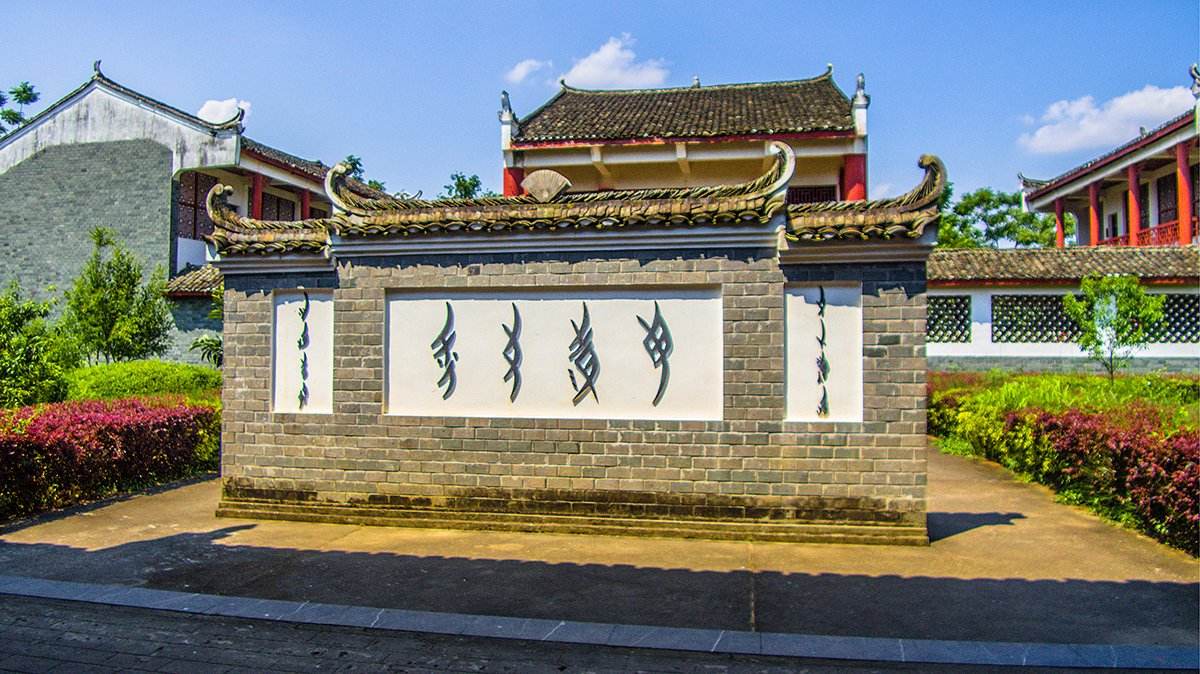
The Nüshu script museum is found in Jiangyong County, Hunan Province.
Is Nüshu still preserved today?
Yes, though it remains fragile. Fewer than a hundred people can read and write the Nüshu script fluently, but interest is growing. Preservation programmes now include museums, university courses, digital archives, exhibitions and published works. A Nüshu school opened in Puwei in 2000, and teachers continue to pass the script on to new generations.
While Nüshu was historically a women-only domain, some men now study it within academic and cultural institutions. Still, its core meaning remains rooted in women’s lived experience. Though it was not a feminist movement in the modern sense, Nüshu represents a quiet form of resistance of women constructing identity, emotional support networks and dignity within restricted social spaces.
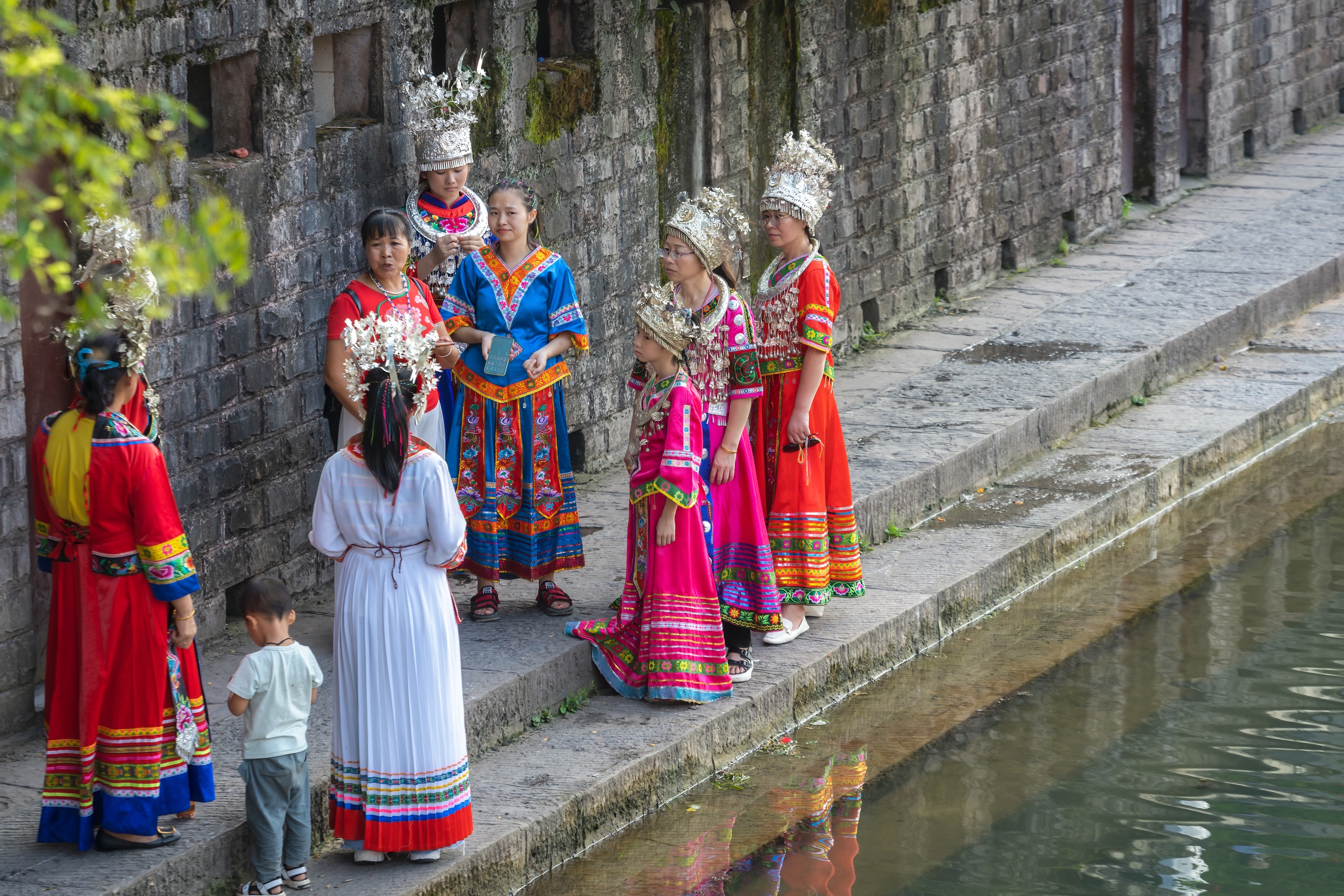
Group of Chinese women dressed in traditional folk costumes standing on the shore of the Tuojiang River in Fenghuang Old Town, Hunan Province, China.
Why Nüshu matters to adventure travellers
For travellers drawn to culture as much as landscape, the story of Nüshu adds depth to any journey through Hunan province. It reminds us that adventure isn’t only about remote places, but about uncovering hidden histories – especially those written out of the mainstream narrative. Nüshu is proof that even in isolation, creativity finds a way. And sometimes, the most powerful stories are the ones written in whispers, stitched into cloth, and carried quietly from one woman to another across generations.
{{leadmagnet-two}}