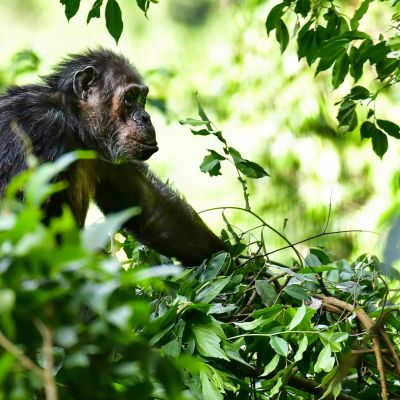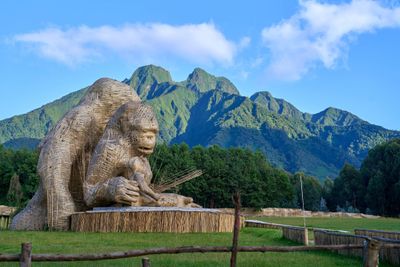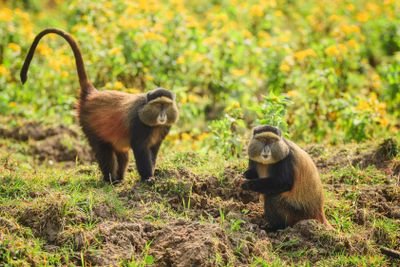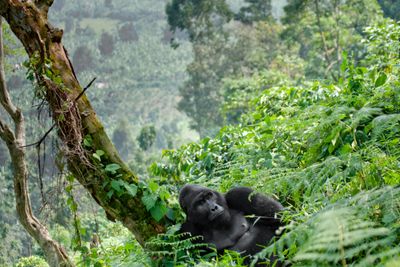



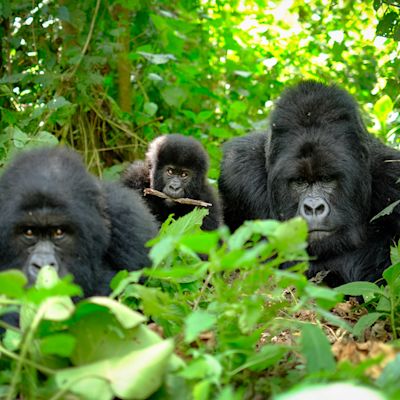
Few experiences in the wild can match the sheer wonder of coming face-to-face with mountain gorillas. Standing quietly in the misty forests of Rwanda, watching these gentle giants move through their home, is humbling in a way that will stay with you forever. The habituation process that allows us this rare glimpse is important for their survival, and tourism is their lifeline as it providing the funds for conservation and actually shows the local communities the value of protecting these incredible animals.
As their name suggests, mountain gorillas make their home high in the mountains, living in forests at elevations of 8,000 to 13,000 feet. Their thick, dense fur sets them apart from other great apes, keeping them warm in an environment where temperatures can drop below freezing. But as human settlements and farming have expanded into their territory, gorillas have been pushed higher into the mountains, often facing harsher and sometimes dangerous conditions.
Despite decades of civil unrest, poaching, and habitat loss in one of Africa’s most volatile regions, mountain gorilla populations have been steadily recovering, a remarkable conservation success story. As their numbers grow, they remain a conservation-dependent species, relying on continued protection and careful habitat management to ensure these iconic animals survive for generations to come.
So if you're looking to contribute to this and visit these majestic creatures in Rwanda, this will indeed need a lot of planning. If you have any questions, just book a call with our team. We’d love to help and share everything you need to know.

Family of mountain gorillas minding their own business.
With that said, visiting Rwanda’s gorillas does take planning. A trekking permit is required, and because numbers are limited, it’s wise to book at least a year in advance. Compared to Uganda, treks here are generally less strenuous, which makes them accessible for most fitness levels. The starting and finishing points are well equipped with amenities like bathrooms, and routes vary depending on where the gorilla families are, offering different levels of adventure.
Let's break down the cost for you.
Price of a Gorilla Trekking Permit in Rwanda
At the time of publishing this, in Rwanda, a gorilla trekking permit costs $1,500 USD (about 2,000,000 Rwandan francs) per person for foreign visitors. This fee includes a guided trek to and from your assigned gorilla family and grants you one magical hour with these majestic creatures in the wild. Permits are issued by the Rwanda Development Board (RDB) and can be booked through their official portal or via a registered tour operator like Follow Alice. We recommend letting us manage the permits and paperwork; it’s one less thing for you to worry about before your gorilla trek.
Here’s an up‑to‑date table of 2026 gorilla trekking permit costs in Rwanda as set by the RDB.
Please remember, during the high‑tourism period from June to October 2026, the standard rate of USD 1,500 applies to all categories, including discounted ones, as part of RDB’s pricing policy to manage demand and maximise conservation funding
Learn more: 20 things to know about mountain gorilla trekking
Are there any cheaper or discounted permits?
In 2026, there are a few opportunities for discounted gorilla trekking permits in Rwanda, depending on your residency and citizenship. East African Community (EAC) citizens and Rwandan nationals can secure a permit for around $200 USD. In comparison, other African citizens and foreign residents living in Africa may pay approximately $500 USD, significantly lower than the standard $1,500 USD international rate.
Some international travellers can also take advantage of low-season promotional discounts, often around $1,050 USD, when combining their gorilla trek with visits to other national parks outside the peak months of June to October. Proof of nationality, residency, or other qualifying documents is required to access these rates. During peak season, however, permits generally revert to the standard rate to manage demand and support conservation efforts.
Learn more: Best time to see gorillas in Rwanda
Accommodation costs in Rwanda
It’s highly recommended to stay close to Volcanoes National Park, the starting point for gorilla treks, so you’re well positioned for the early morning briefing and departure. There is a range of lodges and guesthouses near the park, from more affordable guesthouses at roughly USD 50–100 per night, to comfortable mid‑range options around USD 150–400+, all offering easy access to the trekking trailheads.
For travellers seeking a truly luxurious experience, world‑class eco lodges like Wilderness Bisate offer exceptional service and design, with nightly rates generally starting in the USD 2,500+ range per person sharing, depending on season and availability. Whatever your budget, early booking is important, as accommodation near the park fills up quickly, especially during peak gorilla trekking seasons. At Follow Alice, we offer our Rwanda gorilla trekking guests the choice of mid-range or luxury accommodation.
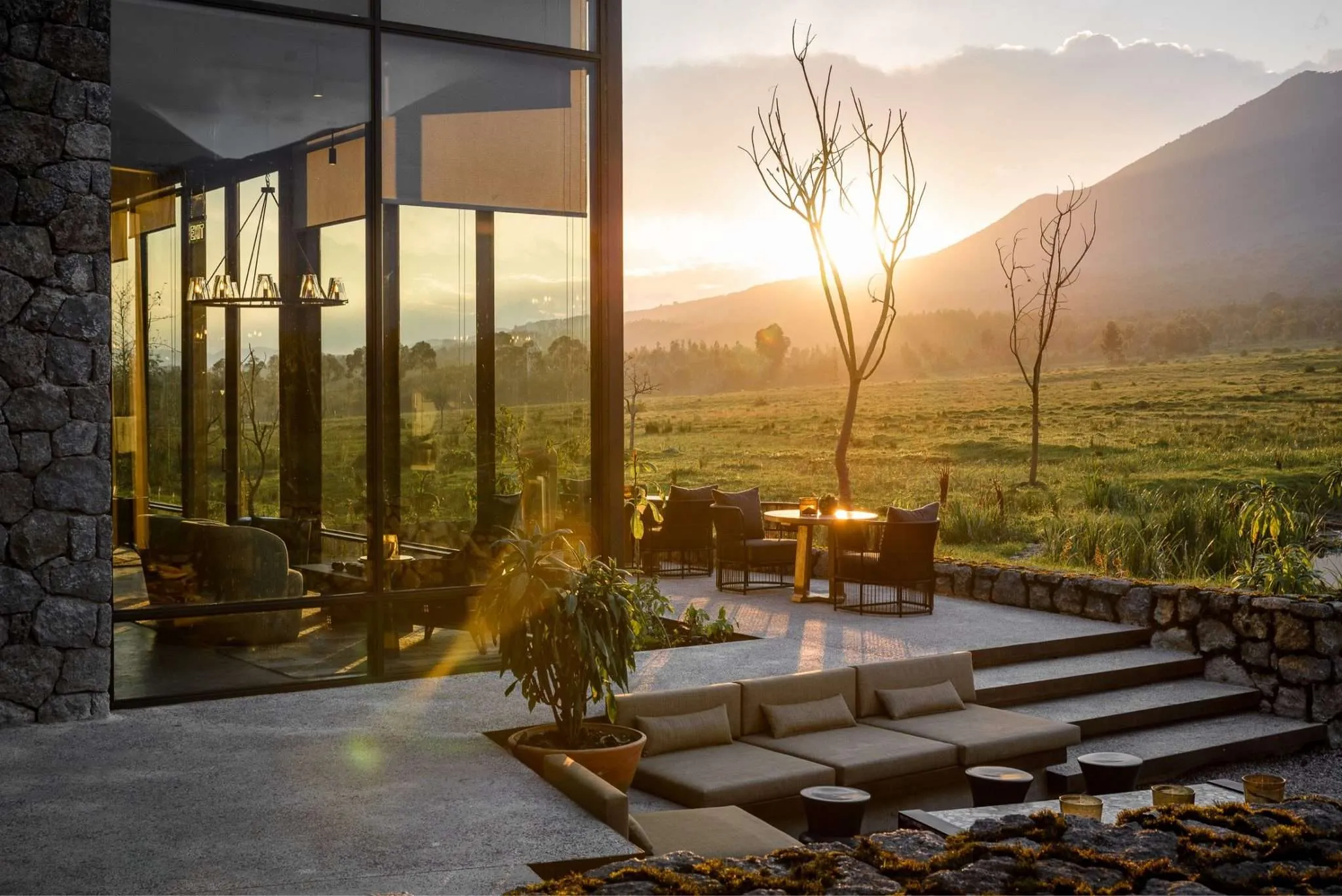
Volcanoes National Park has lodges nearby with comfortable rooms and amazing mountain views.
Hiring porters for your gorilla trek
To make the most of your gorilla trekking experience, you will have the option to hire a porter to help with your luggage and extra equipment. Gorilla trekking involves walking through steep slopes and sometimes muddy terrain while tracking a gorilla group. Porters are experienced and familiar with the trails and can carry your backpack, cameras, snacks, or any other heavy gear. They are also very valuable when climbing steep sections, lending a hand to make the trek easier as you navigate the muddy path.
Hiring a porter is also a meaningful way to give back to the local community. Many porters are university students funding their education, and some park guides and porters are former poachers who now rely on tourism to support their families. By hiring a porter, you are helping these individuals, their families, and the wider community while contributing to mountain gorilla conservation.
Porters typically cost between $10 and $15 USD per trek. Tipping is optional but recommended, as it can improve your experience, as porters will always go the extra mile, show you special sights, or share insights you wouldn’t normally see, especially if you are on a second-day trek.
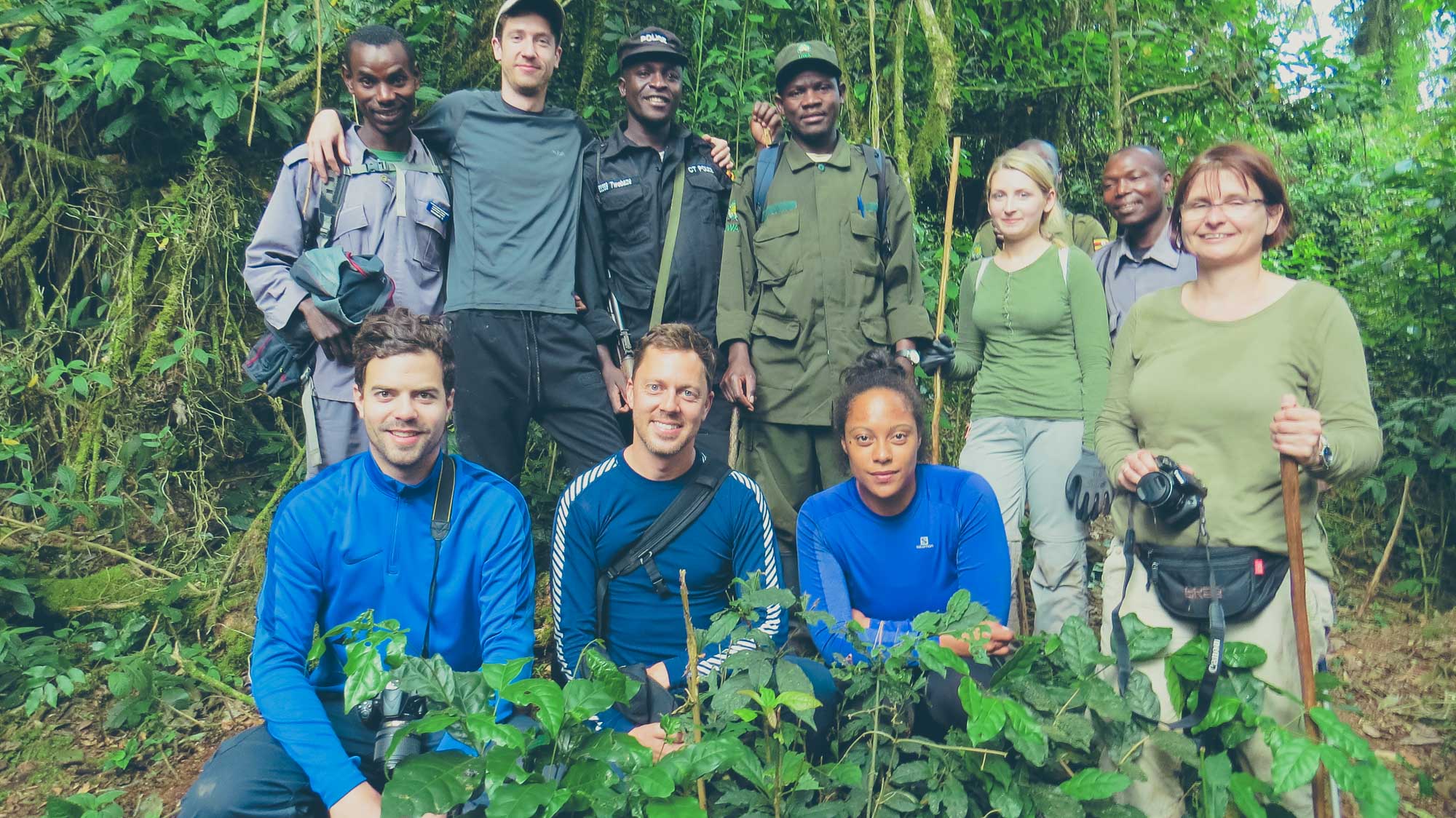
One of our gorilla trekking groups with their guide and rangers
Learn more: Does gorilla trekking help conservation?
Food and drink costs in Rwanda
Eating in Rwanda is part of the adventure. From busy local eateries to luxury lodges, the country offers flavours that are both comforting and memorable. At small local restaurants or street stalls, you can enjoy traditional dishes like ugali, brochettes, or isombe for just $2–$6. Mid-range spots serving a mix of Rwandan and international dishes typically cost $8–$15 per meal, while high-end hotel restaurants can range from $20–$40, perfect for a more indulgent experience.
Most of your food and drink costs will almost certainly be included in your accommodation, especially if you’re staying at a more upmarket lodge. Many accommodations also provide a packed lunch for you to carry on the day of your gorilla trek. That said, it’s good to budget around $10 per person for a meal in a three-star hotel or restaurant, up to about $50 per person in a five-star establishment. Often, having your meals included in your accommodation package works out more cost-effectively.
Drinks are easy to come by, with bottled water costing around $0.50–$1, local beers like Primus or Skol costing $1–$2, and imported beers ranging from $2–$4. Coffee and tea, a Rwandan speciality, are generally $1–$3—a must-try for any traveller. For those planning longer stays, local markets are a treasure trove of fresh fruit, snacks, and ingredients, making it easy and affordable to self-cater. Please remember that it's important to research prices as it increases.
Transport costs to Volcanoes National Park
You also need to remember there are so many moving parts to this trip, and this is transport costs. If you travel with a tour operator like Follow Alice, your transport is usually included in the package. This typically covers a private vehicle and a driver-guide, taking the stress out of navigating Rwanda’s roads, which can definitely be a bit bumpy.
If you plan to travel independently, it’s important to know what you’re in for. The drive from Kigali International Airport to the Ruhengeri District of Musanze, where most gorilla lodges and hotels are located, takes around two to three hours. You’ll need to hire a car and drive yourself or arrange for a local driver. There are no railway links, so road transport is your only option. Expect to pay around $250–$350 USD for a round-trip in a private 4x4 safari vehicle. This type of car is highly recommended for navigating the rougher, rutted roads closer to Volcanoes National Park.
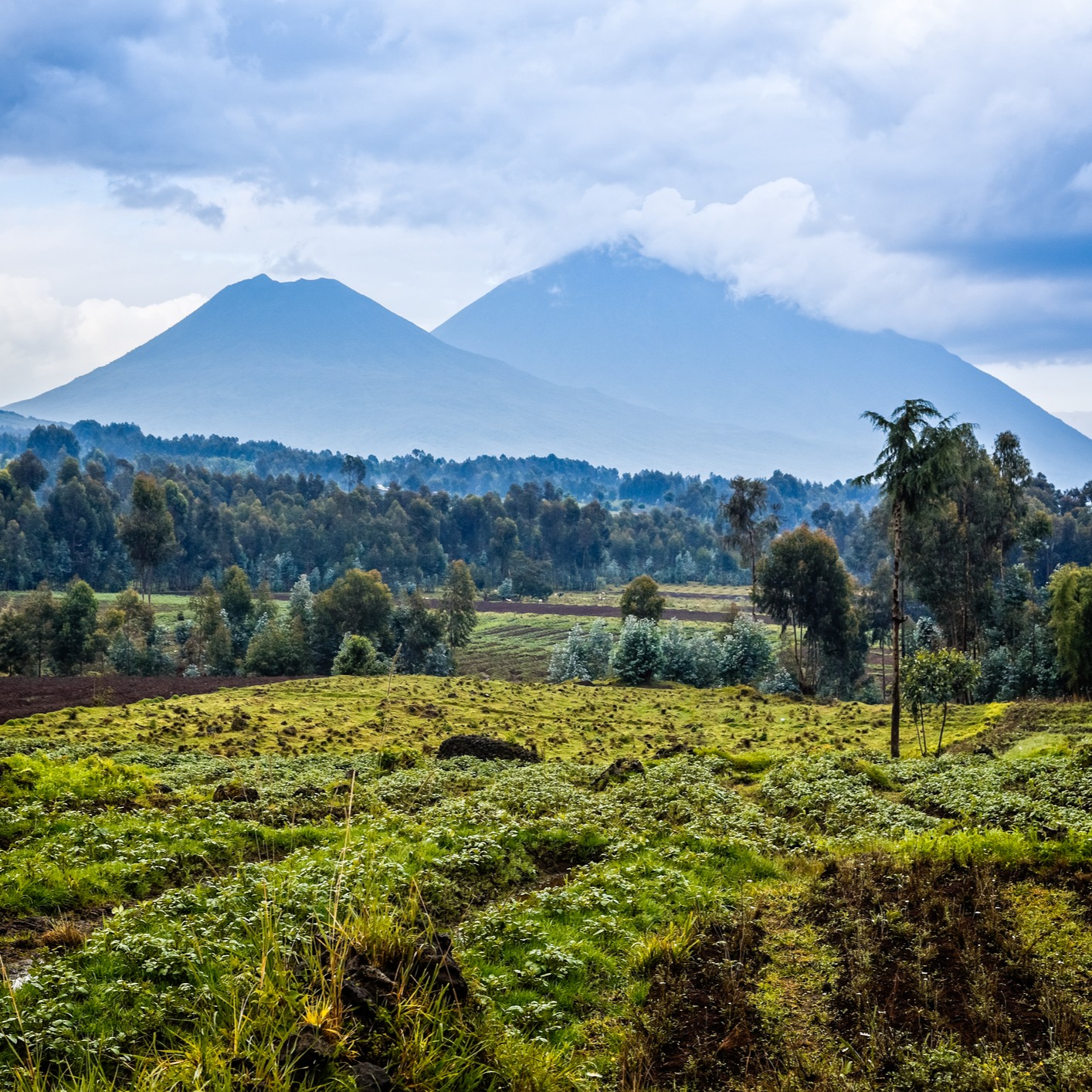
Volcanoes National Park, Rwanda, is one of the 3 homes of the endangered mountain gorillas within the Virunga Mountains.
Rwandan tourist visa fee
Remember to also take into consideration the costs of your visas. Visitors to Rwanda generally do not need to apply for a visa in advance, as citizens of all countries can obtain a visa on arrival. Certain groups are eligible for free visas:
- Citizens of African Union member countries, the Commonwealth, and La Francophonie can receive a 30-day visa at no cost.
- Citizens of East African Community (EAC) member states can obtain a six-month entry visa free of charge.
- Visitors from the following countries are eligible for 90-day visas at no cost on arrival: Angola, Benin, Central African Republic, Chad, Côte d’Ivoire, Saint Kitts and Nevis, Ghana, Guinea, Indonesia, Haiti, Mauritius, Philippines, Senegal, Seychelles, Sierra Leone, São Tomé and Príncipe, Singapore, and Qatar.
For travellers not eligible for visa exemptions, there are two options:
- Apply online through the official Rwanda e-visa system, with payment either online or upon arrival.
- Apply at a Rwandan diplomatic mission in your country of residence before departure.
Visa fees for others are capped at US$50 for a single-entry visa and US$70 for a multiple-entry visa. There is no single agent authorised to apply on your behalf, so always use official channels. To check the latest costing, please visit the official Rwandan government site.
Travel insurance for Gorilla Trekking in Rwanda
Another thing to consider for your budget is travel insurance. This is essential when venturing abroad, especially for an adventure like gorilla trekking in Rwanda. The trek takes you deep into the forest, often at high altitudes and on uneven terrain, so having coverage for medical emergencies, trip cancellations, or unexpected delays gives you peace of mind. Most tour operators won’t host guests without it, making it a non-negotiable part of your planning. For reliable coverage tailored to adventure travellers, we recommend World Nomads or Rise and Shield, a trusted partners of ours for trekking and wildlife expeditions.
Ready to trek Rwanda’s mountain gorillas?
A gorilla trek in Rwanda, while costly it will definitely offer you a chance to witness some of the world’s most extraordinary wildlife while supporting their protection.
Prices vary depending on accommodation choice, transport, and if you are booking a full tour package. Most travellers opt for packages that include transport, accommodation, meals, guides, and permits, which can simplify budgeting. So, from planning your permits and accommodation to arranging transport and packing the right gear, every detail matters to make your experience seamless and unforgettable.
If you’re ready to start planning your trip, our Follow Alice team is here to help. We can guide you through permits, lodges, itineraries, and everything in between, just advice from people who’ve explored these forests themselves.